Omolu God of Disease Brazil Myth Meaning & Symbolism
A myth of the covered deity who brings pestilence and its cure, teaching that the source of the wound holds the power of the remedy.
The Tale of Omolu God of Disease Brazil
Listen. There is a story that walks on legs of fire and whispers with a voice of dry leaves. It is the story of the One Who Is Covered, the King of the Earth, the Lord of Aṣẹ.
In the beginning, there was a child born of the great Olodumare, cast out for his terrifying visage. His skin was ravaged, a map of suffering. He was left to die on a midden heap, a place of refuse and decay. But the earth is a mother to the abandoned. The earth, Ilẹ, took him in. She fed him with the substance of the soil, and the vultures, creatures of transformation who walk between life and death, brought him scraps. He grew not in the sun, but in the shadowed, fertile dark of the world’s underbelly.
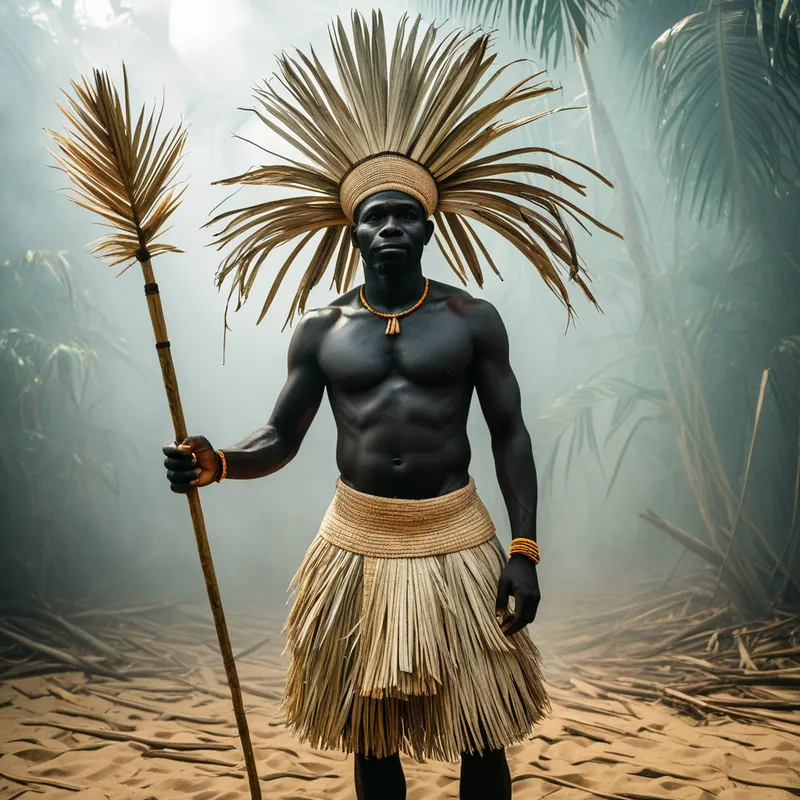
He became Omolu. His body was covered, not to hide, but to contain. He wore a garment of ìko, straw that rustled like a field of bones in the wind. No one could look upon his full face and live, for to see the truth of suffering unmasked is to be unmade.
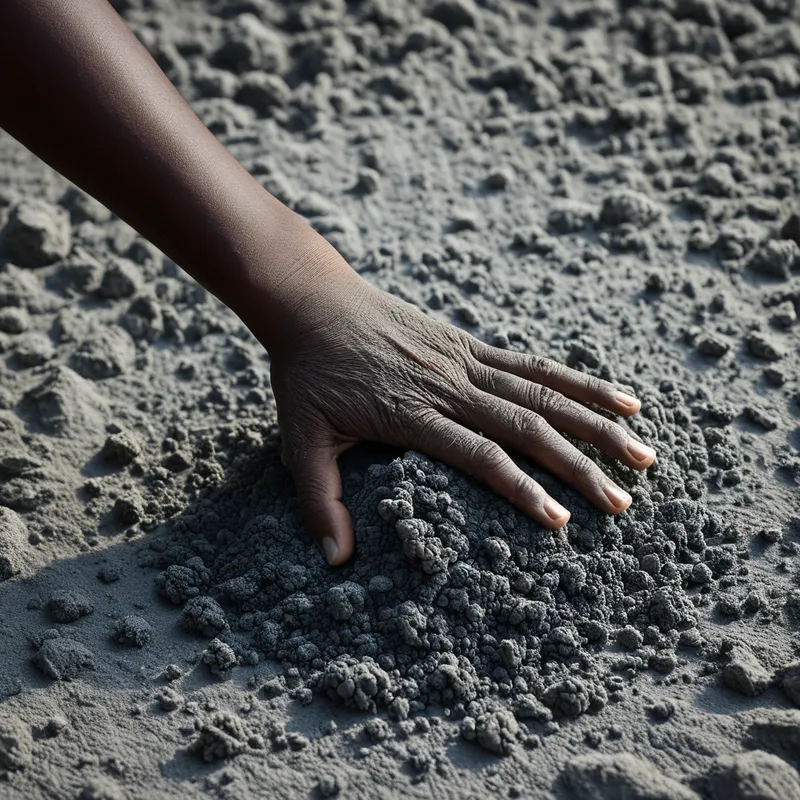
He walked the world, and where his staff struck the ground, fevers bloomed. Where his breath passed, pustules formed. He was a king of desolation, and the people fled before him. Yet, in his wake, he also scattered a fine, white powder—pemba. This was not merely ash; it was the memory of fire, the residue of what has been burned away.
The great mother of waters and sweetness, Ọṣun, saw his isolation. She saw the king who was shunned, the healer who could only manifest as the sickness. She approached the covered one. She did not ask him to unveil. Instead, she began to dance. Her dance was the movement of rivers, the sway of honey, the irresistible pull of life itself. She danced for him, and the rustling of his straw began to change its tune. From the sound of dry death, it began to syncopate, to find a rhythm.
Moved by this act of connection, Omolu taught her the secrets of the leaves. He showed her which roots could cool a fever, which barks could draw out poison. He gave her the knowledge that the cure is always kin to the curse, that the medicine grows next to the malady. From that day, Omolu was not only the bringer of disease but the master of its cessation. His power was dual, complete. He was feared, yes, but also petitioned, honored, and loved as the one who holds the end of suffering within the suffering itself.
Cultural Origins & Context
This is not merely a Yoruba story from West Africa. It is a story that survived the Middle Passage, a psychic seed carried in the hearts and memories of the enslaved across the Atlantic. In the brutal holds of slave ships and on the plantations of Brazil, the myth of Omolu—revered as Obaluaiyê or Ṣọpọna—took on a profound new resonance. The experience of being treated as refuse, of suffering bodily affliction and social ostracization, was not just metaphor; it was daily reality.
The myth was preserved and transformed within the sacred spaces of Candomblé and Umbanda. Here, told not from books but through the bodies of initiates in ritual trance, through the language of the drums (Nagô), and through the meticulous arrangement of offerings, the story became a living technology of survival. Omolu became the archetype of resilience, the deity who understood plague, both physical and social. His worship was a means of confronting the existential diseases of slavery and oppression—despair, fragmentation, loss of identity—and seeking their alchemical cure within the community’s own spiritual resources.
Symbolic Architecture
Omolu is the ultimate symbol of the shadow made sacred. He represents all we shun, cover up, and cast out: disease, decay, ugliness, and death. His straw covering is a masterful symbol. It is a barrier that protects the world from his full force, but it also protects him—the vulnerable, scarred child within. It signifies that some truths are too potent for direct exposure; they must be mediated, approached with ritual and respect.
The wound and the remedy are not opposites; they are two points on the same circle of Aṣẹ. To reject one is to forfeit the other.
The dance with Ọṣun is the critical turning point. It symbolizes the necessary integration of opposites. The raw, transformative power of disease (Omolu) is sterile and destructive without the connective, life-affirming energy of relationship, beauty, and compassion (Ọṣun). Conversely, sweetness and beauty alone are fragile without the grounding knowledge of suffering and limitation. Their union creates holistic healing. The pemba ash is the tangible symbol of this alchemy—the residue of what has been burned in the fires of ordeal, now used to draw protective boundaries and mark a new beginning.
The Dreamer’s Resonance
When this myth stirs in the modern dreamer, it often signals a profound encounter with a psychic “disease.” This is not literal illness, but a pattern of suffering that feels endemic, consuming, and isolating. One may dream of being covered in itchy fibers, of hiding a disfigured face, or of wandering through barren, infected landscapes. There is a somatic quality of heat, itch, and containment.
Psychologically, this is the psyche forcing a confrontation with what has been ostracized. The “Omolu complex” is the feeling of being the carrier of something repulsive—a shame, a grief, a rage, a trauma—that one believes must be hidden lest it destroys one’s connections. The dream is initiating a process of moving from being a victim of this inner affliction to becoming its sovereign. The dream asks: What part of you have you left on the midden heap of your awareness? What power resides in that discarded, suffering shape?

Alchemical Translation
The individuation journey modeled by Omolu is not one of transcending suffering, but of becoming its king or queen. It is a path of sacred ownership.
The first stage is Exile and Endurance. The afflicted, “ugly” part of the self is cast out from the conscious personality. It survives in the dark, fed by scraps (unconscious impulses, symptoms, projections). The task here is to stop trying to “cure” this exile with superficial means and instead, like the earth, begin to acknowledge its existence.
The second stage is The Assumption of Covering. This is the conscious decision to relate to the wound not as a mistake to be erased, but as a potent force to be contained and ritualized. One develops a “straw covering”—perhaps a creative practice, a therapeutic container, or a spiritual discipline—that allows engagement with the shadow without being overwhelmed by it. This is self-compassion as a form of protection.
The final, integrative stage is the Dance of Wholeness. The conscious self (Ọṣun) must actively engage the covered one (Omolu) not with pity, but with the vibrant, connecting energy of life. This is the act of bringing love, art, relationship, and beauty into the heart of the pain. Through this engagement, the secret knowledge is transferred: the insight, the strength, the unique medicine that was forged only in the heart of that specific suffering. The ash of the ordeal becomes the chalk with which you draw your new boundaries and write your new story.
Associated Symbols
Explore related symbols from the CaleaDream lexicon:
- Disease — The central paradox of the myth, representing both destructive affliction and the sacred catalyst that forces transformation and reveals hidden knowledge.
- Healing — The inevitable counterpart to disease in Omolu’s domain, signifying that the process of cure is born from an intimate understanding of the sickness itself.
- Earth — Omolu is the King of the Earth (Obaluaiyê), symbolizing the grounding, receiving, and ultimately transformative power of the soil that nurtures even what is cast aside.
- Sacrifice — The initial sacrifice of the scarred child and the ongoing sacrificial offerings to Omolu, representing the necessary surrender to a painful process to achieve wholeness.
- Mask — The raffia straw covering of Omolu, which acts as a sacred mask that both conceals his full power and mediates its presence, protecting both deity and devotee.
- Ritual — The precise dances, drumming, and offerings dedicated to Omolu, embodying the structured, respectful container needed to safely engage with transformative, chaotic forces.
- Shadow — The psychological embodiment of Omolu as the repressed, feared, and ostracized aspects of the self that hold immense power for healing when integrated.
- Dance — The pivotal act performed by Ọṣun, symbolizing the life-affirming, connective energy that can engage and temper raw, destructive power, catalyzing integration.
- Fire — The transformative element implicit in fever and in the sacred ash (pemba), representing the purgatorial process that burns away impurity to leave essential wisdom.
- Rebirth — The ultimate promise of the myth, where the entity cast out to die becomes a sovereign deity, modeling the psyche’s capacity to regenerate from its deepest wounds.