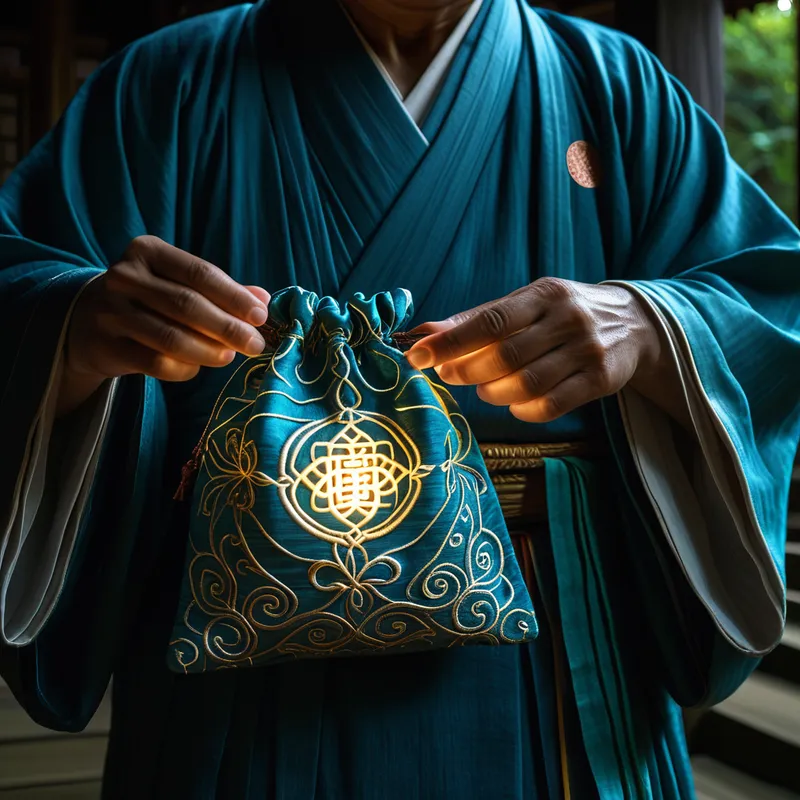
Omamori Charms Myth Meaning & Symbolism
A tale of a kami, moved by human devotion, who seals a fragment of its protective essence into a humble cloth pouch, creating the first omamori.
The Tale of Omamori Charms
Listen, and hear the whisper of silk in [the sacred grove](/myths/the-sacred-grove “Myth from Celtic culture.”/). In the age when [the world](/myths/the-world “Myth from Tarot culture.”/) was thick with kami, and every rustling leaf held a voice, there lived a humble woodcutter at the foot of a great, whispering mountain. His name is lost to [the wind](/myths/the-wind “Myth from Various culture.”/), but his heart is remembered. Each dawn, he would climb the treacherous path, not to gather wood, but to offer a single, perfect cup of clear [water](/myths/water “Myth from Chinese culture.”/) at a moss-covered stone, the dwelling of a mountain kami known as Yama-no-Okami.
Yama-no-Okami watched this silent, daily devotion. The kami saw the man’s frayed sandals, the weariness in his shoulders from a life of toil, and the unshakable light of gratitude in his eyes—gratitude simply for the mountain’s presence. One season, a great sickness descended upon the woodcutter’s village. It crept on a cold fog, touching homes and leaving silence in its wake. The woodcutter’s own child grew feverish and weak.
Despairing, the man did not cease his pilgrimage. Instead, he knelt before the stone, his forehead touching the cool earth, and poured out not a request, but a confession of love for his child and a sorrow for all the village’s suffering. He asked for nothing. He simply offered his fear, his love, and his faith into the stillness.
Moved by this selfless devotion—a devotion that sought no reward, only witnessed the sacred—Yama-no-Okami stirred. That night, as the woodcutter kept vigil by his child, a soft light filled his humble home. Before him appeared not a fearsome deity, but a gentle, luminous presence. The kami spoke, its voice like water over stone. “Your faith has woven a bridge between your world and mine. I cannot walk your path for you, nor can I banish all suffering. But I can lend you my vigilance.”
From its own radiant essence, the kami plucked a single thread of protective will. It folded this thread into a square of cloth from the woodcutter’s own sleeve, tied it with a cord of twisted light, and placed it in the man’s trembling hands. “Keep this close. It is a fragment of my watchful spirit, a seal against malevolent forces. It is a mamori—a guardian. Let it be a reminder that you are not alone in the dark.”
By morning, [the child](/myths/the-child “Myth from Alchemy culture.”/)’s fever broke. The woodcutter, understanding the sacred trust, shared the knowledge of the charm. Others, with pure intent, made their own pilgrimages, and the kami, in its compassion, offered fragments of its protective essence to those who approached with sincere hearts. Thus, the first [omamori](/myths/omamori “Myth from Japanese culture.”/) was born—not a tool of command, but a testament to a contract of devotion and guardianship, a piece of the sacred made portable for a fragile, human journey.
Cultural Origins & Context
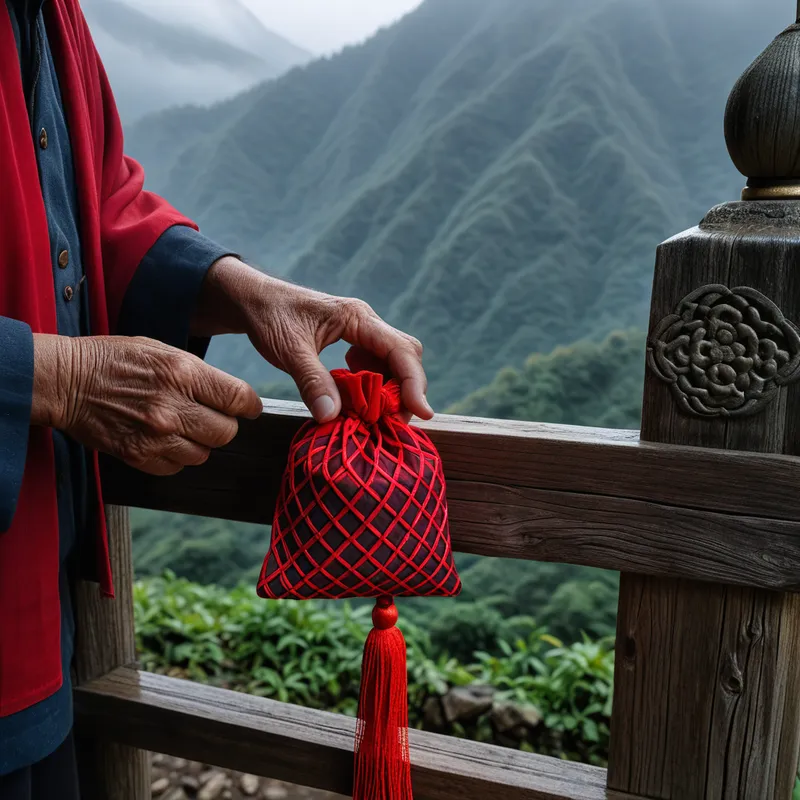
The myth of the omamori’s origin is not a single, codified tale from a classical text like the Kojiki, but a living, folkloric understanding woven into the fabric of Japanese spiritual practice. It emerges from the heart of Shinto, where the world is animate with kami residing in natural phenomena, ancestors, and even remarkable objects. The societal function of this foundational story is to explain and sanctify a ubiquitous practice: the carrying of sacred protection.
Historically, the practice evolved from earlier forms of shide and talismanic seals. It was passed down not by bards in grand halls, but by shrine priests (kannushi) and grandmothers, through the act of giving and receiving. The story served to differentiate the omamori from a mere superstition or magical object. It framed it as a relational artifact—its power contingent on the sacred connection (musubi) between the kami, the shrine (the kami’s home), and the believer. The myth taught that the charm’s efficacy was rooted in respectful conduct, gratitude, and the ongoing relationship with the divine, not in the object itself as an inert power source.
Symbolic Architecture
At its core, the omamori myth is a profound map of a psychological and spiritual [transaction](/symbols/transaction “Symbol: An exchange of value, energy, or information between parties, representing balance, reciprocity, and the flow of resources in life.”/). The woodcutter represents the vulnerable [human](/symbols/human “Symbol: The symbol of a human represents individuality, complexity of emotions, and social relationships.”/) ego, conscious of its fragility in a vast, often indifferent world. His daily offering is the practice of mindfulness and gratitude—[the ego](/myths/the-ego “Myth from Jungian culture.”/)’s conscious [effort](/symbols/effort “Symbol: Effort signifies the physical, mental, and emotional energy invested toward achieving goals and personal growth.”/) to relate to something greater than itself, [the Self](/myths/the-self “Myth from Jungian culture.”/) (in Jungian terms) or the transpersonal [realm](/symbols/realm “Symbol: The symbol of ‘Realm’ often signifies the boundaries of one’s consciousness, experiences, or emotional states, suggesting aspects of reality that are either explored or ignored.”/).
The [mountain](/symbols/mountain “Symbol: Mountains often symbolize challenges, aspirations, and the journey toward self-discovery and enlightenment.”/) kami, Yama-no-Okami, symbolizes the protective, ordering [aspect](/symbols/aspect “Symbol: A distinct feature, quality, or perspective of something, often representing a partial view of a larger whole.”/) of the Self or the unconscious. It is not an external god but an archetypal force of [stability](/symbols/stability “Symbol: A state of firmness, balance, and resistance to change, often represented by solid objects, foundations, or steady tools.”/) and [boundary](/symbols/boundary “Symbol: A conceptual or physical limit defining separation, protection, or identity between entities, spaces, or states of being.”/). The kami’s inability to “banish all suffering” is crucial; it represents the [truth](/symbols/truth “Symbol: Truth represents authenticity, honesty, and the quest for knowledge beyond mere appearances.”/) that wholeness does not mean a [life](/symbols/life “Symbol: The symbol of ‘Life’ represents a journey of growth, interconnectedness, and existential meaning, encompassing both the joys and challenges that define human experience.”/) without challenge, but the [capacity](/symbols/capacity “Symbol: A measure of one’s potential, limits, or ability to contain, process, or achieve something, often reflecting self-assessment or external demands.”/) to meet challenge with a grounded center.
The omamori is the temenos made portable—a sacred fragment of the inner sanctuary that one carries into the profane world.
The [cloth](/symbols/cloth “Symbol: Cloth often symbolizes protection, comfort, and transformation, serving as a barrier and a medium for expression in dreams.”/) [pouch](/symbols/pouch “Symbol: A small bag or container symbolizing secrets, resources, protection, or hidden aspects of the self.”/) is the [vessel](/symbols/vessel “Symbol: A container or structure that holds, transports, or protects something essential, representing the self, emotions, or life journey.”/) of the ego, the conscious [personality](/symbols/personality “Symbol: Personality in dreams often symbolizes the traits and characteristics of the dreamer, reflecting how they perceive themselves and how they believe they are perceived by others.”/). The sealed [ofuda](/myths/ofuda “Myth from Japanese Shinto culture.”/) within is the numinous, unconscious content—a specific quality (protection, success, [health](/symbols/health “Symbol: Health embodies well-being, vitality, and the balance between physical, mental, and spiritual states.”/)) that has been “contracted” or integrated in a limited, manageable form. The [silk](/symbols/silk “Symbol: A luxurious natural fiber representing refinement, sensuality, and transformation from humble origins to exquisite beauty.”/) cords that bind it shut are the psychic boundaries that prevent this powerful content from being dissipated or corrupted by the mundane world. To open the [pouch](/symbols/pouch “Symbol: A small bag or container symbolizing secrets, resources, protection, or hidden aspects of the self.”/) is to violate this container, to release the focused [energy](/symbols/energy “Symbol: Energy symbolizes vitality, motivation, and the drive that fuels actions and ambitions.”/) back into the undifferentiated unconscious, rendering it useless. The charm thus symbolizes a successful, contained [integration](/symbols/integration “Symbol: The process of unifying disparate parts of the self or experience into a cohesive whole, often representing psychological wholeness or resolution of internal conflict.”/) of an archetypal force for a specific life [task](/symbols/task “Symbol: A task represents responsibilities, duties, or challenges one faces.”/).
The Dreamer’s Resonance
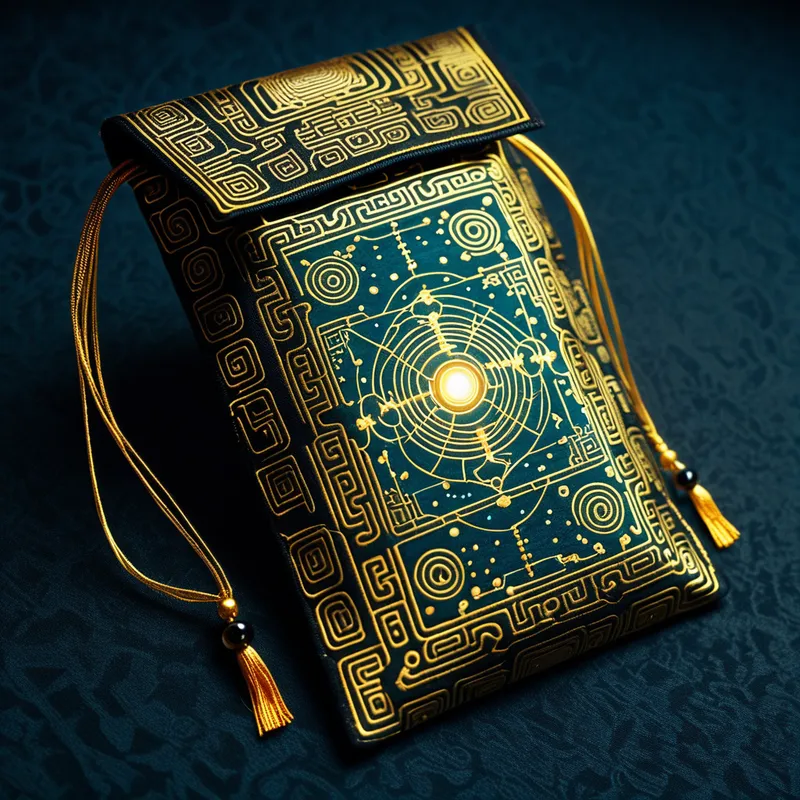
When the motif of an omamori appears in a modern dream, it seldom appears as a simple tourist souvenir. It manifests as a deeply personal symbol of the dreamer’s current psychic negotiation with vulnerability and protection.
To dream of receiving an omamori from a respected or mysterious figure may indicate the dreamer’s unconscious is offering a new form of psychological resilience. A specific challenge (a “sickness” in the village) has been acknowledged, and the Self is providing a tailored resource. To dream of losing an omamori, or finding it frayed and open, often correlates with feelings of exposure, boundary violation, or the depletion of one’s coping mechanisms. The sacred contract feels broken.
Dreaming of a black or corrupted omamori can signal a profound distrust in one’s own inner protection or a fear that one’s devotion (to a career, relationship, or ideal) has been misplaced, attracting not guardianship but a parasitic attachment. Conversely, dreaming of an omamori that glows or speaks points to a direct, conscious channel opening to an inner guiding or protective function—the “kami” making its presence intimately known.

Alchemical Translation
The myth models the alchemical process of coagulatio—the making solid or tangible. Here, the goal is to coagulate the diffuse, atmospheric presence of the sacred (the kami on the mountain) into a lapis, a stone or tangible agent (the charm) that can be used in the work of life.
For the modern individual, the “mountain” is the inner landscape of the unconscious. The “daily offering” is the practice of introspection, journaling, or active imagination—showing up consistently to acknowledge the greater [psyche](/myths/psyche “Myth from Greek culture.”/). The “sickness in the village” is the neurosis, anxiety, or life crisis that exposes our fundamental vulnerability.
The alchemical work is in the petition. The woodcutter does not demand a cure; he offers his authentic state. This is the key: we must present our raw material—our fear, our hope, our love—to the inner sanctum. The “kami” (the Self) then responds by providing a specific, crystallized quality: not the eradication of fear, but the archetype of Courage; not the guarantee of success, but the archetype of the Guide.
We do not receive an answer to our problem; we receive a token of the inner alliance that makes facing the problem possible.
The final, crucial step is the sealing and carrying. This is the integration. We take the insight, the new strength, or the resolved complex, and we consciously “seal” it into our daily identity (the pouch). We bind it with intention (the cords). We do not dissect it endlessly (open the pouch), but we let it work unconsciously within the defined container. We carry it with us, a silent partner in our endeavors. And when its purpose is served—when the challenge is integrated or transformed—we return it to the source (the shrine) with gratitude, completing the sacred circuit and making space for the next fragment of the Self to be called forth and embodied. The omamori thus becomes a living model for a dynamic, respectful, and transformative dialogue between the conscious ego and the profound depths of the psyche.
Associated Symbols
Explore related symbols from the CaleaDream lexicon: