Olympic Games Myth Meaning & Symbolism
A sacred truce forged by Heracles to honor Zeus, transforming a battlefield into a divine contest of mortal excellence, beauty, and cosmic order.
The Tale of Olympic Games
Hear now the tale of the first truce, born not from fear, but from glory. In the age when heroes walked [the earth](/myths/the-earth “Myth from Hindu culture.”/) and the breath of the gods was hot upon the neck of humanity, the land of Elis was stained with blood. King Oenomaus lay dead, his chariot races a grim lottery for the hands of suitors. His son-in-law, [Pelops](/myths/pelops “Myth from Greek culture.”/), for whom the whole peninsula was named, now ruled. But peace was a fragile vessel. Rivalries festered like wounds in the sun, and the people forgot the higher laws.
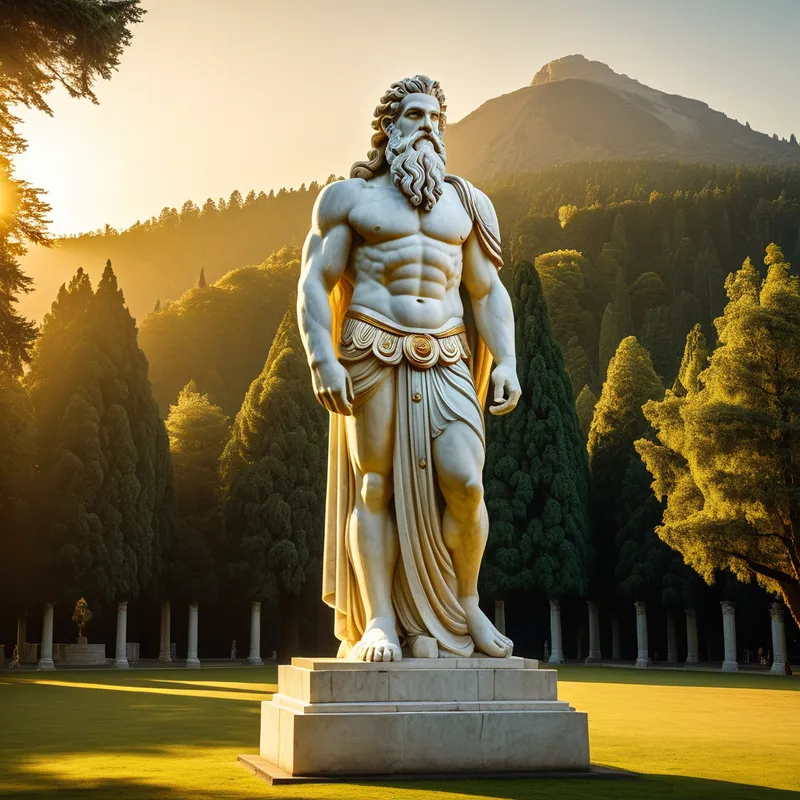
Into this simmering strife came [Heracles](/myths/heracles “Myth from Greek culture.”/), still smelling of the stables of Augeas, which he had cleansed in a single, mighty day. He saw not a kingdom, but a sacred grove—the Altis—choked by the brambles of human contention. An oracle’s voice, thin as mountain air, had spoken to him: “Honor the father. Cleanse the field. Let the contest replace the spear.”
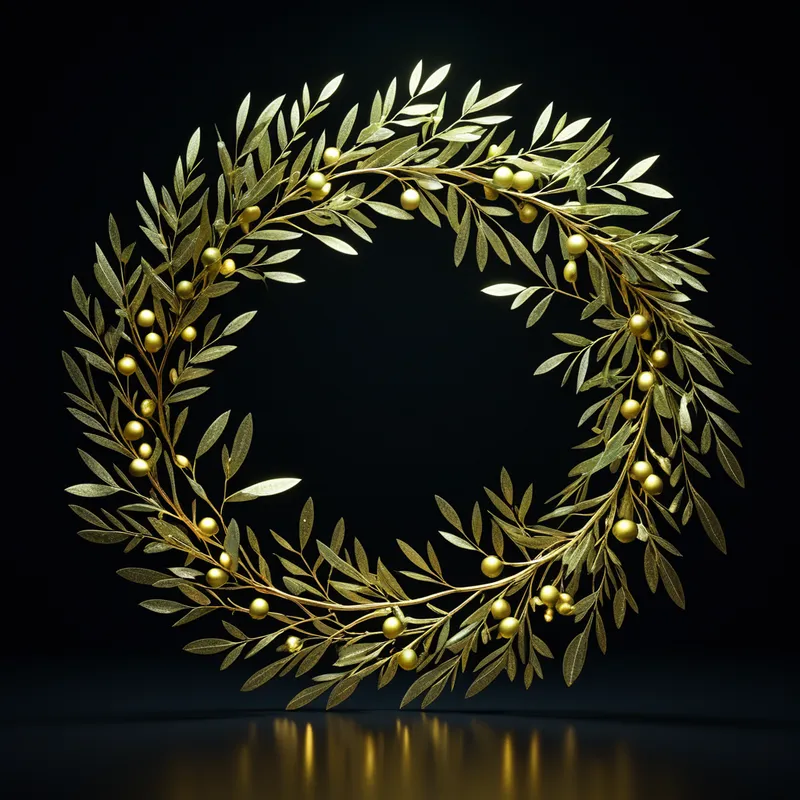
Heracles, the great civilizer, understood. He journeyed to the wild olive tree at the source of the Alpheios, its bark silver, its leaves whispering secrets of the ages. With a single, reverent stroke, he cut a branch and wove a crown, its scent sharp and clean. This was not a king’s diadem, but a prize for a different kind of royalty.
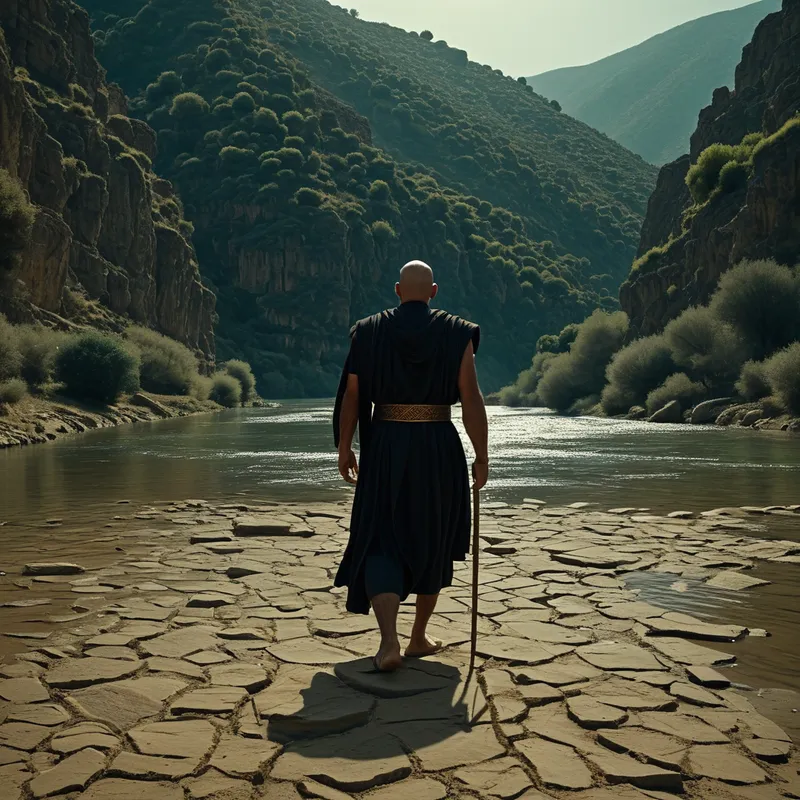
He returned to the plain beneath the hill of [Kronos](/myths/kronos “Myth from Greek culture.”/). With his own feet, he measured the length of the racecourse, one stadium length, his heels pressing the story of his labors into the earth. He summoned the warring kings and the swiftest youths. “Lay down your arms,” his voice boomed, not with threat, but with promise. “For five days, let the only blood spilled be the sweat of your brow. Let the only victory cries be for the man who runs like [the wind](/myths/the-wind “Myth from Various culture.”/), wrestles like the earth, and throws the discus like a crescent moon. Let the winner be crowned with this olive, and let his name be sung from here to the foot of Olympus itself.”
A hush fell. The clatter of bronze shields being set down was the first music of the Games. The first runner took his mark, the dust of the track still holding the memory of conflict. He ran, and as he ran, he was no longer just a man of Elis or Sparta. He was a mortal reaching for the divine standard, his breath a prayer, his straining muscles an offering. When he crossed the line, gasping, [the world](/myths/the-world “Myth from Tarot culture.”/) had changed. The sacred truce—the Ekecheiria—was born. The battlefield had become a theater of the sublime, and the only altar needed was the finish line.
Cultural Origins & Context
The myth of the Games’ foundation is a palimpsest, written over centuries. While the historical Olympics began in 776 BCE, their mythological origins were attributed to figures like Pelops or Heracles, anchoring the event in the deep, heroic past. This was not mere history; it was sacred etiology, explaining why this particular grove in the western Peloponnese was the navel of this world-wide phenomenon.
The tales were passed down by poets, the most famous being Pindar, whose victory odes wove the athlete’s moment of glory into the grand tapestry of myth, linking the victor’s strength to that of Heracles or the favor of Zeus. The myth served a critical societal function: it sacralized the political. The Ekecheiria was a profound geopolitical instrument, enforcing a pan-Hellenic peace every four years. It transformed aggressive, competitive energies—the very energies that fueled Greece’s constant inter-city warfare—into a ritualized, non-lethal, and culturally unifying spectacle. The Games were a temporary, perfect model of Hellenic society: fiercely competitive, yet bound by shared rules, divine sanction, and a common identity under the gaze of Zeus.
Symbolic Architecture
At its core, the Olympic myth is about the [ritual](/symbols/ritual “Symbol: Rituals signify structured, meaningful actions carried out regularly, reflecting cultural beliefs and emotional needs.”/) transformation of [chaos](/symbols/chaos “Symbol: In Arts & Music, chaos represents raw creative potential, uncontrolled expression, and the breakdown of order to forge new artistic forms.”/) into [cosmos](/symbols/cosmos “Symbol: The entire universe as an ordered, harmonious system, often representing the totality of existence, spiritual connection, and the unknown.”/), of war into order, and of raw potential into realized excellence. The [stadium](/symbols/stadium “Symbol: A stadium often symbolizes a place of competition, performance, and public scrutiny.”/) is a [temenos](/myths/temenos “Myth from Greek culture.”/), a [magic circle](/symbols/magic-circle “Symbol: A symbol of protection, power, and the manifestation of intent, often indicating a desire to create or transform one’s reality.”/) drawn against the disorder of everyday strife.
The race is not against the other, but against one’s own latent divinity. The finish line is the horizon where the human touches the eternal.
The figure of Heracles represents the civilizing, ordering principle of [consciousness](/symbols/consciousness “Symbol: Consciousness represents the state of awareness and perception, encompassing thoughts, feelings, and experiences.”/). His labors are the archetypal tasks of mastering the inner and outer [wilderness](/symbols/wilderness “Symbol: Wilderness often symbolizes the untamed aspects of the self and the unconscious mind, representing a space for personal exploration and discovery.”/). By founding the Games, he institutionalizes this struggle, offering a [path](/symbols/path “Symbol: The ‘path’ symbolizes a journey, choices, and the direction one’s life is taking, often representing individual growth and exploration.”/) to glory that builds rather than destroys. The Kotinos is the ultimate [symbol](/symbols/symbol “Symbol: A symbol can represent an idea, concept, or belief, serving as a powerful tool for communication and understanding.”/). It has no [material](/symbols/material “Symbol: Material signifies the tangible aspects of life, often representing physical resources, desires, and the physical world’s influence on our existence.”/) value; its worth is purely symbolic, representing a victory that is immortal, sung by poets, rather than one measured in gold or land. It signifies that the highest [achievement](/symbols/achievement “Symbol: Symbolizes success, mastery, or reaching a goal, often reflecting personal validation, social recognition, or overcoming challenges.”/) is its own reward, a [crown](/symbols/crown “Symbol: A crown symbolizes authority, power, and achievement, often representing an individual’s aspirations, leadership, or societal role.”/) woven from the very essence of [nature](/symbols/nature “Symbol: Nature symbolizes growth, connectivity, and the primal forces of existence.”/) and [effort](/symbols/effort “Symbol: Effort signifies the physical, mental, and emotional energy invested toward achieving goals and personal growth.”/).
The Dreamer’s Resonance
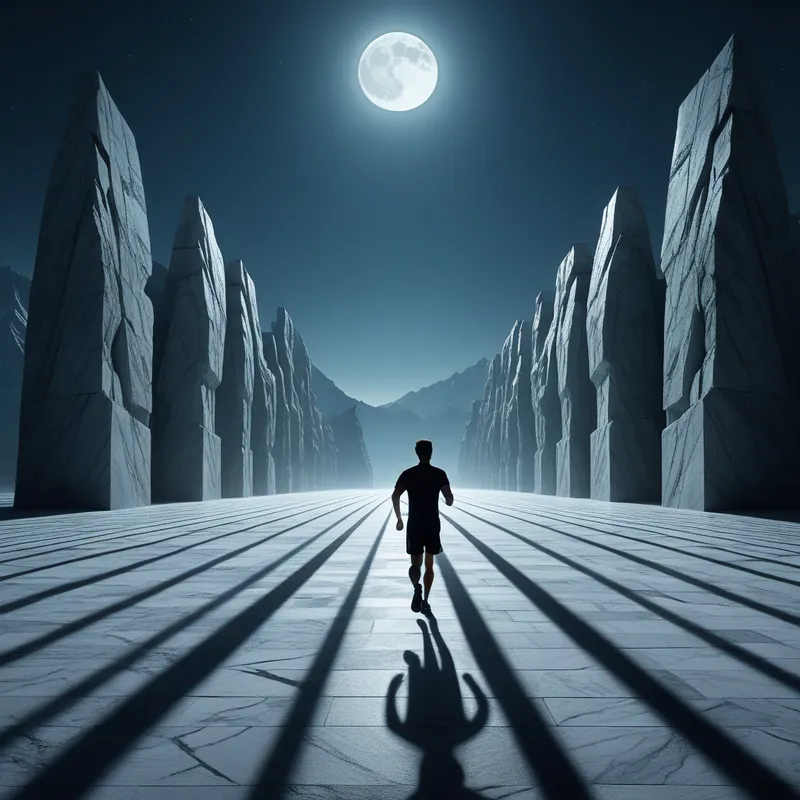
To dream of the ancient Olympic Games is to dream of a profound inner trial. The dreamer may find themselves on a starting line, feeling both the exhilarating freedom of the stadium and the crushing weight of expectation. The somatic feeling is often one of potent, coiled energy—the body ready to burst into motion, yet held in a tense, sacred pause.
Psychologically, this dream emerges when the [psyche](/myths/psyche “Myth from Greek culture.”/) is attempting to ritualize and contain a destructive internal conflict. Perhaps warring impulses—ambition versus ethics, passion versus reason—are causing inner civil war. The dream presents the stadium as a container, a sanctioned space where these forces can “compete” in a structured, non-destructive way. The dream may end before the race is finished, indicating the process is ongoing. Or, the dreamer may receive a crown of light or leaves, symbolizing the nascent integration of these powerful, opposing drives into a new, more excellent whole.
Alchemical Translation
The alchemical journey mirrored in the Olympic myth is the individuation process. The initial state is the [nigredo](/myths/nigredo “Myth from Alchemical culture.”/): the murky, conflict-ridden state of the kingdom of Elis, where potentials are wasted in petty strife. Heracles, [the ego](/myths/the-ego “Myth from Jungian culture.”/)-consciousness allied with [the Self](/myths/the-self “Myth from Jungian culture.”/) (Zeus), imposes a sacred order—the albedo, or whitening. He creates [the vessel](/myths/the-vessel “Myth from Alchemical culture.”/) (the stadium, the rules, the truce).
The athlete undergoes the rubedo, the reddening: the fierce, fiery heat of competition is not destruction, but the necessary ordeal that transmutes base physical effort into the gold of immortal achievement.
The modern individual engages in this same alchemy. We are all Heracles, tasked with creating a sacred space in our lives—a practice, a discipline, a therapy—where our inner conflicts can be consciously engaged, not acted out. We are also the athlete, submitting ourselves to the ordeal of that practice. The “victory” is not over others, but the moment of integration, where a fragment of our potential is fully realized and offered up. The olive crown is the symbol of this psychic achievement: perishable in the material world, but eternal in the realm of meaning. It represents the Self’s recognition of the ego’s striving toward wholeness. The Games, therefore, are an eternal metaphor for the human condition: we are here to contend, beautifully and ruthlessly, not for dominion, but for the fleeting, perfect moment where we become a living bridge between earth and Olympus.
Associated Symbols
Explore related symbols from the CaleaDream lexicon: