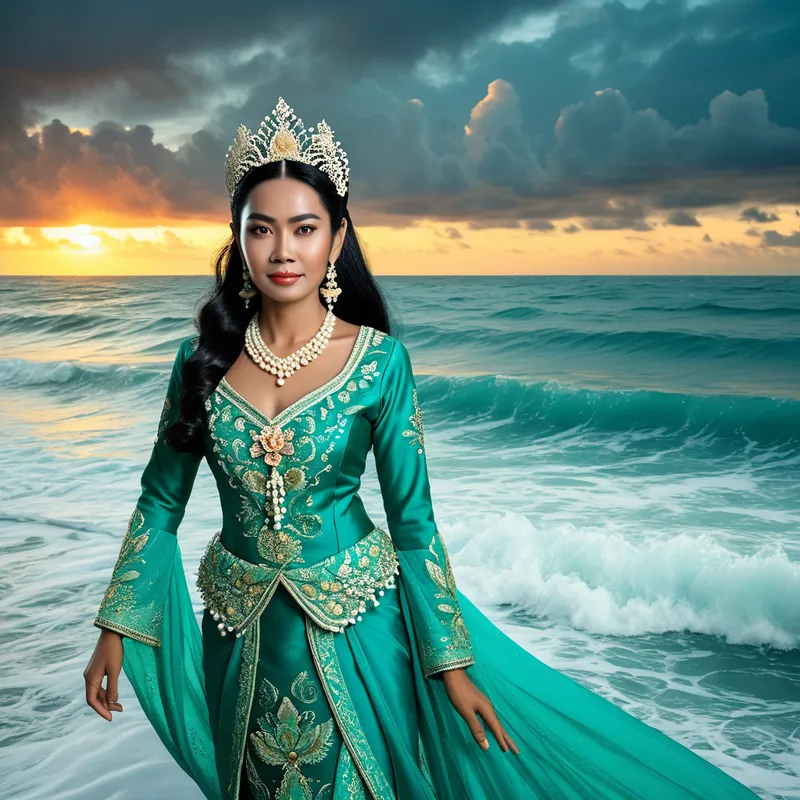
Nyai Roro Kidul Myth Meaning & Symbolism
The myth of the exiled princess who becomes the powerful, dangerous, and revered Queen of the Southern Sea, guardian of the liminal space between land and ocean.
The Tale of Nyai Roro Kidul
Listen, and let the salt-wind carry you to the shores of Java. Here, where the land ends in cliffs of stubborn rock and the Southern Sea begins its endless, hungry roar, a story is woven into the very fabric of the waves. It is the story of a princess, but not one of gentle courts and silken cushions. This is a tale of exile, transformation, and a sovereignty born from profound rupture.
Her name was Nyai Roro Kidul. Once, she walked in the sunlit world as a maiden of breathtaking beauty, a daughter of a kingdom. But beauty is a dangerous gift. Some say a jealous stepmother cursed her with a vile skin disease. Others whisper of a divine destiny too vast for a mortal court. The truth known to [the wind](/myths/the-wind “Myth from Various culture.”/) and the waves is this: she was cast out. Banished from the human realm, she wandered in anguish, her spirit as raw as her afflicted skin.
Driven by a sorrow that hollowed the mountains, she journeyed south, ever south, to where [the world](/myths/the-world “Myth from Tarot culture.”/) frayed at its edges. The jungle gave way to stark cliff, and before her lay the immense, grey-green expanse of the ocean, heaving with a primordial breath. In that moment, at the ultimate threshold, a choice crystallized from her despair. Not a surrender, but a terrible, magnificent offering. She did not fall. She leapt. She gave her broken human form to [the abyss](/myths/the-abyss “Myth from Kabbalistic culture.”/), a final sacrifice to all she had lost.
[The sea](/myths/the-sea “Myth from Greek culture.”/) did not consume her. It transmuted her. The waters, cold and deep, washed away not her life, but her mortal suffering. Her skin disease sloughed off like an old shell, and from the depths she arose, reborn. No longer a sickly princess, but a queen. Her hair became the long, dark kelp forests. Her gown, the shifting hues of the sea itself—most often a profound, hypnotic green. The very waves bowed to her will. The dedemit and spirits of the deep acknowledged her sovereignty. She became Nyai Roro Kidul, Ratu Laut Selatan, the absolute and eternal ruler of the Southern Ocean.
To this day, she reigns. Fishermen and sultans alike pay her homage. Men who wear green on her shores may be swept away as her consorts. She is the tempest that sinks ships and the inexplicable calm that saves them. She is the whisper in the shell, the pull of the undertow, the keeper of all that is lost beneath the waves. Her court is of [pearl](/myths/pearl “Myth from Chinese culture.”/) and bone, her law is the tide, and her love is as perilous and deep as the ocean trench.

Cultural Origins & Context
The myth of Nyai Roro Kidul is not a fossilized story from a dead past; it is a living, breathing presence in Javanese and wider Indonesian cosmology. Her origins are syncretic, woven from pre-Islamic animist beliefs that venerated powerful nature spirits, later layered with Hindu-Buddhist concepts of deity kingship, and finally contextualized within an Islamic worldview. She is a danhyang of the highest order, a genie loci of an entire ocean.
The myth was and is transmitted orally through folk tales, court chronicles (babad), and the sacred teachings of kejawen practitioners. The Kratons of Central Java maintain a formal, ritual relationship with her, claiming her as a spiritual consort and protector of the kingdom. This institutionalizes the myth, grounding it in political and spiritual authority.
Societally, her function is multifaceted. She is an explanation for the very real and deadly caprice of the Southern Sea. She is a moral reminder of the consequences of hubris and the need for respect when entering powerful natural domains. Most importantly, she embodies the Javanese philosophical concept of balance (keseimbangan). She is the necessary, powerful, and often terrifying counterpart to the ordered, cultivated world of the land. You cannot have one without acknowledging the other.
Symbolic Architecture
Psychologically, Nyai Roro Kidul is a monumental [archetype](/symbols/archetype “Symbol: A universal, primordial pattern or prototype in the collective unconscious that shapes human experience, behavior, and creative expression.”/) of the [anima](/symbols/anima “Symbol: The feminine archetype within the male unconscious, representing soul, creativity, and connection to the inner world.”/) in its most sovereign and transpersonal form. She is not the personal [soul](/symbols/soul “Symbol: The soul represents the essence of a person, encompassing their spirit, identity, and connection to the universe.”/)-[image](/symbols/image “Symbol: An image represents perception, memories, and the visual narratives we create in our minds.”/) of an individual, but the [anima](/symbols/anima “Symbol: The feminine archetype within the male unconscious, representing soul, creativity, and connection to the inner world.”/) of the world itself—the [soul](/symbols/soul “Symbol: The soul represents the essence of a person, encompassing their spirit, identity, and connection to the universe.”/) of the deep, unconscious [psyche](/myths/psyche “Myth from Greek culture.”/).
Her [exile](/symbols/exile “Symbol: Forced separation from one’s homeland or community, representing loss of belonging, punishment, or profound isolation.”/) represents the banishment of the wild, untamed, emotionally potent, and instinctual feminine from the conscious “[kingdom](/symbols/kingdom “Symbol: A kingdom symbolizes authority, belonging, and a sense of identity within a larger context or community.”/)” of [the ego](/myths/the-ego “Myth from Jungian culture.”/). The “[skin](/symbols/skin “Symbol: Skin symbolizes the boundary between the self and the world, representing identity, protection, and vulnerability.”/) [disease](/symbols/disease “Symbol: Disease represents turmoil, issues of control, or unresolved personal conflicts manifesting as physical or emotional suffering.”/)” symbolizes how this vital part of the psyche is perceived by the conscious mind: as something ugly, shameful, and in need of eradication. The leap into the sea is the critical act of descent. It is [the ego](/myths/the-ego “Myth from Jungian culture.”/)‘s surrender, allowing the banished content to fall into the unconscious, not to be destroyed, but to undergo a sea-change.
The cure for the wound of exile is not a return, but a radical transformation into the very substance of the exile itself.
Her [rebirth](/symbols/rebirth “Symbol: A profound transformation where old aspects of self or life die, making way for new beginnings, growth, and renewal.”/) as [Queen](/symbols/queen “Symbol: A queen represents authority, power, nurturing, and femininity, often embodying leadership and responsibility.”/) signifies the establishment of a new, autonomous psychic [authority](/symbols/authority “Symbol: A symbol representing power structures, rules, and control, often reflecting one’s relationship with societal or personal governance.”/). She becomes the ruler of all that is hidden, emotional, mysterious, and creative. The green of her [robe](/symbols/robe “Symbol: A robe often represents comfort, authority, or a transition in one’s life, symbolizing the roles we play or the comfort of solitude.”/) is the color of [life](/symbols/life “Symbol: The symbol of ‘Life’ represents a journey of growth, interconnectedness, and existential meaning, encompassing both the joys and challenges that define human experience.”/), of [depth](/symbols/depth “Symbol: Represents profound layers of consciousness, hidden truths, or the unknown aspects of existence, often symbolizing introspection and existential exploration.”/), of the unfathomable. Her dual [nature](/symbols/nature “Symbol: Nature symbolizes growth, connectivity, and the primal forces of existence.”/)—benevolent protector and deadly seductress—mirrors the dual face of the unconscious: it is the [source](/symbols/source “Symbol: The origin point of something, often representing beginnings, nourishment, or the fundamental cause behind phenomena.”/) of nourishing inspiration and terrifying psychosis. To engage with her is to engage with ultimate creative-destructive power.
The Dreamer’s Resonance
When the pattern of Nyai Roro Kidul stirs in modern dreams, it signals a profound encounter with what psychologist James Hillman called the “imaginal.” This is not mere fantasy, but the psyche presenting itself in its own native, mythic language.
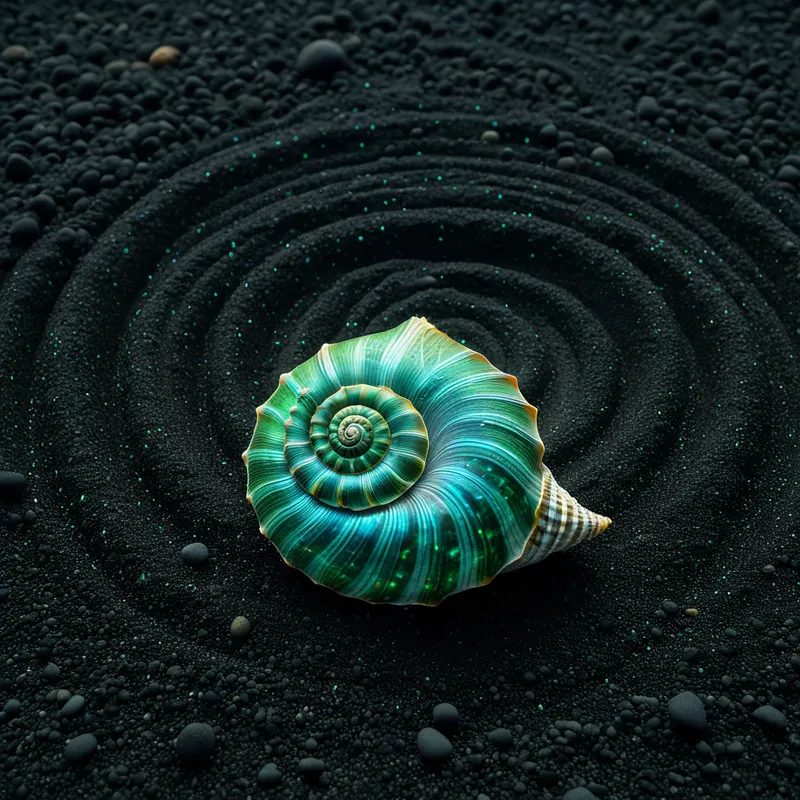
A dreamer might find themselves on a stormy beach, drawn to a figure in green just beyond the breakers. They may dream of a room flooding with seawater, or of finding a beautiful but ominous seashell that whispers. The somatic feeling is often one of both awe and dread—a thrilling pull mixed with the instinct to flee. This is the body registering the approach of the numinous, the “wholly other.”
Psychologically, this dream pattern marks a threshold. The dreamer is being called to acknowledge a powerful, autonomous complex within their own psyche that has been exiled—perhaps a deep creativity, a raw emotional capacity, or a formidable will. The dream is an invitation, or a demand, to cease trying to “cure” this part from the standpoint of the ego, and instead to consider what it might become if given its own rightful, albeit terrifying, domain. It is the psyche preparing for a transfer of sovereignty.
Alchemical Translation
The alchemical journey modeled by Nyai Roro Kidul is not one of heroic conquest, but of sacred abdication and reconstitution. For the modern individual seeking wholeness (individuation), her myth outlines a precise, if perilous, operation.
First, Recognize the Exile ([Nigredo](/myths/nigredo “Myth from Alchemical culture.”/)): One must confront what has been cast out of their conscious life—the “skin disease” of rejected emotion, denied power, or vilified intuition. This is the dark, chaotic beginning.
Second, The Leap of Dissolution ([Solutio](/myths/solutio “Myth from Alchemical culture.”/)): This is the critical, voluntary surrender. It is allowing the rigid structures of the ego-identity to be dissolved in the waters of the unconscious. It feels like a death, a loss of control, a drowning in feeling or fantasy.
Individuation requires not just exploring the unconscious, but granting it a throne.
Third, Sea-Change & Coronation (Albedo & [Rubedo](/myths/rubedo “Myth from Alchemical culture.”/)): In the depths, a mysterious reconstitution occurs. The exiled element is not brought back as it was; it is transformed into a ruling principle. The personal pain becomes transpersonal authority. The individual does not “master” their unconscious, but rather, a new, more complete psyche is born where the conscious “I” learns to respectfully co-exist with the internal “Queen.” She rules her domain; you rule yours. A dialogue is established.
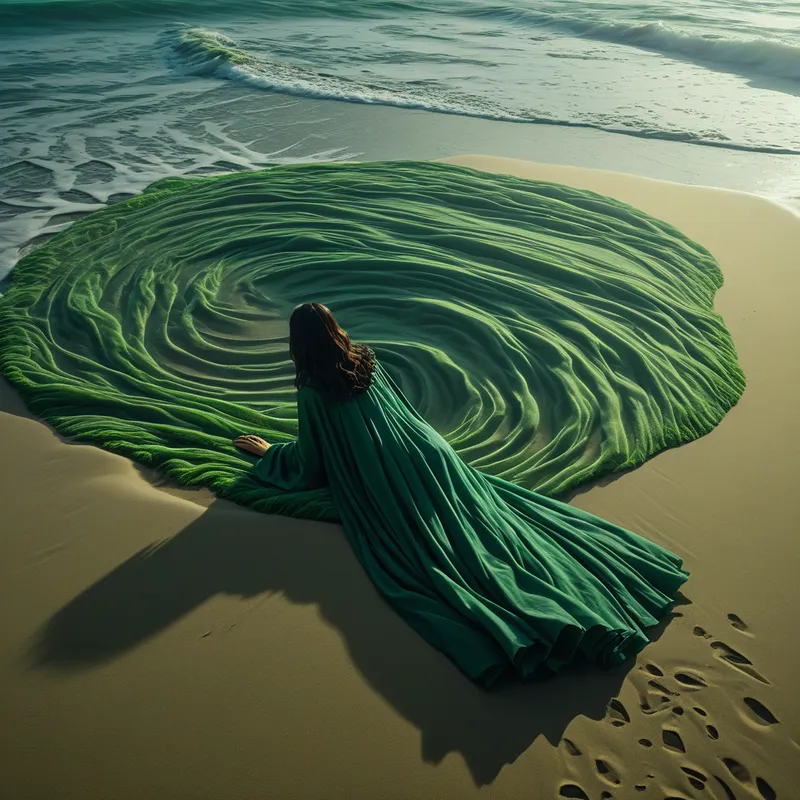
The final stage is Living the Accord: This is the ongoing practice of paying homage—through creativity, through respect for dreams and moods, through acknowledging the deep, non-rational forces that move within and through us. It is knowing when to wear green (to engage deeply) and when to avoid it (to maintain necessary ego boundaries). It is the lifelong navigation of the shore where the known self meets the infinite, creative, and dangerous mystery of the soul.
Associated Symbols
Explore related symbols from the CaleaDream lexicon: