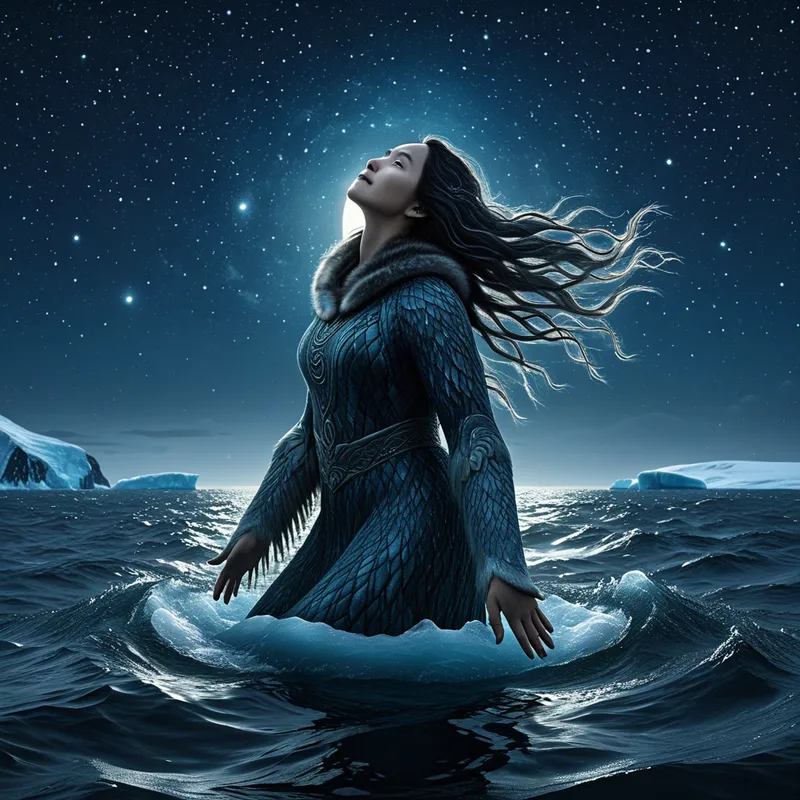
Nunavummiut Creation Myth Meaning & Symbolism
A myth of primal sacrifice where the goddess Sedna's descent into the ocean depths creates the sea, its creatures, and the fragile covenant between human and nature.
The Tale of Nunavummiut Creation
Listen. In the time before time, when the world was a featureless plain of ice and stone under a sky of endless twilight, there was a girl. She was known by many names, but let us call her Sedna. She lived with her father, a great hunter, in a lonely snow-house by the shore of a sea that was not yet a sea, but a void of dark, restless water.
Sedna grew into a woman of such beauty and spirit that suitors came from across the land. But she refused them all, for her heart was proud and her will was her own. This angered the spirits of the air and the deep. One day, a fulmar, a seabird in the form of a handsome man, flew to her. He sang promises of a warm house of skins, of endless food, of a life of ease in a land across the waters. Sedna, weary of her father’s demands and the harshness of the shore, was beguiled. She climbed into his kayak and they vanished into the mist.
But the promise was a lie. The land across the water was a barren rock, the house a wretched nest of sticks and fishbones. The fulmar-man shed his glamour, revealing his true nature: a selfish, squawking creature. Sedna was a prisoner. She sat on the cold stones, her heart filling with a grief as deep as the ocean trench, and she sang a song of longing for her father’s home.
Her song carried on the wind, across the vast, grey water. Her father, who had mourned her, heard its echo. Guilt and love stirred him. He harnessed his dogs, launched his strongest umiak, and braved the treacherous currents. When he found her on that desolate shore, he saw her despair. Without a word, he helped her into the boat and they fled, paddling with silent, frantic strength back toward the known world.
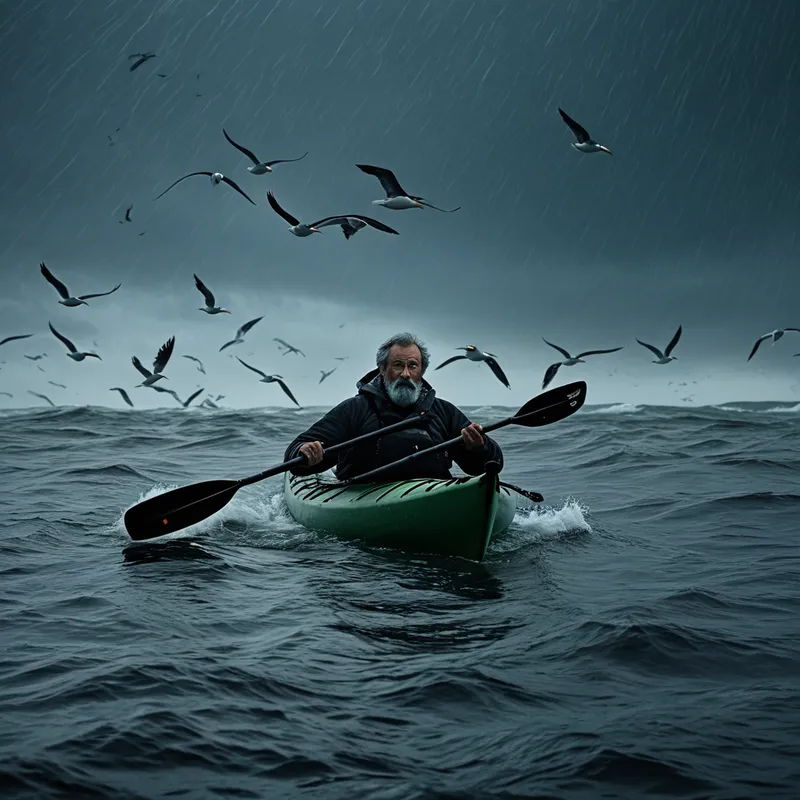
The fulmar discovered their escape. A great rage filled him and all his kind. He summoned a storm. The sky turned black as a raven’s wing. The wind screamed like a thousand angakkuit. The sea, that dark void, awoke. It rose in mountains of water to crush the small boat. As the waves tossed them, the father’s fear overcame his love. He saw the storm as a punishment for stealing the fulmar’s wife. In a moment of primal terror, he made a choice.
He seized Sedna. He lifted her to the gunwale. “The storm is for you!” he cried, and he cast his own daughter into the raging, ice-choked sea.
Sedna grasped the side of the boat, her fingers white with cold and desperation. “Father! Do not abandon me!” she screamed. But the fear in the man’s heart had turned to stone. He took his paddle, a tool meant for navigating life, and he brought it down. Once. Twice. The blows shattered the bones of her fingers.
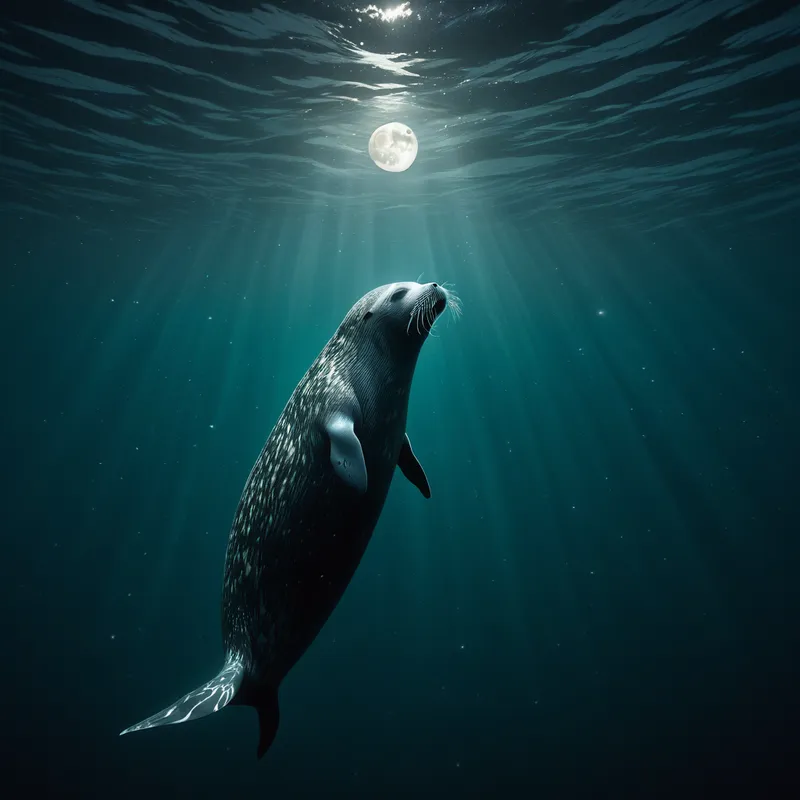
As her severed fingertips touched the hungry water, they did not sink. They transformed. The first became the seals, slick and barking. The next became the walruses, tusked and mighty. Then the great whales, the narwhals, the bearded seals—all the creatures of the sea bubbled forth from her sacrifice, born of her flesh and her pain.
Sedna herself sank, down and down, past the realm of light, past the realm of life, into the black, silent world at the bottom of all things. There, in the deep darkness, she came to rest. Her hair, streaming out in the current, became the forests of kelp. The grief in her heart became the rhythm of the tides. She became Sedna, the one who holds all life in the sea within her. And from that moment, the sea was no longer a void. It was a womb, a larder, a grave, and a goddess—all at once. The world was created.
Cultural Origins & Context
This story, central to the Inuit peoples of Nunavut and beyond, is not a singular, fixed text but a living narrative told by angakkuit (shamans) around the communal qulliq (stone lamp). Its primary function was ontological and ecological: it explained the origin of marine life, the most crucial source of sustenance in the Arctic, and established the sacred, precarious relationship between humanity and nature. The myth was a behavioral compass. It taught that survival depended on respect, ritual, and acknowledging the profound debt owed to the Sedna. When game was scarce, it was said Sedna’s hair was tangled, her anger stirred by human transgressions—broken taboos, disrespect for animals. The angakkuq would then undertake a perilous spirit-journey to the sea floor to comb her hair, appease her, and restore the balance, ensuring the seals would return. The story was thus a map of cosmic order, a guide for ethics, and a practical manual for survival in one of Earth’s most demanding environments.
Symbolic Architecture
The myth is a profound [allegory](/symbols/allegory “Symbol: A narrative device where characters, events, or settings represent abstract ideas or moral qualities, conveying deeper meanings through symbolic storytelling.”/) of creation born from [betrayal](/symbols/betrayal “Symbol: A profound violation of trust in artistic or musical contexts, often representing broken creative partnerships or artistic integrity compromised.”/), [fragmentation](/symbols/fragmentation “Symbol: The experience of breaking apart, losing cohesion, or being separated into pieces. Often represents disintegration of self, relationships, or reality.”/), and ultimate, terrible [integration](/symbols/integration “Symbol: The process of unifying disparate parts of the self or experience into a cohesive whole, often representing psychological wholeness or resolution of internal conflict.”/).
Creation is not an act of will alone, but often a catastrophic rupture that forces a new order into being. The whole world can spring from a single, unforgivable wound.
Sedna begins as the Innocent, then the betrayed [Lover](/symbols/lover “Symbol: A lover in dreams often represents intimacy, connection, and the emotional aspects of relationships.”/), and finally the powerful, wounded [Creator](/symbols/creator “Symbol: A figure representing ultimate origin, divine power, or profound authorship. Often embodies the source of existence, innovation, or personal destiny.”/). Her descent is not a defeat but a necessary fall into the [depths](/symbols/depths “Symbol: Represents the subconscious, hidden emotions, or foundational aspects of the self, often linked to primal fears or profound truths.”/) of the unconscious, the [realm](/symbols/realm “Symbol: The symbol of ‘Realm’ often signifies the boundaries of one’s consciousness, experiences, or emotional states, suggesting aspects of reality that are either explored or ignored.”/) of instinct and the [shadow](/symbols/shadow “Symbol: The ‘shadow’ embodies the unconscious, repressed aspects of the self and often represents fears or hidden emotions.”/). The [father](/symbols/father “Symbol: The father figure in dreams often symbolizes authority, protection, guidance, and the quest for approval or validation.”/) represents the pragmatic, survivalist ego that, in its panic, severs its [connection](/symbols/connection “Symbol: Connection symbolizes relationships, communication, and bonds among individuals.”/) to the [soul](/symbols/soul “Symbol: The soul represents the essence of a person, encompassing their spirit, identity, and connection to the universe.”/) (Sedna) to save itself. This act of betrayal is the central [trauma](/symbols/trauma “Symbol: A deeply distressing or disturbing experience that overwhelms the psyche, often manifesting in dreams as unresolved emotional wounds or psychological injury.”/) from which all creative [life](/symbols/life “Symbol: The symbol of ‘Life’ represents a journey of growth, interconnectedness, and existential meaning, encompassing both the joys and challenges that define human experience.”/) emerges. The severed fingers are the ultimate [symbol](/symbols/symbol “Symbol: A symbol can represent an idea, concept, or belief, serving as a powerful tool for communication and understanding.”/): parts of the self are cut away, sacrificed, and in that very act, they are transmuted into something new, autonomous, and [life](/symbols/life “Symbol: The symbol of ‘Life’ represents a journey of growth, interconnectedness, and existential meaning, encompassing both the joys and challenges that define human experience.”/)-giving. Sedna, at the bottom of the sea, becomes the ultimate integrated being—she is the ecosystem. She is no longer a [human](/symbols/human “Symbol: The symbol of a human represents individuality, complexity of emotions, and social relationships.”/) girl but the [soul](/symbols/soul “Symbol: The soul represents the essence of a person, encompassing their spirit, identity, and connection to the universe.”/) of the world itself, containing both the nurturing [mother](/symbols/mother “Symbol: The symbol of ‘Mother’ represents nurturing, protection, and the foundational aspect of one’s emotional being, often associated with comfort and unconditional love.”/) (provider of [food](/symbols/food “Symbol: Food in dreams often symbolizes nourishment, both physical and emotional, representing the fulfillment of basic needs as well as deeper desires for connection or growth.”/)) and the terrifying, vengeful [aspect](/symbols/aspect “Symbol: A distinct feature, quality, or perspective of something, often representing a partial view of a larger whole.”/) of [nature](/symbols/nature “Symbol: Nature symbolizes growth, connectivity, and the primal forces of existence.”/).
The Dreamer’s Resonance
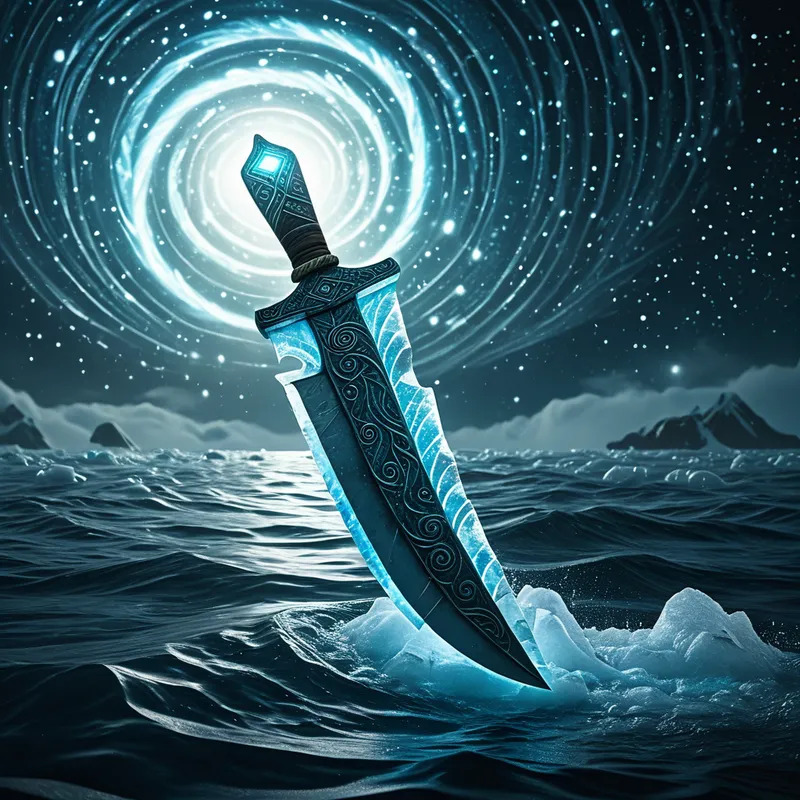
To dream of this myth is to dream of a profound somatic and psychological descent. You may dream of falling into deep, dark water, of having your hands or fingers injured or transformed, or of being betrayed by a parental or authority figure in a moment of crisis. These dreams signal a process of what depth psychology calls enantiodromia—the emergence of the unconscious opposite. The conscious attitude (the father’s flight, the ego’s control) has become too one-sided, too fearful, and is collapsing. The psyche is forcing a confrontation with the deep, instinctual, creative, and wounded feminine aspect (the Sedna complex) that has been cast out.
The somatic feeling is often one of sinking, of cold dread, but also of a strange, pressured fertility. It is the feeling of the soul being pushed into its own depths, where it must confront what it has rejected—its own capacity for rage, its grief, its primal power. The dreamer is being prepared for a creative act or a psychological rebirth that can only come from integrating these severed, sunken parts.
Alchemical Translation
The individuation process mirrored here is the transmutation of trauma into sovereignty. The modern seeker is both Sedna and the father. We are the one who is betrayed by our own survival mechanisms, our own “practical” choices that cut us off from our deep, instinctual nature. And we are also the betrayer, the part that, in fear, hacks away at our own connections to soul, emotion, and the wild self to stay afloat in a storm of modern life.
The alchemical work is not to reverse the blow, but to follow the severed parts into the deep and discover what they have become.
The journey of healing and wholeness is a descent. One must willingly go into that cold, dark, inner ocean—the realm of depression, old grief, buried rage—not to rescue the “innocent girl” but to encounter the powerful, tangled, and sovereign goddess she has become. To “comb Sedna’s hair” is to patiently, ritually, attend to the tangled knots of our own complex history, our traumas and fears, and smooth them into order. This act of care for the wounded creator within restores the flow of life (creativity, vitality, connection) from the depths of the personal and collective unconscious. We stop trying to flee the storm in a fragile boat of ego, and instead learn to breathe in the deep water, discovering that our very wounds have become the source of our most nourishing creations. We become, in our own sphere, the ruler of a newly populated inner world.
Associated Symbols
Explore related symbols from the CaleaDream lexicon:
- Ocean — The primordial unconscious, the womb of all life, and the realm of the submerged goddess Sedna, representing both the source of sustenance and profound, terrifying depth.
- Sacrifice — The central, violent act of severing that paradoxically gives birth to new life, modeling how profound loss or fragmentation can be the necessary precursor to creation.
- Father — Represents the archetypal authority and survival ego whose fear leads to betrayal, forcing a separation from the instinctual self that initiates the transformative journey.
- Daughter — The soul, the instinctual feminine, and the creative potential that is cast out and must descend into the depths to realize its true, sovereign power.
- Transformation — The core process of the myth, where severed human flesh becomes autonomous animal life, and a betrayed girl becomes a foundational goddess.
- Goddess — The ultimate form of Sedna, representing the integrated, powerful, and numinous feminine principle that governs the cycles of life, death, and provision from the unconscious.
- Wound — The literal and psychological injury inflicted by the father, which becomes the sacred site from which all new creation mysteriously springs forth.
- Bird — Embodied by the deceptive fulmar, representing spiritual promises, betrayal, and the stormy, chaotic forces that catalyze the catastrophic creative event.
- Bone — The shattered bones of Sedna’s fingers, symbolizing the essential, structural sacrifice—the breaking of old forms—required for new life to emerge.
- Dream — The angakkuq’s spirit-journey to Sedna’s realm mirrors the modern psychological necessity of descending into the dream-world to commune with and heal our deepest, most creative selves.
- Rebirth — Sedna’s death as a human and resurrection as a goddess models the psychic death of an old identity and the emergence of a more complex, integrated, and powerful self.
- Shadow — The deep ocean floor where Sedna resides is the ultimate symbolic shadow, containing both the repressed trauma and the immense, life-giving power that the conscious ego has cast away.