Nigredo-Albedo-Rubedo Myth Meaning & Symbolism
The soul's journey through the blackening of dissolution, the whitening of purification, and the reddening of sacred union, forging gold from base matter.
The Tale of Nigredo-Albedo-Rubedo
Listen, and I will tell you of the threefold death and the threefold birth. It begins not in light, but in a profound and necessary darkness.
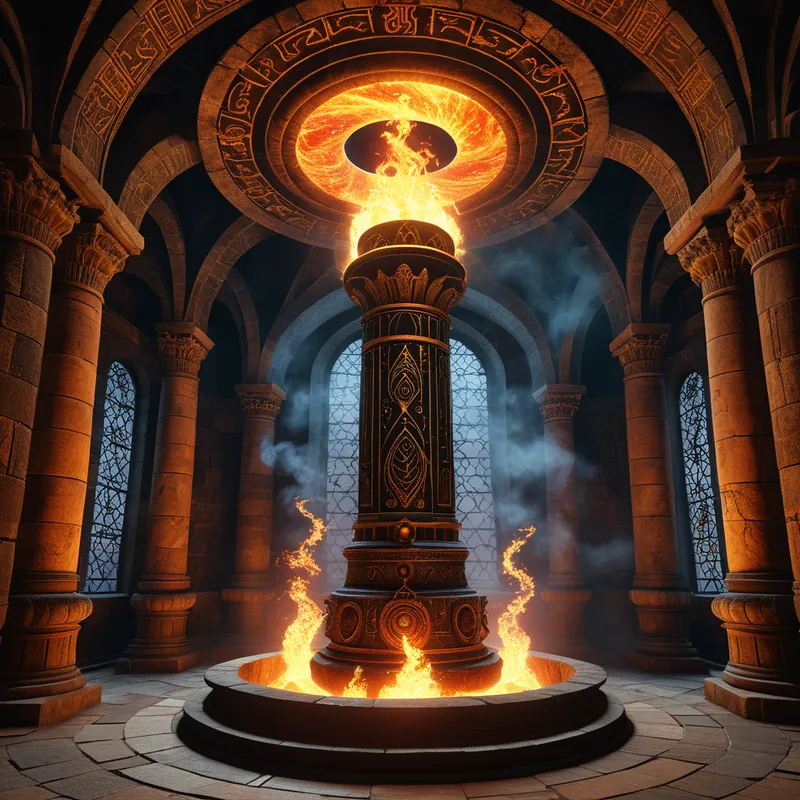
In the beginning, there is the Materia Prima. It is the raw stuff of existence—all potential, all confusion, all weight. The Artifex, driven by a holy longing, gathers this substance into the sealed vessel of their being, the [Hermetic Vessel](/myths/hermetic-vessel “Myth from Alchemical culture.”/). With the application of the secret, inner fire, the work begins. And the first [thing](/myths/thing “Myth from Norse culture.”/) that happens is not creation, but ruin.
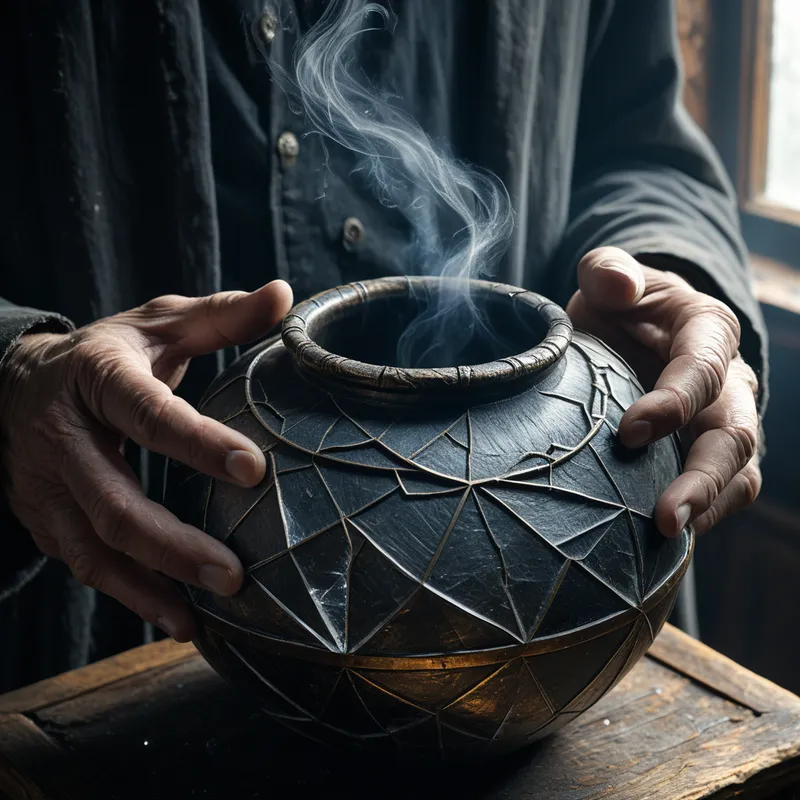
This is the [Nigredo](/myths/nigredo “Myth from Alchemical culture.”/). The once-familiar matter rots. It blackens, putrefies, and dissolves into a chaotic, foul-smelling mass. [The Artifex](/myths/the-artifex “Myth from Alchemical culture.”/) witnesses the death of all they knew. Old identities, certainties, and structures melt into a tar-like despair. The starry sky of the soul is blotted out. In [the vessel](/myths/the-vessel “Myth from Alchemical culture.”/), there is only a swirling, melancholic night, a sol niger—a black sun that gives no light, only the heat of decay. It is the Aqua Permanens eating away at the stone of [the ego](/myths/the-ego “Myth from Jungian culture.”/). [The Artifex](/myths/the-artifex “Myth from Alchemical culture.”/) must endure this, must not break the seal in terror, for this blackness is not an end, but [the womb](/myths/the-womb “Myth from Various culture.”/).
From the absolute saturation of this blackness, a miracle of condensation occurs. A single, pure white vapor begins to rise. This is the dawn of the Albedo. The black mass is washed, not with common [water](/myths/water “Myth from Chinese culture.”/), but with the Ros Gedeonis. The foulness is distilled away, leaving behind a substance of shocking purity—white as the full moon, cold as mountain snow. It is the Luna, crystallized. A profound clarity emerges. The passions of the black stage are calmed; a serene, reflective intelligence shines. The soul feels cleansed, spiritualized, but it is a beautiful, lonely whiteness. It is silver, not yet gold. The union is not complete.
Then, a new fire is kindled. Not the destructive fire of Nigredo, but a gentle, sustained, and ardent heat—the fire of love and fixation. Upon the pure white substance, this fire acts. And slowly, impossibly, a blush appears. A tinge of rose, deepening to crimson, then to a fierce, living scarlet. This is the glorious advent of the [Rubedo](/myths/rubedo “Myth from Alchemical culture.”/). The white Luna and the red Sol embrace in the Hieros Gamos. Their union is not a blending, but a fiery coagulation that births a new, third thing. From the vessel now shines the [Lapis Philosophorum](/myths/lapis-philosophorum “Myth from Alchemical culture.”/)—radiant, incorruptible gold. It is a warmth that heals, a light that understands darkness, a body that is also spirit. The work is complete. The base soul has died and been reborn, not as an angel, but as a true human, whole.
Cultural Origins & Context
The myth of the Three Stages is not a single, codified story from one time or place, but the deep, recurring narrative structure of the Western alchemical tradition, spanning from Hellenistic Egypt through the Islamic [Golden Age](/myths/golden-age “Myth from Universal culture.”/) to the Renaissance and early modern Europe. It was passed down not by bards to a crowd, but in cryptic, illustrated manuscripts—the Mutus Liber or “wordless books”—and in the sealed laboratories of adepts who saw their operations as both a physical craft and a divine mystery.
Its tellers were often anonymous, signing works with pseudonyms like “Basilius Valentinus.” The myth was society’s function for a select few: it was a map for Opus Magnum, a guide for spiritual transformation disguised as a manual for metallurgy. In a culture where direct mystical experience could be heretical, alchemy provided a symbolic, material language—of furnaces, alembics, and dragons—to describe the soul’s journey to God and the cosmos’s journey to perfection. It was a secret science of the soul, preserved in the twilight between church doctrine and emerging empirical thought.
Symbolic Architecture
The myth is a perfect symbolic engine for the process of psychological [death](/symbols/death “Symbol: Symbolizes transformation, endings, and new beginnings; often associated with fear of the unknown.”/) and [rebirth](/symbols/rebirth “Symbol: A profound transformation where old aspects of self or life die, making way for new beginnings, growth, and renewal.”/). It is not [linear](/symbols/linear “Symbol: Represents order, predictability, and a direct, step-by-step progression. It symbolizes a clear path from cause to effect.”/) but helical, a spiral of transformation where each stage contains the seed of the next.
The Nigredo represents the confrontation with the [Shadow](/symbols/shadow “Symbol: The ‘shadow’ embodies the unconscious, repressed aspects of the self and often represents fears or hidden emotions.”/). It is the necessary [dissolution](/symbols/dissolution “Symbol: The process of breaking down, dispersing, or losing form, often representing transformation, release, or the end of a state of being.”/) of the conscious [persona](/symbols/persona “Symbol: The social mask or outward identity one presents to the world, often concealing the true self.”/), the “old [king](/symbols/king “Symbol: A symbol of ultimate authority, leadership, and societal order, often representing the dreamer’s inner power or external control figures.”/)” who must die. All that has been repressed, denied, or left unintegrated—the [grief](/symbols/grief “Symbol: A profound emotional response to loss, often manifesting as deep sorrow, yearning, and a sense of emptiness.”/), rage, [shame](/symbols/shame “Symbol: A painful emotion arising from perceived failure or violation of social norms, often involving exposure of vulnerability or wrongdoing.”/), and [primal chaos](/symbols/primal-chaos “Symbol: The primordial state of formless potential before creation, representing the raw, undifferentiated essence from which all existence emerges.”/)—surfaces. Psychologically, it is a depression, a dark [night](/symbols/night “Symbol: Night often symbolizes the unconscious, mystery, and the unknown, representing the realm of dreams and intuition.”/) of the [soul](/symbols/soul “Symbol: The soul represents the essence of a person, encompassing their spirit, identity, and connection to the universe.”/), where one feels reduced to base, worthless matter.
The gold is hidden in the filth. One must consent to be buried to find the seed.
The [Albedo](/symbols/albedo “Symbol: In alchemy, the whitening stage representing purification, spiritual ascension, and the emergence of consciousness from darkness.”/) symbolizes the [emergence](/symbols/emergence “Symbol: A process of coming into being, rising from obscurity, or breaking through a barrier, often representing birth, transformation, or revelation.”/) of [consciousness](/symbols/consciousness “Symbol: Consciousness represents the state of awareness and perception, encompassing thoughts, feelings, and experiences.”/) from that [chaos](/symbols/chaos “Symbol: In Arts & Music, chaos represents raw creative potential, uncontrolled expression, and the breakdown of order to forge new artistic forms.”/). It is the washing of the [personality](/symbols/personality “Symbol: Personality in dreams often symbolizes the traits and characteristics of the dreamer, reflecting how they perceive themselves and how they believe they are perceived by others.”/) in the waters of [reflection](/symbols/reflection “Symbol: Reflection signifies self-examination, awareness, and the search for truth within oneself.”/) and [insight](/symbols/insight “Symbol: A sudden, deep understanding of a complex situation or truth, often arriving unexpectedly and illuminating hidden connections.”/). The ego, having been broken down, is now reconstituted at a higher level—purified, detached, and spiritualized. This is the stage of [Anima](/symbols/anima “Symbol: The feminine archetype within the male unconscious, representing soul, creativity, and connection to the inner world.”/)/[Animus](/symbols/animus “Symbol: In Jungian psychology, the masculine inner personality in a woman’s unconscious, representing logic, action, and spiritual guidance.”/) development, where the inner other is recognized and refined into a guiding [spirit](/symbols/spirit “Symbol: Spirit symbolizes the essence of life, vitality, and the spiritual journey of the individual.”/) (Luna). It is [clarity](/symbols/clarity “Symbol: A state of mental transparency and sharp focus, often representing resolution of confusion or attainment of insight.”/), but it can be sterile, a spirituality devoid of [earth](/symbols/earth “Symbol: The symbol of Earth often represents grounding, stability, and the physical realm, embodying a connection to nature and the innate support it provides.”/).
The Rubedo is the sacred [marriage](/symbols/marriage “Symbol: Marriage symbolizes commitment, partnership, and the merging of two identities, often reflecting one’s feelings about relationships and social obligations.”/), the Coniunctio Oppositorum. The purified spirit (Albedo) reunites with the redeemed, embodied [passion](/symbols/passion “Symbol: Intense emotional or physical desire, often linked to love, creativity, or purpose. Represents life force and deep engagement.”/) (the transformed [energy](/symbols/energy “Symbol: Energy symbolizes vitality, motivation, and the drive that fuels actions and ambitions.”/) of Nigredo). This creates the Self, symbolized by the gold or the [Stone](/symbols/stone “Symbol: In dreams, a stone often symbolizes strength, stability, and permanence, but it may also represent emotional burdens or obstacles that need to be acknowledged and processed.”/). It is the [birth](/symbols/birth “Symbol: Birth symbolizes new beginnings, transformation, and the potential for growth and development.”/) of a personality that encompasses both darkness and light, [body](/symbols/body “Symbol: The body in dreams often symbolizes the dreamer’s self-identity, personal health, and the relationship they have with their physical existence.”/) and spirit, individual and cosmic. It is wholeness, vitality, and the [capacity](/symbols/capacity “Symbol: A measure of one’s potential, limits, or ability to contain, process, or achieve something, often reflecting self-assessment or external demands.”/) to truly create.
The Dreamer’s Resonance
When this myth stirs in the modern dreamer, it announces a profound somatic and psychological process underway. Dreams of Nigredo are often literally dark: being trapped in mud, tar, or a collapsing mine; witnessing a beloved place rot or decay; finding oneself in a filthy, forgotten basement. The body may feel heavy, leaden. This is the [psyche](/myths/psyche “Myth from Greek culture.”/)‘s initiation of a necessary breakdown, a purging of psychic toxins.
Dreams of the Albedo shift to images of washing in clear, cold water or rain; finding a pristine white stone, feather, or animal (a swan, a dove); ascending to a high, quiet place like a mountain peak or a white room. There is a sense of relief, clarity, and often solitude. The body dream may feel light, cool, detached.
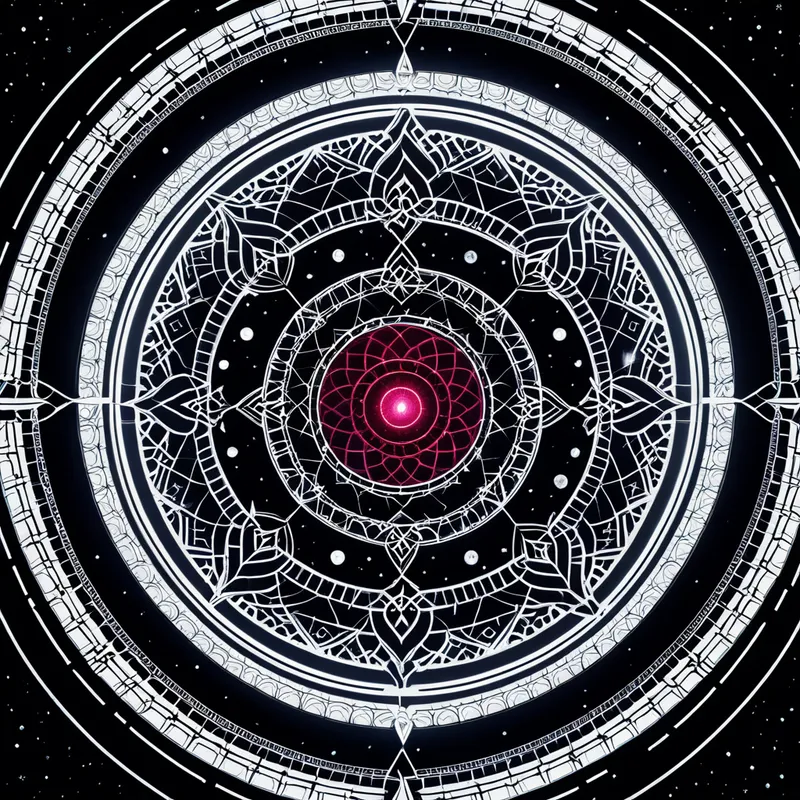
The approach of Rubedo in dreams is signaled by the union of opposites: a marriage of a golden and silver figure, the birth of a radiant child, the discovery of a ruby or a living, pulsing crystal of gold. There may be images of a harmonious, fertile garden, or a [mandala](/myths/mandala “Myth from Buddhist culture.”/) of integrated colors. The somatic sense is of warm, flowing energy, a feeling of embodied completeness and potent creativity.

Alchemical Translation
For the modern individual, this myth is a non-dogmatic model of individuation. It teaches that transformation is not self-improvement, but a series of courageous destructions and rebirths.
The first lesson is the necessity of the Nigredo. Our culture flees darkness, pathologizing depression and chaos. Alchemy sanctifies it. To become whole, one must first consent to fall apart, to let the false self be dissolved by the heat of life’s crises and inner turmoil. This is the “work in the dark.”
The second lesson is that purification (Albedo) follows dissolution, but is not the goal. We can get spiritually “stuck in the white,” mistaking purity for completion. This is the spiritual bypass, the intellect that flees the mess of the body and emotions. The myth insists the white must be fertilized.
The final stage is not transcendence, but immanence—the spirit made flesh, the divine incarnate in a fully human life.
The ultimate translation is in the Rubedo. It models the creation of a “living stone”—a personality that is resilient, valuable (gold), and generative. It is the ability to hold paradox, to contain one’s own darkness without being consumed by it, and to project one’s unique, creative spirit into [the world](/myths/the-world “Myth from Tarot culture.”/). The Lapis is not kept in a vault; it is the elixir that heals the bearer and, by extension, [the world](/myths/the-world “Myth from Tarot culture.”/) around them. The myth of Nigredo-Albedo-Rubedo thus becomes an inner compass, guiding us through the inevitable deaths and rebirths toward becoming not perfect, but profoundly, authentically whole.
Associated Symbols
Explore related symbols from the CaleaDream lexicon: