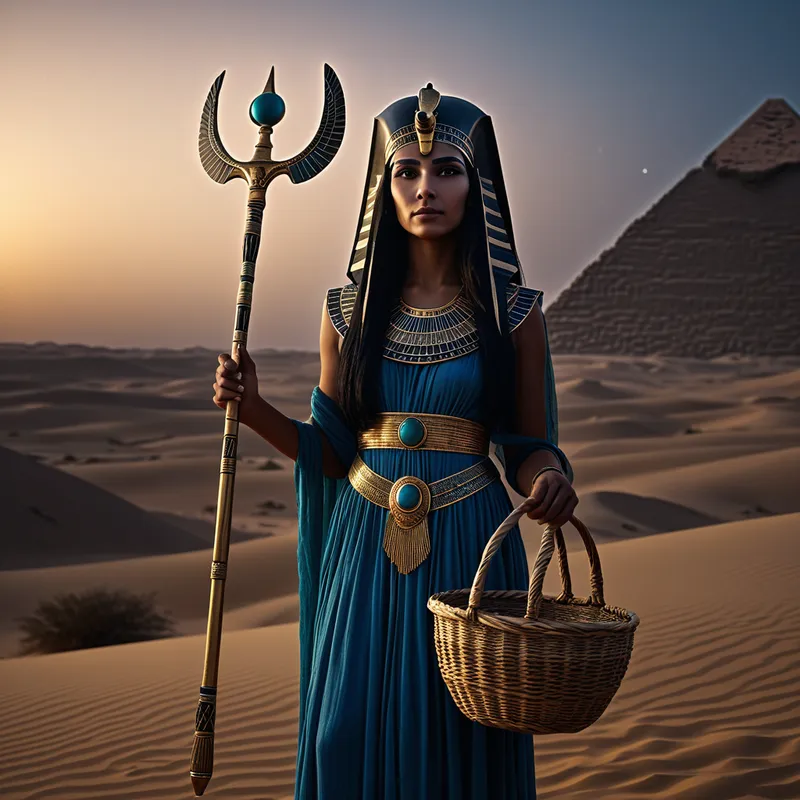
Nephthys Myth Meaning & Symbolism
A goddess of twilight and mourning, Nephthys embodies the protective power of the unseen, the sacred role of grief, and the alchemy of the shadow.
The Tale of Nephthys
Let us speak of the one who walks the edge of light, the lady of the house whose walls are the horizon itself. In the time when the gods walked with the sun caught in their hair, there was a sister born of the sky and the earth. She was Nut, and she was Geb, and from their union came four who would shape the world: Osiris, the green and growing king; Isis, the brilliant and cunning; Set, the red and roaring force; and Nephthys, the twilight one.
While Isis shone with the moon’s silver certainty, Nephthys was the dimming of the day, the hushed breath before nightfall. She was given to Set as his wife, a union of complementary shadows, but her heart dwelt in a different chamber. She saw the luminous order of Osiris, the life he brought to the black soil, and a deep, unspoken sorrow took root within her—a sorrow for a harmony she could not grasp in her own domain.
When the chaos in Set’s heart festered into a plot of murder and usurpation, it was Nephthys, the lady of the unseen, who witnessed. She could not stop the terrible deed, the sealing of the coffin, the casting of the divine king into the Nile’s cold embrace. But in the devastating silence that followed, her power awoke. While Isis wailed her public lament, Nephthys became the shadow of that grief. She joined her sister, and together their cries became the first sacred music of mourning, a sound so potent it could stir the dead.
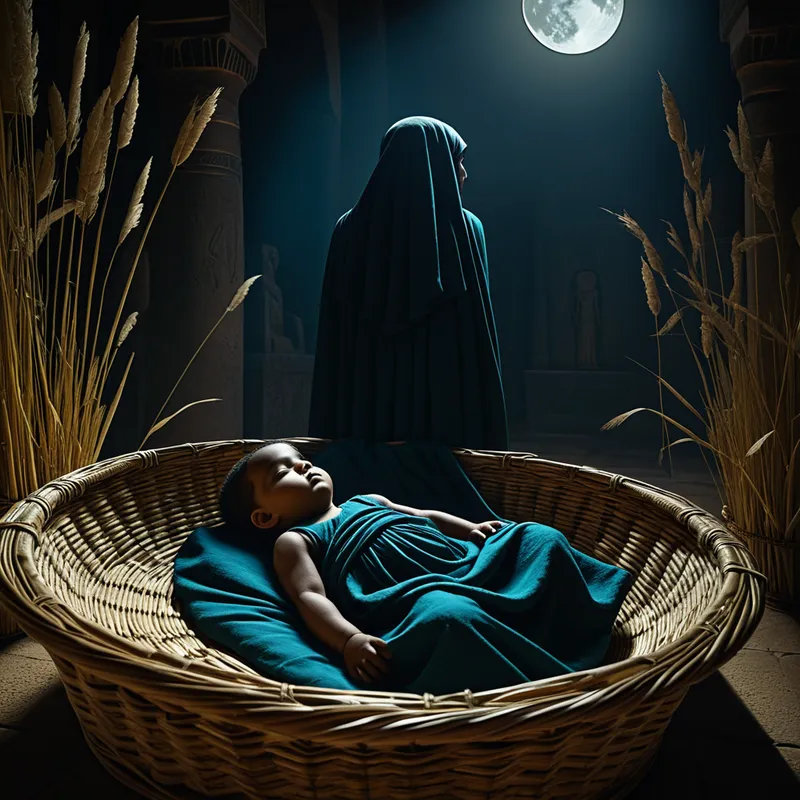
Yet her true act was one of hidden creation. In secret, she took the form of Isis, and from the lost Osiris, she conceived a child—Anubis. Fearing Set’s wrath, she abandoned the infant in the reeds, where he was found and raised by Isis herself, the first act of mercy between the sisters of light and dusk.
And when Isis fled into the marshes of the Delta, hiding the infant Horus</abthys, it was Nephthys who followed. Not as a shining savior, but as a sentinel of the periphery. She was the rustle in the papyrus thicket that warned of danger, the cool breath that soothed the child’s fever, the unseen shield against the scorpion’s sting. She protected the future king from the shadows, using the very substance of her nature—obscurity, silence, the overlooked corner—as a fortress.
In the final, cosmic battle between Horus and Set, she stood not with her husband, but as a mourner for the balance shattered. And when the divine tribunal restored order, Nephthys did not ascend to a bright throne. She took her eternal place at the stern of the Solar Barque of Ra, guarding the sun god himself through the darkest hours of the Duat. Her lament became a protective hymn, her grief alchemized into a vigilance that allows the sun to be reborn each dawn. She is the necessary night that makes the day sacred.
Cultural Origins & Context
The figure of Nephthys emerges from the oldest layers of Egyptian theology, integral to the Ennead of Heliopolis. Unlike the major cult deities with vast temples and priesthoods, Nephthys rarely received sole worship. Her power was embedded in relationship and function. She was invoked in funerary rites and magical spells, her name a whisper on tomb walls and coffin texts.
Her stories were not grand epics recited in sun-drenched courtyards, but essential knowledge passed down by the Kites, the professional mourners who embodied her and Isis in their performances. Through their ululations and torn garments, the myth was made physically present, teaching that grief was not a private failure but a sacred, world-sustaining act. She was the goddess of the transition itself—from day to night, from life to death, from chaos to a fragile, guarded order. Her societal function was to validate and sanctify the liminal, the painful, and the unseen processes that uphold civilization.
Symbolic Architecture
Nephthys is the archetype of the necessary shadow. She represents all that is complementary yet opposite, supportive yet distinct, mournful yet fiercely protective. Her symbolism is an architecture of paradox.
She is the vessel that holds the emptiness, making space for the new. Her mourning is not an end, but a womb.
Her headdress, the hieroglyphs for "house" (Nebet) and "basket" (Het), does not signify domesticity, but the container. She is the house for the spirit of the dead, the basket that cradles the hidden child, the twilight sky that holds the first star. She symbolizes the psychic capacity to hold suffering, loss, and the unintegrated parts of the self without being destroyed by them.
Her union with Set and her loyalty to Isis embody the reconciliation of opposites within the psyche. She is married to chaos but gives birth to the guide of souls (Anubis). She is the darkness that protects the light (Horus). She teaches that the so-called "negative" aspects—grief, obscurity, passivity—are not enemies to be conquered, but essential guardians of the transformative process.
The Dreamer's Resonance
When the pattern of Nephthys stirs in the modern dreamscape, it often signals a profound encounter with the protective shadow. One may dream of a silent, comforting presence in a moment of despair, a forgotten room in a house that contains something precious, or of guarding a vulnerable child or animal from an unseen threat.
Somatically, this can feel like a deep, melancholic tenderness, a weight in the chest that is not quite anxiety, but a solemn fullness. Psychologically, it is the process of acknowledging a grief one has been carrying—not just for a person, but for a lost possibility, a neglected talent, or a forsaken aspect of one's own innocence. The Nephthys process is the ego learning to stop fleeing its own dusk, to sit in the twilight of an ending, and discover that this very act creates an inner sanctuary. The dreamer is being initiated into the sacred duty of holding space for their own wounds, thereby transforming them from sources of shame into sources of hidden strength.

Alchemical Translation
The individuation journey modeled by Nephthys is the alchemy of grief into guardianship. It is not the heroic journey of slaying dragons in daylight, but the nocturnal work of befriending the shadows that dwell within our own palace.
The first stage is Coniunctio in Shadow: acknowledging the forced or painful unions in our life (like Nephthys with Set)—the jobs, relationships, or internal contracts born of obligation or fear. We must consciously dwell in this discomfort.
The second is the Secret Conception: From this acknowledged shadow-union, something new and valuable is conceived in secret. This is Anubis—the nascent ability to guide and process our own psychic "dead," our endings and traumas. It feels illegitimate, something to be hidden.
The third is the Vigil in the Marshes: This is the long, patient, and often lonely work of protecting the nascent, vulnerable Self (the Horus-child) as it develops. It requires using our obscurity, our quiet, our marginality as a protective cloak, shielding our growth from the inner critic (the raging Set) and the harsh judgments of the outer world.
The final transmutation is Becoming the Stern-Guardian: The integrated self does not eradicate grief or shadow. Instead, like Nephthys on the Solar Barque, it takes its place at the helm of the daily journey, using the wisdom of sorrow and the strength of the unseen to protect the very process of life and consciousness. The mourner becomes the guardian; the wound becomes the witness. The individual learns that to truly care for the emerging self, one must first become the sacred keeper of its every dusk.
Associated Symbols
Explore related symbols from the CaleaDream lexicon: