
Nephele Myth Meaning & Symbolism
A cloud shaped by Zeus into a woman, Nephele is a phantom bride, a mother of heroes, and a symbol of the soul's intangible essence.
The Tale of Nephele
Hear now a tale not of stone or blood, but of mist and intention. In the high, clear air where Zeus shapes the world with a thought, a problem took form. A king, Ixion, had dared to lust after Hera herself. For such cosmic arrogance, a punishment was needed, but also a test—a trap woven from the very sky.
So Zeus reached into the vault of heaven and gathered a handful of cloud—nephele—the kind that rides the mountain winds at dusk, tinged with the last light of the sun. With the breath of creation, he shaped it: not a mere phantom, but a perfect, breathing likeness of the goddess-queen. This was Nephele, the cloud-woman, a being of radiant vapor and divine artifice. She was given to Ixion, and in his blinded passion, he embraced the illusion, fathering upon her a son, Centauros, the strange progenitor of the race of Centaurs. Her first purpose served, the cloud-form might have simply dissipated back into the blue.
But stories have a gravity of their own. Nephele was given again, this time in true marriage to the mortal king Athamas. In his halls, she became more than a phantom; she became a mother. To her were born two children: Phrixus and Helle. For a time, there was the semblance of a life, a family anchored by her ephemeral presence.
Yet the wind shifts. Athamas’s heart turned, as mortal hearts do, toward a new queen, Ino. The mortal woman, fierce and jealous, saw the cloud-woman and her children as obstacles to be burned away by the sun of her own ambition. She plotted a famine, bribed an oracle, and demanded the sacrifice of Phrixus upon the altar to appease the angry gods.
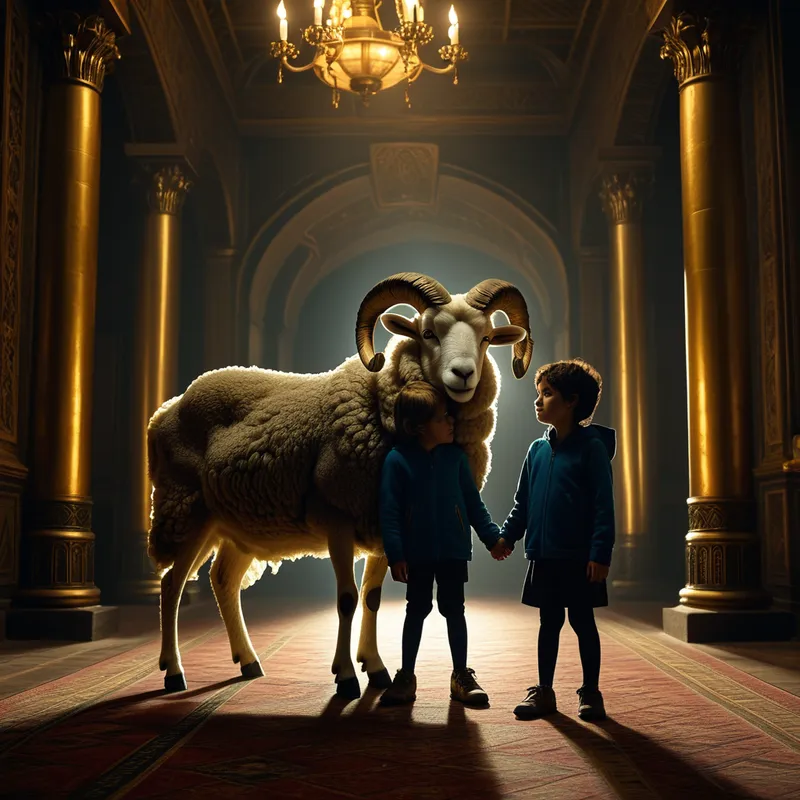
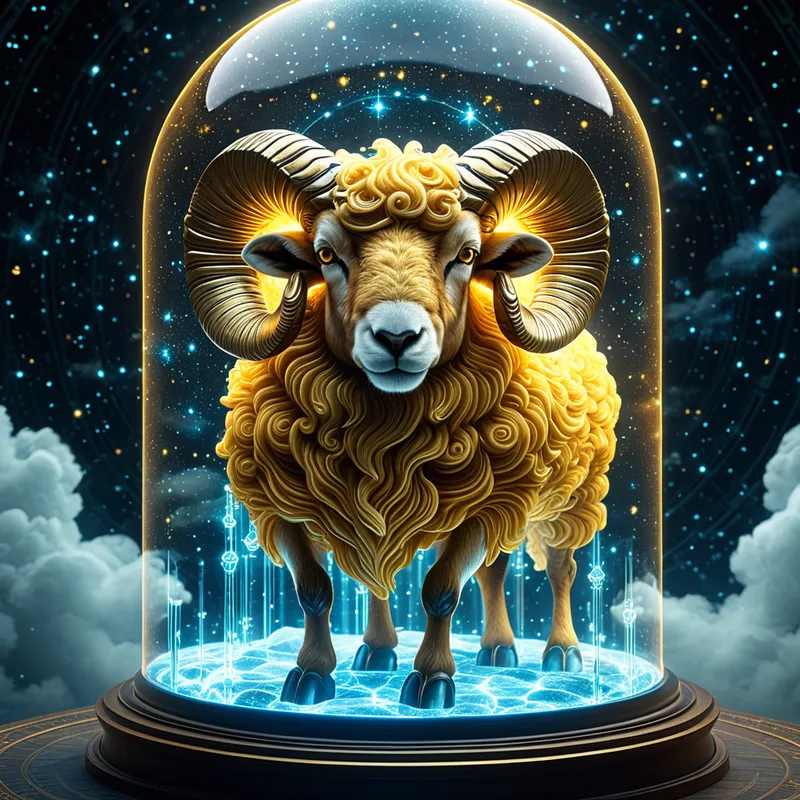
On the day of the sacrifice, as the knife was raised, a desperate cry echoed not from a mortal throat, but from the very atmosphere. Their mother, Nephele, intervened. From the heavens, she sent a miraculous beast: a ram with a fleece of shimmering, living gold. It struck like a bolt of salvation, placing itself between the children and the blade. “Climb!” the wind seemed to whisper. Phrixus and Helle scrambled onto its back, and with a great leap, the golden ram took to the sky, carrying them eastward across the sea.
But the tragedy of the intermediate is its fragility. As they flew over the narrow strait, Helle, looking down at the dizzying waves below, lost her grip. She fell, giving her name forever to those waters—the Hellespont. Phrixus alone was carried to the far-off land of Colchis, where he sacrificed the ram in gratitude. Its golden fleece was hung in a sacred grove, guarded by a dragon, becoming a beacon for future heroes and a testament to a mother’s last, gaseous act of love. And Nephele? Having poured her substance into that final rescue, she dissolved, her story complete, her form returning to the endless, silent sky from whence she came.
Cultural Origins & Context
The story of Nephele reaches us primarily through the fragmented lenses of later mythographers and poets, such as Hesiod and Apollonius of Rhodes. She is a figure of the “old stories,” belonging to the foundational, often brutal, mythic layer that precedes the Olympian order’s firm establishment. Her tale was not the center of a cult or a major epic, but a crucial strand in a wider web—connecting the hubris of Ixion, the origin of the Centaurs, and the pre-history of the great quest for the Golden Fleece.
Functionally, her myth operates on several cultural levels. It is an aetiological story, explaining the origins of the Centaurs and the name of the Hellespont. More profoundly, it explores the Greek fascination with the boundaries of reality: what constitutes a real person? Is a divinely crafted illusion, capable of bearing children and profound emotion, any less real than a being born of earth? She embodies the peril and promise of divine intervention—a solution that itself becomes a source of new, complex tragedy. Told in symposia and by hearths, her story served as a caution about the dangers of overreaching (Ixion), the chaos of jealousy (Ino), and the poignant, unstable nature of blessings that come from the clouds.
Symbolic Architecture
Nephele is the archetype of the Created Self. She is identity fashioned from outside, a soul given form for a purpose not her own. She symbolizes the ego in its earliest, most impressionable state—a self shaped by parental or societal expectations (Zeus’s design), experienced as authentic until the moment of existential crisis.
She is the dream of who you are supposed to be, before you wake to the harder task of becoming who you are.
Her marriages represent the painful journey of this constructed self. First, to blinding, narcissistic passion (Ixion), which sees only the illusion. Second, to conventional life (Athamas), where she performs the roles of wife and mother, yet remains fundamentally other, unable to prevent the betrayal that targets her offspring—the fragile creations of her own borrowed life. Her children, Phrixus and Helle, symbolize the projects, hopes, and vulnerable aspects of the soul that a constructed self produces. Their peril is the peril of all that is authentic within us when the facade is threatened.
Her ultimate act—sending the Golden Ram—is the symbolic climax. It represents the dissolution of the persona for the sake of the soul’s survival. The cloud-woman spends her very substance, her borrowed form, to launch her children toward their own destiny. The fleece becomes the enduring symbol of that sacrifice: a tangible, golden truth born from an ephemeral lie, waiting in a far land to be reclaimed by a more integrated consciousness (Jason).
The Dreamer's Resonance
To dream of Nephele is to dream of the ephemeral self. You may dream of being made of mist or light, visible yet intangible. You may be in a social situation where people look through you, or your voice makes no sound. These are somatic signals of the “Nephele complex”: a deep-seated feeling of being an insubstantial copy, a placeholder in your own life, fashioned to please others.
The dream may feature sudden, desperate rescues using impossible, magical means—a reflection of the psyche’s exhausting effort to protect its vulnerable inner children (your true feelings, creative sparks, or neglected needs) using the last reserves of an inauthentic persona. The sensation of falling, as Helle fell, is common: a terrifying loss of grip on a tenuous identity, plunging into the chaotic waters of the unconscious. Such dreams often precede a period of depression or profound questioning, as the psyche signals that the cost of maintaining the cloud-form is now too great. The body may feel heavy with unshed tears, or oddly weightless and disconnected—the literal somatic echo of being here, yet not here.

Alchemical Translation
The alchemical journey modeled by Nephele is the solve et coagula—dissolve and coagulate—applied to the psyche. Her entire existence is the stage of dissolution. The constructed self, no matter how beautifully formed, must be broken down into its constituent elements (cloud, mist, vapor) to release what is trapped within it.
The first creation is always an imitation. The second creation, born from the dissolution of the first, carries the stamp of the soul.
The modern individual undergoing this process feels the terrifying “un-becoming.” Careers, relationships, and identities that felt solid begin to vaporize. This is not failure, but the necessary nigredo, the darkening, where the cloud-form dissipates. The sacrifice of this false self feels like a death, but its purpose is the rescue of the Phrixus within—the core, resilient spirit that can journey to a new, unknown land (Colchis).
The goal is not to become “solid” in the old way, but to perform the alchemical coagulation around the Golden Fleece. This is the true, hard-won value distilled from the entire painful process: an integrated sense of self that incorporates both the ephemeral (the cloud’s creativity and adaptability) and the enduring (the gold’s value and integrity). One no longer is a cloud, but one has passed through the cloud to claim the treasure it guarded. The individual becomes the hero who can navigate both the tangible world and the intangible realms of spirit, having made the substance of their own soul from the sacrifice of the illusion.
Associated Symbols
Explore related symbols from the CaleaDream lexicon: