
Nanook/Nanuq Myth Meaning & Symbolism
The myth of Nanook, the great polar bear spirit, teaches the sacred pact of survival, respect, and reciprocity between the hunter and the hunted.
The Tale of Nanook/Nanuq
Listen. The wind does not just blow across the ice; it carries the breath of the world. In the time when the sun fled and the long dark embraced the land, the People knew that to survive was to understand a sacred, terrible truth. They were not alone on the ice.
There was Nanook, the Great White One. His form was the mountain of snow that moved, his eyes the deep pools of the open lead in the sea ice, knowing and ancient. He was not merely a bear, but the essence of the bear—the lord of the hunt, the keeper of the pact.
The story is not of a battle, but of a meeting.
A hunter, skilled and humble, would journey far onto the treacherous sea ice. His every sense was tuned: the crack beneath his feet, the scent on the wind, the faint track in the drifted snow. And then, he would find Him. Nanook would rise from the landscape itself, a force of pure survival, a power so immense it stilled the very heart.
But the hunter did not raise his spear in haste. He stood. He breathed. He spoke words of respect into the freezing air, offering honor to the spirit of the bear. He understood that Nanook presented himself not as prey, but as a gift, and a test. The hunt that followed was a dance—a deadly, respectful dialogue between equals. The ice groaned, the wind screamed, the hunter’s muscles burned with cold and effort.
If the hunter was worthy—skillful, respectful, and pure in intention—the gift of life would be given. The bear’s spirit would return to Nanook, to be born again in another body, and the People would live. But if the hunter was arrogant, cruel, or broke the taboos, Nanook would turn away. The hunt would fail, the ice would offer no sustenance, and the hunger would come. The spirit of the bear was judge, jury, and the very substance of life itself. In the end, the hunter laid the bear’s skull high on the rocks, facing the sea, so its spirit could see its home and return. The pact was honored. The cycle, complete.

Cultural Origins & Context
This was not a story told for entertainment by a warm fire, but a living code etched into the very bone of survival. The myth of Nanook was the cornerstone of the practical and spiritual relationship between the Inuit and the polar bear, their most formidable and vital counterpart in the Arctic ecosystem. It was transmitted from elder to youth, not as a fable, but as a manual for existence.
The storytellers were the hunters and the shamans (angakkuq), those who had faced the bear on the ice and in the spirit world. Its societal function was multifaceted: it enforced essential hunting taboos (how to treat the carcass, how to dispose of the bones), it instilled a deep ecological ethic of respect and reciprocity, and it provided a cosmological framework. In a world where life was sustained by taking life, the myth resolved a profound psychic tension. It transformed a act of necessary violence into a sacred exchange, governed by a spirit-ruler who ensured balance. Nanook was the spiritual administrator of this most critical resource, making the relationship transactional within a framework of reverence, not one of mere exploitation or fear.
Symbolic Architecture
At its core, the myth of Nanook is a profound map of a conscious relationship with the raw, amoral power of nature and instinct. Nanook is not a benevolent guardian spirit; he is the archetypal Ruler of a harsh, impartial domain. He is the law of the frozen world.
The pact with Nanook is the soul's agreement to meet the raw force of existence with conscious respect, transforming blind predation into sacred dialogue.
The polar bear symbolizes untamed instinct, supreme adaptability, and solitary power—the ultimate survival drive. The hunter represents the human ego: consciousness, skill, and intention entering that primal realm. The hunt, therefore, becomes the central symbolic act. It is the ego’s encounter with the immense, instinctual Self. The myth dictates that the ego cannot conquer this Self through brute force alone; it must approach with humility, ritual, and recognition of a higher authority. Nanook, as the spirit of the species and the ecosystem, represents this transpersonal authority—the instinctual world itself has a consciousness and rules that must be obeyed for the individual (the hunter) and the collective (the People) to thrive.
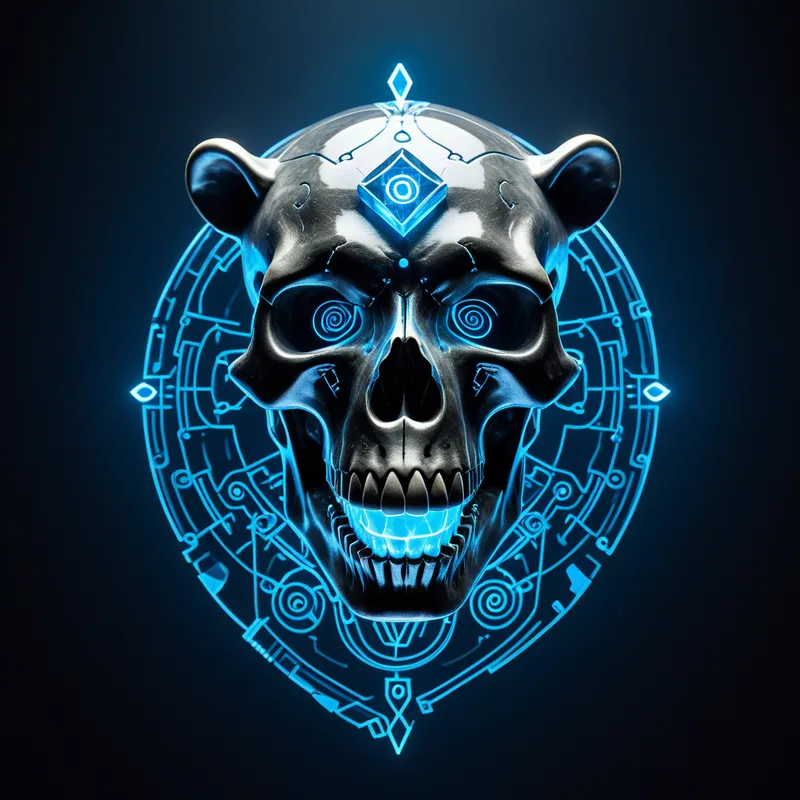
The Dreamer's Resonance
When this mythic pattern stirs in the modern dreamer, it often surfaces not as a literal bear, but as an encounter with a formidable, instinctual force within the psyche. To dream of facing a great bear, a vast white landscape, or of being tested in a stark, survivalist scenario points to a profound somatic and psychological process.
The dreamer is likely confronting what psychologist James Hillman called the "archetype of the animal"—the raw, unmediated power of an instinct (like anger, sexuality, territoriality, or a primal will to live) that feels alien and overwhelming to the conscious personality. The somatic feeling is one of awe, freezing, or a racing heart—the body recognizing a deeper, older intelligence. The psychological process is the initial stage of the "hunt": the ego becoming aware of this powerful inner content. The dream asks: Can you face this? Can you approach this immense part of yourself not with panic or repression (failed hunt), but with respect and a willingness to engage? The fear and awe in the dream are not signs of pathology, but of a healthy recognition of power. The dreamer is standing on the psychic ice, meeting their personal Nanook.

Alchemical Translation
The individuation process modeled by the Nanook myth is one of sacralization of necessity. In alchemical terms, it is the operation of separatio and coniunctio—separating the crude act from its spiritual meaning, then reuniting them at a higher level.
The modern individual is constantly "hunting"—pursuing goals, seeking sustenance (emotional, financial, spiritual), and confronting challenges. The crude, unconscious way is to see the world as a resource to be exploited, and one's own instincts as enemies to be controlled. This leads to psychic famine; the inner Nanook withdraws.
The alchemical gold is found when the pursuit of survival is transmuted into a conscious ritual of exchange with the ruling powers of one's own nature and the world.
The myth instructs us to first recognize the Ruler: acknowledge that there are inner and outer laws (of nature, of the psyche, of relationship) that hold ultimate authority. The polar bear instinct within must be respected as a sovereign entity. Second, we must engage with ritual consciousness: approach our pursuits (the "hunt" for a career, a relationship, self-knowledge) not with arrogant entitlement, but with skill, preparation, and humility. We state our intention, we honor the process. Finally, we complete the cycle with gratitude: when we achieve a goal or integrate an instinct, we must "lay the skull on the rocks"—acknowledge the source, give thanks, and release the spirit of the struggle so it can renew itself. This transforms life from a series of desperate grabs into a sacred, reciprocal dialogue with the ruling powers of existence. We do not conquer our nature; we earn the right, through respectful engagement, to its sustenance.
Associated Symbols
Explore related symbols from the CaleaDream lexicon: