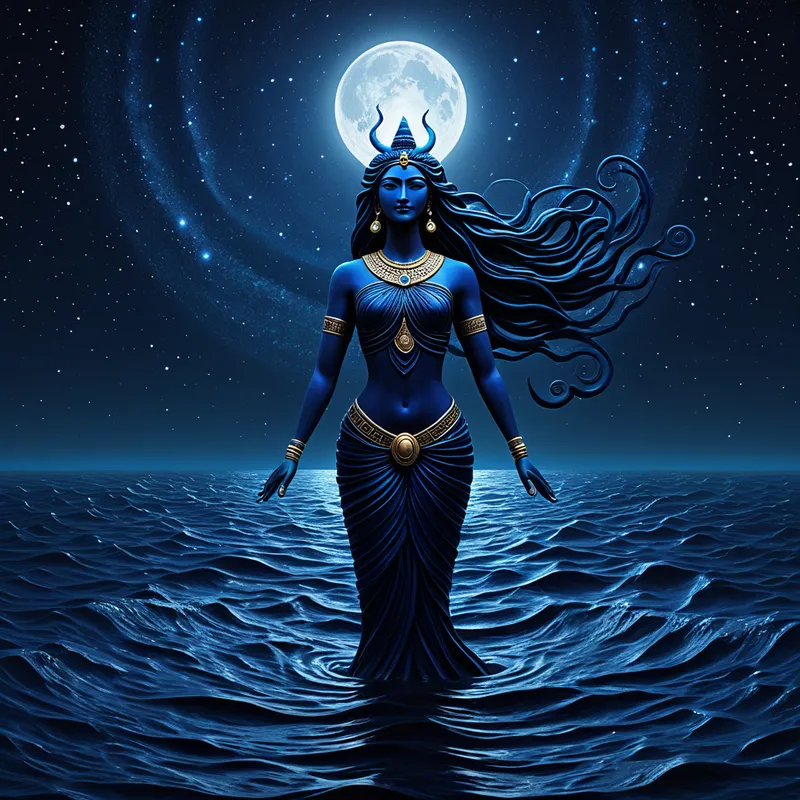
Nammu the Primordial Sea Myth Meaning & Symbolism
Before gods or land, there was Nammu, the boundless, dark, sweet sea, who birthed the universe from the depths of her own being.
The Tale of Nammu the Primordial Sea
In the beginning, there was no beginning. There was no sky of bright An, no firm earth of mighty Enlil. There was no name for anything, for there was nothing to name. There was only the endless, silent, sweet dark. And this dark was not empty. It was full. It was a deep, churning, boundless sea that had always been. The Sumerians knew this sea. They called her Nammu.
She was the first. The mother without a mother. The waters that were the source of all sources. In her black, freshwater depths, time itself lay dormant. There was no conflict, for there was no other. There was only her—the Apsu of sweet waters, the womb of the cosmos.
And within her, a longing stirred. A desire for form, for distinction, for the song of names to break the eternal silence. From the very substance of her being, from the clay of the deep, she brought forth the first mountain. This mountain was the union of her waters and the first solid thing, and upon its peak, she birthed the great gods. An, the vault of heaven, was born from her. Enlil, the raging breath that would separate his father An from the earth, was born from her.
But the young gods, in their divine clamor, were a restless lot. They filled the newly separated realms with their noise and light. And in time, they grew weary. They needed servants, beings to tend the me, the sacred principles of civilization. They needed to create.
The gods gathered, their brilliance dimmed by the weight of the task. Who could fashion a being from nothing? Who understood the primal clay, the very marrow of existence? It was the wise god Enki, her son, who lay in the deep, who knew the answer. He rose from his watery abode and spoke to the assembly: "The creature whose name you uttered, it exists! Bind upon it the image of the gods. Mix the heart of the clay that is over the Apsu. The skilled and the wise will thicken the clay. You, the birth-goddesses, will stand by. My mother, she who gave birth to all the gods, Nammu, will be present. Let my mother decide its fate."
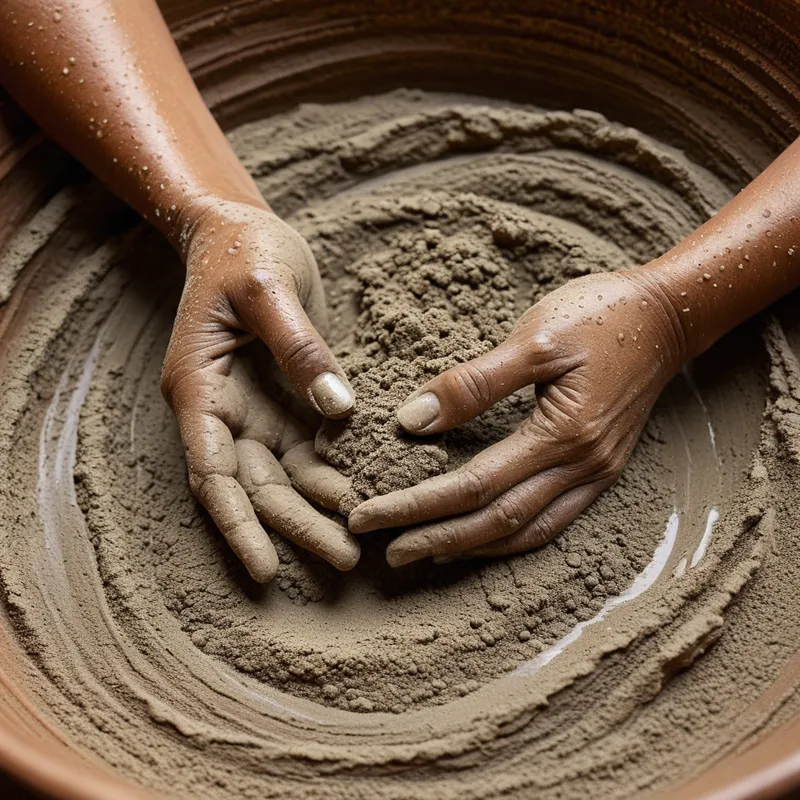
And so, the creators turned to the source. They went not to a forge of fire, but to the quiet, generative dark. Nammu took the clay from above the Apsu—the very interface between her formless depths and the potential for form. With the birth-goddesses as her midwives, she pinched and shaped the first humans. She mixed the clay with the blood of a slain god, giving them life and a connection to the divine. She did not speak grand proclamations; she performed the silent, fundamental act of motherhood. From her waters came the material. From her will came the first shape of humanity. And having given this final, foundational gift, Nammu, the primordial sea, receded back into the silent, sustaining dark, the matrix from which all things continually emerge.
Cultural Origins & Context
This myth comes to us from the world's first urban civilization, in the fertile silt between the Tigris and Euphrates rivers—a land literally born from water and clay. The Sumerians, who invented writing (cuneiform), recorded these stories on clay tablets, a material that directly echoes the myth of human creation. The tale of Nammu is not found in a single, neat epic, but is pieced together from creation hymns, god lists, and later Babylonian texts (like the Enuma Elish, where her role is absorbed by Tiamat).
It was likely recited by temple priests and scribes, the literate custodians of the me. Its function was profoundly ontological: it explained the origin of the cosmos, the hierarchy of the gods, and, most importantly, humanity's place within it. We were not accidental, but intentionally fashioned from sacred material (primordial clay) by the ultimate source (Nammu), infused with divine essence. This established a cosmic order and a deep, material connection between humans, the gods, and the earth itself.
Symbolic Architecture
Nammu is the archetypal symbol of the unformed, generative void that precedes consciousness. She is not chaos in a destructive sense, but the potential that contains all possibilities.
She is the psychological Apsu—the deep, unconscious matrix of the psyche from which all conscious thought and identity slowly differentiate.
Her element, sweet (fresh) water, is the essence of life, fertility, and nourishment, contrasting with the saltwater of later chaotic sea monsters. She represents the ultimate Mother archetype, but one who exists before the polarity of mother/father, before even the concept of parenting. She is parthenogenetic, self-generating. Her act of creation is not one of conquest or willful imposition, but of natural, effortless emanation. The clay from "above the Apsu" is key—it symbolizes the first moment where the formless (the sea) produces the material capable of holding form (clay). This is the primal act of differentiation, the birth of the Self from the unconscious.
The Dreamer's Resonance
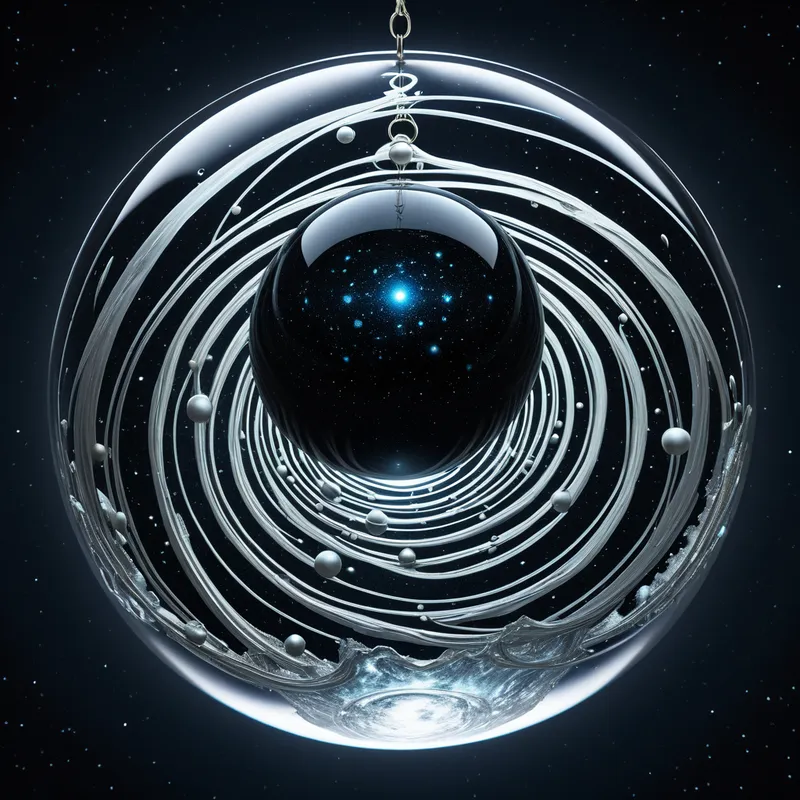
When a modern dreamer encounters the imagery of Nammu—a vast, dark, calm body of freshwater, an infinite abyss that feels nurturing rather than terrifying, or the act of shaping something from wet, dark clay—it often signals a profound somatic and psychological process.
This is the psyche returning to source. It can manifest during life transitions, creative blocks, or periods of burnout, when the conscious ego has become over-structured and brittle. The dream is an immersion in the restorative, pre-personal unconscious. The body may feel heavy, suspended, or deeply relaxed in such dreams, mirroring the somatic state of floating in amniotic fluid. It is not a call to action, but a call to being. The dreamer is being re-connected to the primal wellspring of their own identity, before it was shaped by family, culture, and trauma. It is a dissolution of old forms so that new, more authentic forms can be conceived.
Alchemical Translation
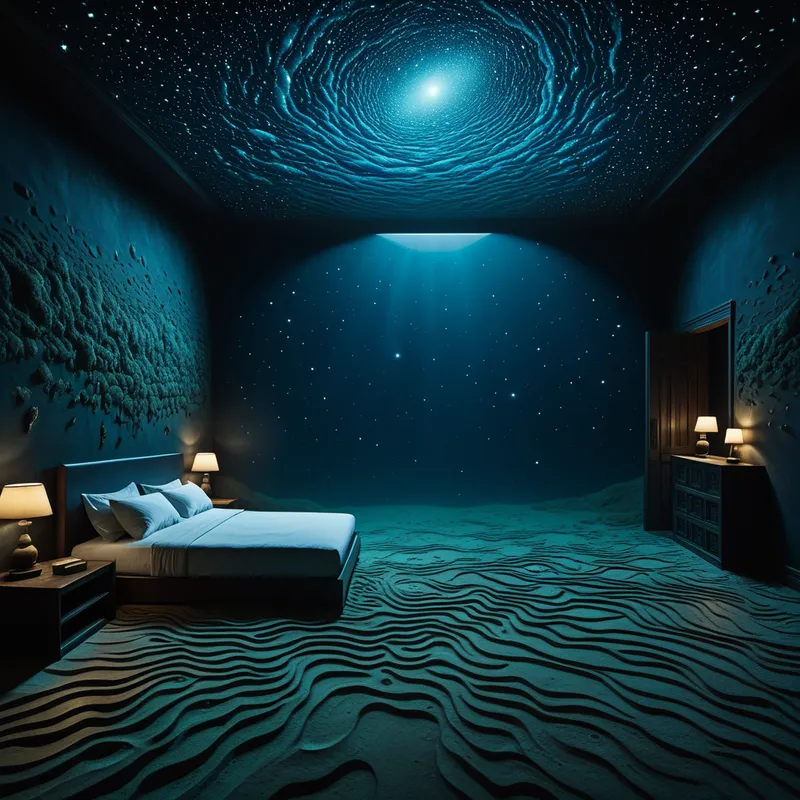
The myth of Nammu models the first and most crucial phase of psychic transmutation: the nigredo, or the descent into the primal matter.
Individuation does not begin with building the tower of the ego, but with the courageous dissolution back into the sea of the unconscious.
The modern individual, identified wholly with their conscious achievements and persona, is like the young gods who know how to rule but not how to truly create. The alchemical work requires an "Enki moment"—a wise voice from within that says, "To create anew, you must return to the mother of all." This is the often-feared process of breakdown, depression, or loss, where solid ground turns to water. It is the voluntary immersion in one's own Nammu-nature: the silent, dark, inner space where all labels dissolve.
Here, in this inner Apsu, one finds the "clay above the abyss"—the raw, unshaped potential of the Self. The work is then to, with the help of inner "birth-goddesses" (instincts, healing figures, creative impulses), patiently shape this clay. We mix it with the "blood of a god"—our own lived experience, our passions, and our sufferings—to animate it. The goal is not to escape the sea, but to fashion a vessel from its substance that can navigate both the depths and the surface world. To become a conscious creation of the primordial source is the ultimate act of Self-realization.
Associated Symbols
Explore related symbols from the CaleaDream lexicon:
- Ocean — The vast, boundless, and primordial aspect of Nammu, representing the unconscious in its totality, the source of all life and potential.
- Mother — The ultimate generative principle, Nammu as the parthenogenetic mother of all gods and the material universe, symbolizing unconditional source and origin.
- Water — Specifically fresh, sweet water, representing life, fertility, nourishment, and the fluid medium of all creation and psychic energy.
- Clay — The primal substance formed at the interface of Nammu's waters, symbolizing the malleable material of existence, the human body, and the psyche ready to be shaped.
- Creation — The fundamental act of bringing form from formlessness, which Nammu initiates and facilitates, representing pure, undirected generative power.
- Primordial Chaos — Not as destructive disorder, but as the fertile, undifferentiated state (the Apsu) that Nammu embodies, containing all possibilities before order.
- Goddess — The divine feminine as the foundational, autogenic cosmic power, preceding and birthing the patriarchal sky gods.
- Dream — The nightly return to the Nammu-like state of the unconscious, where forms dissolve and new potentials are conceived in the dark waters of the psyche.
- Womb — The enclosed, dark, generative space of Nammu's being, symbolizing the cosmic and psychological place of origin and safe dissolution.
- Root — The deepest, most ancient source of being, connecting all later manifestations back to the primordial sea from which they sprang.