Naadam Festival Origin Myth Meaning & Symbolism
A myth where a hero's victory in wrestling, archery, and horse racing establishes cosmic order and the sacred festival of the Three Manly Games.
The Tale of Naadam Festival Origin
Listen, and let the wind carry you back to the time before time was counted in years, when the Steppe was a formless breath, a sigh waiting for a shape. The sky, a dome of restless spirits, pressed low. The earth, a churning, dark mass, knew no Tögrög. There was no up or down, no contest of strength, no song of the bowstring, no thunder of hooves in unison. There was only the murmuring chaos, a world unborn.
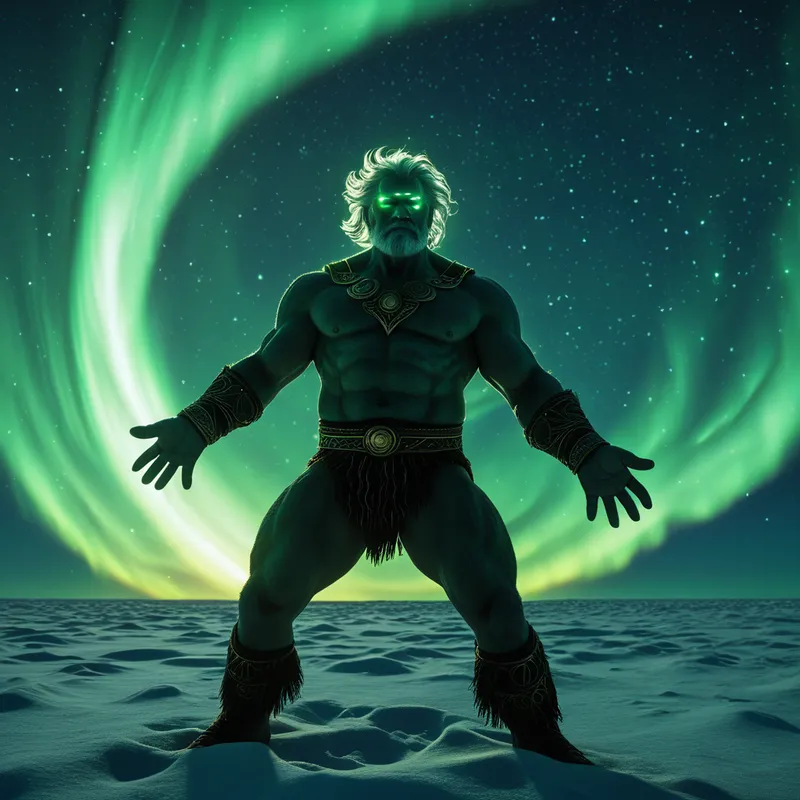
Then, from the place where the first light cracks the shell of night, he came. They did not know his name, for names bring limit, and he was beyond limit. They knew him by his presence: a pressure in the air, a gravity that pulled the scattered stones toward a center. His eyes held the cold fire of the Sun and the deep pool of the Moon. He stood upon a lone Mountain that rose like a fist from the plain, and he surveyed the unformed world. And he wept. His tears were not of sorrow, but of potency. Where they fell, the first grasses whispered into being.
But the formless chaos, the Ereg, recoiled. It did not wish for shape. It rose against him—not as a beast, but as a suffocating absence of rule, a howling void that sought to swallow his defining light. The hero did not draw a blade, for no blade could cut nothingness. Instead, he stretched out his arms, and his gesture was a challenge. "Let there be a test," his spirit thundered. "Let strength be measured, let aim be true, let speed be honored. In the contest, order is born."
The chaos condensed into a shifting, shadowy opponent. The first contest was of body against the anti-body. They grappled on the newborn grass, their struggle the first earthquake. The hero’s feet planted like Roots, his back a bridge between the pressing sky and the resisting earth. With a roar that split the murmuring silence, he lifted the chaos and drove it into the ground. The place of his victory became the first wrestling ring, the soil forever remembering the shape of order imposed upon disorder.
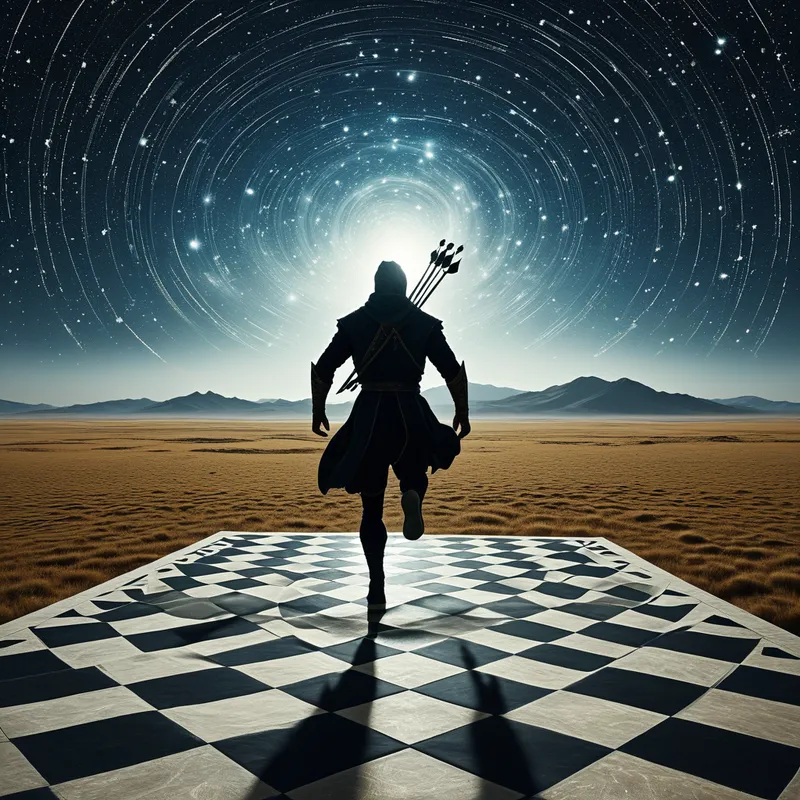
The wounded chaos fled, scattering into a thousand whispering doubts, a haze that blurred the horizon. The hero took up the rib of a great sky-bird, strung it with the sinew of a cloud-tiger, and fashioned the first bow. He drew. His breath became the wind, his focus a line of pure intent. The arrow was not meant to kill, but to pierce. It flew, a streak of decisive light, through the heart of the haze, pinning confusion to the distant blue. Where it struck, a clear path appeared. This was the origin of archery: not mere hunting, but the act of defining direction, of making a line through uncertainty.
Weakened but not defeated, the chaos became a rushing, panicked wind, seeking to scatter all that had begun to gather. The hero looked to the herds of wild horses that now ran like thoughts on the steppe. He chose the strongest, the fleetest, and whispered into its ear the secret of the shared Sulde. He mounted not as a master, but as a partner. Together, they gave chase to the chaotic wind. They did not run it down to destroy it, but to tame its pace, to give the wild flight a rhythm, a destination. The thunder of their pursuit became the first drumbeat of community, the proof that freedom and direction could be one. The chaos, exhausted, settled into the gentle breeze that now carries the scent of sage.
With the three victories won—of foundational strength, of clear intention, of harnessed spirit—the world found its balance. The hero, his task complete, did not claim a throne. Instead, he decreed that these three contests—wrestling, archery, horse-racing—would be held whenever the world grew slack, whenever the memory of order faded. He scattered his own essence into the people, the animals, and the very land, so that the spirit of the contest would live forever. And so, the Naadam was born, not as a mere game, but as the ritual re-enactment of creation itself.
Cultural Origins & Context
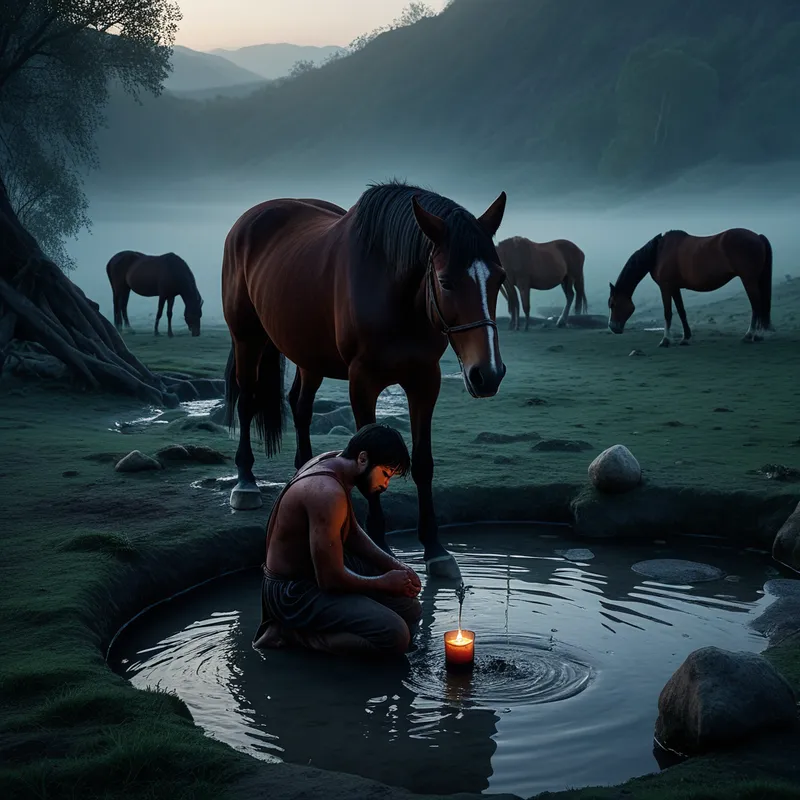
This foundational myth, woven from strands of ancient shamanic cosmology, Turkic epic tradition, and the pragmatic ethos of steppe life, was never a single, fixed text. It lived in the throat of the Tuulich, recited during the long nights around the hearth, and in the rituals of the Böö before great hunts or migrations. Its primary societal function was ontological: to explain and sanctify the core pillars of male social identity and cosmic responsibility in a nomadic society. Wrestling embodied the physical and moral strength needed to protect the family and herd. Archery symbolized the precision, focus, and foresight required for survival and hunting. Horse-racing reflected the paramount values of mobility, endurance, and symbiotic partnership with the animal world.
The myth provided the sacred charter for the Naadam festival, which historically coincided with important communal gatherings—to swear alliances, to celebrate military victories, or to honor the spiritual forces before a seasonal migration. The games were a means of divining the favor of the heavens, of redistributing honor and status, and of ritually renewing the community's bond with the forces of order. The myth thus transformed practical skills into sacred arts, and competition into a form of communal prayer, ensuring that the society's most vital capacities were perpetually exercised, celebrated, and passed down.
Symbolic Architecture
At its heart, the myth is a profound map of consciousness emerging from the unconscious. The formless Ereg represents the primal, undifferentiated state of the psyche—full of potential but lacking structure, direction, or identity. The unnamed hero is the emerging principle of the Ego, or more accurately, the Self, which must engage and shape this chaos to bring a livable world into being.
The contest is not a war of annihilation, but a ritual of engagement. Order is not imposed from without, but won from within the heart of chaos through sacred, rule-bound struggle.
The Three Games are not arbitrary. They form a complete psychic algorithm. Wrestling symbolizes the foundational, somatic struggle with the "shadow" material—the heavy, embodied, often ugly aspects of ourselves we must grapple with and pin down. Archery represents the focused application of consciousness (the arrow) toward a distant goal (the target), the ability to project intention through the fog of confusion and doubt. Horse-racing embodies the harnessing of the powerful, instinctual, and mobile energies of the libido (the horse) and directing them with skill and partnership toward a collective, celebratory goal. Together, they model the integration of body, mind, and spirit—the creation of a coherent Self from the raw material of being.
The Dreamer's Resonance
When this mythic pattern stirs in the modern dreamer, it often signals a profound crisis of structure. The dreamer may feel adrift in a "formless steppe" of life choices, relationships, or internal confusion. Dreams of chaotic landscapes, undefined opponents, or futile running are somatic echoes of the primal Ereg.
A dream of wrestling a shapeless foe points to a somatic confrontation with unprocessed trauma, rage, or guilt—the psyche forcing a bodily engagement with what has been ignored. Dreaming of shooting an arrow that always misses its mark speaks to a crisis of intention and purpose, a feeling that one's will cannot affect the world. Dreams of trying to ride a wild, uncontrollable horse, or of running a race with no finish line, reveal a struggle with untamed emotional or instinctual energies that lack direction.
The healing movement within the dream, if it follows the myth, would be toward the establishment of these three sacred arenas. The dream may culminate in finding solid ground to stand on (wrestling), finally seeing a clear target (archery), or feeling a harmonious, powerful surge forward in partnership with a dream animal (racing). This is the psyche ritually re-enacting its own creation of order.
Alchemical Translation
The alchemical journey mirrored here is the opus contra naturam—the work against nature, which is really the work of cultivating nature's highest potential. The base matter is the chaotic, leaden state of inner conflict and aimlessness. The myth provides the threefold fire of transformation.
First, the nigredo or blackening occurs in the wrestling hold: one must face and fully engage the dark, chaotic, "shadow" aspects of oneself. This is a descent, a confrontation that feels like being buried in the dark earth. The victory is not eradication, but acknowledgment and grounding.
The hero does not slay the chaos; he tames it by giving it a form to struggle against. So too, we do not eliminate our darkness, we give it a conscious shape so it can be engaged.
Second, the albedo or whitening is the flight of the arrow. After the shadow work, a new clarity emerges. The mind, purified by the struggle, can now formulate a clear intention, a "silver" goal. This is the distillation of purpose from confusion.
Finally, the rubedo or reddening is the horse race—the integration of the transformed energies into a vibrant, living, and communal expression. The harnessed instincts (the horse), now aligned with consciousness (the rider), create a surge of red, vital life force. This is the culmination: the created Self, now structured and potent, participating joyfully in the festival of existence. The individual becomes a microcosm of the ordered cosmos, their inner Naadam a perpetual ritual of psychic rebirth and renewal.
Associated Symbols
Explore related symbols from the CaleaDream lexicon:
- Hero — The archetypal force that confronts formlessness and, through sacred contest, establishes the rules and structures that make a coherent world and self possible.
- Order — The principle established by the hero's victories, representing the necessary structures, rituals, and disciplines that transform chaotic potential into livable reality.
- Circle — The eternal cycle of the festival itself, and the wholeness achieved by integrating the three games (body, mind, spirit) into a complete, self-renewing system.
- Horse — The instinctual, mobile, and powerful life force that must be partnered with, not dominated, to achieve directed speed and communal celebration.
- Mountain — The initial point of consciousness and perspective from which the hero surveys the chaos, representing the elevated, centered stance required to begin the work of ordering.
- Earth — The arena of the struggle and the foundation won through wrestling; it symbolizes the grounded, somatic reality that must be secured first.
- Sky — The realm of the arrow's flight and the source of divine mandate; it represents the lofty goals, ideals, and clear vision one must aim for.
- Festival — The joyful, communal culmination and perpetual re-enactment of the creative act, where the established order is celebrated, renewed, and passed on.
- Origin — The mythic moment of inception where potential becomes actual, serving as the timeless template to which the psyche returns to re-found itself during crises.
- Ritual — The formalized, repeated performance of the three games, which transforms practical skill into sacred technology for maintaining cosmic and psychic balance.
- Thunder — The sound of the hero's roar and the hooves of the race, representing the powerful, disruptive, and life-giving force that shatters stagnation and announces new order.
- Victory — Not a conquest over an external enemy, but the hard-won internal achievement of structure, clarity, and harmonious flow, which benefits the entire community.