
Merlin's Staff Myth Meaning & Symbolism
The story of the wizard Merlin forging his staff from the world's soul, a tool of immense power that ultimately demands a terrible price of its wielder.
The Tale of Merlin's Staff
Listen. Listen to the wind in the oaks of Brocéliande, for it carries an older whisper. Before the sword was drawn from the stone, before the round table was hewn, there was the Staff.
In the time when the world was still half-wild and the veil between the realms of men and the Fae was thin as morning mist, there walked a man who was more. He was born of no mortal father, a child of prophecy and storm, and his name was Merlin Ambrosius. He saw the threads of what was, what is, and what might be, woven together in a tapestry of dizzying complexity. Yet to shape fate, to guide a kingdom yet unborn, he needed a focus. Not a sword for cutting, but a rod for channeling.
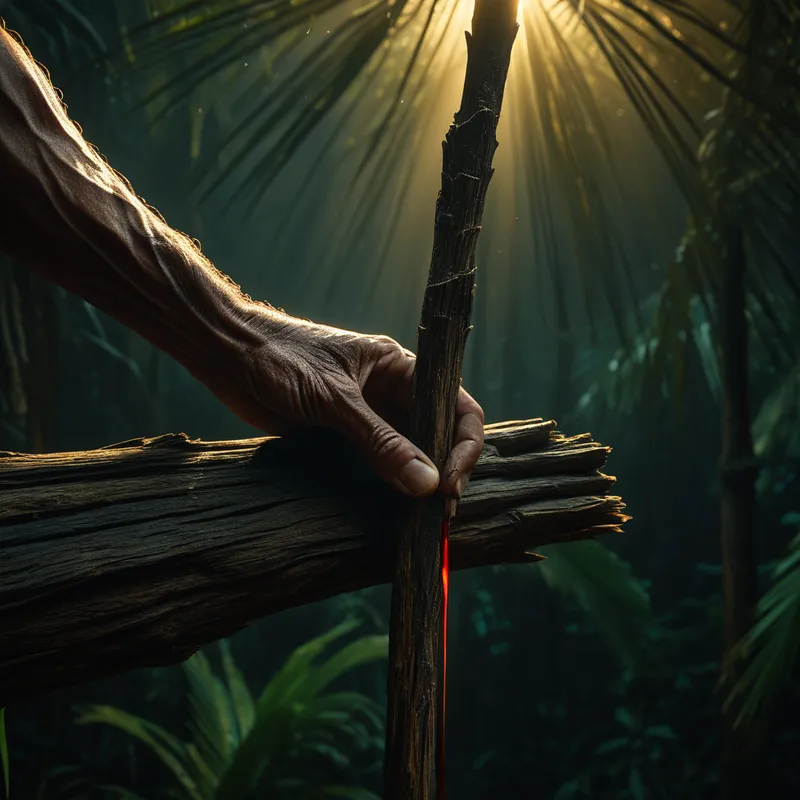
He journeyed beyond the maps, to the heart-root of the isle, to a grove so ancient the trees remembered the first sunrise. There stood the Father Oak, its bark like stone, its branches holding up the sky. For seven days and seven nights, Merlin sat in its shadow, neither eating nor sleeping, listening to the slow, deep song of the earth. He heard the memory of water in stone, the patience of roots in the dark, the fierce green fire of growth. On the eighth morning, as the first light touched the highest branch, the Oak spoke not with words, but with an offering. A single limb, struck by no lightning, severed by no axe, fell gently at his feet.
But raw wood is not a staff. Its power was latent, dreaming. Merlin carried the limb to the shores of the Isle of Avalon, where the waters heal and obscure. He did not carve it. Instead, he walked with it. He plunged it into the tidal pools where the sea meets the fresh water of the sacred spring. He held it aloft in thunderstorms, letting the sky’s fire kiss it. He rested its base upon the Dragon’s Ley, the hidden lines of power that cross the land like veins.
And then came the final forging. Not with hammer and anvil, but with blood and breath. In a circle of standing stones under a winter moon, Merlin drew a blade across his own palm. He let his life, his mortal essence—the part of him that was born and would one day die—drip onto the root-knot of the staff. As his blood soaked into the grain, he breathed upon it the secret names of the wind, the stone, and the star. The staff drank, and awoke.
It became an extension of his will. With it, he could summon mist to hide an army, cause springs to bubble forth from barren ground, and see through the masks of men’s hearts. It was the scepter of the hidden king, the compass of destiny, the key to the unseen world. Yet, from that moment, a bond was sealed. The staff’s power was drawn from the world’s soul, but its anchor was Merlin’s own. Its great strength was his profound vulnerability. The tale whispers that he who wields such a tool does not command it, but is commanded by it. The price of seeing all paths is the burden of walking one.
Cultural Origins & Context
The myth of Merlin’s Staff is not found in a single, canonical text like Le Morte d'Arthur. It is a folkloric accretion, emerging from the deep substrate of Celtic tradition that underlies the later French and English romances. In the earliest Welsh texts, Myrddin is a wild, prophetic figure, more a force of nature than a courtly advisor. The staff, as his primary attribute, likely evolved from the rod of the druids and bards—a symbol of authority, poetic inspiration, and connection to the natural order.
This story was passed down not in illuminated manuscripts first, but in the oral traditions of storytellers and bards by the fireside. Its function was multifaceted: to explain the source of Merlin’s uncanny power, to ground that power in the sacred landscape of Britain itself (the oak, the ley lines, Avalon), and to embed a crucial ethical warning. In a culture deeply concerned with sovereignty and the rightful use of power (a central Arthurian theme), the myth illustrates that true wisdom is not dominion, but a pact. The staff represents knowledge that is earned through sacrifice and symbiosis, not seized. It served as a narrative container for a very Celtic and druidic worldview: that power flows from relationship and respect for the animate world, and that such a relationship always entails a cost.
Symbolic Architecture
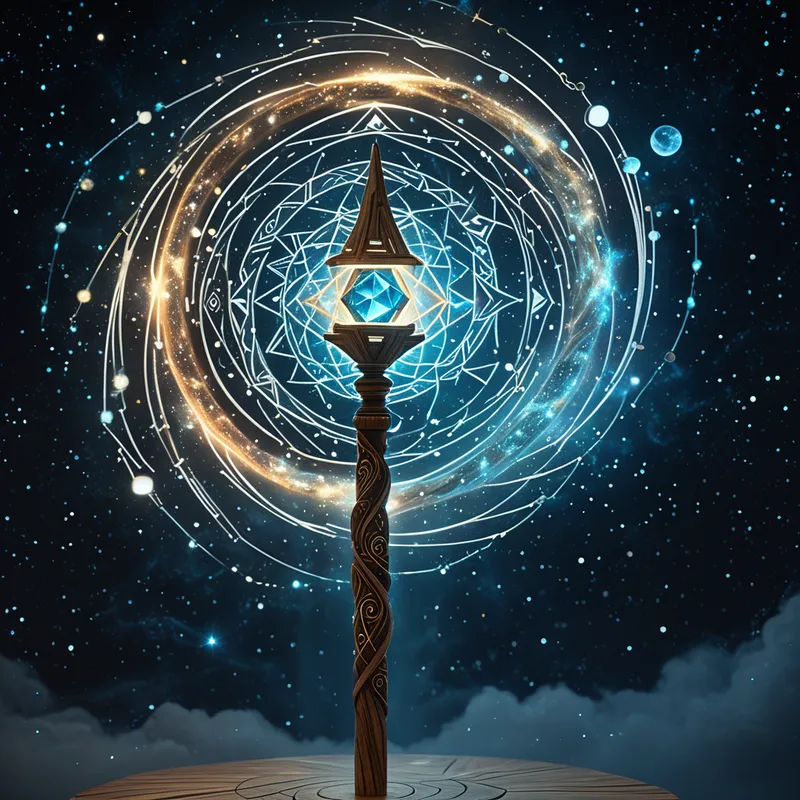
The staff is far more than a wizard’s prop; it is a dense symbolic organism. It is the Axis Mundi in personal form, the world tree made portable. The Oak limb represents rootedness, stability, and ancient, enduring wisdom—the wisdom of the unconscious and the ancestral past. The rituals of water, storm, and earth symbolize the alchemical processes of purification, energization, and grounding.
The ultimate act of creation is not an act of will, but an act of surrender. One does not impose form upon the chaos; one bleeds into it, offering one’s own substance to become the seed of a new order.
The pivotal act of blood sacrifice is the core of the symbol. Merlin does not just use his power; he merges with it. His blood—his literal vitality and mortality—becomes the staff’s life. This creates a profound paradox: the tool of ultimate control is born from an ultimate act of vulnerability. Psychologically, the staff represents the integrated Self, the conscious ego (Merlin) having forged a living connection to the vast, non-personal powers of the unconscious (the world-soul). It is the symbol of individuation in progress. Yet, the bond is a two-way street. To channel such power, one’s own psyche must be open to its flows, its storms, and its deep, often terrifying, currents.
The Dreamer's Resonance
When the image of Merlin’s Staff arises in a modern dream, it rarely appears as a simple object. It may manifest as a unique tool at a critical moment, a tree growing through the floor of one’s childhood home, or a painful, glowing wound in the palm that projects light. The dreamer is likely at a crossroads where a significant inner resource or personal power is seeking conscious recognition and disciplined application.
Somatically, this process can feel like a gathering of energy—a pressure or heat in the chest or hands—accompanied by a deep anxiety about the responsibility this energy brings. The dream is pointing to a “forging” moment in the psyche. The “blood sacrifice” in the modern context is the painful but necessary act of surrendering an old identity, a cherished illusion, or a comfortable wound. It is the price of accessing a deeper, more authentic layer of personal authority and wisdom. The dream may also carry a warning: is the dreamer trying to “carve” their power through sheer will (ego), or are they engaging in the slower, more respectful process of “walking with it,” listening, and offering something genuine of themselves in return? The staff dreams ask, “What are you willing to give of your very essence to bring your true capability to life?”
Alchemical Translation
The myth of Merlin’s Staff is a perfect map for the alchemical individuation process. The prima materia, the raw stuff, is the unformed potential of the Self—represented by the fallen oak limb, a gift from the deep unconscious (the ancient grove). The long journey and the rituals with the elements correspond to the stages of nigredo (confronting the shadow in the dark woods), albedo (purification in the waters of Avalon), and citrinitas (illumination by the storm’s fire).
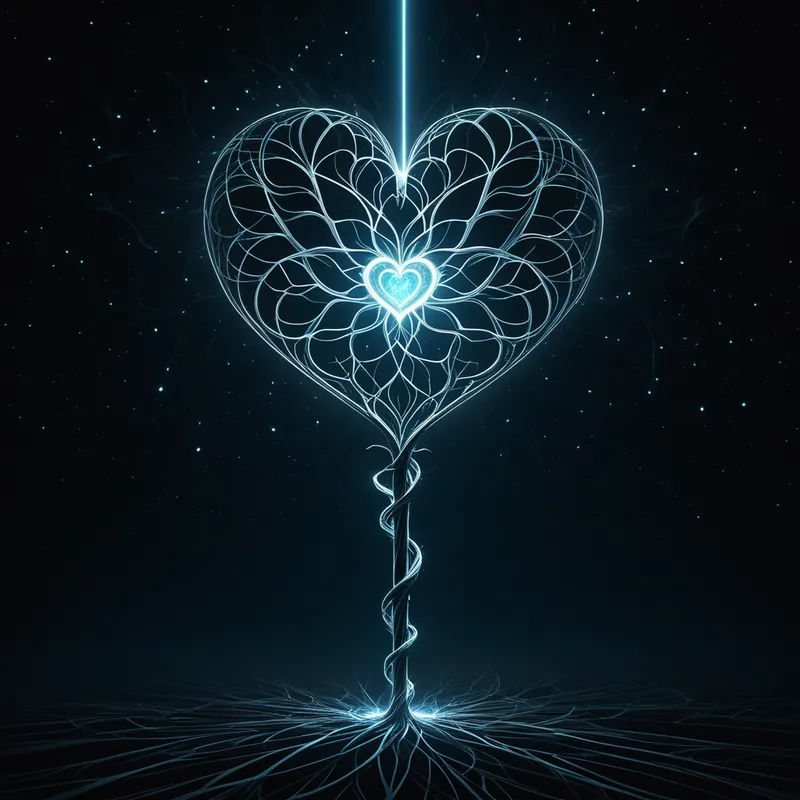
The crucial rubedo—the reddening, the final stage of union—is the blood sacrifice. In psychological terms, this is the ego’s sacrifice of its total autonomy. It is the moment when we realize that to become whole, we must stop trying to manage the unconscious from a safe distance and must instead allow a piece of our conscious self—our pride, our control, our carefully constructed persona—to die and feed the growth of something greater. The staff that results is the lapis philosophorum, the philosopher’s stone: the integrated personality.
The forged staff is not a weapon to wield against the world, but a conductor to reconcile the world within. Its power lies not in command, but in resonance.
For the modern individual, the “alchemical translation” is this: our deepest wisdom and capacity are not built through accumulation of skills alone, but through a sacred contract with our own depths. We must take the raw material of our innate gifts (the oak), subject them to the trials of life (the elements), and finally, offer up our most cherished illusions (the blood) to transform that potential into a functioning, guiding principle—a personal “staff” of integrity and insight. The myth assures us that this power, though fearsome in its responsibility, is our rightful inheritance, but only if we are brave enough to pay the price of its awakening.
Associated Symbols
Explore related symbols from the CaleaDream lexicon: