
Medicine Bundle Myth Meaning & Symbolism
A sacred covenant between human and spirit, a bundle containing the cosmos, a promise of power and responsibility carried in the heart.
The Tale of Medicine Bundle
Listen. The wind does not merely blow; it carries a voice from the time before memory. In that time, the People walked in a world alive with breath and intention. The stones spoke, the rivers sang, and the four-legged ones were kin. Yet a great loneliness dwelled in the human heart—a feeling of being separate, a leaf adrift from the great tree of life.
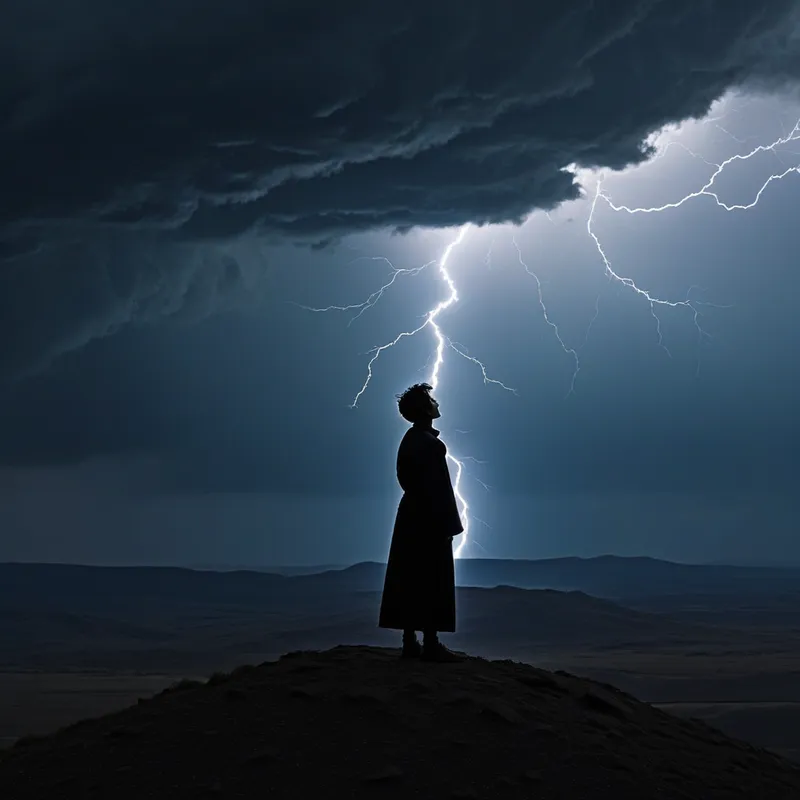
One who carried this loneliness deep within their bones went out from the camp. Not as a warrior, but as a seeker, with empty hands and a heart full of yearning. They climbed to a high place, a place of rock and sky, where the only company was the cry of the hawk and the whisper of the pines. For four days and four nights, they cried for a vision, for a sign that they belonged. They cried until their voice was the wind, and their body was the earth.
On the fourth night, when the veil between worlds grows thin as spider-silk, it came. Not with thunder, but with a profound silence that hummed. A presence, vast and intimate as the night sky, drew near. It might have been Wakan Tanka, or the Grandfather of the Four Directions, or a specific spirit-animal whose eyes held the depth of lakes. It did not speak in words, but in knowing.
"You feel apart," the presence conveyed, a truth felt in the marrow. "You seek connection, which is power. But power is not a thing to be taken; it is a relationship to be honored."
Then, the vision unfolded. The spirit showed the seeker the cosmos in its wholeness: the four sacred directions, each with its color, its animal, its lesson. It showed the above and the below, the sky and the earth. It showed the interconnected web of all life. "This," the spirit intoned, "is what you carry. This is your Medicine."
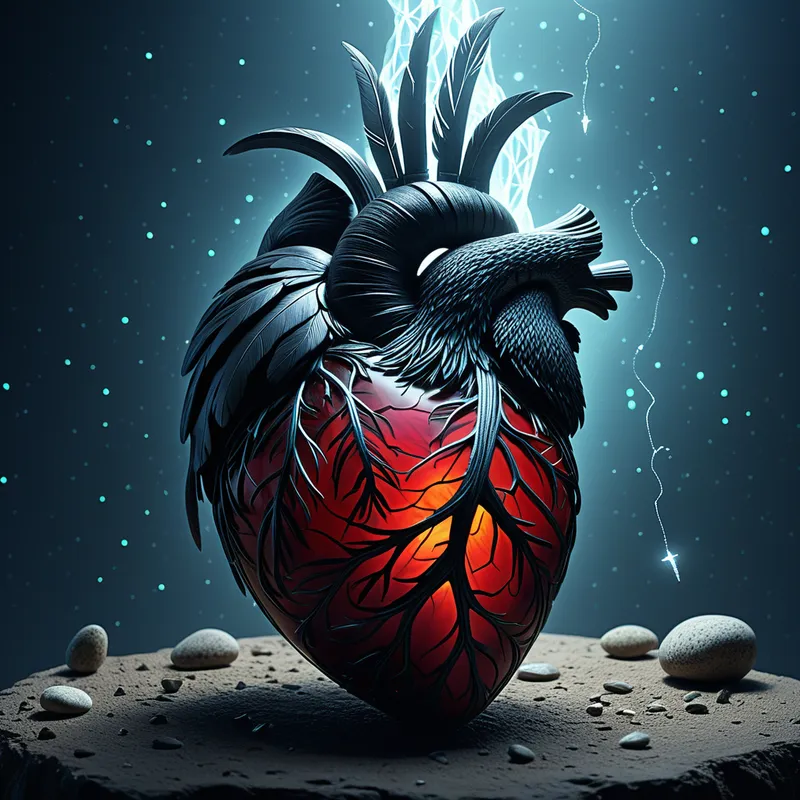
The spirit instructed the seeker to gather specific, humble items: a stone from the creek, smoothed by time. A feather gifted by a bird. A tuft of fur from a respectful hunt. A root from a healing plant. Each was a token, a signature of a relationship with a part of creation. "Bind them together," came the instruction. "Not to trap their power, but to honor the covenant. This bundle will be your altar, your reminder, your responsibility. It is not magic. It is a promise. The promise that you are not alone, and that with the power of these relationships comes the duty to uphold them."
As the dawn broke, painting the sky in the colors of the four directions, the seeker carefully gathered the sacred items. With trembling, reverent hands, they wrapped them in a piece of soft hide, tying it with a thong. In that moment, the loneliness shattered. The bundle in their hands did not feel heavy with objects, but light with meaning. They carried a piece of the living universe, and the universe, in turn, carried them. They returned to the People not just as a person, but as a caretaker of a sacred trust, a living bridge between the human community and the animate world.
Cultural Origins & Context
The concept of the Medicine Bundle is not a single, monolithic myth from one tribe, but a profound spiritual practice and philosophical concept found across many Indigenous nations of North America, including the Lakota, Ojibwe, Blackfoot, and Cheyenne, among others. The narrative above synthesizes the core experiential truth of its origin: direct personal revelation.
These bundles were not created from doctrine, but from encounter—dreams, visions, fasts, and ordeals on the hill. They were the physical testament to a personal covenant between an individual and the spirit world. The contents were dictated by the vision itself, making each bundle utterly unique and irreplicable. Knowledge of their significance, the songs and prayers that "activated" them, and the protocols for their care were passed orally from elder to keeper, often across generations if a bundle became a hereditary family or tribal charge.
Societally, Medicine Bundles served multiple vital functions. A personal bundle was a source of guidance, protection, and healing for its keeper. Larger, communal bundles held by spiritual leaders were central to the tribe's identity, brought out for ceremonies to ensure prosperity, successful hunts, or victory in conflict. They were, in essence, the concentrated spiritual "bank" of relationships that a person or a people had cultivated with the forces of the universe. Their power was contingent entirely on the respect, ritual cleanliness, and correct relationship maintained by their human caretakers.
Symbolic Architecture
At its core, the Medicine Bundle myth is a master symbol of the psyche's journey from a state of perceived fragmentation to experienced wholeness. The initial loneliness of the seeker represents the modern condition of alienation, the ego's sense of isolation from the deeper, instinctual, and spiritual layers of the Self.
The bundle is the psyche made tangible—a curated collection of soul-fragments gathered from the wilderness of the unconscious and bound by the thread of consciousness.
Each item within the bundle is a powerful symbol in its own right. The stone represents the enduring, foundational Self, the bedrock of one's being. The feather symbolizes spirit, aspiration, and communication with the higher realms (the above). The fur or bone connects to instinct, animal wisdom, and the life-and-death cycles of nature. The plant signifies healing, growth, and rooted connection to the earth (the below). Together, they map the complete individual: mineral body, animal instinct, vegetative life-force, and spiritual breath. The act of wrapping them is the act of integration, creating a sacred container for one's totality.
The covenant with the spirit is the critical psychological turn. It signifies that wholeness is not an act of egoic acquisition ("I will take power"), but of humble reception and responsible relationship ("I will honor this connection"). The power of the bundle—its "medicine"—is not in the objects themselves, but in the relational field they represent and the conscious attention of the keeper.
The Dreamer's Resonance
When the pattern of the Medicine Bundle arises in modern dreams, it often signals a profound process of psychic gathering and integration. One might dream of frantically collecting small, significant objects as a storm approaches, or of carefully assembling disparate parts of a broken heirloom. The dreamer may find a mysterious, wrapped package that feels intensely personal and heavy with meaning.
Somatically, this can correlate with a feeling of being "scattered" or pulled in too many directions, coupled with a deep, often anxious yearning for center and cohesion. Psychologically, the process is one of active imagination: the ego is being called to go into the wilderness of its own experience—memories, talents, traumas, insights—and begin the sacred work of collection. Which parts of your life feel like the enduring stone? Which forgotten inspirations are the feather? Which instinctual drives are the fur, needing acknowledgment? The dream presents the task of gathering these orphaned parts of the Self before they are lost.
The conflict in such dreams is often between the urge to hoard everything (indiscriminate accumulation) and the need for discernment—listening for which items are sacred to your particular vision, your unique covenant with life.
Alchemical Translation
The myth of the Medicine Bundle is a precise alchemical map for the Jungian process of individuation—the journey toward becoming an integrated, whole individual. The seeker's lonely fast on the hill is the nigredo, the initial descent into darkness and confrontation with the feeling of meaninglessness.
The visionary encounter represents the beginning of the albedo, the illuminating insight from the Self (the spirit presence). The instruction to gather specific items is the call to consciously engage with one's complexes, talents, and archetypal fragments—not to eliminate them, but to honor their place in the totality.
Individuation is not about becoming perfect, but about becoming complete. It is the careful, reverent assembly of your own sacred bundle, where the flawed stone and the broken feather are as essential as the shining ones.
The final act of wrapping and returning to the community symbolizes the rubedo, the red dawn of integrated life. The power is now embodied. The keeper does not have a Medicine Bundle; they are the living manifestation of its covenants. For the modern individual, this translates to the ongoing practice of taking inventory of one's soul: What relationships—to people, to work, to nature, to the unseen—constitute your "bundle"? Are they bound by the thread of conscious responsibility and gratitude, or are they scattered, neglected, or held in disrespect? The myth teaches that our wholeness, and thus our true power and peace, resides not in what we possess, but in the sacred quality of the connections we honor and carry.
Associated Symbols
Explore related symbols from the CaleaDream lexicon: