Maui's Fish Myth Meaning & Symbolism
The trickster demigod Maui uses a magical jawbone to fish the North Island of Aotearoa from the ocean depths, a tale of audacious creation.
The Tale of Maui’s Fish
Listen. The world was younger then, and the great ocean, Te Moana-nui-a-Kiwa, stretched vast and empty to every horizon. The people lived on the great canoe, Te Waka-a-Māui, but they were crowded, their voices a constant murmur against the sigh of the waves. They longed for land, for space to breathe and grow.
And there was Maui-tikitiki-a-Taranga. Not a god, but more than a man—a demigod, born of the blood of the earth and the cunning of the heavens. He was the last, the cleverest, the one his brothers scorned for his tricks and his dreams. They saw only a nuisance. They did not see the fire in his eyes, the mana that hummed in his bones, a gift from his ancestor, Murirangawhenua.
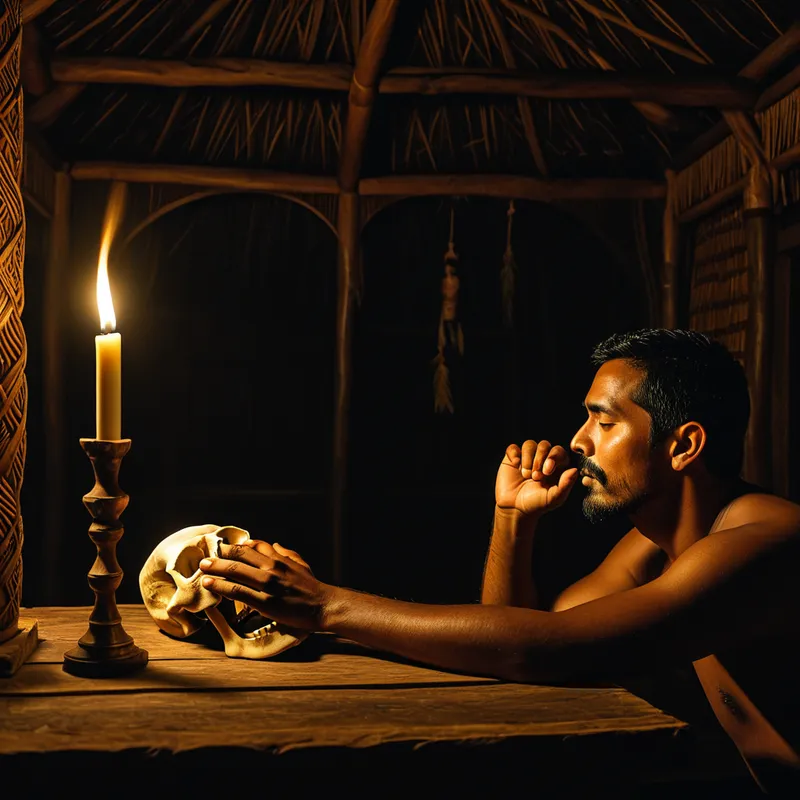
One night, when the sky was a black bowl pierced with cold stars, Maui moved. His brothers, weary from fishing the barren waters, slept deeply in the hull of their canoe. Silently, Maui took his most precious treasure: the jawbone of Murirangawhenua, an heirloom of immense power, carved with the stories of the beginning of time. He fashioned it into a hook, whispering incantations of creation, binding it with sacred line platted from his sister’s hair. He mixed his own blood for bait, a sacrifice of self to call the unimaginable.
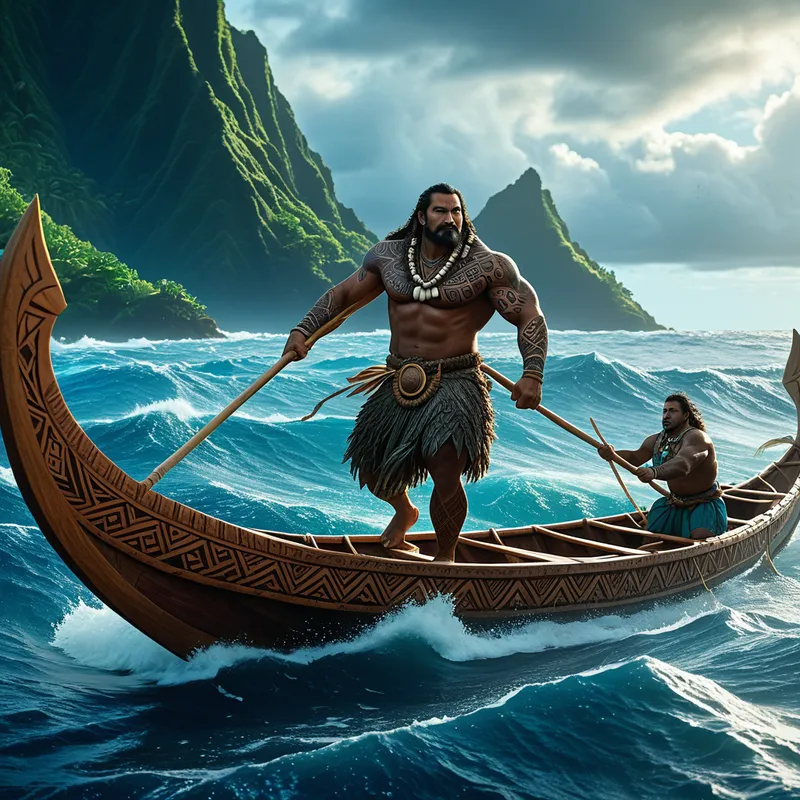
At dawn, he convinced his brothers to take him fishing, though they grumbled and cursed. “You will scare the fish, little brother!” they said. But Maui smiled his secret smile. He paddled them far, far out, past all known currents, to the sacred fishing ground of his grandmother. The sea here was a different creature—deep, dark, and breathing slowly.
“Here,” Maui said, his voice quiet as the deep. He cast the enchanted hook. It sank, a falling star into the abyss. Time stretched. Then, a tug that shuddered through the very wood of the canoe. The line went taut, singing with strain. The sea began to boil. Maui braced himself, his feet planted, every muscle corded. He chanted the karakia of hauling, his voice rising above the roar of water.
His brothers cried out in terror as the ocean heaved. A mountain broke the surface—not a fish of scale and fin, but a colossal, living island! Forests sprouted on its back, rivers carved down its sides, and steam rose from its peaks. With a final, earth-shaking pull, Maui hauled the great fish, Te Ika-a-Māui, from the depths. Land, born from audacity and ancestral power. But in their awe and fear, his brothers, forgetting the sacred work, attacked the newfound land with their tools, hacking at its flesh, carving the deep valleys and rugged mountains we see today. The perfect creation was made wild, beautiful, and enduring by human haste.
Cultural Origins & Context
This myth is not merely a story; it is a foundational whakataukī for the Māori people of Aotearoa (New Zealand). It belongs to the vast Polynesian narrative constellation centered on Māui, whose exploits—from snaring the sun to stealing fire—are told from Hawaiʻi to Tahiti to Aotearoa. In each locale, the myth adapts, rooting itself in the specific landscape. The “Fish” is the North Island; his canoe, the South Island.
It was and is an oral tradition, passed down through generations by tohunga and storytellers. Its function was multifaceted: it was a cosmological map, explaining the origin of the landforms. It was a social charter, encoding values of ingenuity, respect for ancestral tools (taonga), and the consequences of impulsive action. Most profoundly, it established the intimate, familial relationship between the people and the land. The land is not inert dirt; it is a living being, fished up by an ancestor. You walk on the body of Maui’s catch. This imbues the environment with a sacredness that demands kaitiakitanga.
Symbolic Architecture
At its heart, this is a myth of creation ex profundis—creation from the depths. The ocean represents the primordial, undifferentiated unconscious, the massa confusa. Maui, the trickster-hero, represents the emerging consciousness, the ego that dares to venture into the unknown and engage with the deep, chaotic potential of the psyche.
The hero’s task is not to conquer the deep, but to engage it, to bring form from its formless potential.
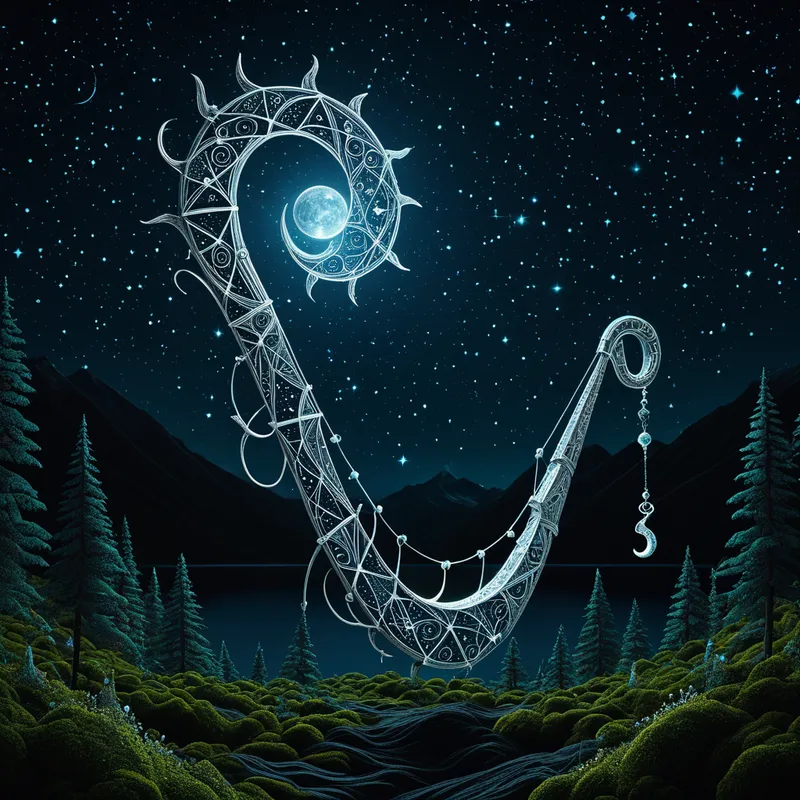
The magical jawbone hook is the crafted tool of consciousness—it is ancestral wisdom (the grandmother’s bone), personal sacrifice (his blood as bait), and relational connection (his sister’s hair) forged into a single pointed intent. It is the focused will, the question, the prayer cast into the void of the unconscious. The great fish is the latent Self, the wholeness that lies buried beneath the surface of everyday life. Pulling it up is the arduous, often terrifying, process of bringing this wholeness into the light of awareness. The brothers’ hacking of the land symbolizes how the integrated Self, once surfaced, is inevitably shaped—and sometimes scarred—by the conscious mind’s attempts to understand, control, and inhabit it.
The Dreamer’s Resonance
When this myth stirs in the modern dreamer, it signals a profound somatic and psychological process: a call to fish in deep waters. You may dream of being on a small boat in a vast sea, of finding a strange and powerful tool, or of feeling a tremendous, unseen pull from below.
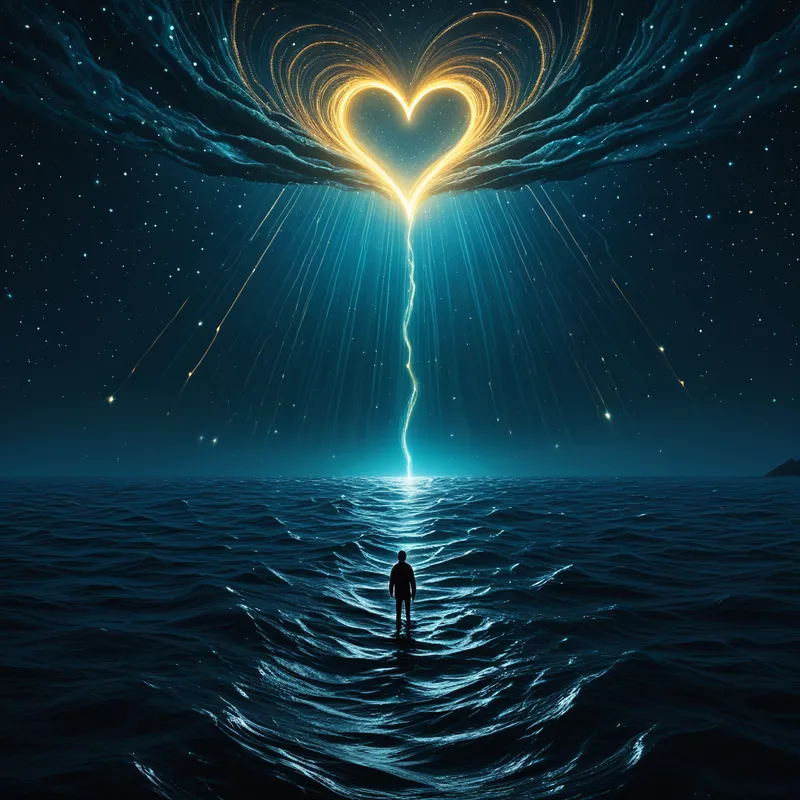
Somatically, this can feel like a gathering of tension, a consolidation of energy in the core. It is the prelude to a great effort of becoming. Psychologically, it is the moment when polite self-improvement ends and the real work begins—the work of engaging with what is foundational, massive, and hidden. The “fish” might manifest as a forgotten talent, a repressed trauma, or a calling so large it feels like it could capsize your current life. The dreamer is Maui in that canoe: terrified, exhilarated, and utterly committed, feeling the line that connects them to their own vastness strain to its limit.
Alchemical Translation
The alchemical journey mirrored here is the individuation process. The first stage, nigredo, is the voyage into the empty, dark ocean—the feeling of being lost, purposeless, or confined. Maui’s act of crafting the hook from ancestral bone is the albedo: clarifying one’s tools, understanding one’s heritage and inner resources.
The casting of the line is the leap of faith. The struggle with the colossal fish is the central, transformative rubedo—the fiery confrontation with the contents of the unconscious. This is not a battle to win, but a relationship to negotiate, a weight to integrate.
To pull the fish from the sea is to accept the burden and the gift of one’s complete nature.
Finally, the brothers’ shaping of the land represents citrinitas and the ultimate, often imperfect, rubedo. The integrated Self does not manifest as a perfect, placid ideal. It manifests as a lived-in, worked-on landscape—a life. It has mountains of achievement and valleys of shadow, carved by the sometimes-clumsy tools of our daily actions and relationships. Maui’s Fish teaches that creation is a violent, beautiful, and collaborative act between the daring individual consciousness and the deep, teeming unconscious, resulting in a world that is both a sacred gift and a ongoing responsibility.
Associated Symbols
Explore related symbols from the CaleaDream lexicon: