
Mats of the Three Sisters Myth Meaning & Symbolism
A myth of three divine sisters, woven into the world as corn, beans, and squash, teaching humanity about sacred interdependence and the alchemy of growth.
The Tale of Mats of the Three Sisters
Listen. In the time before time, when the earth was soft and the sky was close, there lived three sisters. They were not sisters of blood alone, but of spirit—a single breath in three bodies. The eldest stood tall and straight, her hair the color of summer sun, her gaze steady and golden. She was strength and promise. The middle sister was lively and supple, with eyes like dark water and a laugh that twined around you. She was connection and reach. The youngest sister stayed close to the ground, her form broad and gentle, her touch cool and comforting. She was shelter and embrace.
They lived in a world of plenty, yet they saw the people struggling. The people hunted and gathered, but their bellies were not always full, and their spirits yearned for a bond with the earth that was more than taking. The sisters’ hearts ached with a love so vast it could not be contained in their divine forms. They gathered at the edge of the great village as the people slept.
The eldest sister looked to the sky. “I will become a pillar,” she whispered. “I will stand guard in the field, and from my body will come kernels like drops of sunlight, food that can be stored against the winter’s hunger.” And she began to change. Her feet rooted deep into the dark soil. Her body stretched toward the sun, becoming a sturdy stalk. Her golden hair became tassels, and from her sides grew ears wrapped in protective husks. She became Corn.
The middle sister reached out. “I will not let her stand alone,” she murmured. “I will climb her strength, and in my climbing, I will give back. My touch will fix life from the air into the soil, and from my vines will come pods full of sustaining flesh.” She grew slender and strong, sending out tender vines that spiraled lovingly up the cornstalk. Her delicate flowers became long, green pods. She became Bean.
The youngest sister spread her arms. “And I will cover the earth between them,” she said softly. “My broad leaves will be a living mat, shielding the soil from the harsh sun, holding the moisture close. My fruit will be a vessel, a bowl from the earth itself.” She spread across the ground, her large, prickly leaves forming a living carpet. Beneath them, golden blossoms swelled into rounded, nourishing fruit. She became Squash.
When the people awoke, they found the miraculous garden. They saw not just plants, but a sacred community. They learned to plant the three together—the corn a trellis, the beans a nourisher, the squash a protector. The sisters, woven into the very fabric of the world, taught that to thrive, one must be part of a whole. They were no longer three separate beings, but one inseparable truth: the Mat of Life.
Cultural Origins & Context
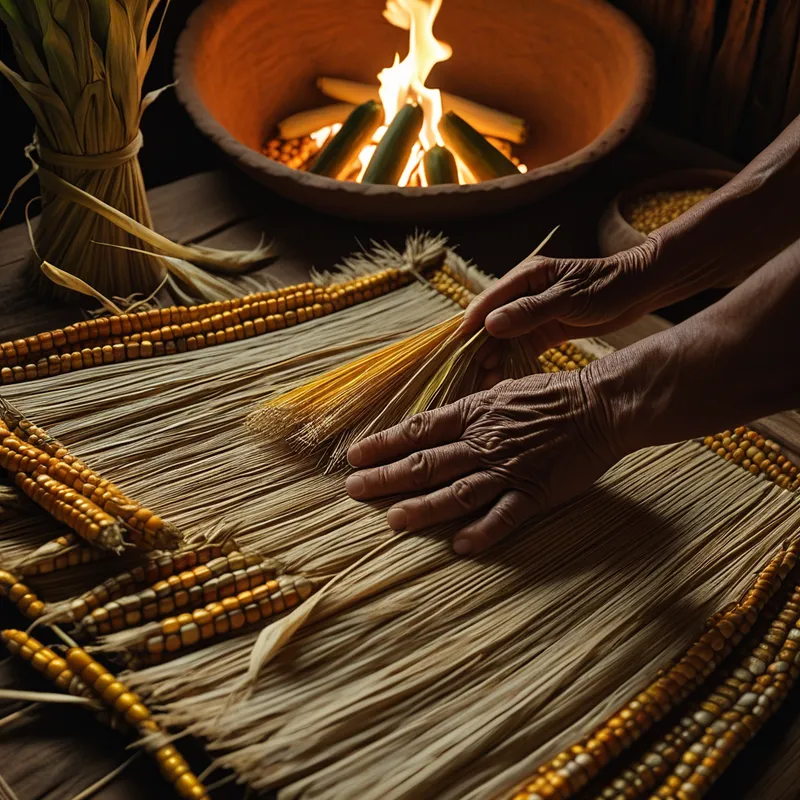
The myth of the Three Sisters is one of the most widespread and enduring agricultural allegories among many Haudenosaunee (Iroquois) and other Eastern Woodlands nations. It is not merely a story about efficient farming, but a cosmological principle passed down through generations, often by clan mothers and elders during seasonal ceremonies and planting times. Its societal function was profound: it encoded a complete ecological and ethical system. It taught the technology of companion planting, where each plant supports the others, but more importantly, it modeled the ideal society—one based on mutual aid, respect for distinct roles, and collective thriving. The myth was a living instruction manual for both sustaining the body and nurturing the soul of the community, reinforcing that human life is inextricably woven into the life of the earth.
Symbolic Architecture
The Three Sisters represent a perfect symbolic triad of interdependence, a psychic ecosystem where different aspects of the self support and complete one another.
Corn is the Spine of Consciousness. She symbolizes the upright ego, the principle of structure, goals, and visible achievement. She reaches for the sky, representing spiritual aspiration and the framework upon which life grows.
Bean is the Heart of Relation. She is the connective tissue, the emotional and instinctual intelligence that binds things together. Her ability to fix nitrogen symbolizes the psychological process of taking raw, atmospheric experience (emotions, interactions) and transforming it into nourishing substance for the roots of the psyche.
Squash is the Vessel of the Unconscious. She is the grounding force, the shadowy, fertile ground from which all growth emerges. Her broad leaves represent protection, containment, and the humility of staying close to the source. She is the necessary boundary that conserves resources and prevents burnout.
The true self is not a solitary stalk, but a woven mat. Consciousness, relationship, and the grounded unconscious must grow together, or they do not grow at all.

The Dreamer's Resonance
When this myth stirs in the modern dreamer, it often signals a deep, somatic call toward integration and holistic nourishment. To dream of planting the Three Sisters suggests a nascent understanding that a project, relationship, or phase of life requires a multi-faceted approach—it needs a plan (corn), emotional investment (bean), and self-care or boundaries (squash). Dreaming of a blight on one sister while the others thrive points to a psychic imbalance: perhaps an overemphasis on career (corn) at the expense of connection (bean) or health (squash).
A powerful dream motif is weaving the mat—taking the harvested husks, vines, and leaves to create a single surface. This is the psyche working to synthesize disparate life experiences into a coherent identity. The dream may evoke a profound sense of peace, a somatic feeling of being held and supported from within, as the internal "sisters" finally learn to cooperate. Conversely, dreaming of the sisters as separate, competing entities reveals an inner conflict where aspects of the self are at odds, leading to a feeling of barrenness or scarcity.
Alchemical Translation
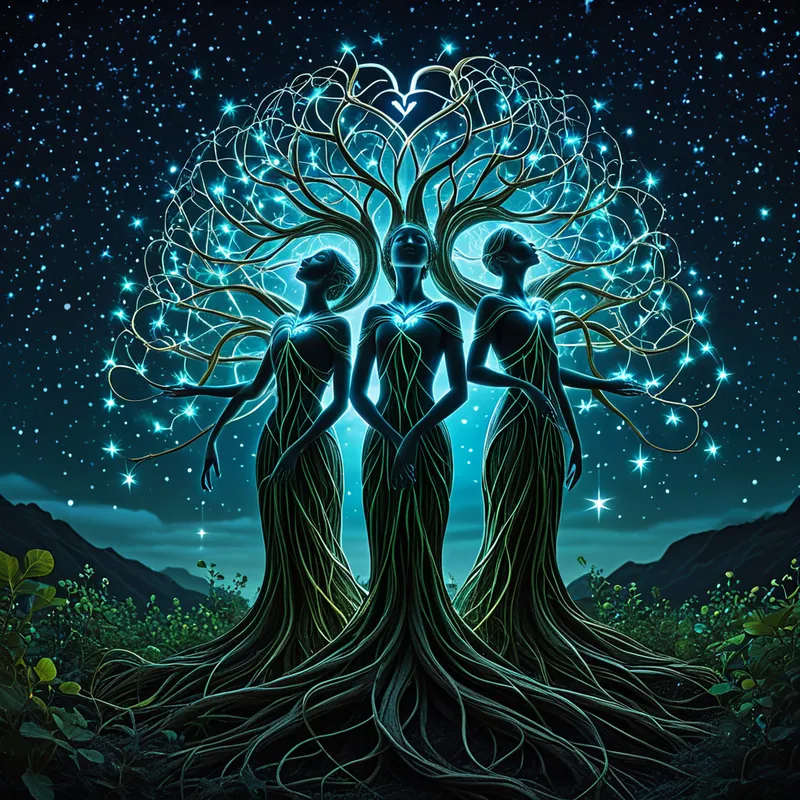
The alchemical process modeled here is not one of heroic conquest, but of sacred collaboration—the opus of community within the individual. The modern journey of individuation often begins with identifying with the solitary Corn: the striving ego seeking to stand tall and achieve. This is necessary, but incomplete. The work begins when the ego-stalk feels its loneliness and rigidity. It must allow the soft, twining Bean-vine of feeling and relatedness to climb it, which feels like a vulnerability, a loss of pristine self-sufficiency.
The vine does not weaken the stalk; it gives it a reason to stand.
Simultaneously, one must cultivate the Squash—the often-neglected capacity for containment, rest, and grounding in the instinctual self. This is the alchemical vas, the vessel in which the transformation occurs. Without this grounding cover, the soil of the soul dries up; inspiration withers.
The ultimate transmutation is the creation of the "mat." This is the fully realized personality, where the achievements of consciousness (corn) are nourished by rich relationships and emotions (beans) and protected by a grounded, self-caring awareness of limits and roots (squash). The product of this alchemy is not gold, but sustainable life: the ability to nourish oneself and others, season after season, from a deeply integrated center. The individual becomes, like the sisters, a self-sustaining ecosystem—a sacred garden where every part has a purpose, and every purpose serves the whole.
Associated Symbols
Explore related symbols from the CaleaDream lexicon: