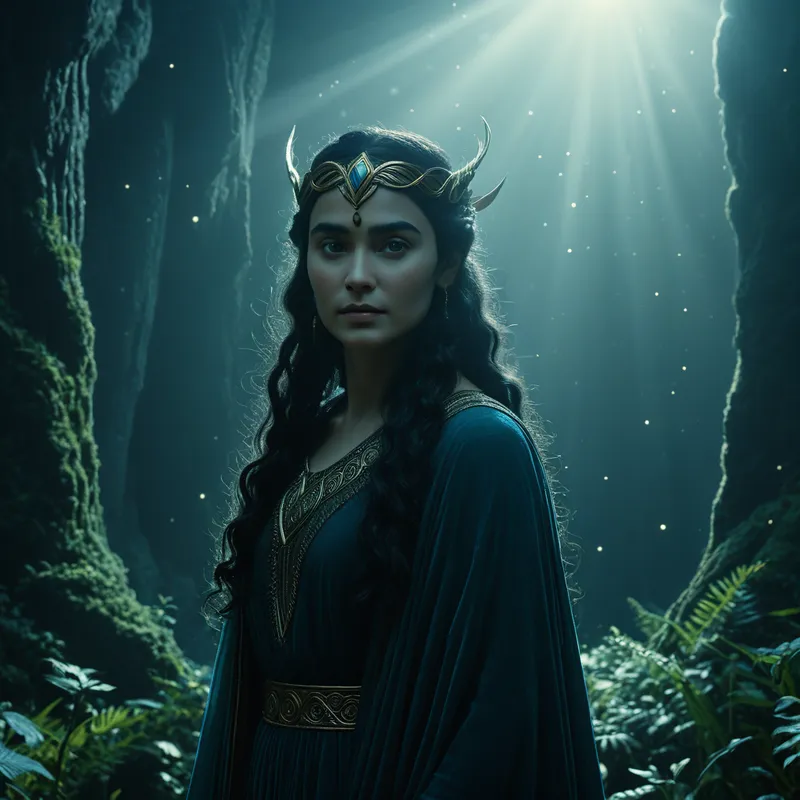
Marduk the City God
The Babylonian god Marduk ascended to become the patron deity of Babylon, embodying kingship, creation, and the city's divine protector.
The Tale of Marduk the City God
In the beginning, before the ordering of days, there was only the primordial, churning Tiamat and her consort, the sweet waters, Apsu. From their mingling, generations of gods were born, whose clamor and light disturbed the ancient, silent depths. Apsu, weary of the noise, plotted their destruction, but was himself slain by the clever god Ea. In the sacred chamber built upon Apsu’s stilled body, a new god was conceived. This was Marduk, born of divine wisdom and avenging purpose, a storm in infant form. From his birth, he was extraordinary; four eyes saw all directions, four ears heard every whisper, and from his lips leapt fire. He was given the four winds as his playthings, and he stirred the belly of Tiamat with their turbulence.
The old mother, Tiamat, grieving and enraged by the death of Apsu and the insolence of the younger gods, raised an army of monsters. She appointed the god Kingu as her champion and placed the Tablet of Destinies upon his breast, making him the commander of absolute fate. The assembly of gods trembled before this resurgence of primal chaos. They needed a champion, but none dared face Tiamat. Finally, Ea and the god of counsel, Anu, went to Marduk. They found him radiant, terrible, and unafraid.
Marduk agreed to be their defender, but on one profound condition: “If I am to be your avenger, to conquer Tiamat and save your lives, let me be supreme. Let my word be law, unchallenged and eternal, in the assembly of the gods.” Desperate, the gods convened a feast. They built Marduk a majestic throne, vested him with the scepter and the ring, the symbols of kingship, and chanted his fifty names, each a facet of his power. “We give you kingship over the totality of the universe,” they declared. His destiny and the city’s were now entwined before the battle had even begun.
Armed with a bow, a mace, a net held by the four winds, and seven storms of his own creation, Marduk mounted his storm-chariot and faced the dragon of the deep. He challenged Tiamat to single combat. As she opened her maw to consume him, he drove the evil wind into her belly, distending her. He shot an arrow that pierced her heart and split her skull. He stood upon her carcass, the conqueror of chaos.
Then, from the monstrous body of the defeated, he began the work of creation. He split her carcass like a clamshell, raising one half to form the vault of the sky, securing it with bars and posting guards so her waters would not escape. From the other half, he fashioned the earth. He established the constellations, the calendar, the rhythms of moon and sun. He organized the cosmos from the corpse of chaos. Finally, turning to Kingu, he severed his arteries and, from his blood, Ea fashioned humankind—lullû—to bear the labor of the gods, so that the divine might be at leisure.
And for himself, for his city, he performed the ultimate act of symbolic architecture. He built Babylon, “the gate of the gods,” at the very center of this new world. Within it, he raised his temple, Esagila, and beside it, the foundation of heaven and earth, the ziggurat Etemenanki. Here, in the city named for that divine gate, Marduk the king took his seat. The Tablet of Destinies was placed in his hands, not as a spoil of war, but as the ratified charter of a new cosmic order, centered on the city of brick and reed, now the axis of the universe.
Cultural Origins & Context
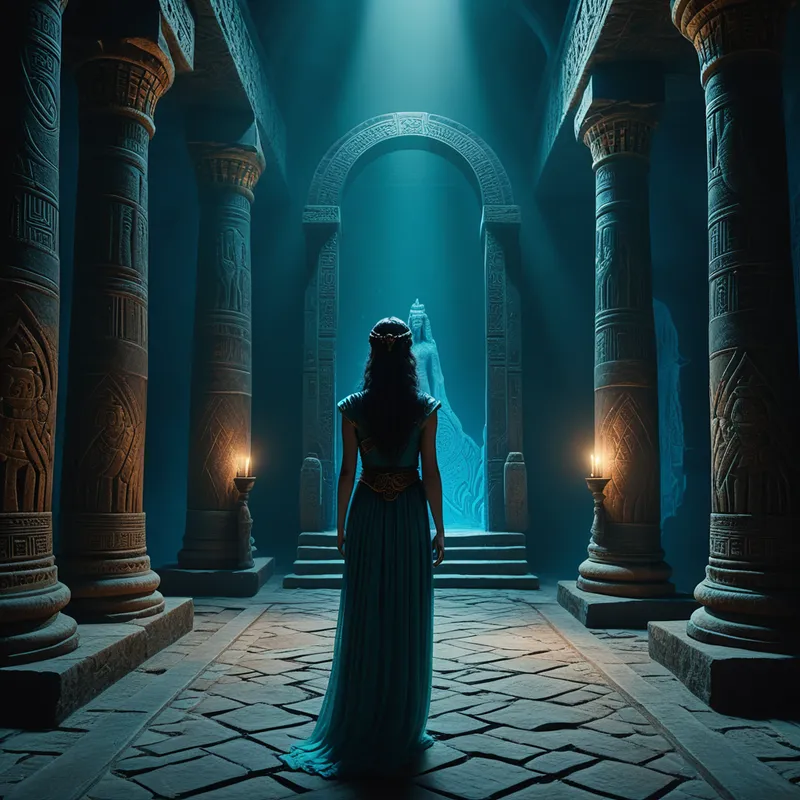
Marduk’s ascent is not merely a myth; it is the theological manifesto of Babylon’s political rise. Originally a minor agrarian deity associated with water, vegetation, and perhaps the morning sun, his character was amorphous. His name may mean “bull calf of the storm,” suggesting youthful, generative power. This local god of a then-insignificant city was radically reimagined as Babylon itself ascended under Hammurabi (c. 1792–1750 BCE). To justify Babylon’s hegemony over older Sumerian city-states like Nippur (home of Enlil) and Eridu (home of Ea), its theologians engineered a celestial coup.
The epic Enuma Elish, our primary source for this myth, was likely composed or codified during this period. It is a work of profound political theology. By narrating Marduk’s promotion from the ranks of the younger gods to the position of supreme ruler, it provided a divine blueprint for Hammurabi’s own unification of Mesopotamia. The god’s victory and subsequent ordering of the cosmos mirrored the king’s establishment of law and order across the land. The myth served a crucial ritual purpose as well, recited during the Akitu (New Year) festival to re-sanctify the king’s rule, reaffirm the cosmic order, and ensure the city’s prosperity for another year. Marduk became the ultimate city god, his fate inseparable from the walls that contained his temple. His power was not abstract; it was civic, manifest in the king who served as his steward and in the laws that flowed from his will.
Symbolic Architecture
The myth of Marduk constructs a psychic and cosmic architecture where chaos is not annihilated but transformed, and sovereignty is earned through a terrifying act of differentiation.
Marduk’s battle is the primordial act of consciousness confronting the undifferentiated, maternal deep. Tiamat is the uroboric state—the all-containing, all-devouring womb of potential that precedes the ego. To be born into individuality, the psychic hero must “slay” this totality, not out of hatred, but out of necessity for form to exist. The creation of the world from her body signifies that all structured reality—the sky of thought, the earth of the sensed—rests upon and is made from the substance of that which was overcome.
His demand for absolute authority before the battle is crucial. It represents the psyche’s recognition that to engage the chaotic, unconscious forces, the emerging ego-center must be granted total, if terrifying, commitment. There can be no ambivalence in the face of the dragon. The gods’ feast and bestowal of names is the inner council granting this centralizing principle its mandate.
Babylon itself, as the “navel of the world,” is the symbolic ego-complex built at the center of the newly ordered psyche. The ziggurat, Etemenanki, is not just a temple but a axis mundi, a ladder between the determined world of the gods (the superconscious) and the human world of toil (the conscious). Marduk’s rule from this city signifies that order, law, and meaning are not universal abstractions but are always mediated through a specific, located center of consciousness—a “city” of the self.
The Dreamer's Resonance
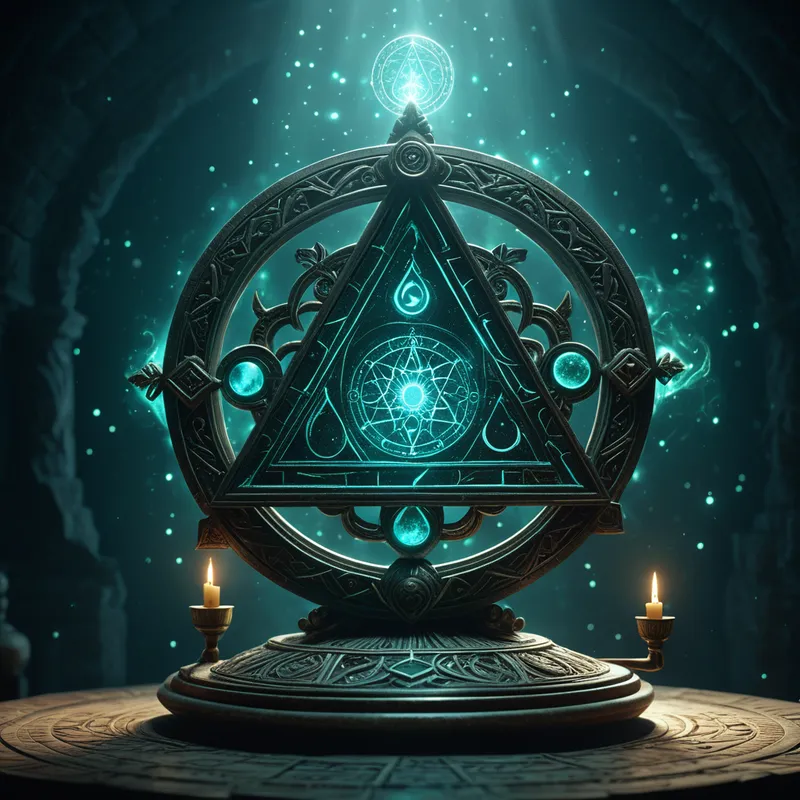
To encounter Marduk in the inner landscape is to confront the archetypal moment of decisive ordering. He appears when the dreamer’s life is in a state of formless turmoil or passive dependency (the reign of Tiamat). The call to “become Marduk” is the call to take up the terrifying responsibility of defining one’s own cosmos, of establishing inner laws and boundaries where none existed.
This can manifest as the courage to face a monstrous, overwhelming problem (addiction, grief, a life crisis) not with negotiation, but with a focused, combative will. It is the psyche’s move from victimhood to sovereignty. The price, however, is the loneliness of command. The ego that centralizes power in this way may feel isolated, burdened by the weight of the “Tablet of Destinies” it now holds—the weight of its own choices and their consequences. The dreamer may also grapple with the guilt of this “parricide,” of having to de-throne older, internalized authorities (parental complexes, outdated beliefs) to establish their own rule. The myth asks: What chaos must you face to build your city? And what absolute authority must you claim within yourself to do it?
Alchemical Translation
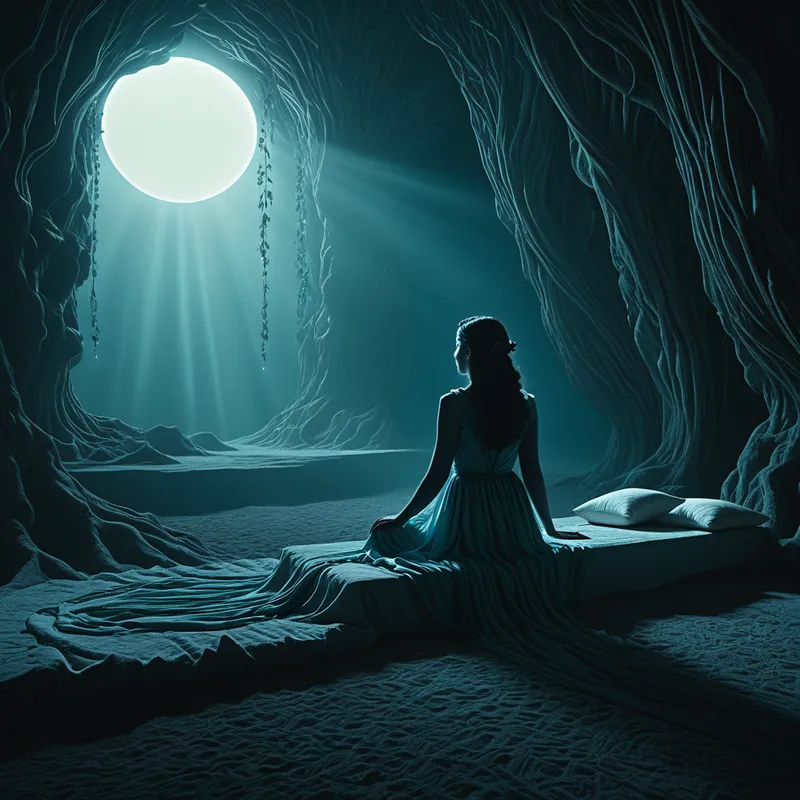
In the alchemical vessel of the soul, the myth of Marduk maps the stage of separatio and coagulatio—the violent separation of opposites from the primal massa confusa and their recombination into a new, royal unity.
The battle is the nigredo, the blackening, where the prima materia (Tiamat) is dissolved in the violent conflict. Marduk’s weapons—wind, arrow, net—are the alchemical agents of separation. The splitting of the carcass is the crucial separatio: heaven from earth, light from dark, conscious from unconscious. From this division, the work of coagulatio begins, forming the stable elements of the experienced world. Marduk himself, the filius regius (royal son), becomes the lapis philosophorum (philosopher’s stone), the perfected, ruling principle that transmutes base chaos into cosmic order.
The creation of humanity from the blood of the defeated Kingu is a profound alchemical insight. The “lead” of unconscious, rebellious instinct (Kingu) is slain, and its vital essence (blood) is taken up by the wise artifex (Ea) to create the homunculus, the awakened human consciousness that serves the greater work. We are not born of the victor, but of the transformed substance of the vanquished adversary. Our very nature is alchemical, forged from redeemed conflict. The city of Babylon, then, is the vas or the temenos, the sacred, walled space where this entire transformative process is stabilized and made permanent—the alchemist’s laboratory now rendered as a kingdom.
Associated Symbols
Explore related symbols from the CaleaDream lexicon:
- City — The ordered center of consciousness and civilization, built as a bulwark against chaos and a testament to sovereign will.
- Order — The cosmic and psychic principle established through decisive action, turning formless potential into structured reality.
- Chaos — The primal, undifferentiated state of potential and terror, represented as the monstrous deep that must be engaged and transformed.
- King — The archetypal ruler and centralizing principle of the psyche, embodying authority, law, and the responsibility of command.
- Temple — The sacred space where the divine meets the human, representing the inner sanctuary where the supreme principle is honored and order is maintained.
- Thunder — The terrifying voice of divine power and decisive intervention, breaking the stagnation of the old order.
- Crown — The symbol of legitimized sovereignty and the mandate to rule, conferred by the inner assembly of psychic forces.
- Dragon — The embodiment of primal, chthonic power and the unconscious in its overwhelming, devouring aspect.
- Blood — The vital essence of life and kinship, here representing the raw material of creation forged from the substance of conflict.
- Circle — The wholeness of the cosmos and the enclosed, protected domain of the newly established order.
- Tablet — The inscribed record of fate, law, and destiny, representing the fixed codes and decrees that govern the ordered world.
- Gate — The threshold between chaos and order, the point of access and defense, literally embodied in the name "Babylon."