
Mammoth Spirit Myth Meaning & Symbolism
A myth of a primordial beast, guardian of the underworld, whose bones hold the memory of the world and whose spirit guides the dead.
The Tale of Mammoth Spirit
Listen. The wind that cuts across the endless white does not blow empty. It carries a memory older than the first fire, a rumble from deep beneath the sleeping earth. This is the story of Mammoth Spirit, who does not walk upon the tundra, but within it.
In the Time Before Time, when the world was soft and still forming, the Great Mammoth walked. It was the first mountain, its back a rolling steppe, its breath the mist that became rivers. It shaped the valleys with its tread and its tusks scraped the sky, drawing down the first stars. But a great change came—a sinking cold, a hardening of the world. The earth itself grew heavy and began to swallow its eldest child. The Mammoth did not fight. It understood the turning of ages. With a final, resonant call that shook the roots of the World Tree, it allowed the ground to take it. It descended, not into death, but into a deep, dreaming vigilance.
Now, it dwells in Synda, the world beneath our world. Its colossal body is the architecture of that realm: its spine forms the ridges that hold up the ceiling of our earth; its great heart, a slow, warm cavern, is the forge where the spirits of metals and gems are born; its vast, labyrinthine intestines are the rivers that flow with black water, carrying the souls of the recent dead to their rest. The Mammoth Spirit is the keeper, the guardian, the very bedrock of the underworld.
It is said that on the stillest nights, when the aurora dances like the spirits of ancestors, you can feel its slow movement below. The ice cracks with a sound like snapping timber. In the deep taiga, a hunter might stumble upon a place where the snow has sunk into a perfect, circular depression—this is where the Mammoth Spirit breathed upward, leaving an echo of its presence. And when a great shaman dies, their journey to the spirit world is not upward, but down. They must find a crack in the permafrost, a gateway, and there, they will meet the Mammoth. It will not speak with words, but will show them the path through its own monumental body, past the rib-arches and through the heart-cavern, guiding them safely to the other side. To be received by the Mammoth Spirit is the final honor, a return to the primordial embrace of the world itself.
Cultural Origins & Context
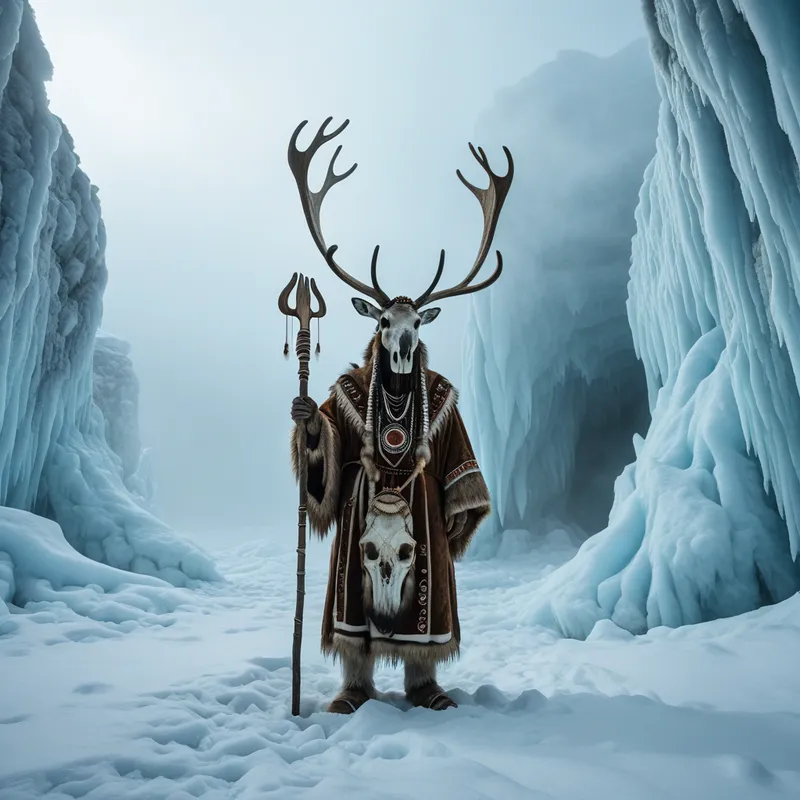
This myth is not a single story from one tribe, but a deep, resonant layer in the psychic substrate of many Indigenous Siberian peoples, including the Khanty, Mansi, Nenets, and Yakuts. It belongs to the animist worldview where every mountain, river, and animal possesses a conscious spirit (eeren or khozyain). The mammoth, whose immense bones were—and are—literally unearthed from the melting permafrost, provided a tangible link to a primordial past. These bones were not seen as mere fossils, but as the physical remains of a living, spiritual geography.
The tales were passed down by shamans (oyuun or noid), for whom the Mammoth Spirit was a crucial ally. It functioned as a psychopomp—a guide for souls—and as a guardian of profound, earthly wisdom. The myth served a vital societal function: it explained the mysterious, unstable terrain of the tundra (sinkholes, sudden cracks, booming sounds from below). More importantly, it provided a cosmology of depth. It taught that the foundation of life is not a void, but a remembered, living presence. Death was not an end, but a descent to be navigated with the help of the oldest ancestor of all.
Symbolic Architecture
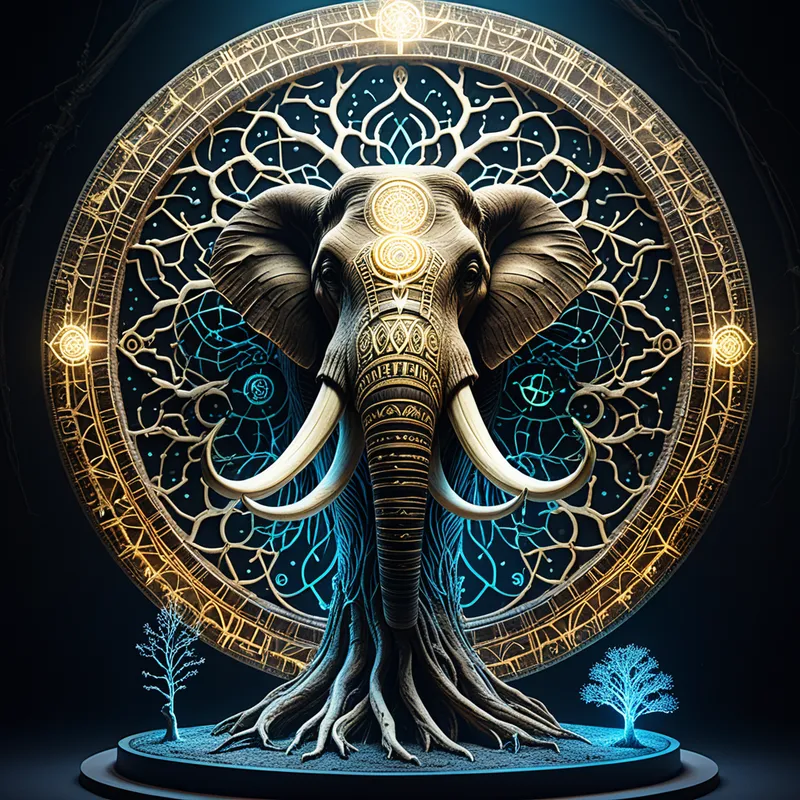
The Mammoth Spirit is an archetype of foundational memory and the underworld self. It symbolizes the psychic substratum—everything that has been "buried" by time, trauma, or cultural shift, yet continues to form the supporting structure of conscious life.
The Mammoth does not forget; it is memory incarnate. Its body is the archive of the world.
Its location beneath the permafrost is key. The permafrost represents the frozen, conscious ego—the "solid ground" of our identity. Beneath it lies the vast, dynamic, and often warmer realm of the unconscious, where the foundational patterns of our psyche reside. The Mammoth is the spirit of that foundational layer. Its tusks, often found protruding from riverbanks, are like memories breaking through into consciousness. Its slow movement causes cracks and tremors—the psychological equivalent of repressed material surfacing, disrupting our stable sense of self.
It is neither benevolent nor malevolent; it is structural. It does not judge the souls it guides; it simply contains the path. This makes it a profound symbol for the neutral, immense ground of being that underpins our personal dramas.
The Dreamer's Resonance
When the pattern of the Mammoth Spirit stirs in modern dreams, it signals an encounter with the bedrock of the psyche. This is not a dream of personal shadow (the wolf, the thief) but of the transpersonal shadow—the ancestral, the archetypal, the geologically slow processes of the soul.
You may dream of finding enormous bones in your backyard, of the floor of your house giving way to ancient caverns, or of a silent, immense presence moving deep below a city street. Somatic sensations often accompany these dreams: a deep rumbling in the chest, a feeling of the ground being unsteady, or a profound, gravitational pull downward. Psychologically, this indicates a process of psychic grounding—not in the sense of calming, but in the sense of connecting to the deepest, most archaic layers of the self. It is the psyche preparing for a major integration, often preceded by a feeling that the old "ground" of one's life (career, identity, relationships) is cracking apart to reveal something more ancient and true underneath.
Alchemical Translation
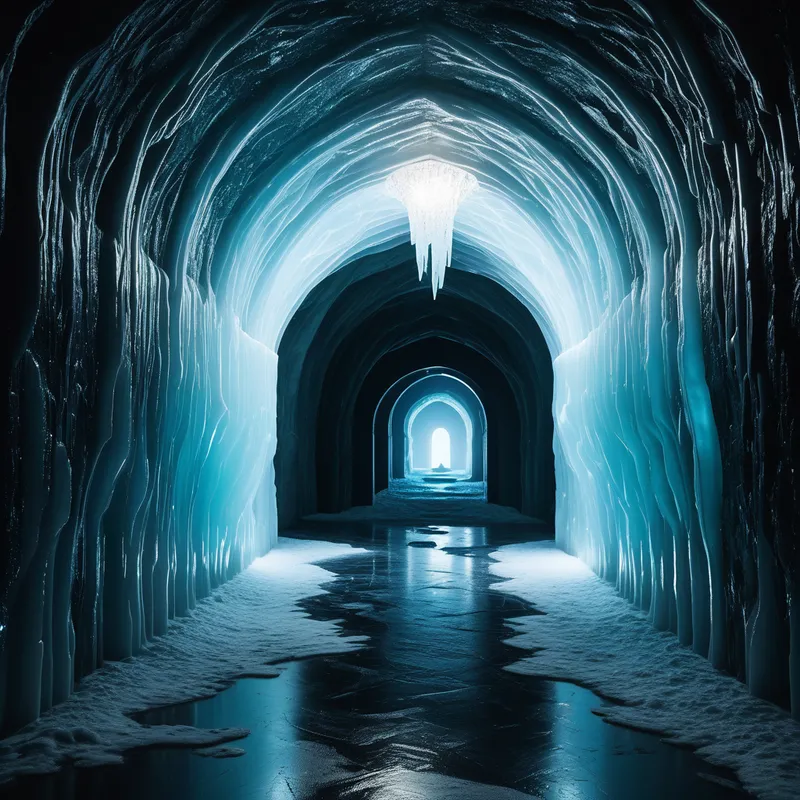
The myth of the Mammoth Spirit models the alchemical stage of nigredo—the blackening, the descent into the prima materia—and its paradoxical goal: finding the foundation in the abyss. The modern individuation process often requires a similar descent. We must allow parts of our constructed identity (the permafrost) to crack and sink to encounter the immense, forgotten wisdom that supports us.
The journey to the self is not a climb to a peak, but a guided descent to the bedrock. The spirit that seems buried is, in fact, what holds you up.
The "shaman's journey" in the myth is the ego's journey into the unconscious, not to battle monsters, but to be conducted through the landscape of the soul by its oldest, most patient inhabitant. The Mammoth’s body-as-terrain teaches that the structure of the unconscious is the path. The heart-cavern one passes through is the sol niger, the black sun, the dark center where transformation is forged in heat and pressure. To integrate the Mammoth Spirit is to achieve a profound, unshakeable grounding. It is to know that your psyche is built upon the bones of timeless patterns, that your personal life is a story happening on the back of a vaster, slower, wiser existence. You do not conquer this spirit; you learn its geography, and in doing so, you find that you are forever held in the memory of the world.
Associated Symbols
Explore related symbols from the CaleaDream lexicon: