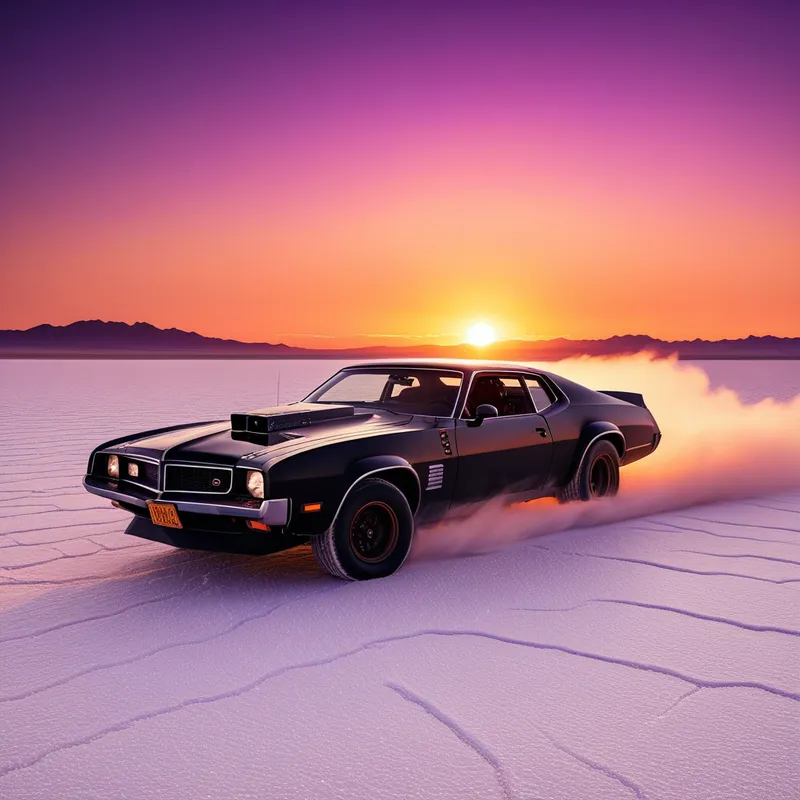
Mad Max's Interceptor Myth Meaning & Symbolism
A lone wanderer's sacred machine, forged in fire and loss, becomes the sole vessel of memory and identity in a shattered world.
The Tale of Mad Max's Interceptor
Listen. This is not a story of beginnings, for the world had already ended. It is a story of what remains.
In the time of the Great Poisoning, when the sky burned and the earth turned to dust, there walked a man who was no longer a man. He was a ghost of the old world, a Main Force Patrol warrior whose name had been scoured from his soul by fire and loss. They called him Max Rockatansky. And his soul was not in his chest, but in a machine.
The machine was a beast of black steel and roaring fury, a V8 Pursuit Special. It was his last tether to a time of rules, a time of walls and borders that meant something. He called it the Interceptor. Its engine was his heartbeat; its fuel line, his artery. Within its scarred metal shell, he carried the last relics of his dead world: a sawed-off shotgun, a tank of precious guzzoline, and a tiny, tinkling music box that played a melody of ghosts.
Max and his metal self wandered the Wasteland, a single entity of survival. The sun was a hammer. The silence was a scream. He fought marauding tribes who worshipped chrome and violence, their own bodies grafted with machinery, a dark mirror to his own fusion. He ran from them, and he ran towards nothing, for the Interceptor’s purpose was not to arrive, but to endure.
Then came the theft. The night it was taken from him—stolen by the feral, white-painted Nightrider cult—was the night he was truly unmade. To lose the car was to be disemboweled, to have his beating heart ripped from his ribs and driven shrieking into the darkness. He pursued, not as a man seeking property, but as a phantom seeking its only vessel. The chase was a funeral dirge played at full throttle, a final, violent spasm of the self.
He reclaimed his heart-machine from the wreckage of the thief, but it was changed. Scarred. Like him. And in the reclaiming, he used it not to flee, but to make a stand—a brief, terrible flare of the old justice in a world that had forgotten the word. He became the avenger, the rolling judgment. The Interceptor was both sanctuary and weapon, womb and tomb.
In the end, there was no victory, only survival. The car, battered and faithful, carried him away from the latest graveyard, back into the endless, shimmering haze of the desert. Man and machine, a single, lonely archetype against the void, destined to wander, destined to remember, destined to run.
Cultural Origins & Context
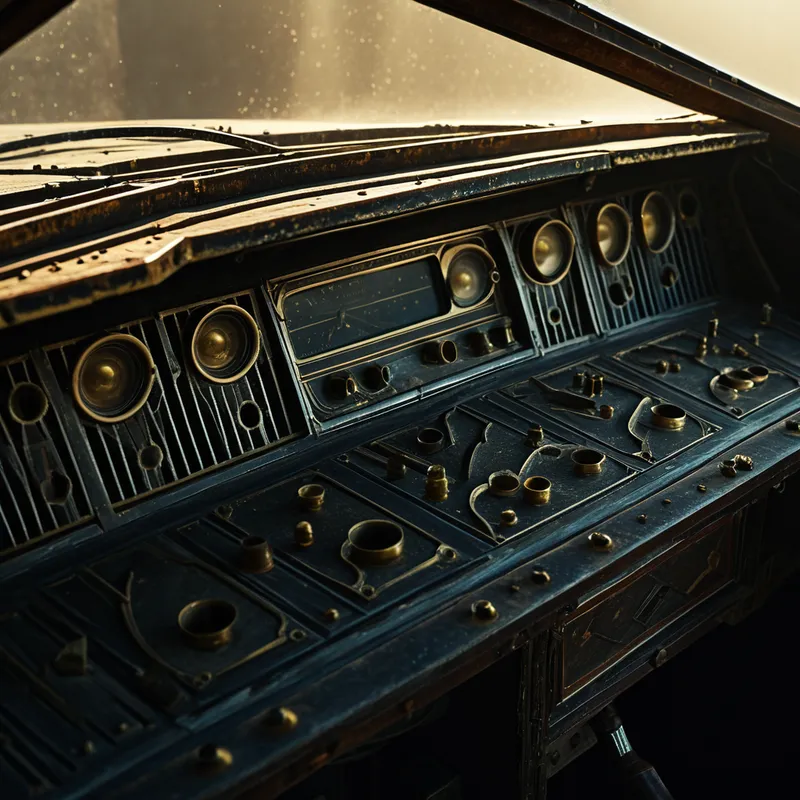
This myth emerged not from ancient scrolls, but from the flickering light of cinema in the late 20th century. It was forged in the cultural anxieties of the 1970s and 80s: fear of resource depletion, societal collapse, and the fragility of civilization. The filmmakers, particularly director George Miller, acted as modern bards, channeling these collective fears into a stark, visceral narrative.
The myth was passed down through the potent ritual of the movie theater and, later, home video. It found fertile ground in subcultures obsessed with cars, survivalism, and a dystopian aesthetic. Its societal function was dual: it served as a terrifying cautionary tale about the road we were on, and simultaneously as a strange, empowering fantasy of ultimate self-reliance. It asked the haunting question: What is the core of you when everything else—family, society, law—is stripped away? The answer it provided was not a person, but a persona fused with a purpose-built machine.
Symbolic Architecture
The Interceptor is not a car; it is a psychic capsule. It represents the hardened, mobile structure of a traumatized psyche. Max’s ego, shattered by loss, retreats into this metallic shell. The car is his individuation vehicle—quite literally—but one stuck in a primitive, defensive stage.
The vehicle is the vessel for the soul in exile. It is the mobile fortress of the self, when the self can no longer trust the ground upon which it walks.
The Wasteland is the externalized inner world of profound trauma—barren, hostile, stripped of meaning and connection. The pursuit and defense of the Interceptor symbolize the most basic, animal-level struggle to preserve the integrity of the self. The fuel is life-force, the ammunition is will, and the road is the relentless, forward-moving demand of time, even when there is nowhere to go.
The theft of the car is the ultimate psychological violation, a narcissistic injury that forces the hero to engage with the world not from a place of isolated survival, but of active, rage-fueled reclamation.
The Dreamer's Resonance
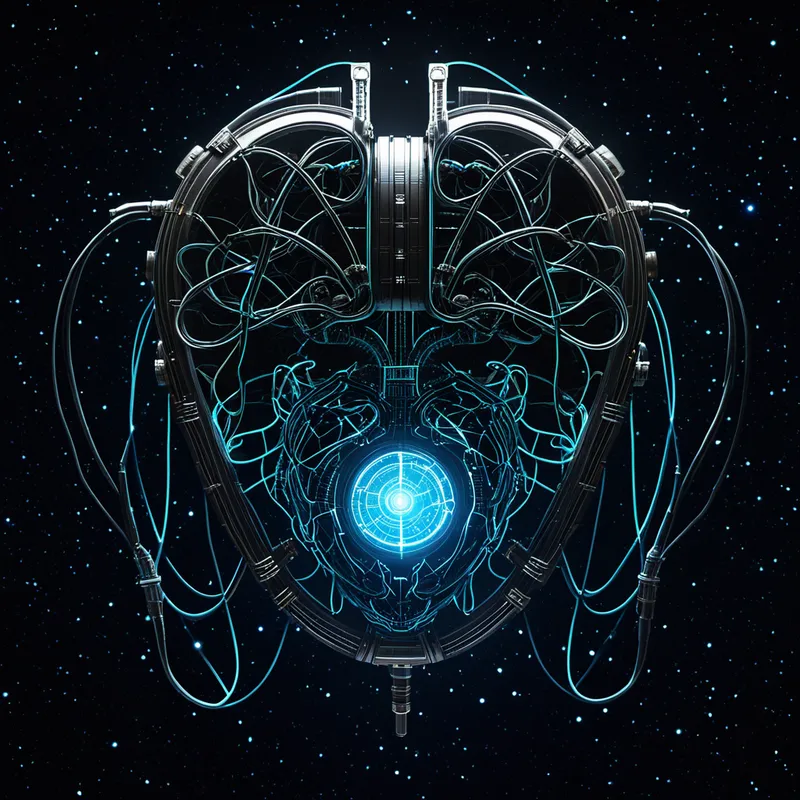
To dream of the Interceptor is to dream of one’s own psychological armor and its limits. It often appears when the dreamer feels their core identity or autonomy is under threat.
- Dreaming of driving it effortlessly may signal a period of integrated strength, where one’s defenses and resources feel perfectly aligned with life’s challenges.
- Dreaming of it being damaged, stuck, or out of fuel points to shadow material or exhaustion depleting the ego’s resources. The psychic vehicle is breaking down.
- Dreaming of it being stolen is a profound alarm from the unconscious. It indicates a felt experience of being robbed of one’s agency, purpose, or sense of self, often by external pressures or internal betrayals.
- Dreaming of endlessly repairing it speaks to the somatic and psychological work of maintaining one’s functional persona in the face of ongoing stress or past injury.
The dream is an inquiry into the cost of our fortifications. What precious, soft humanity have we locked in the trunk to keep this hard shell running?

Alchemical Translation
The myth of Max and his Interceptor models the initial, brutal stages of the alchemical nigredo. It is about the reduction of the personality to its most essential, hardened element through the fire of trauma. The goal here is not yet gold, but durable, functional iron.
The alchemical process begins with the separatio—the violent severing from the old life (family, society). Max is dissolved into the chaos of the Wasteland. His coniunctio, or sacred marriage, is not with an anima figure, but with the machine. This is a mysterium coniunctionis of man and tool, consciousness and its defensive extension.
The triumph is not in finding a new paradise, but in mastering the art of navigation through an ongoing hell. The transformed self is the one that can carry its ruins without being crushed by them.
The true transmutation offered is one of function. The Interceptor begins as a symbol of a lost order (a police car). Through its trials, it is alchemized into something new: a vessel of pure, amoral survival, and later, a reluctant tool for a skewed justice. For the modern individual, this myth speaks to the phase of healing where one must construct a temporary, robust identity—a “psychic Interceptor”—to carry one through the desert of depression, grief, or crisis. It is about honoring the armor while knowing it is not the final form. The journey is from being a shattered victim of the Wasteland to becoming its definitive, if lonely, sovereign—a ruler of one’s own scarred, rolling kingdom.
Associated Symbols
Explore related symbols from the CaleaDream lexicon: