Luqman the Wise Myth Meaning & Symbolism
The story of a humble slave granted divine wisdom, whose proverbs guide the soul toward inner sovereignty through silence, observation, and right action.
The Tale of Luqman the Wise
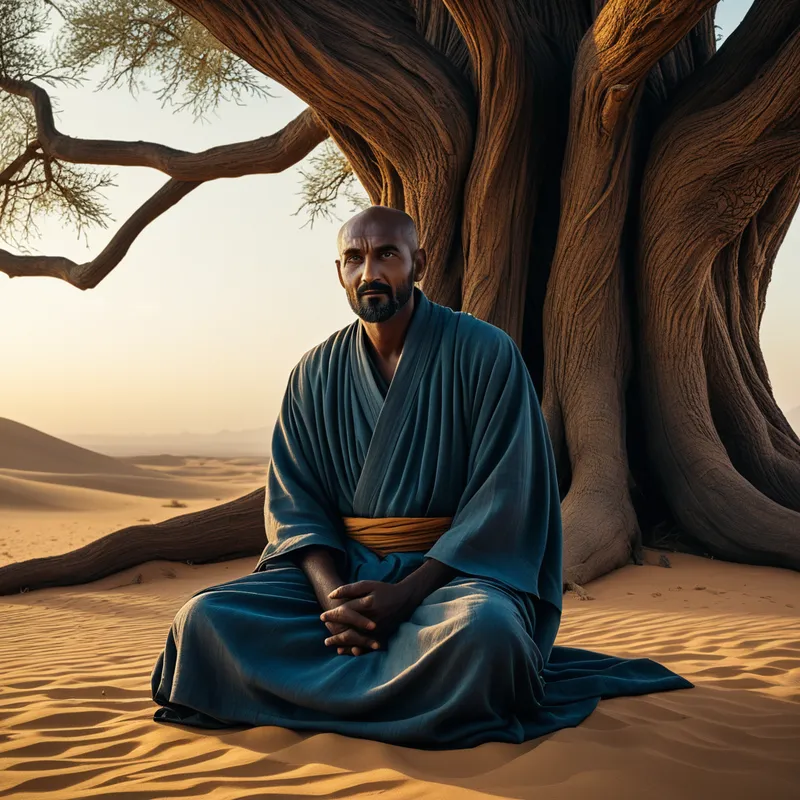
In the deep, sun-scorched time before time, when the desert sands whispered secrets to the wind, there lived a man named Luqman. He was not a king crowned in gold, nor a warrior famed in song. He was a slave, his body marked by labor, his hands familiar with the rough texture of rope and the coolness of clay. His home was the vast, silent expanse where the sky meets the earth in a line of pure, burning light.
One day, as Luqman tended his master’s flock under the relentless eye of the Sun, a stillness descended upon the world. The wind died. The bleating of the sheep fell silent. A presence, vast and intimate as the horizon, filled the air. It was not a voice that spoke to his ears, but a knowing that blossomed in the very center of his being. The Divine offered him a choice: prophethood or wisdom.
Luqman did not reach for the mantle of a messenger. Instead, he bowed his head, his forehead almost touching the hot sand. “O Allah,” his soul whispered, “if I can choose, let me have wisdom.” And so it was granted. Wisdom did not come as a flash of lightning, but as a slow, deep-rooted understanding that grew within him like a Tree in fertile soil. He saw the truth in the flight of a Bird, the lesson in the flow of a River, and the order in the turning of the stars.
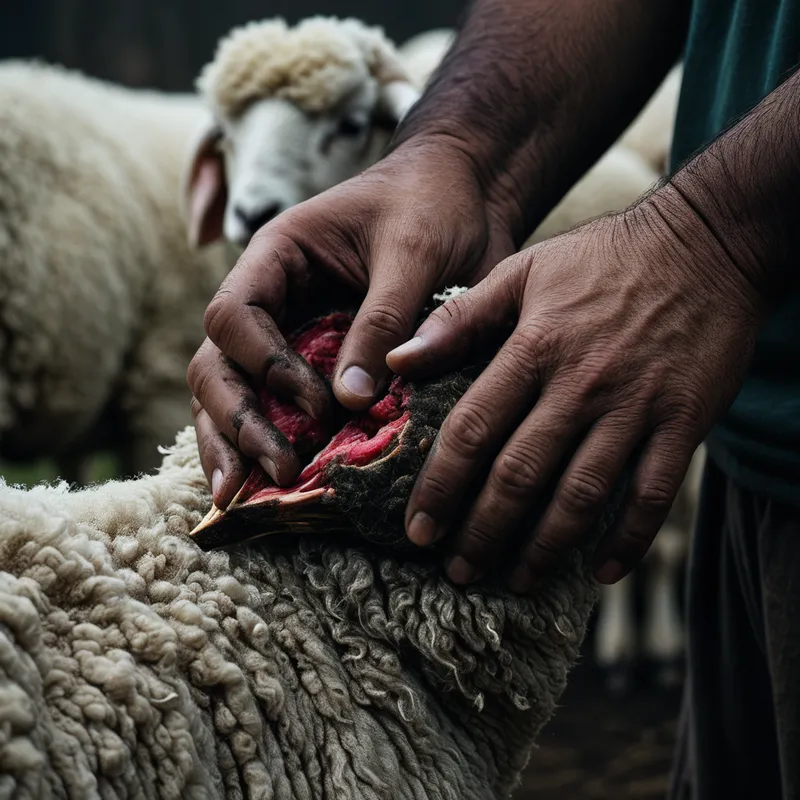
His master, witnessing this profound change, once tested him. He commanded Luqman to slaughter a sheep and bring him the two best parts. Luqman returned with the tongue and the heart. Another day, he was commanded to bring the two worst parts. Again, Luqman returned with the tongue and the heart. The master, bewildered, demanded an explanation. Luqman, his voice as calm as deep Water, said, “These two organs are the best when they are good, and the worst when they are corrupted.”
His fame spread, carried on caravans and in the stories told at oasis wells. People journeyed through the blistering heat to sit at his feet beneath the shade of that great tree. To his beloved son, he poured forth his counsel, a stream of proverbs that became the Surah of Luqman. “O my son,” he would say, his hand on the young man’s shoulder, “do not turn your cheek in pride towards people, nor walk upon the earth in arrogance. And lower your voice, for the harshest of sounds is the braying of the donkey.” He spoke of the unseen weight of a mustard seed’s worth of faith, of gratitude to parents, and of the ultimate return to the Divine. He lived and died a slave in body, yet in spirit, he was the most sovereign of Rulers, his kingdom the human heart.
Cultural Origins & Context
The figure of Luqman emerges from the rich, pre-Islamic oral traditions of the Arabian Peninsula, later woven into the fabric of Islamic civilization through the Quran and the vast corpus of Hadith and commentary (Tafsir). He is a liminal figure, straddling the boundary between universal sage and specifically Islamic exemplar. His story was not the property of court historians but of storytellers (Qussas) and scholars who used his narrative as a pedagogical tool.
Societally, Luqman served a crucial function. In a culture that highly valued tribal lineage, honor (sharaf), and often equated social status with worth, Luqman’s identity as an Abyssinian slave presented a radical theological and social axiom: true nobility comes from Taqwa (God-consciousness) and wisdom, not from bloodline or worldly power. He modeled an inward Jihad against the ego, making his teachings a timeless guide for ethical and spiritual conduct, accessible to every individual, regardless of station.
Symbolic Architecture
Luqman is the archetypal Senex integrated with the humility of the servant. His myth dismantles the ego’s grandiosity, proposing that the throne of wisdom is found in the valley of humility.
The first step toward true knowing is the conscious choice to remain a student of the unseen, to prefer the quiet certainty of the heart over the loud authority of the title.
The central symbols of the tongue and the heart are the myth’s psychological keystones. The tongue represents the formative, creative, and destructive power of speech—the logos that shapes reality. The heart symbolizes the seat of intention (niyyah), the moral and emotional core. Together, they form the crucible of character. Luqman’s lesson is that these organs are neutral vessels; their virtue or vice is determined by the quality of the Soul that directs them. His choice of wisdom over prophethood signifies a profound truth: the wisdom to navigate one’s own inner world is the foundation for any authentic outer guidance.
The setting—the desert under the sun—is not mere backdrop. It is the Desert of the soul, where all non-essentials are burned away, leaving only the bedrock of being upon which the Tower of true understanding can be built.

The Dreamer's Resonance
When the pattern of Luqman stirs in the modern Dream, it often manifests as a confrontation with false sovereignty. The dreamer may find themselves in a position of apparent authority—sitting on a grandiose throne—only to discover it is made of brittle clay. Or they may dream of being a silent observer in a chaotic court, understanding the folly of every speaker but feeling no urge to speak.
Somatically, this process can feel like a grounding, a heavy, sure weight settling in the belly, counteracting the dizzying inflation of the ego. Psychologically, it is the ego’s capitulation to the greater intelligence of the Self. The dreamer is undergoing a kenosis—an emptying of pretension. The conflict is between the inner “master” (the social persona craving status) and the inner “slave” (the humble, authentic self that labors in truth). The resolution comes not in overthrowing the master, but in realizing, as Luqman did, that the only master worth serving is the voice of profound, inner wisdom. One awakens with a sense of quiet dignity, having touched the Stone of one’s own genuine nature.

Alchemical Translation
The alchemy of Luqman is the transmutation of base ego (lead) into the gold of humble wisdom. It is the opus contra naturam—the work against our natural tendency toward self-aggrandizement.
The process begins with the Nigredo, the blackening: the acceptance of one’s lowly, “enslaved” state—not in a literal sense, but an acknowledgment of one’s limitations, ignorance, and dependence on forces greater than the ego. This is the desert experience. The Albedo, the whitening, is the divine offer: the flash of potential for greatness (prophethood). The critical, alchemical choice is Luqman’s refusal. This refusal is the Citrinitas, the yellowing, where the solar impulse of inflation is consciously rejected and internalized.
The most profound act of will is not the grasping of power, but the disciplined surrender to a higher order of knowing. This is the moment the crown of the ego is melted down to forge the key to the soul.
The final stage, Rubedo, the reddening, is the lived embodiment of wisdom. It is the heart, now purified and fully conscious, directing the tongue with precision and compassion. The slave becomes the sage, not by changing his outer station, but by realizing his inner sovereignty. The external chains remain, but they no longer bind the spirit. For the modern individual, this translates to the difficult, daily work of choosing silent understanding over clever debate, of performing necessary duties without resentment, and of measuring one’s worth by the integrity of one’s heart, not by the applause of the world. It is the ultimate Individuation, where one rules the inner kingdom with justice, having first served it with humility.
Associated Symbols
Explore related symbols from the CaleaDream lexicon:
- Tree — The ancient, enduring symbol of Luqman’s wisdom, representing deep-rooted life, connection between heaven and earth, and the sheltering knowledge he provides.
- Heart — The central organ of Luqman’s lesson, symbolizing the seat of intention, the moral core, and the vessel that determines the quality of one’s actions and speech.
- Tongue — Representing the power of speech and expression, which Luqman teaches can be the best or worst of instruments based on the wisdom or corruption that guides it.
- Water — Symbolizing the deep, calm, and life-giving nature of true wisdom, as opposed to the arid arrogance of the ego.
- Sun — The conscious, divine light under which Luqman receives his wisdom, representing illumination, truth, and the overseeing principle of cosmic order.
- Mountain — Emblematic of the steadfastness, endurance, and lofty perspective achieved through humble wisdom, forming an inner stability unshaken by worldly winds.
- Key — The wisdom of Luqman acts as a key that unlocks the understanding of true sovereignty, which is found not in external power but in internal governance.
- Ruler — Luqman embodies the inner Ruler archetype, demonstrating that true kingship is the wise and just governance of one’s own soul, regardless of external status.
- Shadow — The myth engages with the Shadow by confronting the ego’s pride and arrogance, integrating these denied aspects through the acceptance of a humble, servant identity.
- Soul — The ultimate subject of Luqman’s guidance; his proverbs are a map for the care, cultivation, and ultimate return of the soul to its source.
- Stone — Symbolizing the foundational, unshakeable truth and humility upon which the edifice of authentic wisdom is built.
- Islamic Mosque — Represents the cultural and spiritual tradition that preserved and venerates Luqman’s story, framing his wisdom within a cosmology of divine unity and ethical living.