Loki / Coyote / Eshu Myth Meaning & Symbolism
A cross-cultural exploration of the Trickster archetype, revealing how chaos, boundary-breaking, and cunning are essential to psychological wholeness and cultural vitality.
The Tale of Loki / Coyote / Eshu
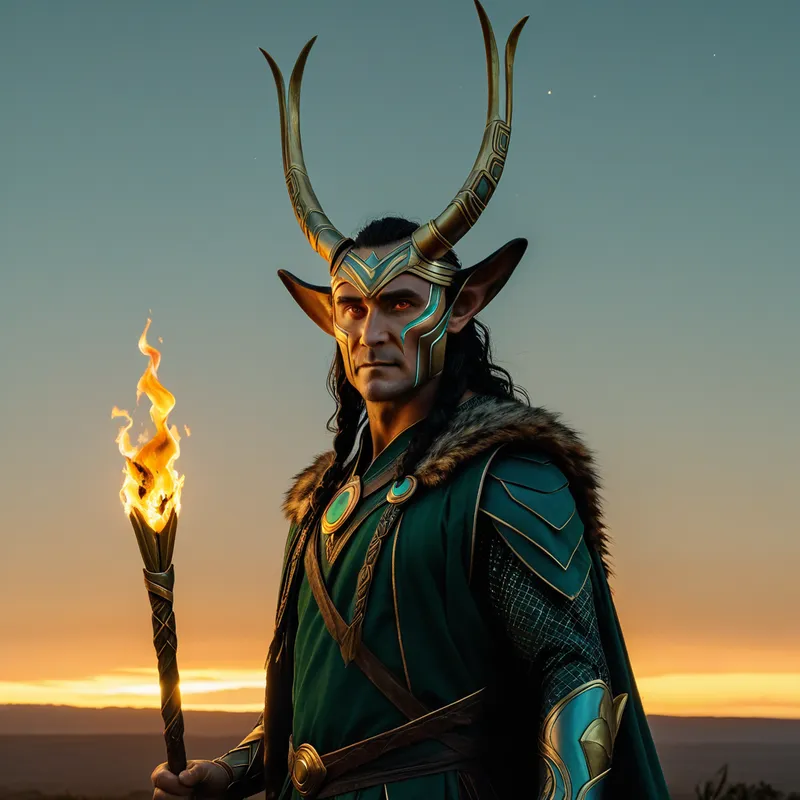
Listen. In the time before time was a straight line, when the world was still soft at the edges, there walked a figure in the spaces between. You would hear his step—a rustle in the dry canyon, a crackle in the hearth’s dying ember, a laugh at the crowded market gate. He is the shape in the corner of your eye, the thought you didn’t mean to think.
He is the one who steals the sun, not to plunge the world into night, but to toss it like a golden ball, teaching it a new arc across the sky. He is the one who, invited to a feast of the gods, ensures the mead is sour and the roast is burnt, so that laughter, sharp and real, breaks the sterile silence of perfection. He walks the dusty road where it forks, wearing a hat black on one side, white on the other, and asks the traveler a riddle with no answer. Whichever way you choose, he is already there, grinning.
He saw the people, orderly and good, and grew restless. So he took the carefully bagged stars from the Old Man’s lodge and untied the thong. He did not keep them. He flung them wildly across the black velvet of the night, splattering light in reckless, beautiful patterns. “There,” he said, as the people cried out at the chaos. “Now you have something to wish upon.”
He saw the wall, strong and high, built by giants to protect the gods, and he saw the price: the sun, the moon, and the goddess of love. A fair wage, said the builder. The gods agreed, sure they would cheat him. But as the deadline neared, the wall rose, flawless. Panic stirred in Asgard. Only he had a plan. He transformed into a magnificent mare, luring the builder’s mighty stallion away. The wall was left unfinished. The gods were saved. And from that union, born of trickery and desire, came the eight-legged steed Sleipnir, fastest of all. The savior was the scandal; the solution was a sin that became a gift.
His greatest trick was on himself. At a feast, in malice or in mirth, he orchestrated the death of the most beloved god, the shining Baldr. For this, the threads of fate snapped. He was bound in a cavern, a serpent’s venom dripping onto his face. His loyal wife catches the poison in a bowl. But when she turns to empty it, a single drop falls. He convulses in agony, and his thrashing shakes the very roots of the Yggdrasil. His pain is the earthquake. His bondage is the price of the world’s order. And his writhing is the tension that keeps the story from ending.
Cultural Origins & Context
This is not one myth, but a pattern sung across continents. In the Norse sagas, recorded by medieval scribes often hostile to the old gods, Loki is the ambiguous blood-brother of Odin, embedded in the family of the Aesir yet eternally other. His stories were told in longhouses during the deep winter, a reminder of the chaos that rings the fragile community.
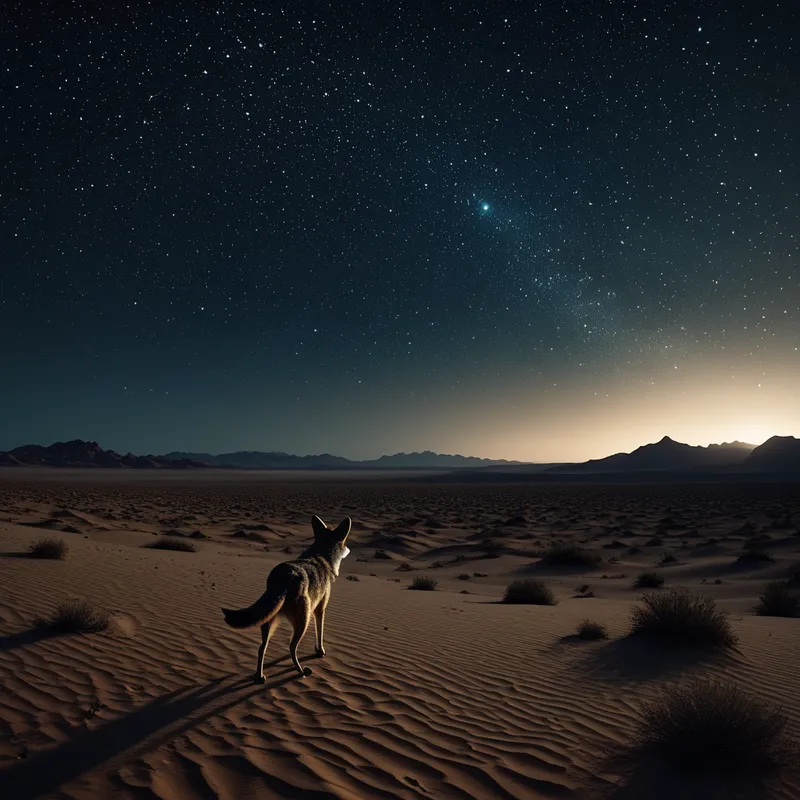
On the plains and in the canyons of North America, Coyote stories are not mere folklore but sacred, living narratives. Told by elders to teach, warn, and socialize, Coyote is the First Person, the one who, through his outrageous greed, vanity, and foolishness, often accidentally creates the world as it is—defining rivers, placing mountains, and establishing the rules by breaking them spectacularly. He is a moral example in reverse.
In the Yoruba and later Afro-diasporic traditions, Eshu (also Elegua, Exu) is a fundamental divine force. He is the messenger, the linguist who enables communication between humans and orishas. His domain is the crossroads—literal, spiritual, and existential. He is propitiated first in ritual, for he opens or closes the way. He is not "evil," but he is unequivocal in enforcing destiny and balance, often through provoking necessary conflict.
Symbolic Architecture
The Trickster is the archetypal personification of the unconscious itself—mercurial, amoral, creative, and destructive. He represents the psychic principle of enantiodromia, the tendency of any extreme state to generate its opposite.
The Trickster does not believe in walls. He is the solvent that dissolves the calcified order, the spark that ignites the necessary fire in the too-clean hearth.
He is the boundary-breaker. He transgresses every category: god and giant, animal and human, male and female (Loki as a mare, mother to Sleipnir). He exists at the liminal space—the crossroads (Eshu), the twilight (Coyote), the doorway (Loki). His function is to keep categories fluid, to prevent the psyche—and the culture—from becoming rigid, sterile, and dead.
He is the catalyst of change. No transformation in mythology occurs without his interference. He steals fire, shatters illusions, and provokes crises. The death of Baldr, orchestrated by Loki, is the necessary prelude to Ragnarok and eventual rebirth. Coyote’s foolish theft of the stars creates the constellations that guide travelers. Eshu’s mischief forces a confrontation that leads to a new understanding.
He is the shadow of the hero, the laughter that undermines the king, the question that unravels the dogma. He is the psyche’s immune response against the tyranny of the conscious ego.
The Dreamer's Resonance
When the Trickster pattern stirs in modern dreams, he rarely appears as a mythological figure. He is the sudden, absurd joke in a serious meeting; the inexplicable urge to take a wrong turn; the chaotic friend who upends your plans; or the sly, animalistic figure that darts through the urban dreamscape.
Somatically, this can feel like nervous energy, restless legs, a bubbling of laughter or anxiety in the gut, or a literal feeling of being "tied in knots." Psychologically, it signals that the dreamer’s life structure has become too tight, too predictable, or too identified with a single, "respectable" persona. The unconscious is injecting chaos to create movement.
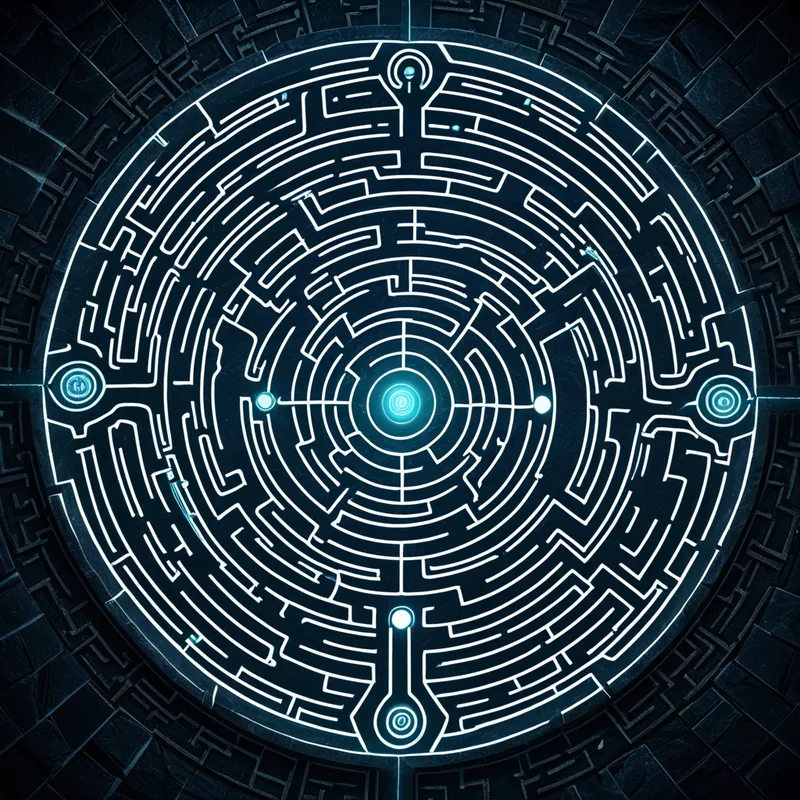
The dream-Trickster forces a confrontation with repressed dishonesty, suppressed creativity, or unacknowledged ambivalence. He makes a mess of the carefully arranged inner furniture. To dream of him is to be invited—or sentenced—to a process of deconstruction. The old, safe way is being shown to be an illusion, and the dreamer is in the liminal, uncomfortable space of the crossroads, where every choice feels fraught with both danger and potential.

Alchemical Translation
The individuation process is not a straight path to enlightenment; it is a spiral dance with the Trickster. He models the essential, terrifying stage of the nigredo, the blackening, where the old ego-complex is dissolved in the acid of paradox and shadow.
The first alchemical translation is the embrace of ambiguity. The ego desires certainty, good versus evil, success versus failure. The Trickster dissolves these binaries. To integrate this energy is to develop a capacity to hold contradiction, to see how one’s virtue is tied to one’s vice, how a great loss contains the seed of a new beginning. It is to wear the hat that is black on one side, white on the other.
The second is the necessity of sacred mischief. Conscious development requires not just building up (the persona, the career, the relationships) but also skillfully breaking down outgrown structures. This is the "constructive chaos" of the Trickster. It might mean questioning a deeply held belief, changing a life path that looks successful but feels dead, or allowing a repressed part of the personality to have its say, however disruptive.
The ultimate trick is on the ego itself: the realization that the force that seems to undermine you is also the force that keeps you alive, creative, and whole. The binding of Loki is the binding of chaos, but his thrashing is the pulse of the world.
To integrate the Trickster is not to become chaotic, but to make peace with the chaotic, creative, and unpredictable core of life and psyche. It is to acknowledge that at the heart of the most sacred order is a laugh, a gamble, and a crossroads. He is the god you must invite to the feast, lest the feast become a tomb. He is the shadow that, when brought into the light, does not vanish but begins to dance.
Associated Symbols
Explore related symbols from the CaleaDream lexicon: