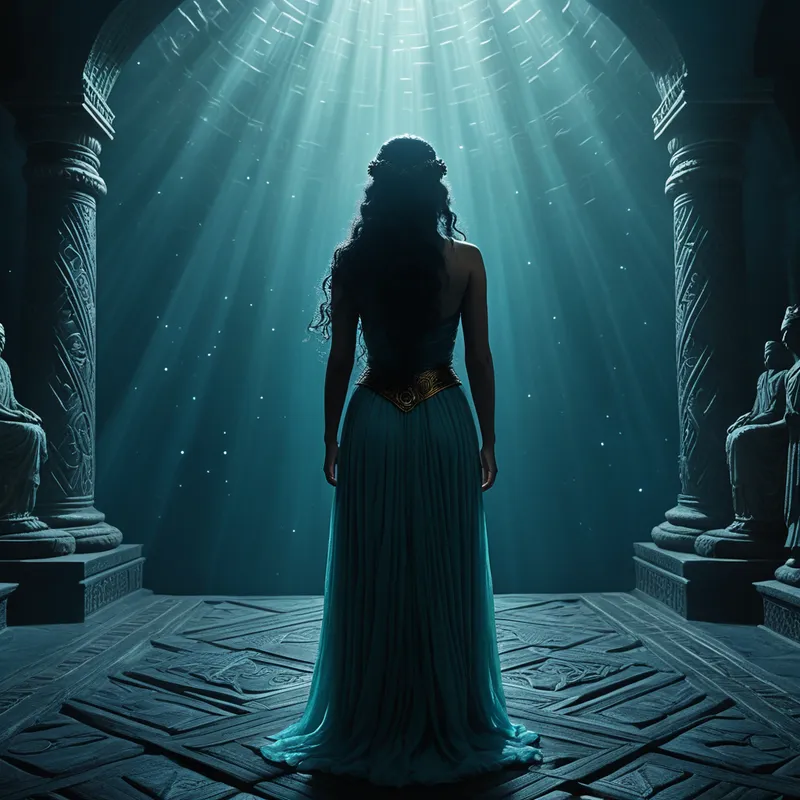
Lilith First Wife of Adam
Lilith, Adam's defiant first wife in Hebrew lore, rejected subservience and fled Eden to become a powerful, independent figure of rebellion and autonomy.
The Tale of Lilith First Wife of Adam
In the beginning, when the world was still soft and the light of creation was a palpable mist, the Holy One formed the first human, Adam, from the red clay of the earth. But the loneliness of the singular being echoed in the garden, a hollow note in the symphony of paired creatures. And so, from the same dust, the same divine intention, God fashioned a companion for Adam. This was Lilith. She was not drawn from his side, but shaped in parallel, an equal from the very same earth. They stood together in Eden, two sovereign beings under the same sky.
Yet, discord soon found its seed. In their coming together, Lilith refused the position beneath Adam. “Why should I lie beneath you?” she is said to have demanded. “We were both created from the earth, and are therefore equals.” She invoked the sacred name of God, a power known to her as it was to him, and claimed her autonomy. Adam insisted on his primacy; Lilith refused submission. Their union became a battleground of wills where harmony was meant to bloom.
Seeing no path to parity within the garden’s bounds, Lilith made her choice. With the power of the Ineffable Name on her lips, she fled the ordered paradise of Eden. She went out into the wild, unmapped places—to the desert, to the shores of the Red Sea, a region teeming with its own potent, untamed life. Adam, bereft and angered, appealed to the Creator. Three angels—Senoy, Sansenoy, and Semangelof—were dispatched to retrieve her, with a terrible ultimatum: return, or face a daily forfeit of one hundred of her demon children.
They found her by the Red Sea, a figure of fierce independence. Lilith refused. She would not return to subservience, even under threat of annihilation. A compromise, born of divine pragmatism, was struck. She would not be forced back to Adam, but the angels would enact a measure of control: they would take the lives of her offspring. In some tellings, she swore vengeance in return, vowing to prey upon human infants, sons of Adam and Eve, and to haunt the dreams of men, sowing nocturnal unrest.
Thus, Lilith passed from the chronicle of creation, becoming a permanent exile. Her departure made space for the second wife, Eve, formed from Adam’s side—a genesis that inscribed a different story of origin and relation. But Lilith was not erased. She became a power in the wilderness, a queen of demons and succubi, a specter of the night, and an eternal emblem of the defiant spirit that chose absolute freedom over paradisiacal bondage.
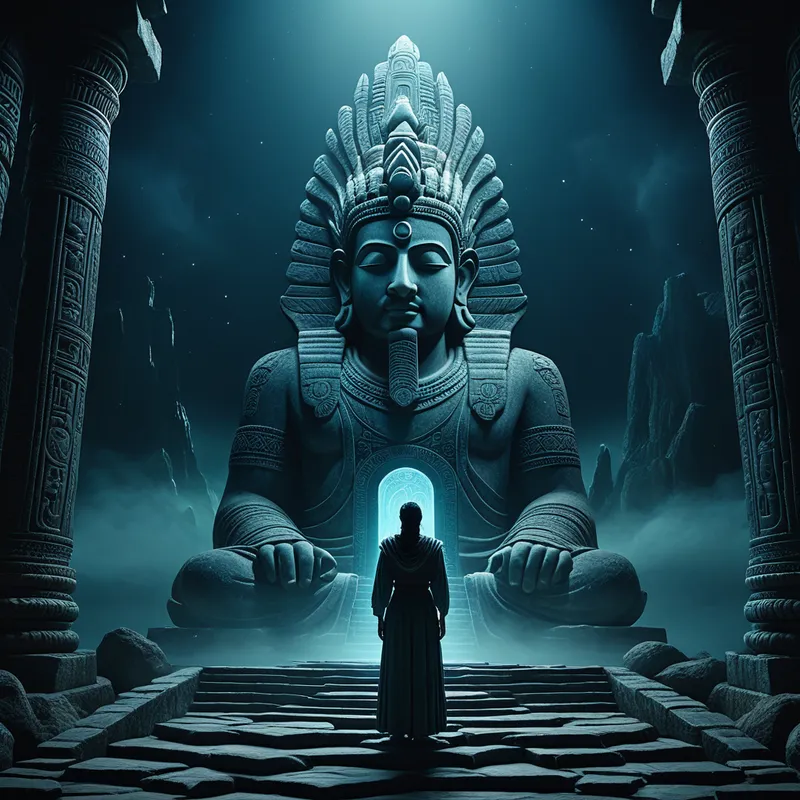
Cultural Origins & Context
The figure of Lilith emerges not from the canonical Hebrew Bible, but from the rich soil of Jewish midrash and folklore. Her most famous literary appearance is in the Alphabet of Ben Sira, a medieval satirical text from the 8th-10th centuries CE. Here, the tale of the first wife who demanded equality is fully articulated, answering a provocative question about the apparent contradictions in the Genesis creation accounts.
Her roots, however, sink deeper. Scholars trace her name and essence to earlier Mesopotamian night demons, the lilītu, wind spirits associated with sterility, infant mortality, and sexual menace. In this light, Lilith represents the absorption and transformation of a feared, external “other” into the internal mythology of the Hebrew tradition. She becomes the shadow to the light of Eve, the necessary “chaos” to Eden’s “order.” Within Kabbalah, particularly the Zohar, she is integrated into the complex cosmology of the Shekhinah, sometimes appearing as the severe and dangerous counterpart to the Shekhinah’s nurturing aspect. She is the first wife, the first exile, and the first to embody a rupture in the divine plan—a rupture that introduces the enduring themes of choice, consequence, and unresolved feminine power.
Symbolic Architecture
Lilith’s myth constructs a profound symbolic architecture for the psyche’s uncharted territories. She is the archetype of the Shadow in its most potent feminine form. Where Eve represents relatedness, nurturance, and (later) fallen grace, Lilith embodies unadulterated autonomy, wild instinct, and rage at enforced inequality. She is not evil in a simplistic sense, but she is dangerous—dangerous to structures of control, to patriarchal order, and to the illusion of peace bought through submission.
Her flight from Eden is not merely an act of disobedience, but a primal act of self-definition. She chooses the authenticity of the wilderness over the inauthenticity of the garden, trading security for sovereignty.
Her domain is the liminal space: the desert, the Red Sea shore, the night. These are places of transformation, trial, and raw potential, opposed to Eden’s cultivated stasis. As a succubus, she symbolizes the autonomous, devouring aspect of sexuality and creative energy that exists outside the bounds of procreation or partnership. She claims her desire as her own. Furthermore, her association with infant mortality, while terrifying, speaks to a deeper, more unsettling truth: she represents the psychic “death” of all that is soft, nascent, and dependent when confronted with the unyielding demand for absolute self-possession. She is the mother who refuses the role, the wife who refuses the contract, the soul that refuses assimilation.
The Dreamer's Resonance
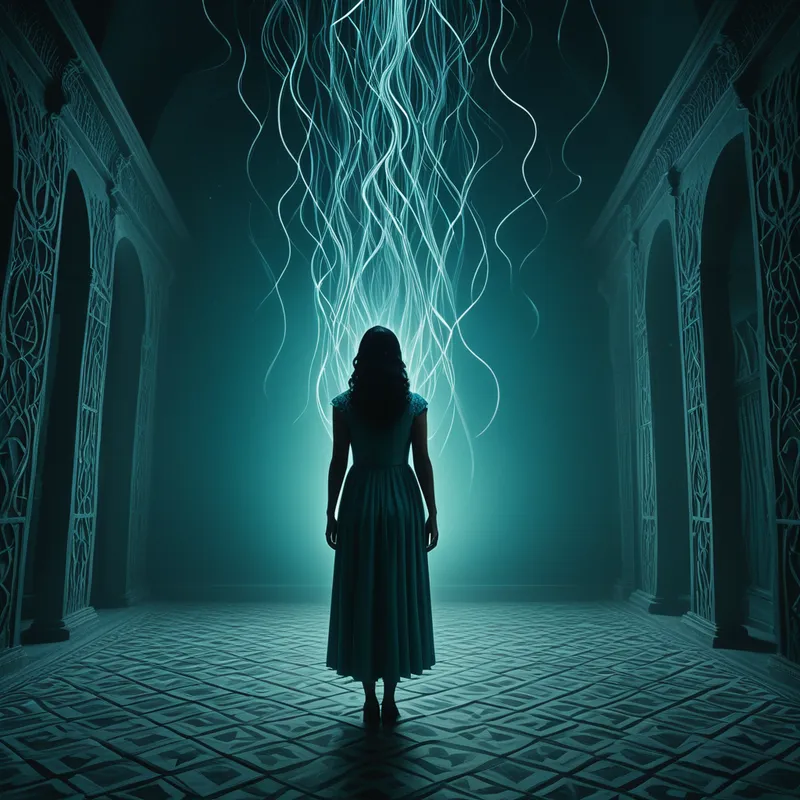
To encounter Lilith in the inner landscape is to meet a formidable aspect of the self. She appears when the soul feels the chokehold of compromise, when the spirit is forced into a posture of false humility or silent agreement. She is the rising fury at injustice, the gut-deep “no” that precedes any conscious thought. In dreams, she may manifest as a powerful, threatening, or seductive feminine figure, a wild animal, or the compelling call to abandon a “gilded cage” situation.
Psychologically, integrating Lilith is not about becoming destructive, but about reclaiming the right to exist on one’s own terms. It is the difficult work of acknowledging one’s own rage, ambition, and need for absolute autonomy—qualities often社会化ized out of individuals, particularly women. To deny her is to relegate a vast reservoir of personal power to the shadow, where it may erupt in covert, damaging ways—as unexplained anger, self-sabotage, or profound alienation. To welcome her, with all her terror, is to begin the alchemical process of transforming raw defiance into unwavering integrity.
Alchemical Translation
The alchemy of Lilith is the opus of separation. In the alchemical process, the first stage is often nigredo, the blackening, a dissolution of the old, false unity. Lilith performs this stage mythically. She shatters the initial, untenable union with Adam, plunging herself and the cosmic story into a state of conflict and darkness. Her flight is the necessary separatio that must occur before any higher, more conscious conjunction (coniunctio) can be imagined.
In the psyche’s laboratory, Lilith is the mercurial spirit that refuses containment. She is the fire that burns away compliant falsehood, leaving only the scorched but authentic self, ready for renewal.
Her work is not to create harmony, but to create the possibility for a harmony worth having. By asserting “I am,” she establishes a second pole of being. The subsequent creation of Eve from Adam’s side can then be seen not as a replacement, but as the emergence of a different feminine principle—one born from relationship (the side) rather than from separate, equal origin (the dust). The alchemical journey requires both: the fierce independence of Lilith (the solitary spirit) and the connective capacity of Eve (the related spirit). The ultimate goal is not the victory of one over the other, but the conscious reconciliation of autonomy and intimacy, a union that honors both sovereignty and bond.
Associated Symbols
Explore related symbols from the CaleaDream lexicon:
- Rebel — The primal force that challenges imposed order and authority, choosing the integrity of self over the safety of compliance.
- Shadow — The repository of all that is denied, feared, and cast out from conscious identity, holding immense transformative power.
- Wilderness — The uncharted, untamed realm beyond societal structures, where the self is stripped bare and true identity is forged.
- Night — The domain of the unconscious, of dreams, instincts, and the potent, often feared, aspects of life that flourish away from the light of day.
- Demon — Not merely a figure of evil, but a personification of raw, untamed psychic energy that exists outside sanctioned spiritual frameworks.
- Desert — A landscape of austerity, trial, and revelation, where sustenance comes from within and illusions are burned away by a relentless sun.
- Wind — The invisible, untamable force of spirit and change, often carrying both inspiration and a chilling reminder of chaos.
- Blood — The vital essence of life and lineage, but also a symbol of taboo, power, and the fierce, biological truth of existence.
- Door — The threshold between realms; Lilith’s act is passing through the door of Eden into the unknown, a point of irreversible choice.
- Fire — The element of purification, passion, and destructive creativity that consumes the old to make way for the new.
- Moon — The celestial body governing cycles, the unconscious, and the dark, potent feminine, a counterpoint to the sun’s rational light.
- Dragon — A majestic, terrifying guardian of deep treasure and primal wisdom, representing the sovereign, untamed power of the instinctual self.