
Libulan Myth Meaning & Symbolism
The myth of Libulan, the Visayan moon god, tells of his radiant love for a mortal, his tragic fall, and his eternal, illuminating sacrifice.
The Tale of Libulan
Listen, and let the night itself tell the tale.
Before the sky was a dome of fixed stars, before the sun knew its daily path, the world was a tapestry of shadow and potential. In the celestial realm of Kaluwalhatian, there lived a deity of such beauty it was a quiet pain to behold. This was Libulan, whose body was not flesh but captured starlight, whose hair was the dark silk of the space between constellations. His light was not the bold, demanding glare of day, but a gentle, silver persuasion that coaxed secrets from the shadows and dreams from the sleeping.
His domain was the cool silence after dusk, the rhythm of the tides, the hidden growth. Yet, for all his celestial majesty, a profound loneliness dwelled within his luminous heart. He would gaze past the bamboo bridges of the sky, past the clouds that were his kingdom’s shores, down to the vibrant, teeming world below—the Ibalon. There, he saw life in its raw, passionate form: the laughter around fires, the tears of farewell, the fierce, fleeting love of mortals. It was a world of scent, of touch, of warm breath and beating hearts—things his divine, ethereal nature could never truly know.
One evening, as he guided his luminous boat across the zenith, his light fell upon a mortal woman on a white-sand beach. She was dancing alone, her movements not a ritual but a pure expression of joy, her feet tracing patterns in the wet sand as the waves kissed her ankles. Her name was Bulan, which means "moon" in their tongue, a secret joke of the fates. In her, Libulan did not see a subject to illuminate, but a soul radiating its own inner light. He was captivated. Night after night, he would linger above her island, casting his gentlest beams upon her, and she, feeling a strange companionship in the light, would sing to him.
Their communion grew. He began to descend, not fully, but as a presence—a cool breeze carrying the scent of night-blooming jasmine, a soft glow that made her skin shimmer. They spoke without words, a language of feeling and light. He learned the weight of her grief, the texture of her hope. She, in turn, felt the profound solitude of his eternal, perfect existence. A love, impossible and profound, took root—a bridge between the eternal and the ephemeral.
But the cosmos is built on order. The other deities, especially the fierce sun god Adlaw, saw this transgression. A celestial being was dimming his essential light, becoming entangled in the muddy, chaotic world of feeling and decay. It was a danger to the balance. The cosmic law was clear: divinity must maintain its distance, its purity. To become mortal in affection was to risk dissolution.
A choice was demanded of Libulan: relinquish his love and return to his untouchable splendor, or be cast down. Libulan, his heart now irrevocably human in its longing, looked at Bulan, at the world of feeling he had come to cherish. He could not un-know the touch of her spirit. With a resolve that shook the stars, he made his decision. He would not abandon his love, but he would not defy the cosmos utterly.
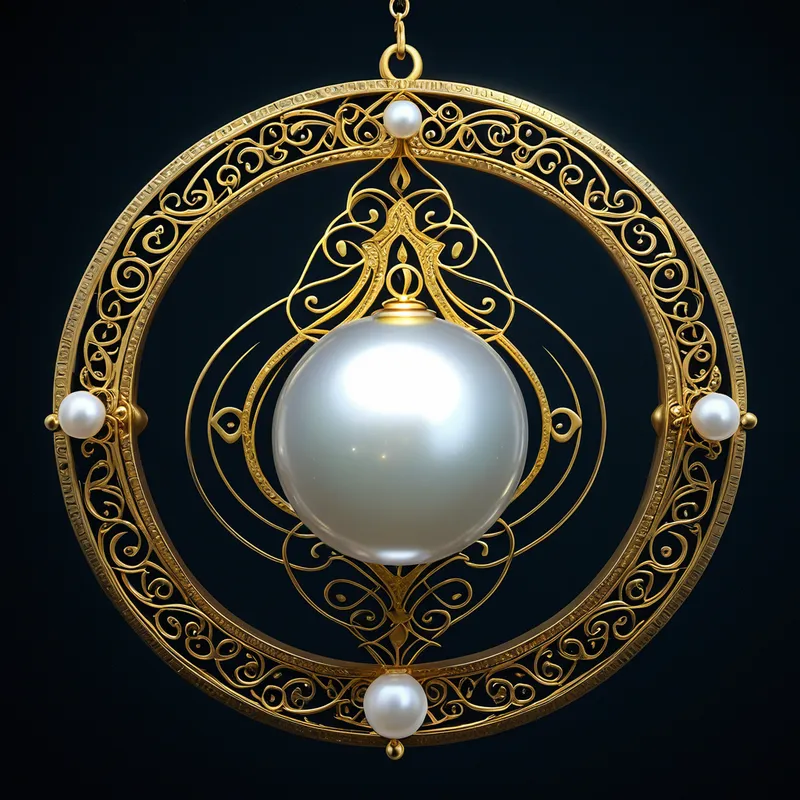
In an act of supreme sacrifice, he gathered his luminous essence. He did not fight his fall; he orchestrated it. He let his celestial form fragment, not into nothingness, but into a thousand thousand pieces of soft, silver light. He fell from the sky like a slow, glorious rain of diamonds, scattering his divine substance across the black velvet of the night. His central consciousness, his love, did not perish. Instead, it transformed. He became the moon as we know it—no longer a distant, perfect god in a boat, but a luminous, scarred presence bound to the earth’s rhythm, forever chasing, forever reflecting, forever loving from a distance. His light became a borrowed, reflective glow, a testament to his sacrifice. He gave up his pristine, independent divinity to become a symbol of connection, his broken pieces now the gentle light that guides lovers, inspires poets, and pulls the very oceans in a perpetual, loving embrace.

Cultural Origins & Context
The myth of Libulan springs from the rich oral traditions of the Visayan peoples of the central Philippines. Unlike the more structured pantheons recorded in Spanish-era manuscripts like the Libru na ning Pasion, the stories of Libulan were carried in the breath of the babaylan and the songs of fishermen. Passed down through generations, it was not a dogma but a living narrative that explained the natural world and the human heart.
The myth functioned as a celestial map for emotion. In a culture deeply attuned to the cycles of nature—the fishing tides governed by the moon, the planting seasons—Libulan’s story gave psychological depth to these cycles. His light was not merely a navigational aid; it was the light of introspection, of secret love, of quiet longing. The tale served to sacralize human emotions, particularly love and sacrifice, by mirroring them in the cosmos. It taught that even the gods are subject to the profound laws of connection and loss, and that true light often comes from a heart that has allowed itself to be broken and remade.
Symbolic Architecture
At its core, the myth of Libulan is an alchemical drama of the soul’s descent into the realm of feeling. Libulan represents the pristine, unconscious spirit—perfect, self-contained, and ultimately isolated in its celestial purity. The mortal world, Ibalon, symbolizes the realm of embodied experience: messy, temporal, and rich with relationship.
The sacrifice of the perfect form is the birth of the meaningful connection. To shine with one’s own light is to be alone; to reflect a greater love is to belong to the cosmos.
His love for Bulan is the irresistible call of the anima, the soul-image that draws the spirit into relationship, vulnerability, and ultimately, transformation. His fragmentation is not a punishment, but the necessary disintegration of the old, rigid self. The moon he becomes is a symbol of the transformed psyche: no longer a source of light, but a reflector. It embodies the enlightened heart that has integrated the shadow of mortality and emotion, now glowing with a softer, wiser, borrowed luminescence. The cosmic law he "breaks" is the illusion of separateness; the balance he ultimately creates is the dynamic, tidal balance between spirit and matter, eternity and the moment.
The Dreamer's Resonance
When this myth stirs in the modern dreamer, it often manifests as dreams of falling stars, of searching for a lost, luminous person in a dark landscape, or of holding a fragile, glowing object that threatens to shatter. Somatically, one might feel a deep, melancholic longing in the chest or a sense of radiant coolness.
Psychologically, this signals the soul’s negotiation between the ideal and the real. The dreamer is at a point where a pristine self-image, a perfect plan, or a spiritual ideal (the celestial Libulan) is being irresistibly drawn into contact with a messy, human, emotional reality (the mortal world). The process at work is the painful, necessary sacrifice of perfectionism or spiritual bypassing. The psyche is preparing to "fall"—to allow a cherished self-concept to fragment—in order to achieve a deeper, more reflective, and connected state of being. It is the heart learning to beat in time with a world it cannot control.

Alchemical Translation
The individuation journey modeled by Libulan’s myth is the transmutation of perfection into compassion. The initial state is the nigredo of celestial loneliness: the spirit, though bright, is isolated and yearning.
The call of love (Bulan) initiates the albedo, a purification not through fire but through the waters of feeling. This is the descent, the conscious embrace of vulnerability. The critical alchemical operation is the sacrificium: the shattering of the old, divine self-image.
One does not become whole by staying untouched, but by gathering the pieces of a heart broken open by love.
The fragments of Libulan’s light, scattered across the night, represent the citrinitas, where insights gleaned from the descent are collected. Finally, the new moon—a reflective, cyclical, nurturing presence—symbolizes the rubedo. The goal is not to regain lost godhood, but to become a vessel. The modern individual completes this cycle when they stop striving to be a sole source of brilliance and instead learn to reflect the light of a greater connection—to others, to the world, to the soul itself—accepting the scars and cycles as integral to their newfound, compassionate radiance.
Associated Symbols
Explore related symbols from the CaleaDream lexicon:
- Moon — The ultimate symbol of Libulan’s transformed state: reflective, cyclical, governing tides and emotions, a light born of sacrifice and connection.
- Ocean — Represents the realm of mortal feeling and the unconscious into which Libulan descends; the tides are his eternal, loving embrace of the world.
- Sacrifice — The central, voluntary act of fragmenting one’s pristine self to achieve a deeper, more relational form of existence and illumination.
- Light — Transmutes from a source of solitary divinity to a reflected, shared glow, symbolizing wisdom gained through empathy and loss.
- Love — The irresistible, transformative force that bridges celestial and mortal realms, compelling the spirit into vulnerable, embodied connection.
- Star — Represents Libulan’s original, distant, and fragmented celestial nature, as well as the scattered pieces of his divine self after the fall.
- Shadow — The necessary darkness that makes the moon’s light visible and meaningful; the embraced mortal experience that defines the transformed deity.
- Heart — The seat of Libulan’s longing and the organ of his sacrifice; the human emotion that catalyzes the divine transformation.
- Journey — The eternal, cyclical path of the moon across the sky, mirroring the soul’s ongoing process of descent, reflection, and return.
- Dream — The medium of communion between Libulan and Bulan, and the silver light he casts, which inspires the subconscious and nocturnal visions of humanity.
- Grief — The profound sorrow of separation and transformation that accompanies the sacrifice, essential for the birth of compassionate, reflective light.