Kris of Empu Gandring Myth Meaning & Symbolism
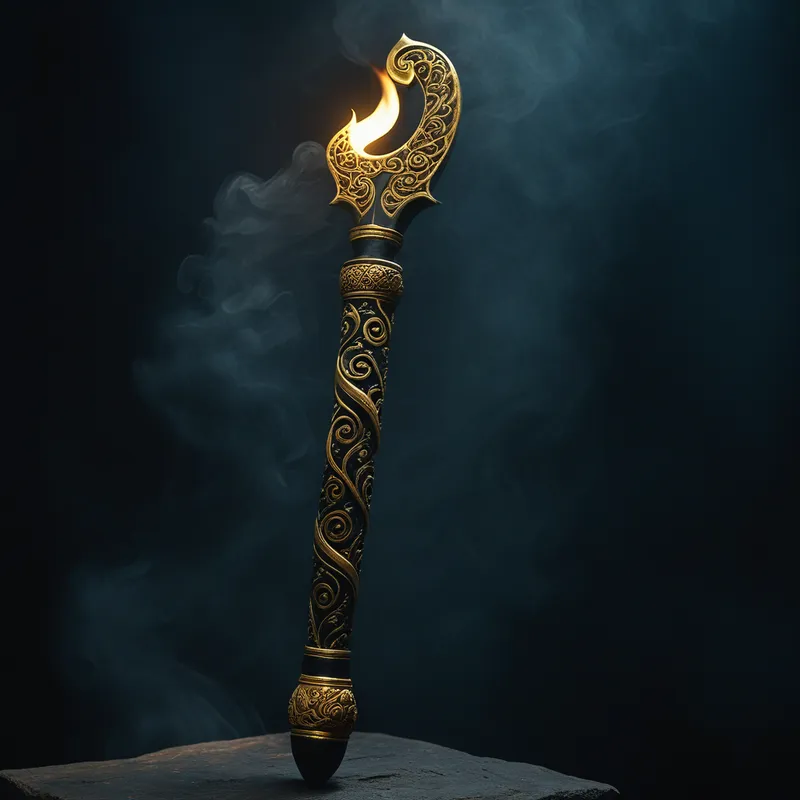
A legendary cursed keris, forged in betrayal, destined to kill seven kings, embodying the inescapable cycle of karma and the shadow of ambition.
The Tale of Kris of Empu Gandring
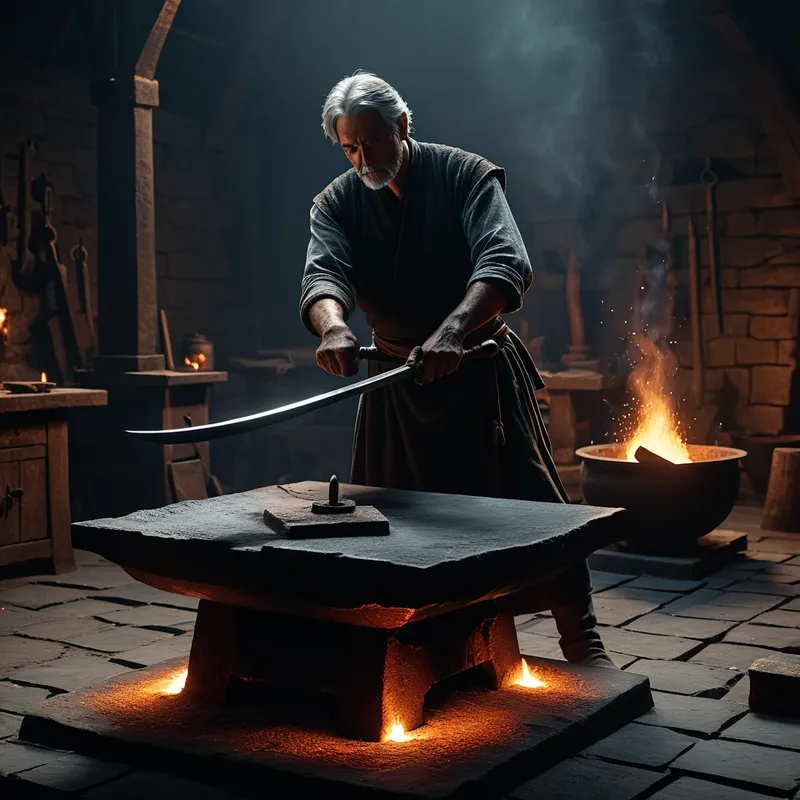
Hear now the tale whispered on the wind that sweeps across the Java highlands, a story not of light, but of the long shadow cast by a king’s ambition. It begins not in a palace, but in the sacred, soot-stained sanctum of a master. His name was Empu Gandring, and his hands were guided by spirits of earth and fire. His forge was a temple, his hammer a prayer.
Into this realm of heat and holy purpose came Ken Arok, a man of low birth but a soul ablaze with a destiny written in stars of fire. He was a panakawan who had seized fate by the throat, and now he sought to crown his ascent. He came to Empu Gandring with a demand that was also a plea: “Forge me a keris. A weapon of such power that it will make me invincible, that will secure my throne before the year is out. You have five months.”
The empu, a man bound to the rhythms of the cosmos, not the impatience of kings, bowed his head. “My lord, to rush such a creation is to insult the spirits within the iron. A keris of true power requires years. Its soul must be folded a thousand times, its form dreamed into being.”
But Ken Arok’s ambition was a furnace that consumed patience. He insisted. The air in the smithy grew heavy, charged with a promise that felt like a threat. Reluctantly, driven by duty or fear, Empu Gandring agreed. For five months, the forge-fire burned day and night. The empu worked, but the sacred process was violated, the ritual truncated. The blade that took shape was beautiful—wavy like a river of dark lightning, sharp enough to slice a shadow—but its soul was born in haste and resentment.
When the appointed day arrived, Ken Arok returned. The keris was magnificent, yet unfinished; the final rituals of spiritual infusion remained. In a fury of betrayed expectation, Ken Arok’s pride curdled into rage. He seized the very blade meant to secure his destiny and turned it upon its creator. The empu fell, his lifeblood soaking the earthen floor of his sanctuary. With his dying breath, he did not curse the man, but the object, speaking a prophecy that would weave itself into the iron: “You, Keris, will claim seven lives. You will kill Ken Arok, his children, and his children’s children. Seven kings will fall to your edge.”
The keris drank the smith’s blood and his final words, and its curse was sealed. Ken Arok took it, and with it, he did indeed slay the ruler of Tumapel, Tunggul Ametung, securing the throne and the king’s wife, Ken Dedes. He founded the great Rajasa dynasty of Singhasari. Yet the keris, now named for its murdered maker, was never at peace. It passed from hand to hand, a coveted heirloom of deadly power. It fulfilled its grim destiny, finding its way into the hearts of Ken Arok’s own descendants, just as the dying empu had foretold. The very instrument of creation and conquest became the agent of an inescapable cycle, a blade that wrote its own bloody history in the lineage of kings.
Cultural Origins & Context
This myth is rooted in the Pararaton, a text that blurs the lines between history, genealogy, and divine legend. It emerges from the world of pre-Islamic Javanese kingdoms, where power was seen as a tangible, almost supernatural force (wahyu or divine mandate) that could be gained, lost, and transferred. The keris was far more than a weapon; it was a pusaka, a vessel for ancestral spirit and cosmic power.
The story functioned as a foundational political myth for the Singhasari and later Majapahit empires. It explained the turbulent, often fratricidal, nature of royal succession not merely as human ambition, but as the working out of a supernatural decree. It served as a cautionary tale about the dangers of usurping the natural order—rushing sacred creation, betraying the wisdom of the master artisan, and seeking power without the necessary spiritual preparation. Told by court poets and chroniclers, it legitimized a dynasty born from violence while simultaneously warning of the karmic price of that violence. The curse was the narrative mechanism that reconciled the glorious founding of a kingdom with the bloody reality of its maintenance.
Symbolic Architecture
At its heart, the myth of the Kris of Empu Gandring is a profound meditation on the nature of creation, agency, and unintended consequence. The keris represents the concretization of will—Ken Arok’s burning ambition forged into physical form.
A tool created in violation of its own sacred nature becomes an autonomous entity, an independent actor in the drama of fate. It is will divorced from wisdom.
Empu Gandring symbolizes the archetypal Creator, the bridge between human desire and cosmic law. His murder is the primal sin of the story—the silencing of wisdom, the severing of the connection to tradition and spirit. Ken Arok represents the heroic, yet hubristic, ego that believes it can command the processes of soul-making to suit its own timetable. The curse is not mere punishment; it is the natural law reasserting itself. The unfinished keris, imbued with the smith’s dying breath, becomes a living embodiment of karma. Its journey through seven lives illustrates the inescapable law that the means of our ascent often contain the seed of our downfall.
The Dreamer's Resonance
When this myth stirs in the modern psyche, it may manifest in dreams of powerful, beautiful, yet somehow ominous tools or creations. One might dream of a brilliant business plan that feels ethically “cursed,” a stunning piece of art born from a period of exploitative relationships, or a technological innovation developed under crushing, unethical deadlines.
The somatic feeling is often one of gripping a handle that is both cold and electric, of possessing something that grants immense power but also carries a deep, unshakeable dread. This is the psyche signaling a confrontation with the “Empu Gandring complex”: the part of us that has rushed a creative or life-building process, bypassing necessary incubation, integrity, or respect for the deeper self. The dream is an invitation to examine what we have forged in the fires of our ambition. What unfinished business, what repressed guilt or ignored wisdom, have we built into the very structures of our lives? The “curse” in the dream is the unconscious knowledge that this creation will eventually turn on us, forcing a reckoning with the choices made in its making.
Alchemical Translation
The individuation process modeled here is the arduous journey from identifying with the Ken Arok ego—the ambitious, time-bound, conquering self—to integrating the fate embodied by the keris, and ultimately, reconciling with the slain Empu Gandring within.
The first stage is Concretization of Shadow: We take a raw, driving desire (Ken Arok’s ambition) and forge it into a reality (the kingdom, the career, the relationship). But if this is done without consulting the deeper, wiser self (the Empu), the creation carries a fatal flaw—our own unlived life, our ignored ethics, our spiritual haste. The keris is this “successful shadow,” brilliant and effective but cursed.
The curse itself initiates the second stage: The Enforced Return. The keris killing seven kings is the psyche’s ruthless, autonomous justice. Our one-sided creation cycles back through our life, wounding us in different forms (failed relationships, health crises, existential despair) until we get the message. Each “king” that falls is a ruling complex, a false identity built on the initial act of spiritual violence.
The alchemical goal is not to break the curse, but to fulfill it consciously, to take the keris back to the forge of introspection and complete the work Empu Gandring began.
The final transmutation is Reconciliation with the Creator. This means going back to the moment of the “murder”—the silencing of our inner wisdom, our intuition, our need for slow, soulful growth. We must apologize to that inner master, honor the true timelines of the soul, and consciously integrate the lesson of the curse into our being. In doing so, the keris transforms from an agent of blind fate into a redeemed pusaka—a sacred heirloom of hard-won wisdom. Its power is no longer about external conquest, but about the integrity of one’s own forged soul. The curse ends when we acknowledge that we are both Ken Arok and Empu Gandring, and choose to let the latter guide the hands of the former.
Associated Symbols
Explore related symbols from the CaleaDream lexicon:
- Fire — The sacred element of the forge, representing transformative ambition, creative passion, and the destructive rage that can corrupt the creative act if uncontrolled.
- Blood — The life-force of Empu Gandring that seals the curse, symbolizing the inescapable bond between creator and creation, and the karmic debt incurred through violence.
- Curse — The prophetic utterance that imbues the object with autonomous fate, representing the law of unintended consequences and the psyche’s enforcement of moral and spiritual balance.
- Fate — The inescapable destiny of the keris to kill seven kings, embodying the cyclical nature of karma and the predetermined results of foundational actions.
- Shadow — The keris itself as the embodied shadow of Ken Arok’s ambition—brilliant, powerful, but carrying the repressed guilt and violence of its creation.
- Creator — Empu Gandring as the archetype of divine craftsmanship and wisdom, whose murder represents the ego’s fatal rejection of soulful process and natural law.
- Weapon — The keris as a tool of both conquest and self-destruction, symbolizing how our greatest strengths and creations can become the instruments of our downfall if misaligned.
- Ring — The unbroken cycle of the curse passing through seven kings, representing inescapable karmic loops and the repetitive patterns born from an original trauma.
- Destiny — Ken Arok’s rise to kingship, intertwined with the blade’s curse, illustrating the complex weave of free will, ambition, and preordained consequence.
- Sacrifice — The murder of Empu Gandring, a perverted sacrifice that empowers the object with a dark spirit, showing how true sacrifice is given, not taken.
- Order — The natural, sacred order of craftsmanship and kingship that Ken Arok violates, leading to the chaotic, corrective justice of the curse until balance is restored.
- Dream — The unrealized, perfect keris that Empu Gandring envisioned, representing the soul’s blueprint that is corrupted by the ego’s impatience and demands.