Kookaburra Myth Meaning & Symbolism
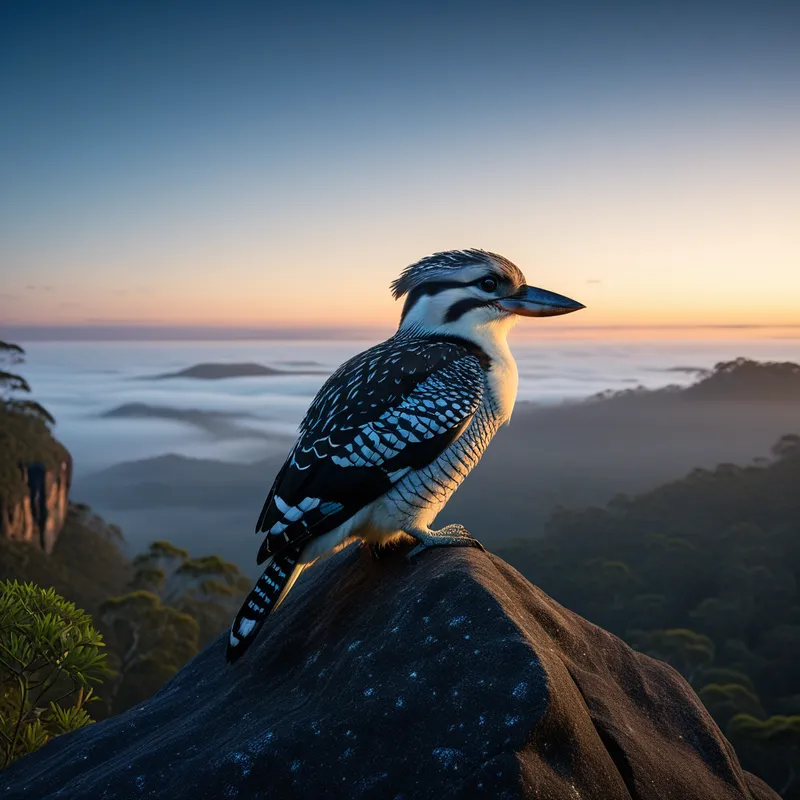
Kookaburra's laughter is a sacred call that ends the Dreamtime's first night, bringing light and order to a world held captive by primordial fear.
The Tale of Kookaburra
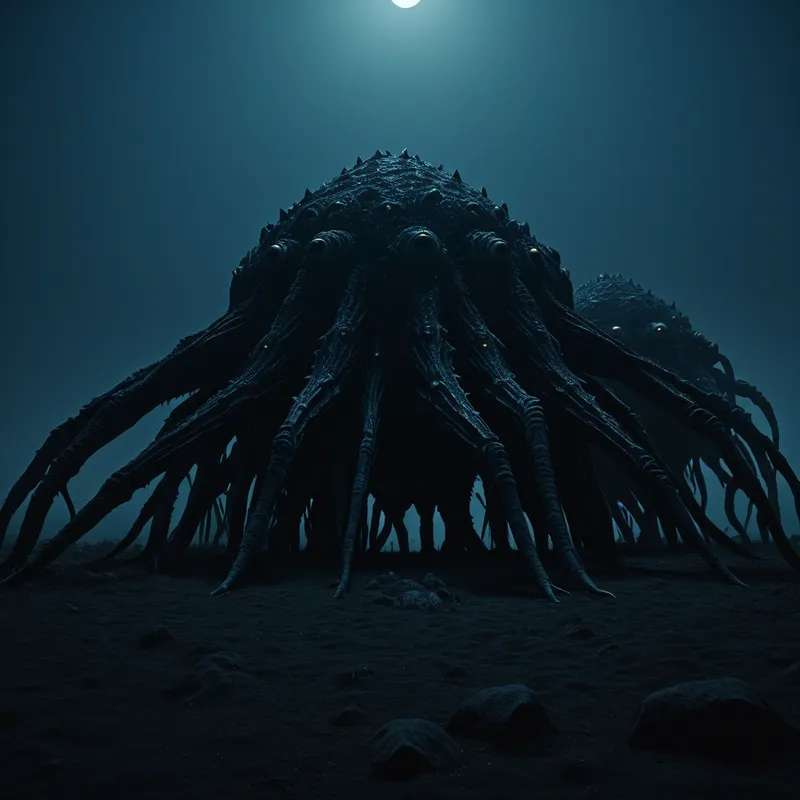
In the First Time, the Dreamtime, there was a great and terrible silence. The world was newborn, soft and formless, and the sky was a blanket of unbroken black. The first animals—the kangaroo, the emu, the lizard, the snake—huddled together in the cold, featureless dark. They did not know day, for day had not yet been invented. They knew only this endless, suffocating night, and in that night, a deep and primal fear took root. It was the fear of the dark that has no end, the silence that has no voice.
They whispered to each other, their voices trembling. "Who will bring the light?" they asked. "Who is brave enough to challenge the great dark?" But no one answered. The eagle was too proud, the snake too cunning, the kangaroo too swift to be burdened with such a task. The darkness pressed in, a physical weight upon their spirits.
Then, from a high branch of a ghost gum that was the first tree, a small, sturdy bird looked out. This was Kookaburra. He was not the largest, nor the strongest, but he possessed a keen eye and a heart that burned with a quiet fire. He saw the terror of his kin. He felt the world waiting, breath held, for a sign. And in his breast, a strange sensation swelled—not a song, but something louder, something that demanded to break the silence.
He opened his beak. What emerged was not a chirp or a warble, but a raw, rolling, cacophonous sound. It was a shout, a cackle, a riotous peel of noise that shattered the stillness like a stone through ice. KOO-KA-BURRA! KOO-KA-BURRA! The other creatures jumped, startled. The sound was strange, undignified, almost foolish. But Kookaburra did not stop. He threw his head back and let the sound pour out, a torrent of defiant joy aimed directly at the heart of the dark.
He laughed again, deeper, louder. And as he laughed, a miraculous thing began to happen. Far on the eastern edge of the world, the black sky began to soften. A faint grey light seeped into the horizon, like watercolor on stone. Emboldened, Kookaburra laughed a third time, a great, gulping, joyous roar that shook the dew from the leaves. The grey light blushed into pink, then gold.
With a fourth and mighty laugh, Kookaburra challenged the night for the final time. The golden light burst forth, triumphant! The great fireball of the Sun, Gnowee or her kin, heaved herself over the world's rim, flooding the land with warmth and color. The darkness fled, shrinking into shadows beneath rocks and trees. The animals blinked in the dazzling new world. They saw the red earth, the green leaves, their own faces reflected in water. The fear melted away, replaced by wonder.
And so it was decreed in the Law of the Dreamtime: every dawn, Kookaburra must raise his voice in that same raucous, life-giving laugh. His is the sacred duty, the first alarm of the world, to call the sun from her sleep and remind all creatures that the night, no matter how deep, is always temporary.
Cultural Origins & Context
This myth originates from various Aboriginal language groups across eastern Australia, where the laughing kookaburra (Dacelo novaeguineae) is a familiar presence. It is a foundational Dreaming story, belonging to the complex tapestry of the Songlines. Traditionally, it was not merely a tale for entertainment but a vital piece of cosmological instruction, passed down through generations by elders.
Its telling was often accompanied by mimicry of the bird's distinctive call, engaging listeners in a multisensory experience. The story functioned as an etiological myth, explaining the bird's behavior, but its deeper purpose was pedagogical. It reinforced the natural order, explained the cycle of day and night, and instilled a fundamental truth: that courage and proactive effort are required to maintain the balance of the world. It taught that the seemingly mundane—a bird's call—is, in fact, a sacred ritual upon which all life depends.
Symbolic Architecture
At its core, the myth of Kookaburra is a masterclass in the psychology of awakening and the imposition of consciousness upon chaos. The primordial, endless night represents the undifferentiated unconscious—a state of potential but also of latent terror, where instincts and fears rule without the clarifying light of awareness.
Kookaburra’s laugh is the first act of consciousness. It is the ego’s brave, often awkward, declaration of existence in the face of the overwhelming unknown.
Kookaburra himself symbolizes the hero archetype in its most essential form. His heroism is not of physical conquest, but of audacious expression. He does not fight the dark with claw or tooth, but with sound—with vibration, which is the fundamental ingredient of creation in many wisdom traditions. His laughter is disruptive, creative energy. It is the courage to be the first to speak, to act, to break a paralyzing silence, whether that silence is internal (depression, stagnation) or external (oppression, collective fear).
The transition from dark to light symbolizes the dawn of understanding, insight, and order. It is the moment a problem is clarified, a depression lifts, or a new idea is born. The myth assures us that the agent of this transition may not be a majestic warrior, but often the most unexpected part of ourselves—a burst of irrational humor, a sudden impulse, a simple act of defiance against despair.
The Dreamer's Resonance
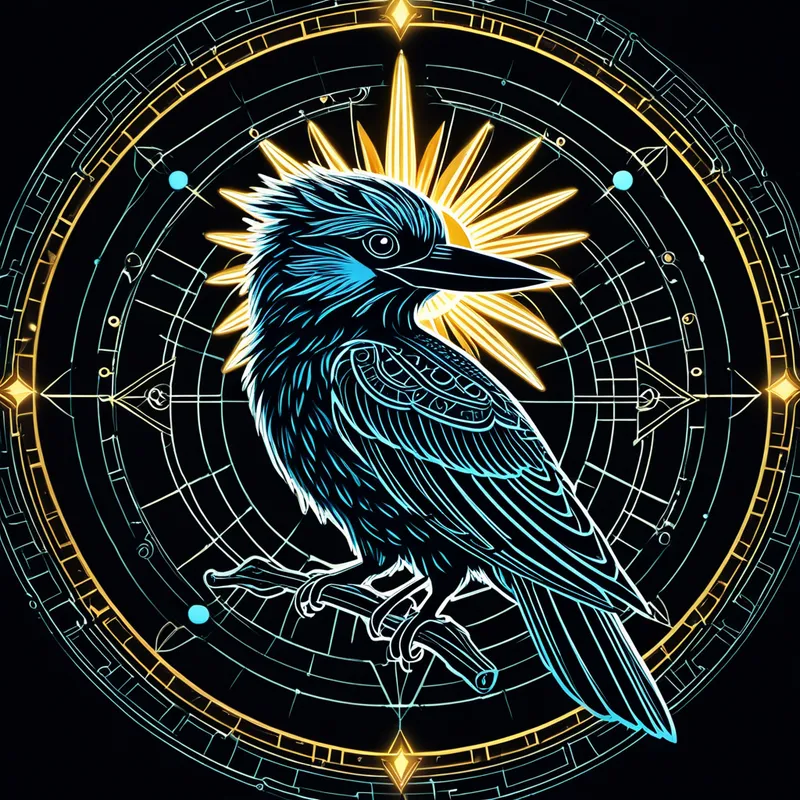
When the pattern of the Kookaburra myth stirs in the modern dreamer, it often signals a psychic state at the cusp of a major awakening. To dream of being trapped in an endless, fearful darkness reflects a period of depression, confusion, or spiritual stagnation—the "dark night of the soul." The unconscious is presenting its raw, unformed contents, and the conscious ego feels small and powerless against them.
Dreaming of hearing a loud, startling sound—a laugh, a bell, a crash—that begins to dispel this darkness is a direct resonance with the myth. This is the psyche's own "Kookaburra call." It represents an emergent force from the deeper self, an instinctual push toward consciousness and resolution. Somatic experiences might accompany this: a jolt awake, a sudden intake of breath, or a feeling of tension releasing in the chest. Psychologically, it marks the moment when passive suffering begins to turn into an active, albeit perhaps clumsy, attempt to engage with one's predicament. The dream is modeling the initial, vital fracture in the shell of hopelessness.

Alchemical Translation
The alchemical process mirrored here is the Nigredo giving way to the Albedo. The long, silent night is the Nigredo: the necessary descent into the shadow, the confrontation with primal fear and the dissolution of old, outworn attitudes. It is a state of putrefaction and despair that is, paradoxically, fertile ground for transformation.
The transmutation occurs not through avoidance, but through a profound engagement with the darkness, symbolized by Kookaburra’s direct address to the night. His laugh is the Lapis in action—the unique, personal power that effects change.
For the individual on the path of individuation, the myth instructs a crucial step: one must find their own "laughter." This is not frivolity, but one's authentic voice, one's unique creative or assertive act that challenges internalized darkness. It is the decision to speak a painful truth, to begin a long-postponed project, to choose hope against the evidence of despair. This act feels risky and undignified, much like Kookaburra's first, awkward cackle.
The resulting dawn—the Albedo—is the clarity, peace, and new order that follows such an act of courageous consciousness. The myth assures us that this cycle is sacred and perpetual. Every personal "night" contains within it the potential for a self-generated dawn, if we can only find the courage to sound our own, peculiar, life-affirming call into the void.
Associated Symbols
Explore related symbols from the CaleaDream lexicon: