Kawa no Kami Myth Meaning & Symbolism
A myth of the river's spirit, embodying the flow of life, the danger of stagnation, and the sacred duty to honor the boundary between the wild and the human.
The Tale of Kawa no Kami
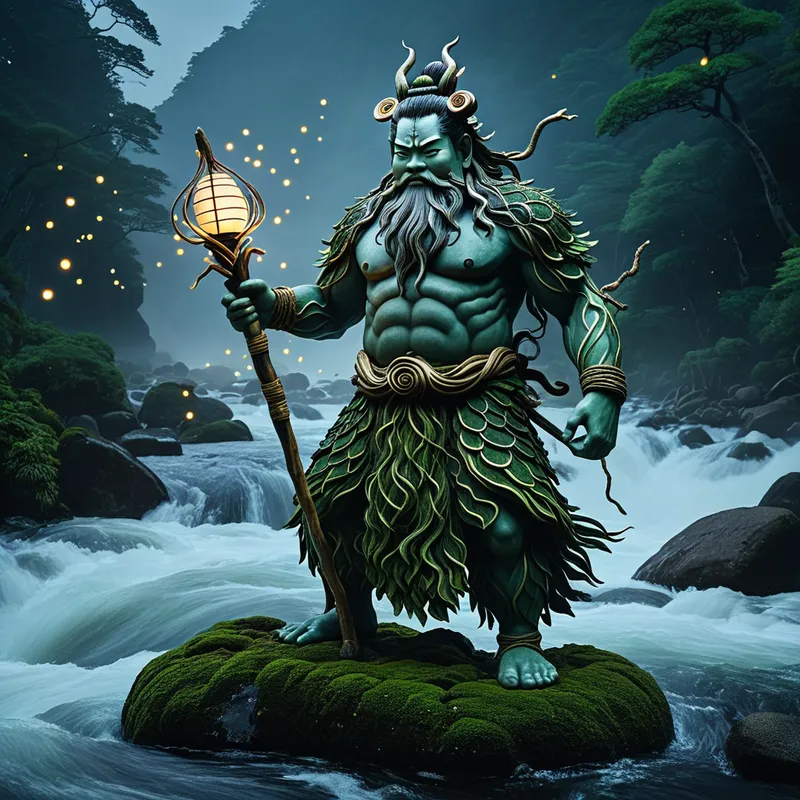
Listen. The river does not simply flow; it remembers. In the deep mountain valleys where the mist clings like a ghost to the pines, there lived the spirit of the current, the lord of the ford, the one who holds the threshold. He was known as Kawa no Kami.
His domain was not a single place, but every place where the water carved its song into the stone. He was in the thunder of the spring melt, the patient whisper of the summer stream, and the silent, black ice of winter. To cross his path was to step into a realm of profound ambiguity—a place of life-giving drink and sudden, drowning death; of fertile silt and devastating flood. The villagers knew. They built their small shrines at the river’s bend, left offerings of salt, rice, and clear sake. They spoke in hushed tones of the green-haired man who could be seen on moonless nights, sitting on a mid-stream rock, combing the water with long, pale fingers.
But there was one pool, deep and dark beneath a canopy of ancient maples, where the Kawa no Kami was said to be most present, and most perilous. The water there was a mirror of polished obsidian, reflecting nothing but the void above. It was said that to look into it for too long was to see your own soul stripped bare, and to risk being pulled into the silent depths, your spirit added to the river’s endless, murmuring memory.
One year, a great stagnation fell upon the upper village. The rains came, but the river below the dark pool grew sluggish, its waters turning a foul, murky green. Fish floated belly-up. The rice paddies thirsted. The people grew weak and fearful. The elder said the Kawa no Kami was angered, that the flow of things had been insulted. A young man, whose heart was as clear as the mountain spring he remembered, was chosen. His task was not to fight, but to listen. To go to the dark pool and offer not just rice, but understanding.
He journeyed alone, the silence of the sick forest pressing upon him. At the pool’s edge, the air was cold and still. He placed his offering, closed his eyes, and did not speak of his village’s need. Instead, he spoke to the river of its own journey—from the high snows to the distant sea, of the stones it polished, the banks it shaped, the secrets it carried. He apologized for the filth and disregard. He offered his own reflection, not as a demand, but as a testament.
For a long moment, nothing. Then, the obsidian surface of the pool shivered. From its center, the form of the Kawa no Kami arose, not as a monster, but as a weary, ancient being of water and moss. “You see the journey, not just the obstacle,” the spirit’s voice echoed, a sound like pebbles tumbling in a current. “The blockage is not in my bed, but in yours. You have dammed the flow of respect. You have forgotten the covenant.”
The young man bowed his head to the mud. When he looked up, the spirit was gone. But from the depths of the pool, a single, powerful bubble of clear water broke the surface. Then another. And another. A fresh, cold current began to flow from the pool’s heart. By the time the young man returned home, the river was singing its old song once more, clean and strong. The Kawa no Kami was not appeased by sacrifice alone, but by the recognition of his true nature—the eternal, ambivalent flow of life itself.
Cultural Origins & Context
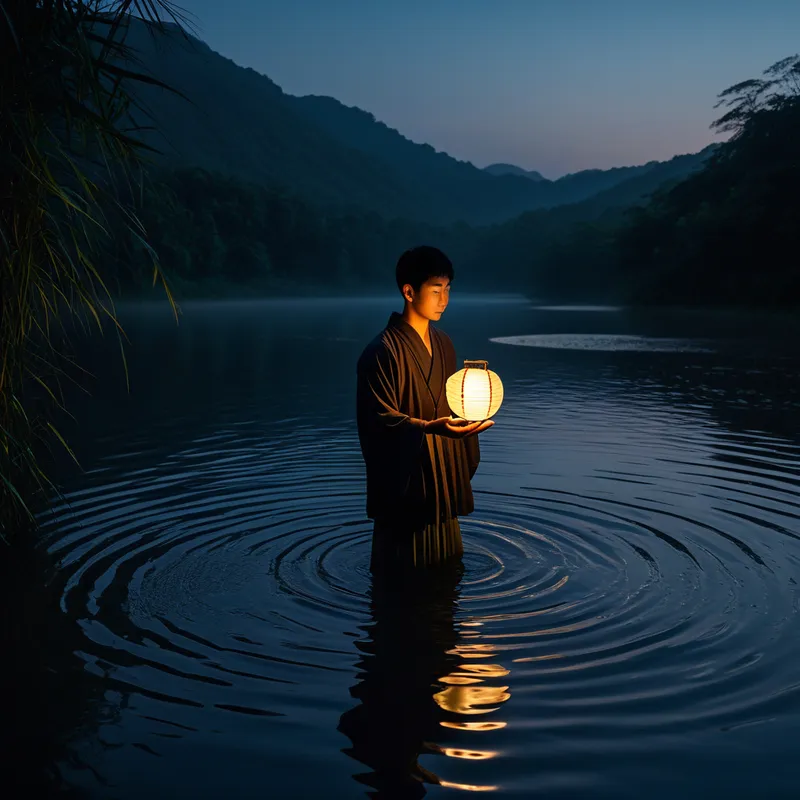
The veneration of Kawa no Kami is rooted in the ancient Shinto worldview, where natural phenomena and locales are inhabited by conscious, sentient spirits known as kami. Rivers were particularly potent sites of spiritual ambiguity. They were lifelines, providing water, food, and transportation, yet they were also treacherous boundaries and potent symbols of impermanence.
This myth likely originated and was passed down in rural, agricultural communities whose survival was intimately tied to the river’s mood. It was not a story confined to formal priesthoods but a lived folklore shared by villagers, fishermen, and travelers. Its societal function was multifaceted: it was an etiological myth explaining the river’s dual nature, a piece of environmental ethics enforcing respect for a vital resource, and a ritual technology. By prescribing offerings and respectful behavior, it provided a psychological framework for managing the very real, existential anxiety of living at the mercy of a powerful, unpredictable natural force. The myth codified a relationship, a way of negotiating with the wild through ritualized respect, ensuring both physical and spiritual safety when crossing the literal and metaphorical threshold the river represented.
Symbolic Architecture
At its core, the myth of Kawa no Kami is a profound map of the psyche’s relationship with the dynamic, often dangerous, flow of life energy and unconscious content.
The River itself is the central symbol. It represents the flow of time, consciousness, and psychic energy. It is life-force, but also the relentless current of the unconscious, which can nourish or drown. The Dark Pool symbolizes a place of stagnation in this flow—a psychic complex, a repressed trauma, or a period of depression where the vital energy of life has become blocked, toxic, and self-reflective in a negative way.
The river god is not the obstacle; he is the truth of the current. To fight him is to drown. To honor him is to learn to swim.
The Kawa no Kami is the archetypal guardian of this threshold. He is not merely a capricious nature spirit but the personified logos of the river—its essential, intelligent pattern. He embodies the ambivalence of the deep Self: creative and destructive, nourishing and terrifying. The Young Man represents the conscious ego facing a crisis caused by its own neglect of the deeper Self. His success lies not in heroic conquest, but in humble listening, in acknowledging the sovereignty and the journey of the Other. His offering is one of conscious attention, which alone can re-initiate the blocked flow.
The Cleansing Current that returns is the symbol of psychic renewal. It signifies that when the conscious mind (the village) re-establishes a respectful dialogue with the unconscious (the river), the natural, healing flow of the psyche can resume. The blockage was never just in the river; it was in the relationship.
The Dreamer’s Resonance
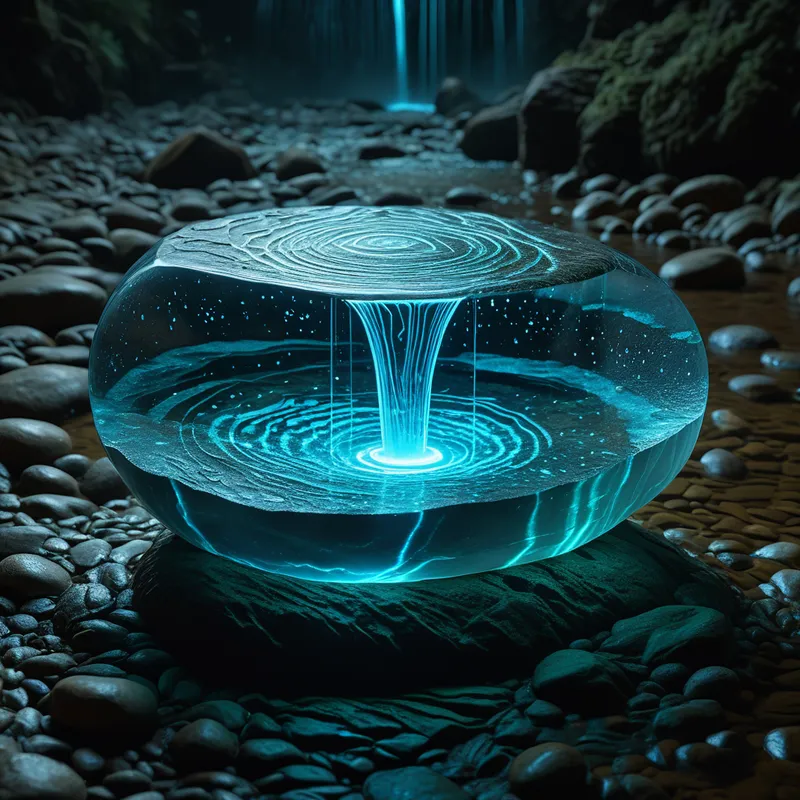
When this myth pattern stirs in the modern dreamer, it often signals a confrontation with a “stagnant pool” within the psyche. Dreaming of a polluted, sluggish, or dangerously flooding river points directly to an imbalance in one’s emotional or vital energy.
Somatically, this may manifest as a feeling of being “stuck,” lethargic, or burdened by a toxic emotional state that won’t shift. Psychologically, the dreamer is at the bank of their own dark pool, facing a complex that has dammed the flow of their life. The figure of the Kawa no Kami in a dream—whether as a visible entity, a felt presence, or simply the overwhelming power of the water itself—is the Self asserting its reality. It is a demand for recognition. The dream is an intra-psychic ritual space where the ego is forced to acknowledge what it has ignored or polluted: a neglected talent, a festering resentment, an unlived life. The anxiety in the dream is the friction of this necessary, often dreaded, engagement.
Alchemical Translation
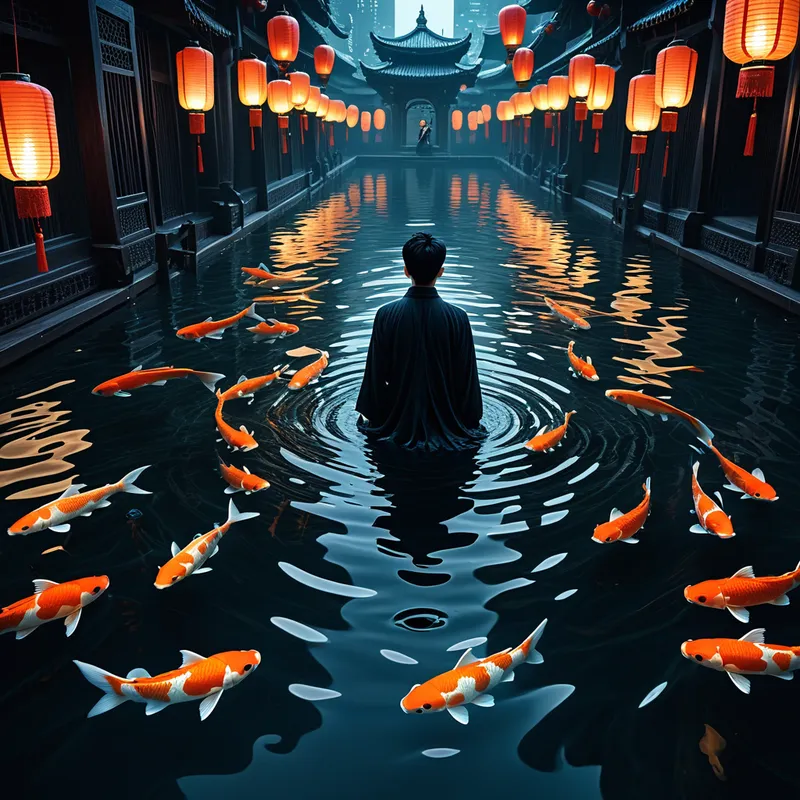
The process modeled by this myth is a precise alchemy for modern individuation. It outlines the transformation from a state of psychic stagnation (nigredo) to one of renewed flow and clarity (albedo).
First, the Recognized Blockage: The foul river is the prima materia—the acknowledged suffering and sickness of the soul that initiates the work. The conscious life feels poisoned.
Second, the Humbling Journey: The ego (the young man) must leave the familiar “village” of its identifications and descend to the source of the trouble. This is a movement away from blame and toward interiority.
Third, the Sacrifice of Understanding: This is the crucial coniunctio, the sacred marriage. The offering is not a bribe, but the ego’s full attention and respect given to the autonomous reality of the Self (the river god). The ego stops listing its demands and instead seeks to understand the nature and journey of the greater force within.
Individuation is not about building a dam to control the river of the Self, but about learning the river’s language and becoming a conscious part of its watershed.
Fourth, the Dialogue and Release: The spirit speaks. In psychological terms, when the ego sincerely engages the complex or the unconscious content, it transforms. The complex loses its autonomous, negative power and begins to yield its meaning and energy. The bubble of clear water is the first symbol of this release—a new insight, a freed emotion, a shift in perspective.
Finally, the Renewed Flow: The healing is not the eradication of the river’s power (which would be death), but the restoration of its clean, dynamic flow. The transformed ego returns to its life (the village), but now in service to a more conscious relationship with the inner current. The individual no longer lives in fear of the river or in neglect of it, but in a sustained, respectful dialogue with the deep, flowing source of their own being. The myth teaches that wholeness is found not in stillness, but in participating consciously in the eternal, ambivalent, and sacred flow.
Associated Symbols
Explore related symbols from the CaleaDream lexicon: