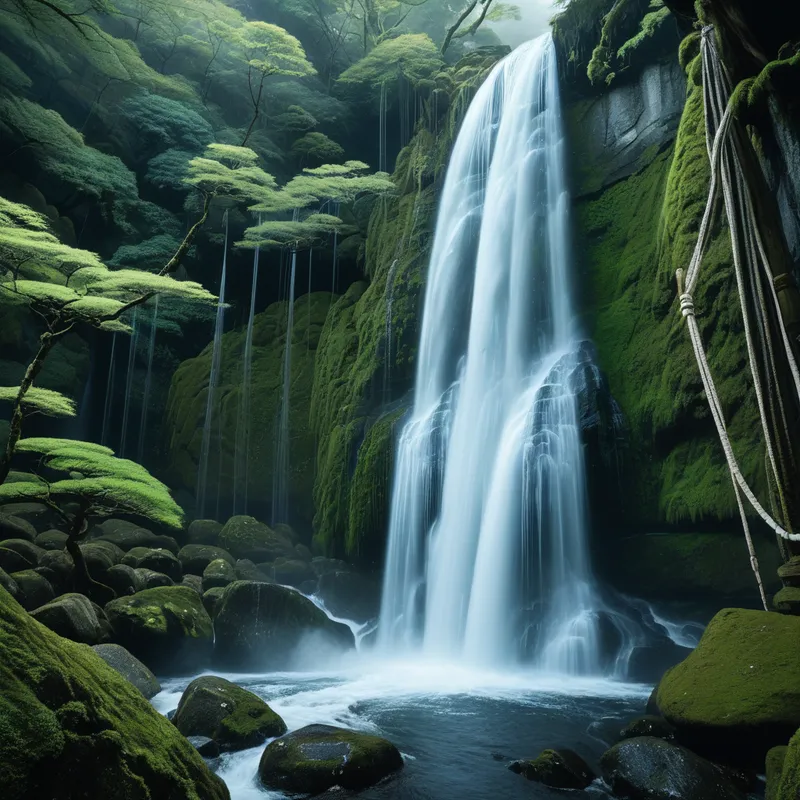
Kami of Waterfalls Myth Meaning & Symbolism
A myth of a kami who descends as a waterfall, offering purification and renewal through a sacred, self-sacrificial plunge into the mortal world.
The Tale of Kami of Waterfalls
Listen. Can you hear it? Not with your ears, but with the bones of the earth within you. It begins as a whisper in the high, lonely places, where the mountain’s breath turns to cloud. It is the sound of gathering—a thousand secret springs, seeping from stone, trickling over roots, joining in silent accord. They become a stream, then a river, singing as it carves its path through ancient forest.
But the song changes. The land falls away. The water does not hesitate.
In that moment of sublime surrender, at the precipice where the solid world ends, the kami is born. She is not a deity who commands the water; she is the act of falling itself. Her voice is the thunderous roar that shakes the valley. Her body is the endless, silken veil of white, crashing into the pool below with a force that churns stone to sand. Her breath is the cool, electrifying mist that hangs in the air, tasting of ozone and wet moss.
She is Taki-no-Kami. To the villagers in the valley, she is both terror and blessing. They hear her constant roar and know it is the mountain’s heartbeat. They approach her pool with offerings of salt, rice, and folded white paper, their prayers carried on the mist. They speak of those who, in ages past, glimpsed her form—a woman of impossible beauty, her hair the color of the waterfall’s foam, her eyes holding the deep, still darkness of the plunge pool.
The tale tells of a great drought. The rivers shrank to threads. The rice fields cracked like old pottery. Desperate, the village elder climbed the treacherous path to the waterfall’s base. He made no grand demand. Instead, he sat in silent vigil for three days and three nights, listening to her roar, feeling her mist upon his skin. On the third night, as the moon silvered the cascade, he saw her. She stood upon the water’s surface, and in her presence, he understood the bargain.
The waterfall was not merely water falling. It was a perpetual sacrifice. The mountain gave up its stored tears, its hidden life, in a ceaseless, self-emptying gift to the world below. The kami, in her divine nature, enacted this sacrifice eternally. Her power was not in holding, but in releasing. Her abundance was born of descent.
The elder returned to the village, his clothes soaked through not with sweat, but with the kami’s mist. He told them to dig a new channel from the river that fed the fall, not to take more, but to guide the overflow. They worked with reverence, and as they did, the skies, moved by the kami’s echoed sacrifice, opened. The rains came, gentle and steady. The village learned then that the waterfall’s gift was not just the water at its bottom, but the cycle it embodied—the sacred, terrifying, life-giving plunge.
Cultural Origins & Context
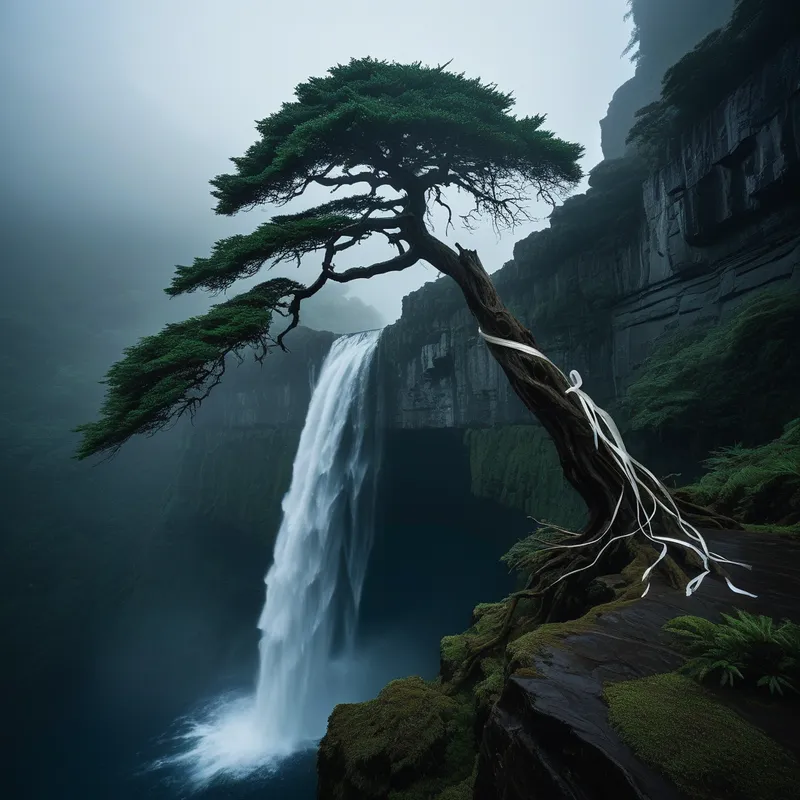
The veneration of Taki-no-Kami is a strand in the vast, animistic tapestry of Shinto. It belongs not to a single, codified scripture, but to the oral traditions of mountain villages and the practices of yamabushi. These myths were passed down by elders, by shrine attendants at local hokora dedicated to the waterfall, and by the ascetics who used the waterfall’s punishing, icy flow for misogi, a practice of spiritual and physical purification.
Societally, the myth functioned on multiple levels. Practically, it encoded ecological wisdom: the waterfall and its river were the literal lifeblood of the community, and the story instilled a sacred duty to protect the watershed. Spiritually, it localized the divine. The grand Amaterasu might rule the heavens, but here, in this specific, thunderous place, was a powerful, immanent deity you could approach, whose presence you could feel on your skin. The myth served as a bridge between the human and the overwhelmingly powerful forces of nature, transforming raw geological process into a relationship with a conscious, responsive being.
Symbolic Architecture
At its core, the myth of the Waterfall Kami is a profound symbol of purification through radical descent. The waterfall represents the point where accumulated potential—the gathered waters of the highlands—must be released in a transformative, often violent, act.
The waterfall does not ask if the pool is ready. It simply falls, and in falling, makes the pool deep.
Psychologically, the kami embodies the archetypal force of the Magn Mater in her transformative aspect. She is not the still, nourishing lake, but the dynamic, crushing, cleansing flow. The water’s journey from hidden spring to thunderous fall mirrors the psychic journey of repressed emotion, stored trauma, or stagnant thought that must be brought to a point of crisis (the cliff edge) and released (the fall) to become something new (the mist, the river, the nourished land).
The sacrifice is key. The kami’s existence is an eternal act of self-emptying. This symbolizes the psychological truth that healing and renewal often require a sacrifice of the old self, a letting go of stored pain, pride, or identity. The power lies not in possession, but in the courageous release into the unknown plunge.
The Dreamer’s Resonance
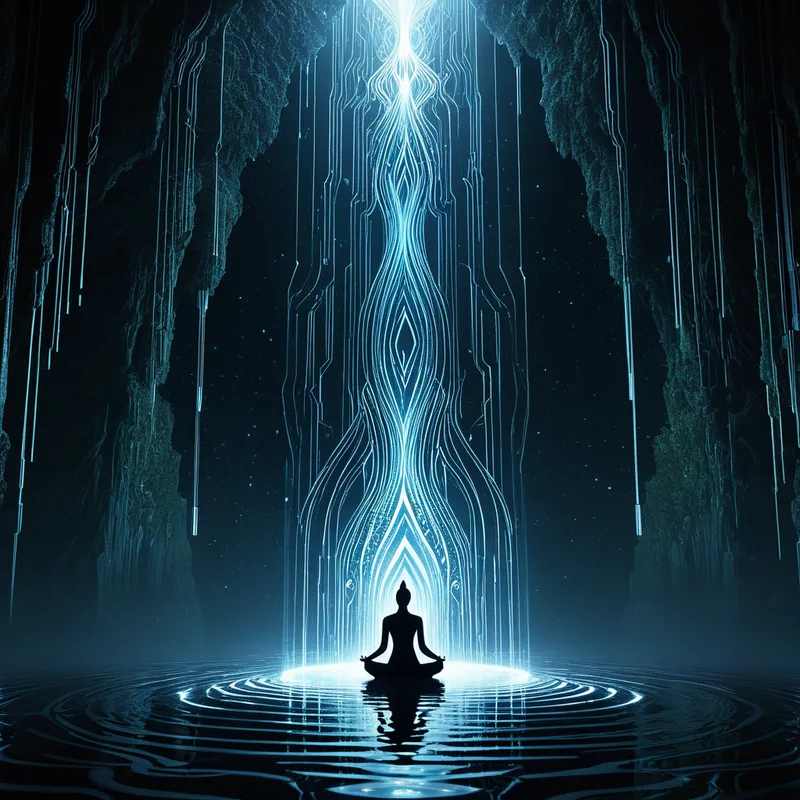
When this myth stirs in the modern unconscious, it often manifests in dreams of powerful, overwhelming water. To dream of standing at the top of a tremendous waterfall, feeling the pull to fall, can signal a psyche at its own precipice. The somatic feeling is one of vertigo, a thrilling terror in the gut. The dreamer may be holding onto something—a grief, a career, a relationship, a version of themselves—that has reached its natural end point. The gathered waters have pooled; the fall is now inevitable.
Conversely, dreaming of being at the waterfall’s base, soaked in its mist or battered by its spray, often relates to undergoing a purification process that feels both external and unavoidable. It is the dream equivalent of misogi. The dreamer is in the midst of a cleansing crisis, perhaps a period of intense emotional release, illness, or life upheaval that, while brutal, is stripping away the inessential. The roar in the dream is the sound of the psyche’s own necessary chaos, drowning out the ego’s protests.
Alchemical Translation
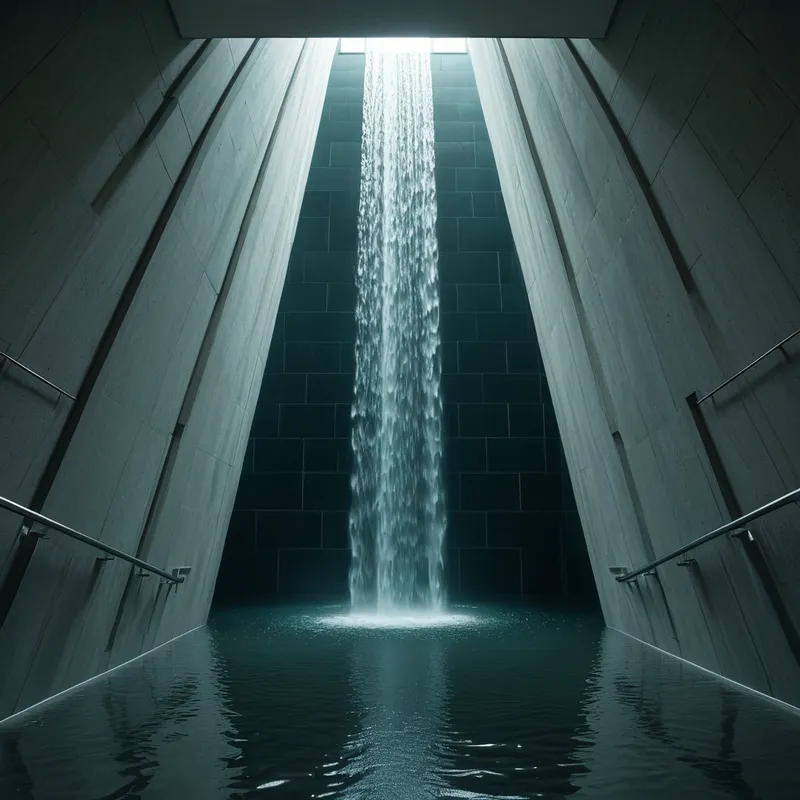
For the individual on the path of individuation, the myth of the Waterfall Kami models the stage of nigredo—the dark night of the soul—and its immediate, catalytic transformation. The alchemical operation here is solutio: dissolution by water. But this is not a gentle dissolving; it is the violent dissolution of the cataract.
The ego, like the riverbank, must be worn away for the soul’s course to change.
The “gathered waters” represent the contents of the personal and collective unconscious that have been ignored or dammed up. The conscious mind (the mountain plateau) can hold them no longer. The alchemical work is to consciously approach this inner precipice—through therapy, artistic expression, meditation, or any profound introspection—and to consent to the fall. This is the sacrifice: the willing release of control, the surrender of the ego’s insistence on solid ground.
The plunge is the terrifying, liberating moment of breakdown or breakthrough. The kami herself is the guiding archetype within this process—the part of the Self that knows this fall is not annihilation, but the only path to renewal. The resulting “mist” is the new consciousness born from the ordeal: a wider, more diffuse awareness that can nourish new growth. The transformed waters flowing from the pool are the liberated energy of the psyche, now able to move forward and create life in the world. One does not become the waterfall; one learns the sacred truth that the waterfall teaches: that true power is a sacred, perpetual offering, and that the deepest pools are carved by the courage to fall.
Associated Symbols
Explore related symbols from the CaleaDream lexicon: