Kachina Myth Meaning & Symbolism
Sacred spirit messengers descend from the peaks to bring rain, teach, and embody the living covenant between the Hopi people and the animating forces of the world.
The Tale of Kachina
Listen. In the beginning, when the world was soft and the people were finding their way, there was a great forgetting. The people lived on the mesas, their eyes turned to the hard earth, their throats parched by the relentless sun. They knew the names of the clouds, but the clouds did not answer. They planted the seeds of corn, but the seeds slept in the dust. A silence had fallen between the world of the people and the world of the spirits.
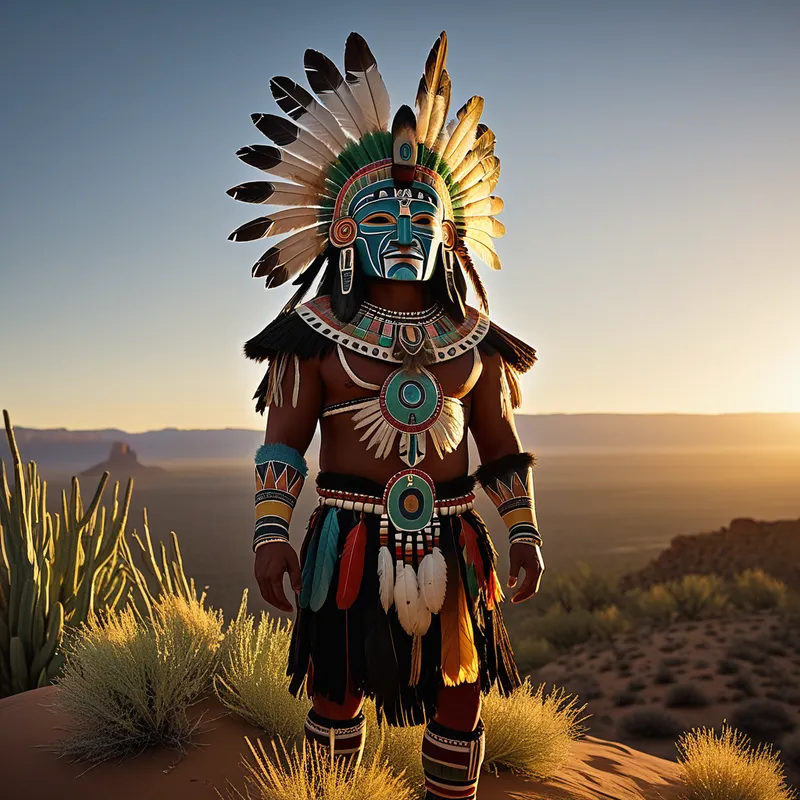
Then, from the sacred peaks—from the Nuvatukya'ovi—a sound began. It was not thunder, but the soft, rhythmic beat of many feet upon the stone. A procession descended. They were not human, yet they walked like men. They were not gods, yet they carried the weight of the cosmos in their posture. They were the Kachinas.
They came masked and painted, each a unique embodiment of a force: the Angakchina with flowing black locks like storm clouds; the Pöqangwhoya with fierce stripes and a warrior’s stance; the Koshare, whose antics held a mirror to the people’s folly. They did not speak with human tongues. They communicated through the rustle of evergreen sprigs, the shake of gourd rattles filled with seeds, the precise, hypnotic stamp of their feet upon the plaza earth.
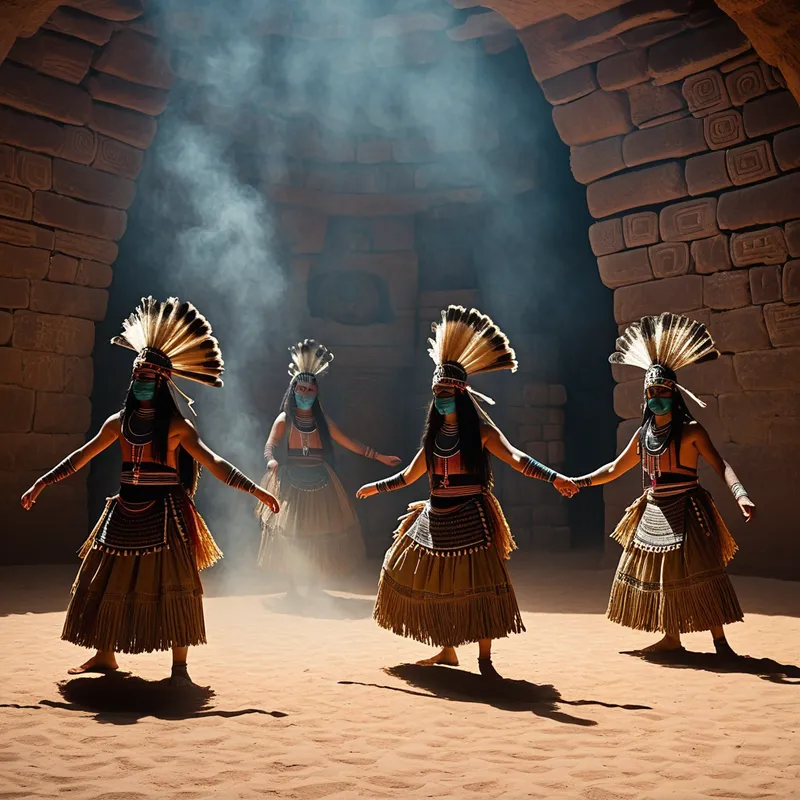
For a season, they lived among the people. They danced the rain down from the sky, their movements pulling the moisture from the very air. They taught the songs that called the corn from its slumber. They showed the children the proper way to live—not through lectures, but through embodied stories in the dance. The people remembered. They felt the connection thrum back to life, a cord re-knitted between the heart of the village and the heart of the mountain.
But the Kachinas are not meant to stay. As the summer sun reached its zenith, a solemnity settled over them. In a final, powerful ceremony, they gathered the people. They removed their masks—and beneath them were not spirit faces, but the faces of the people’s own uncles, brothers, and fathers. The revelation was not a trick, but the final, most profound lesson: the spirit does not live out there. It lives in here, in the commitment to embody it. The masks were not disguises, but portals.
Then, they departed, not back to the peaks, but into the very bodies of the Hopi men. They left their physical forms behind as carved tithu dolls for the children, to remember. The spirits returned to Nuvatukya'ovi, but their power, their covenant, remained in the village, sleeping within the people, waiting for the dance to call it forth again.
Cultural Origins & Context
The Kachina tradition is the living breath of Hopi cosmology. It is not a single, frozen myth from a distant past, but a continuous, cyclical ceremonial practice central to the Hopi phratry and clan system. The narratives and identities of hundreds of distinct Kachinas are preserved not in written texts, but in the oral instructions passed from initiated men to their successors, and in the meticulous, seasonal performances themselves.
The primary societal function is one of holistic education and ecological mediation. The six-month Kachina season, from the winter solstice to the summer solstice, is a ceremonial engine for the community’s wellbeing. Through the dances, the people participate directly in the maintenance of the world: they bring rain, ensure fertility of crops, teach social and ethical norms to the young, honor ancestors, and reaffirm their place in the sacred geography. The Kachina dancer, by taking on the mask, undergoes a temporary but complete transformation. He becomes a vessel, a conduit for the spirit’s influence to flow into the human world. This is not theater; it is a sacred technology of relationship.
Symbolic Architecture
At its core, the Kachina mythos is a profound symbol of the mediated connection. It solves the human dilemma of a transcendent spiritual world that feels separate from the immanent physical world. The Kachina is the bridge.
The mask is not a barrier between the human and the divine; it is the lens that makes the interface possible. It allows the infinite to take a finite form, and the finite to touch the infinite.
Psychologically, the Kachina represents the archetypal force made conscious and approachable. The pantheon of Kachinas—from rain-bringers to healers to disciplinarians—maps the complete spectrum of forces necessary for a balanced psyche and a balanced community. The Koshare, for instance, embodies the critical, shadow-integration function, using humor and taboo-breaking to expose hypocrisy and release social tension, much like the trickster archetype in depth psychology.
The final unmasking is the ultimate symbolic revelation. It dismantles the projection of spiritual power onto external, distant deities. It declares that the sacred is a potentiality within the community and the individual, activated through ritual, discipline, and conscious embodiment. The power of the mountain must be walked into the plaza by human feet.

The Dreamer's Resonance
When the motif of the Kachina arises in a modern dream, it often signals a process of sacred embodiment. The dreamer may be encountering masked figures, or may themselves be putting on or struggling with a mask that feels both alien and strangely familiar.
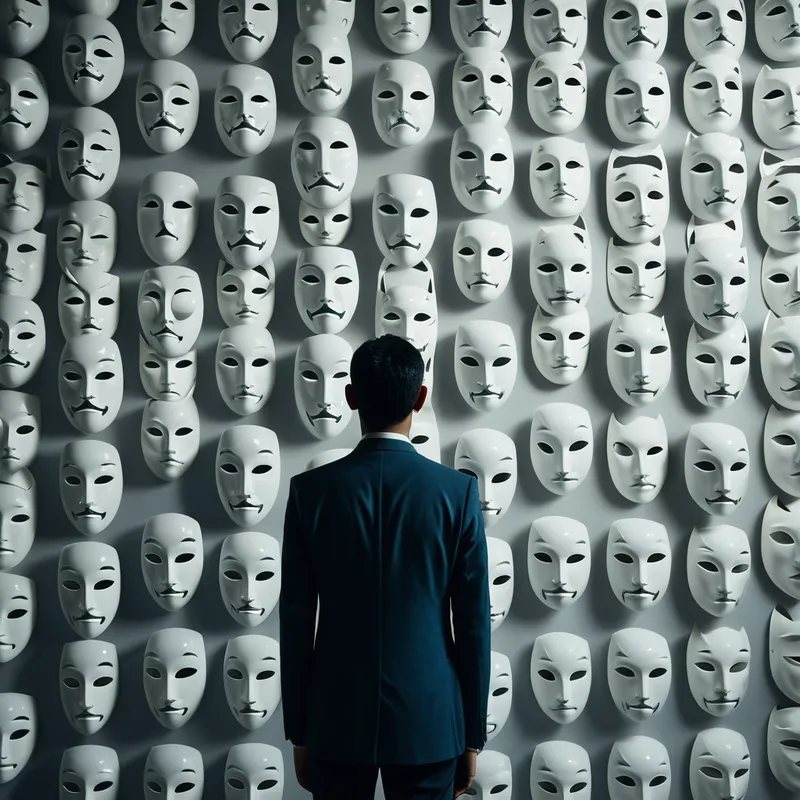
This is the psyche working on the integration of a powerful archetypal energy that feels larger than the personal ego. The somatic sensation can be one of being "filled" or "animated" by a force—a sense of expanded presence, authority, or knowing that is not quite one's own. Conversely, dreaming of a Kachina mask staring blankly from a wall may indicate a felt disconnect from one's own spiritual or instinctual depths, a sense that a vital, guiding aspect of the self is available but not currently "inhabited."
The dream is prompting a question: What potent, perhaps daunting, aspect of your own spirit are you being called to "dance" into existence? What mask—what role, what responsibility, what forgotten power—awaits your conscious acceptance and embodiment?
Alchemical Translation
The Kachina cycle is a perfect model for the Jungian process of individuation—the alchemical journey of becoming one’s whole, authentic self. It maps the transformation from a state of psychic fragmentation (the people and the spirits separate) to a state of integrated wholeness (the spirit embodied in the person).
The first stage is Recognizing the Drought—the feeling of spiritual or creative barrenness in the individual’s life. The "rain" does not fall; inspiration is absent. Then comes the Descent of the Archetype—an influx from the unconscious, often in the form of a powerful new drive, insight, or compelling symbol (the Kachina appearing). This energy feels numinous and other at first.
The crucial alchemical work is the Ritual Embodiment—the disciplined, repetitive "dance." This is the conscious engagement with that energy: writing the poem, practicing the skill, engaging in the therapy, living the new value. One "puts on the mask" of this new potential through action.
Individuation is not about becoming a god; it is about becoming a responsible vessel for the god-like potentials within. It is the unmasking that reveals the dancer was you all along, now irrevocably changed by the dance.
Finally, the Unmasking and Integration. The initial, overwhelming archetypal energy is metabolized. It is no longer a foreign "Kachina" spirit controlling you, but a mature, owned aspect of your own character. The power returns to the mountain (the unconscious), but you retain the carved doll (the integrated complex, the new capacity) as a permanent part of your psychic structure. The cycle is complete, only to begin again with a new drought, a new calling, a new mask awaiting its dancer. This is the ongoing alchemy of a life lived in conscious relationship with the depths.
Associated Symbols
Explore related symbols from the CaleaDream lexicon: