Julunggul Rainbow Snake Female Myth Meaning & Symbolism
A foundational Aboriginal Australian myth of the Rainbow Snake, Julunggul, embodying creation, sacred law, and the terrifying, fertile power of the primordial feminine.
The Tale of Julunggul Rainbow Snake Female
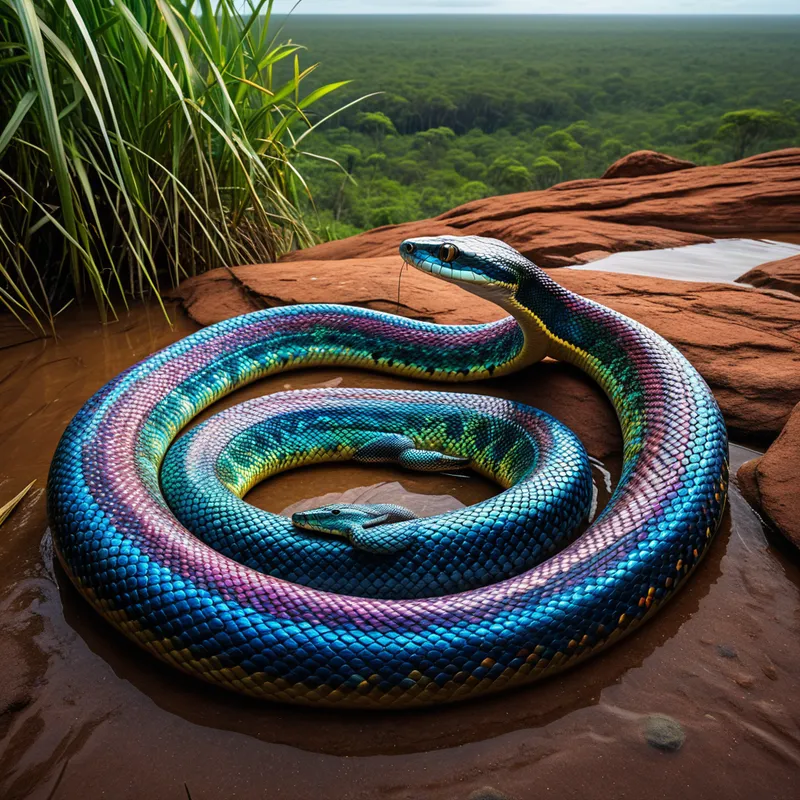
In the time before time, when the world was soft and singing, the great waterholes of the Dreaming held a deep, dreaming silence. From the deepest of these, in the country of the Yolngu people, dwelled Julunggul. She was the land and the water, the rainbow and the storm. Her immense, iridescent body held the colors of the ochre earth, the monsoon cloud, and the setting sun. She was the keeper of the waters, the source of all life, and the enforcer of the first and most sacred law.
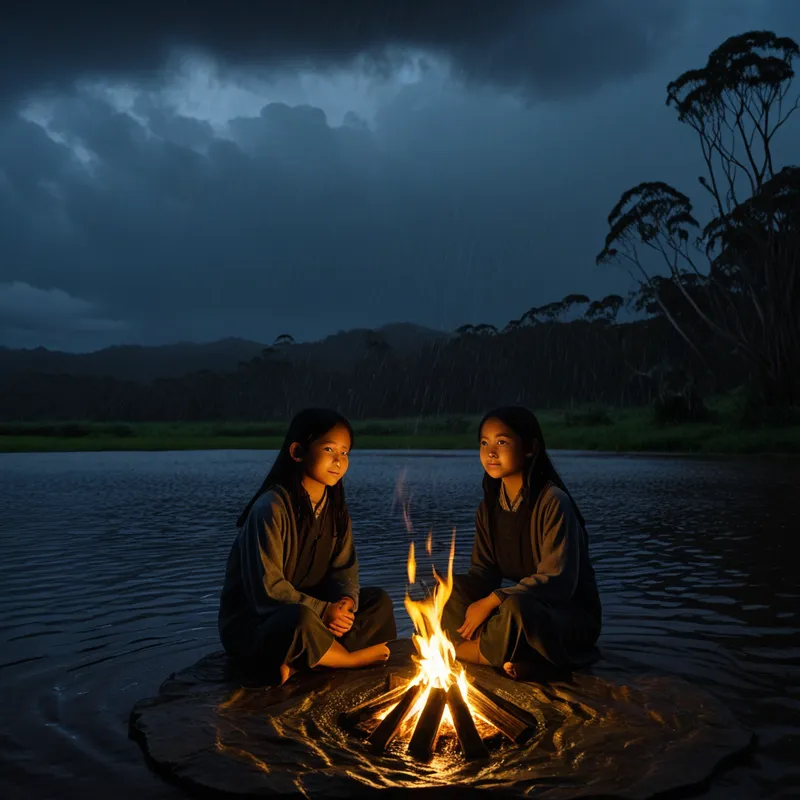
One day, the scent of life—new, vibrant, and untested—drifted into her watery realm. It was the scent of the Wawalag Sisters. These sisters, one elder and one younger, were journeying across the land. The elder sister had broken a powerful taboo: menstrual blood had fallen upon the earth. This sacred, life-giving substance carried a potent power that resonated through the songlines straight to Julunggul’s abyss.
Drawn by this powerful, forbidden call, Julunggul began to stir. The waterhole, once still as a mirror, began to churn. The sky darkened, not with night, but with her rising presence. She emerged, a colossal, gleaming serpent, her scales refracting the last of the light into a terrifying, beautiful arc across the heavens. The air grew thick with the smell of rain and ozone, of damp earth and primal power.
The sisters, making camp by a smaller billabong, felt the world change. The birds fell silent. The wind died. They built a shelter, a humble wurley, sensing a great presence approaching but not knowing its form. As the elder sister’s child cried, and as the sisters themselves prepared to sleep, the first drops of Julunggul’s rain began to fall—a heavy, insistent drumming on the leaves above.
Then, she was there. Her great head rose from the waterhole, water streaming from her form. She entered their shelter. In a moment of immense, silent drama, she swallowed the sisters and the child whole, drawing them into the dark, watery mystery of her being. The world held its breath.
But the story does not end in digestion; it culminates in regeneration. Within Julunggul, the sacred law was affirmed, and the cycle was completed. Moved by the rhythms of the life she now contained—or perhaps by the completion of the ritual—she raised her great body to the sky and vomited them forth, alive and renewed. In that act of ingestion and release, the people, the land, and the law were forever changed. She returned to her waterhole, and with her descent, the first true monsoon was unleashed, flooding the land, carving new rivers, and making everything fertile and new. Julunggul had not destroyed; she had initiated.
Cultural Origins & Context
This myth is a foundational narrative of the Yolngu and other Aboriginal peoples of north-eastern Arnhem Land. It is not a mere story but a Dreaming story, a cosmological map and a legal charter. It was and is passed down through intricate song cycles, dances, body paintings, and rituals performed by initiated custodians. The telling is a sacred act, connecting the present community directly to the creative events of the ancestral past.
Its societal function is multifaceted. It establishes the sacredness and danger associated with fertility, particularly female fertility and its associated taboos. It explains the origin of the monsoon seasons and the life-giving yet destructive power of water. Most importantly, it encodes the principle of The Law. Julunggul is the ultimate sanction, the embodiment of a natural order that, when breached, reacts with terrifying, transformative force to restore balance. The myth teaches respect, explains natural cycles, and binds the people to their country through a shared, living narrative of how that country came to be.
Symbolic Architecture
Julunggul is the ultimate symbol of the paradoxical, all-encompassing feminine principle. She is not a "goddess" in a distant pantheon; she is the landscape—the waterhole, the rainbow, the storm, the fertile earth.
She represents the unconscious itself: the deep, creative, and potentially annihilating waters from which all consciousness emerges and to which it must periodically return for renewal.
The blood of the Wawalag sister is the catalyst. It symbolizes potent, raw life-force entering the structured world, an act that simultaneously invokes creation and chaos. Julunggul’s swallowing is not a punishment but a necessary, if terrifying, reintegration. The sisters are taken back into the source to be remade. The subsequent vomiting is a rebirth, and the monsoon is the cosmic release of this new, fertilized potential into the world. The Rainbow is her visible covenant, a bridge between the terrestrial and the celestial, between destruction and creation, signifying the promise of order restored after the storm.
The Dreamer's Resonance
When this myth pattern stirs in the modern dreamer, it often signals a profound encounter with the autonomous, transformative power of the deep psyche—what Jung termed the anima in its most primordial form. Dreaming of a great serpent, especially in or near water, or of being swallowed by a natural force, can point to this archetype activating.
The somatic experience might be one of overwhelming pressure, a feeling of being consumed by an emotion (often grief, rage, or a powerful creative urge) or a life circumstance. Psychologically, it is the process of being drawn into a necessary "dissolution." The old identity or adaptation that has breached an inner, sacred law (authenticity, perhaps) is being deconstructed. The dreamer is in Julunggul’s belly—a dark, confusing, and passive phase where conscious control is useless. This is the prelude to renewal, a mandatory descent before a new level of psychic order and fertility can be achieved.
Alchemical Translation
The myth of Julunggul is a perfect map for the alchemical process of individuation, specifically the stage of nigredo—the blackening, the dissolution. The conscious attitude (the Wawalag sisters going about their journey) inadvertently activates a deeper, more powerful law of the Self. The ego is swallowed by the unconscious (Julunggul).
The triumph is not in escaping the belly, but in enduring it, allowing the primal, non-egoic forces to work upon the psyche until a new composition is forged.
The modern individual’s "monsoon" is the flood of emotion, insight, and energy that follows such a period of introversion and breakdown. The old structures are washed away, making space for new growth. The key lesson is that creation is not a gentle, controlled act. True psychic birth and the establishment of an authentic inner order often come through a terrifying engagement with the chaotic, fertile, and utterly amoral power of the foundational Self. We are vomited forth, not as we were, but as we are meant to be—more aligned with the inner rainbow covenant that bridges our deepest nature with our lived reality.
Associated Symbols
Explore related symbols from the CaleaDream lexicon:
- Rainbow — The visible manifestation of Julunggul’s being and her covenant, symbolizing the bridge between destruction and creation, the promise of order and fertility after the storm.
- Water — Represents the primordial, unconscious realm of Julunggul herself, the source of all life, memory, and potential, as well as the medium of her transformative power.
- Snake — The core form of Julunggul, embodying cyclicality, transformation, primal energy, and the deep, earth-connected wisdom that enforces natural law.
- Blood — The potent, taboo life-force of the Wawalag sister, which acts as the sacred catalyst that summons the transformative power of the ancestral world.
- Rain — The direct action and consequence of Julunggul’s movement, representing both the nourishing and devastating flood of unconscious contents into conscious life.
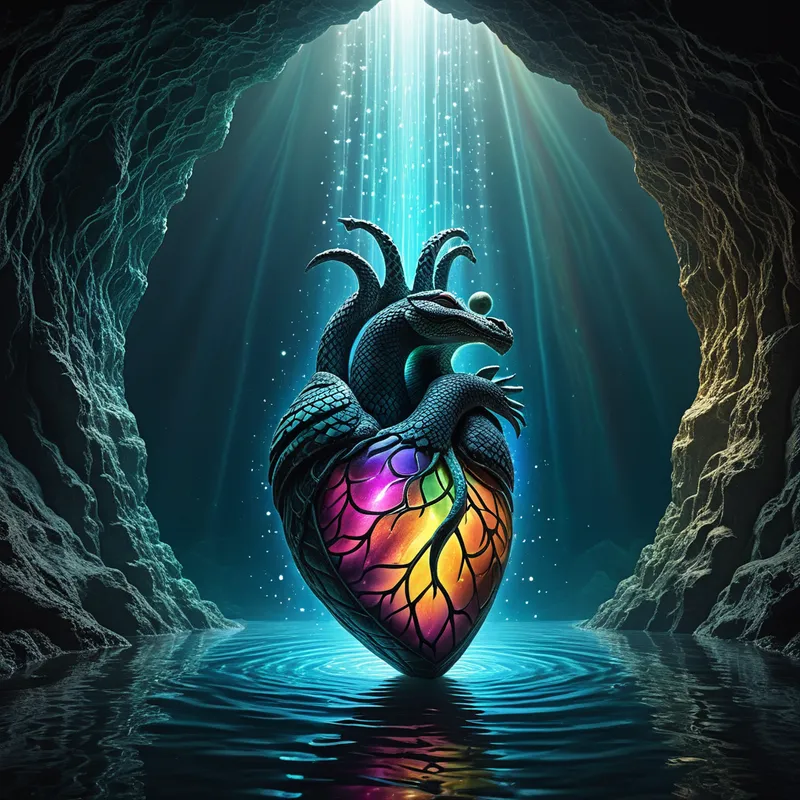
- Cave — Symbolic of Julunggul’s waterhole abyss and her belly, the dark, womblike container where dissolution and recombination of identity occur.
- Rebirth — The essential outcome of the myth, as the swallowed beings are returned to the world renewed, modeling the psyche’s capacity for regeneration after crisis.
- Earth — Julunggul is not separate from the land; she is its animating spirit, representing the deeply grounded, non-abstract nature of this cosmological power.
- River — The channels carved by Julunggul’s monsoon, symbolizing the new pathways of life, emotion, and thought created after a period of psychic flooding.
- Mother — Julunggul in her aspect as the ultimate, ambivalent source: she who gives life, takes it back into herself, and gives it again, demanding respect for her laws.
- Dream — The state in which this ancestral reality remains alive and accessible, and the modern psychological space where its patterns continue to enact transformation.
- Order — The fundamental Law that Julunggul embodies and enforces, representing the innate, often severe, psychic necessity for balance and authentic structure.