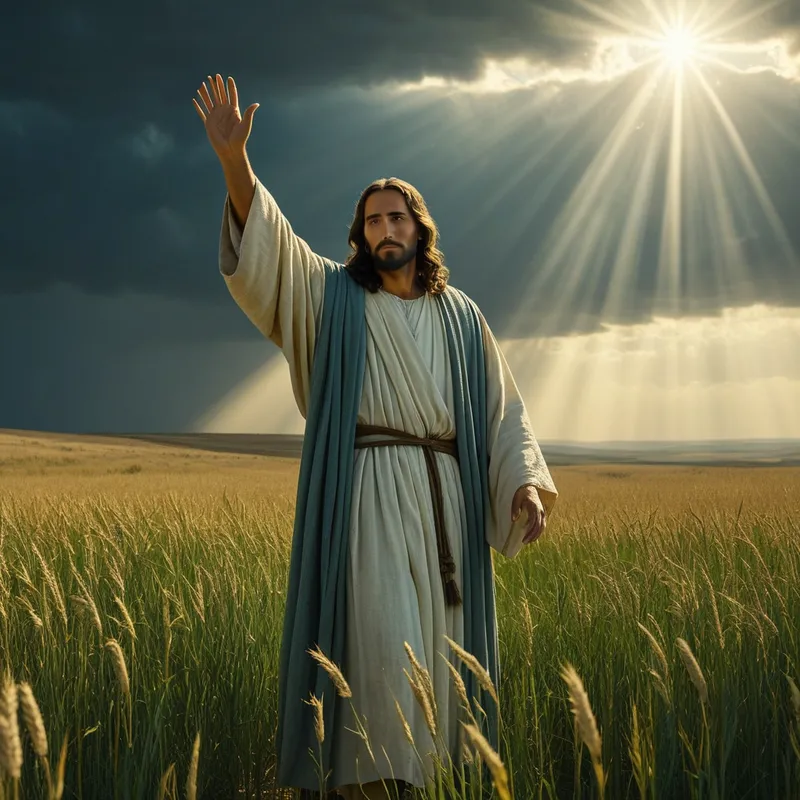
Jesus Christ Myth Meaning & Symbolism
A divine figure descends into mortal flesh, teaches a radical love, is betrayed and sacrificed, and rises again, transforming death into eternal life.
The Tale of Jesus Christ
Listen. In a time when the world was heavy with empire and longing, a whisper moved through the veins of the earth. It spoke of a promise, a king not of gold and legion, but of spirit and dust. In a forgotten corner of Judea, under the watchful eye of Caesar’s eagle, a child was born in the animal-scented dark of a stable. His first cries were not heard in a palace, but by shepherds who saw the very fabric of the night sky tear open with song.
He grew, this child, in silence and ordinary labor, until the day he stepped into the muddy waters of the Jordan. There, the sky opened again, and a voice like thunder and honey declared him Beloved. From that moment, he walked the dust-choked roads, a man yet more than a man. He spoke not of law, but of a kingdom within the human heart. He touched the untouchable—the leper’s ravaged skin, the fevered brow, the eyes sealed shut from birth—and where his fingers passed, wholeness bloomed like a sudden spring. He fed thousands with a few loaves, calmed a raging sea with a word, and spoke in parables that were keys to unseen doors.
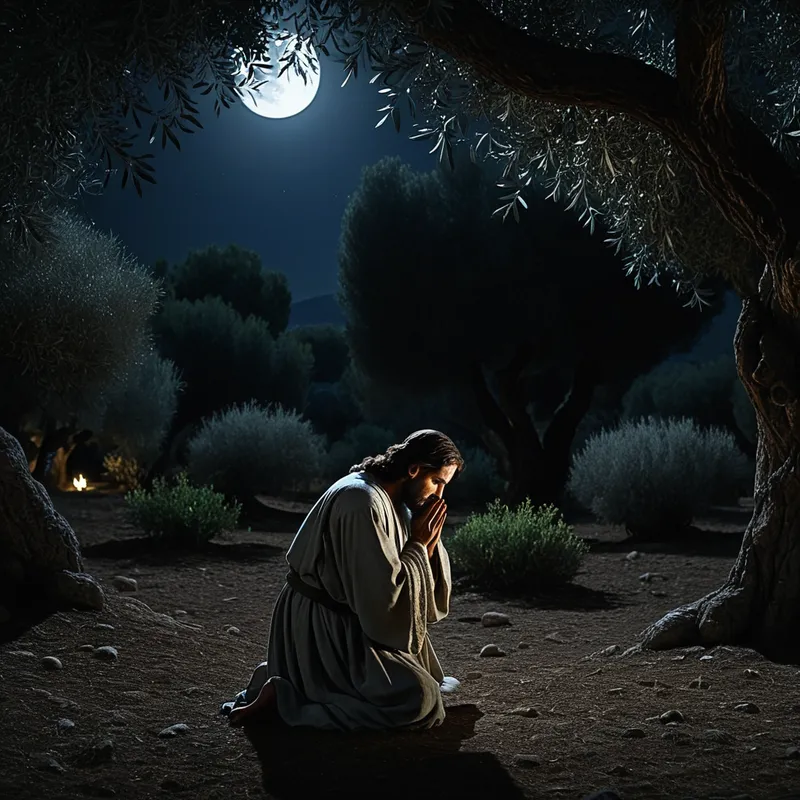
But light casts long shadows. His radical love, his claim of intimacy with the Source itself, threatened the careful order of temple and throne. The whispers turned to plots. In a garden drenched in moonlight and dread, he knelt, his soul in agony, begging for another way. Yet he surrendered, “Not my will, but Yours.” The betrayal came with a kiss from a friend. He was dragged before mocking authorities, stripped, beaten, crowned with cruel thorns.
They nailed him to a cross of rough-hewn wood on a hill called Golgotha, the Place of the Skull. For hours he hung between heaven and earth, between a repentant thief and an unrepentant one, between his mother’s grief and the soldiers’ dice. As life fled his broken body, he cried out, forgave his tormentors, and commended his spirit. The sun hid its face. The earth trembled. The veil in the temple, separating the holy from the most holy, tore from top to bottom.
They laid him in a tomb sealed with a stone, and the world fell into a silence deeper than any Sabbath. For three days, hope lay entombed. Then, at dawn, women came with spices to anoint the dead. They found the stone rolled away, the tomb empty, but not vacant—filled with a presence of dazzling light. “He is not here,” a messenger said. “He is risen.” He appeared to them, not as a ghost, but in a body that bore the wounds of love, yet could pass through walls. He broke bread with his friends, and in that simple act, they knew him. He ascended, promising his spirit would remain, a comforter, a fire in the heart. The story did not end; it was seeded in the world, waiting to be lived.
Cultural Origins & Context
This myth emerged from the fertile, turbulent soil of Second Temple Judaism, a culture living under Roman occupation and yearning for a Messiah. It was not born in palaces or academies, but on the roads and in the homes of a marginalized people. The primary vessels for the tale were the apostles and early communities who shared oral testimonies, passionate letters, and eventually the narrative accounts we call the Gospels. These texts—Matthew, Mark, Luke, and John—were composed decades after the events, each refracting the core story through the lens of a specific community’s needs and theological insights.
Societally, the myth functioned as a radical re-founding narrative. For a persecuted minority, it transformed the symbol of ultimate Roman shame—the cross—into a badge of ultimate victory. It created a new identity not based on ethnic lineage or legal observance, but on a shared, transformative relationship with the divine. The ritual of the Eucharist (communion) served to re-member and ingest the myth literally and symbolically, binding the community to the story and to each other across time and space.
Symbolic Architecture
At its heart, this is the archetypal myth of the God who becomes mortal to show mortals they are, in essence, divine. It maps the journey of the Self into the confines of the individual ego, its struggle within the world of matter and shadow, its apparent death, and its triumphant return to a transformed, conscious wholeness.
The crucifixion is not the punishment of a god, but the voluntary shattering of the divine vessel so that its essence may be poured into every crack of the created world.
Jesus represents the Self incarnate. His baptism symbolizes the conscious descent of spirit into the waters of the unconscious and the personal psyche. His miracles are eruptions of the supernatural order (the Self) into the natural order (the ego’s world), demonstrating that the laws of lack, sickness, and chaos are not ultimate. The betrayal by Judas symbolizes the necessary role of the shadow—the part of ourselves that, through its “treason,” forces a crisis that leads to transformation. The crucifixion is the ultimate ego death, the total surrender of the personal will and identity to a larger, incomprehensible process. The resurrection is the birth of the individuated personality, where the divine nature is not lost but fully integrated with the experience of suffering and mortality.

The Dreamer’s Resonance
When this mythic pattern stirs in the modern dreamer, it signals a profound psychic initiation. To dream of carrying a cross speaks to a burden of consciousness, a responsibility or suffering that feels destined and crushing, yet somehow sacred. Dreaming of a betrayal often points not to an external Judas, but to the dreamer’s own neglected values or instincts (the shadow) that have “sold out” their deeper truth for the thirty pieces of silver—social approval, security, or comfort.
A dream of being in a tomb or sealed room reflects a state of incubation, where an old identity or life-phase has died and the new Self is gestating in darkness. The appearance of a radiant, familiar yet transformed figure in a dream—a teacher, a guide, or even a luminous stranger—can be the dream-ego’s encounter with the resurrected Self, offering not solutions, but the palpable presence of a peace that passes understanding. These dreams are somatic; they may be accompanied by feelings of immense weight, followed by shocking relief, or a visceral sense of awe and terror at the sacred.
Alchemical Translation
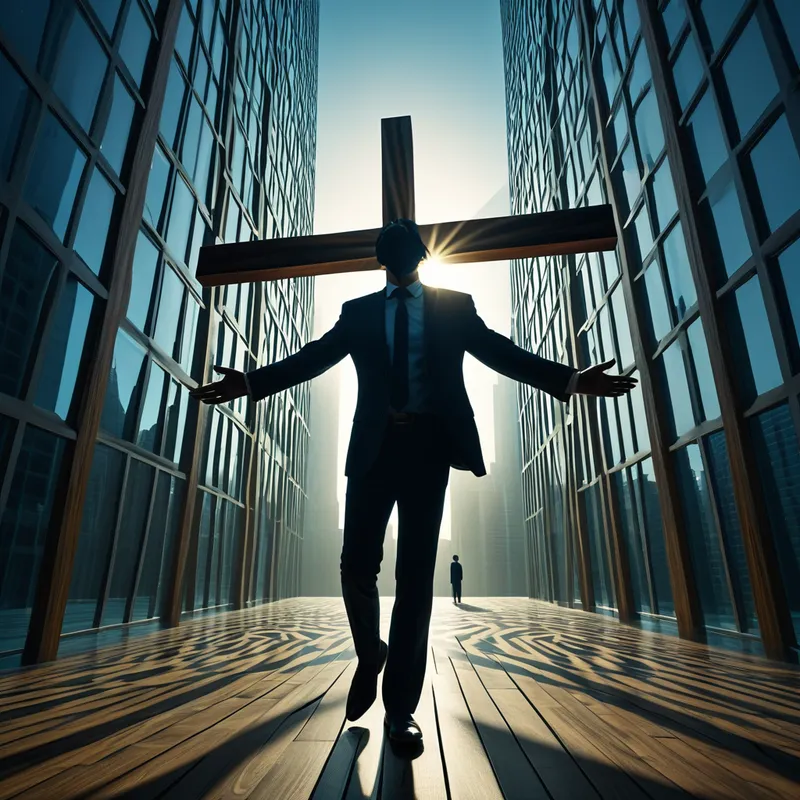
The alchemical opus of this myth is a map for psychic transmutation. The first stage, nigredo (the blackening), is the agony in the garden and the crucifixion—the dissolution of the ego’s certainties, the confrontation with despair, meaninglessness, and the shadow. The Trinity itself models a psychology: the Father (the unconscious, unknown Source), the Son (the conscious ego that incarnates and relates), and the Spirit (the transcendent function that bridges and unites).
Individuation is the passion of the Christ within the human soul—the slow, painful, glorious realization that one must be broken open to become whole.
The burial is the albedo (the whitening), a silent, sterile purification in the tomb of introspection. The resurrection is the citrinitas (the yellowing) and rubedo (the reddening)—the dawning of a new, golden consciousness and its integration into the full-blooded life of the body and the world. For the modern individual, this means the courage to fully inhabit one’s unique life (incarnation), to love and forgive from the core of one’s being (ministry), to accept and consciously offer up one’s inevitable sufferings and limitations (crucifixion), and to discover that on the other side of that surrender is not annihilation, but a more authentic, resilient, and compassionate mode of being (resurrection). The myth promises that the stone of our hardest, most sealed-off self will be rolled away, not by force, but by the inevitable, inner dawn.
Associated Symbols
Explore related symbols from the CaleaDream lexicon: