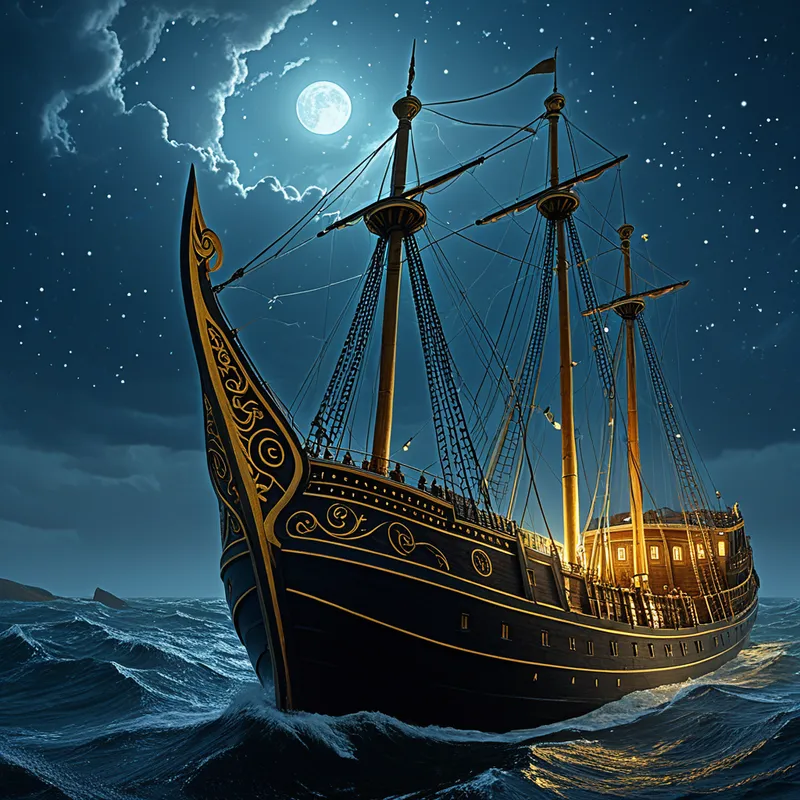
Jason and the Argo Myth Meaning & Symbolism
A prince, a stolen throne, and a sacred quest for a golden fleece aboard the first ship, crewed by heroes and guided by gods.
The Tale of Jason and the Argo
Hear now the tale of the first ship, and the man who sailed her into the mouth of destiny. It begins not with a hero, but with a crime in the dark. In Iolcos, a usurper’s blade stole a rightful king’s throne. The infant prince, Jason, was smuggled away to the wilds, to be raised by the wise centaur Chiron, who taught him the arts of war, healing, and the hard truths of the world.
Years later, a man wearing one sandal strode into the marketplace of Iolcos. It was Jason, come to claim his birthright. His uncle, the usurper Pelias, trembled at the omen, for an oracle had warned him of such a man. With a tyrant’s cunning, Pelias smiled and named a price for the throne: the Golden Fleece, hung in a sacred grove in far-off Colchis, guarded by a dragon that never slept. A quest designed for a hero’s death.
But the Fates had woven a different thread. The goddess Athena herself inspired the building of the Argo, a vessel with a speaking timber from the sacred Dodonian Oak in its prow. A call went out, and the greatest souls of the age answered: mighty Heracles; the winged sons of the North Wind; the prophet Orpheus, whose lyre could calm the waves. They were the Argonauts, bound by oath to the voyage.
Their journey was the map of the unknown world. They fought the harpies, those clawed winds of torment. They passed through the Clashing Rocks, the Symplegades, the very jaws of the sea, escaping by a hair’s breadth. They wept on the shore where Hyacinthus was buried, and heard the lament of the sea. They arrived in Colchis, a land of sorcery and gold, ruled by the ruthless King Aeëtes.
Here, Jason’s heroic strength was not enough. The king set impossible labors: yoke fire-breathing bulls of bronze, sow a field with dragon’s teeth, and then fight the armed men who would spring from the earth. Salvation came not from a god’s favor, but from a mortal’s passion. The king’s daughter, the sorceress Medea, was pierced by Aphrodite’s arrow. She betrayed her father, her homeland, everything, for love of the stranger. With her potions and her wisdom, Jason survived the flames and the sown men. With her song, she charmed the sleepless dragon. In the dead of night, they stole the Fleece, a radiant pelt of gold that lit the dark grove, and fled for the Argo.
Their return was a wake of blood and broken oaths. To delay her father’s pursuit, Medea did the unthinkable, dismembering her own brother and scattering his limbs in the sea. They found no safe harbor in Greece, only the relentless curse of the Fleece. Jason gained his throne, but the glory was ash. He betrayed Medea for a political marriage, and in her divine wrath, she destroyed his new bride, his children, and his future. The man who commanded the first ship and a crew of legends died alone, crushed by the rotting timber of the Argo’s hull, a broken man beneath the shadow of his own story.

Cultural Origins & Context
The saga of Jason is one of the oldest and most layered in the Greek tradition, a foundational “road movie” of the ancient world. Its earliest complete version comes to us from the Hellenistic poet Apollonius of Rhodes, but its roots are far older, echoing in the fragments of Homer and Hesiod. It functioned as a mythic charter for Greek exploration, mapping the dangerous and wondrous coasts of the Black Sea (the Euxine) onto a narrative of heroic endeavor.
The tale was not merely entertainment; it was a societal compass. Performed by bards, it reinforced the values of xenia (the sacred guest-host relationship), the sanctity of oaths, and the terrifying costs of violating them. It explored the tension between individual glory (kleos) and collective endeavor, as the Argo, named for its crew, was the true hero—a metaphor for the polis, the ship of state requiring all hands. The inclusion of heroes from all over Greece made it a pan-Hellenic myth, a story that helped define a shared heroic past for a disparate people.
Symbolic Architecture
At its heart, the myth is not about retrieving a trophy, but about navigating the impossible contract between the conscious ego and the unconscious Self. The Golden Fleece is not mere wealth; it is the numinosum, the ultimate value of the psyche, a symbol of divine kingship and wholeness that resides in the darkest, most defended place.
The quest begins not with a call to adventure, but with a theft. The hero’s journey is often a restorative act, a reclaiming of what was lost to shadow.
Jason is an unusual hero—often passive, reliant on others, from Chiron to Medea to Aphrodite. He represents the ego-consciousness that must be built, not born fully formed. The Argonauts are the latent faculties of the psyche—strength, art, prophecy, speed—mobilized for a singular purpose. The voyage out is the descent into the unconscious, facing its monstrous and enchanting aspects (the Harpies, the Clashing Rocks). Colchis is the realm of the Great Mother in her terrible, magical aspect, ruled by a king who hoards the treasure. To win it, the hero must integrate the rejected, “foreign” feminine power of Medea, the witch, the instinctual and magical wisdom society fears.
The tragedy is that Jason, having seized the treasure, fails to integrate it. He rejects Medea, the very power that won it for him. He attempts to return to a “normal” kingly consciousness, and the retrieved gold turns to poison.
The Dreamer’s Resonance
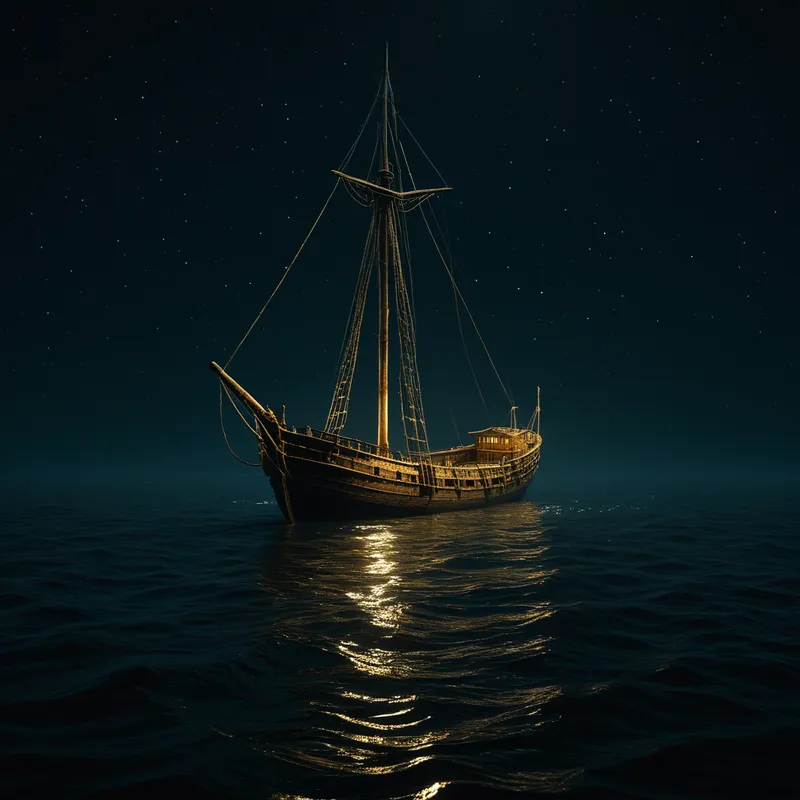
When this myth stirs in modern dreams, it often signals a profound, collective mobilization of the psyche. Dreaming of a grand, archaic ship being prepared for voyage may indicate the Self organizing resources for a major life passage or a deep psychological undertaking. The dream-ego may not feel like a confident captain, but like Jason—somewhat out of place, tasked with an overwhelming mission.
Dreams of impossible tasks (yoking fiery beasts, facing sown warriors) mirror feelings of being tested by life in ways that feel inhuman or rigged against us. The appearance of a powerful, enigmatic helper figure (a Medea) can symbolize the emergence of a previously neglected psychic function—perhaps raw intuition, creative fury, or a connection to instinctual wisdom that feels both necessary and taboo. The critical somatic feeling in such dreams is often one of immense pressure and urgency, a sense of being propelled by a destiny or a debt that must be paid, coupled with the anxiety of the crew (the other parts of oneself) watching and depending on you.
Alchemical Translation
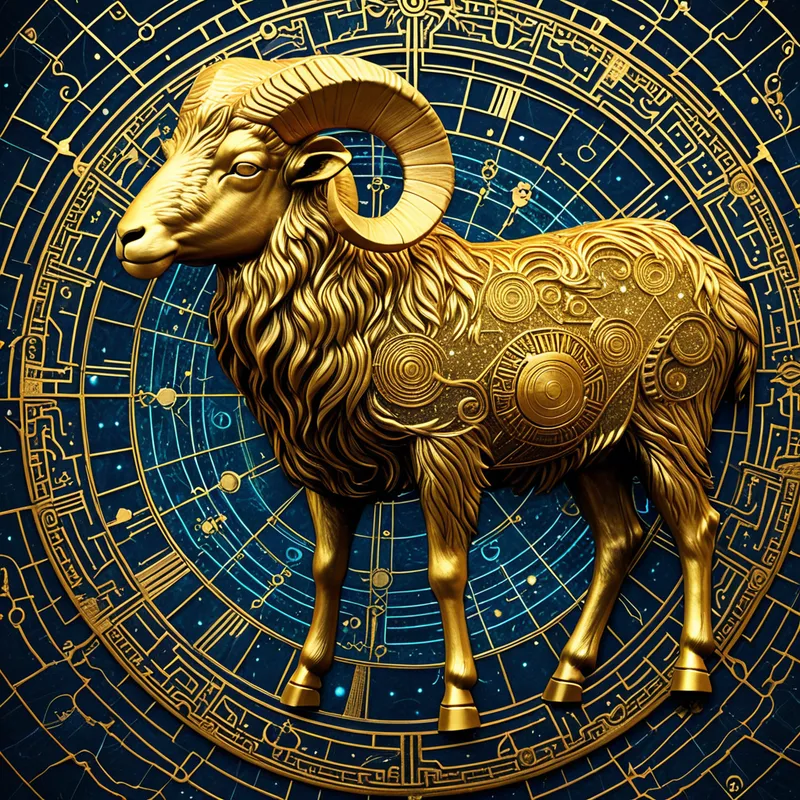
The myth models the alchemical opus with brutal clarity. The prima materia is the stolen throne—a life out of order, a Self usurped by a complex (Pelias). The quest is the long, perilous work of solutio (the sea voyage) and coagulatio (the trials on land), dissolving old structures and confronting the fiery, metallic nature of the unconscious (the bronze bulls).
The Fleece itself is the aurum philosophicum, the philosophical gold. It is not found, but earned through a sacred marriage, the coniunctio, with the anima in her most potent and dangerous form.
Jason’s union with Medea in the grove of Ares is this sacred marriage, where the heroic ego weds the transformative, magical power of the deep psyche. This is the pinnacle of the opus. The failure is in the return, the rubedo. Individuation is not complete with the retrieval of the treasure, but only when it is successfully integrated into life. Jason fails this final stage. He tries to deposit the gold into the old, corrupt system (his kingship in Iolcos) and discard the transformative agent (Medea). The result is not wholeness, but a violent mortificatio—the death of his new life, his children (his potential futures), and finally himself.
Thus, the myth serves as a profound warning. The journey to the edge of the world is perilous, but the greater danger lies in believing the treasure is an external object to be possessed. The true alchemy is allowing the Fleece—the earned wisdom, the reclaimed sovereignty—to transform the seeker so utterly that he can never again sit comfortably on an old, stolen throne. The ship Argo, the vessel of the collective Self, sails on, but the man who commanded it must be reborn in its wake, or be broken by it.
Associated Symbols
Explore related symbols from the CaleaDream lexicon: