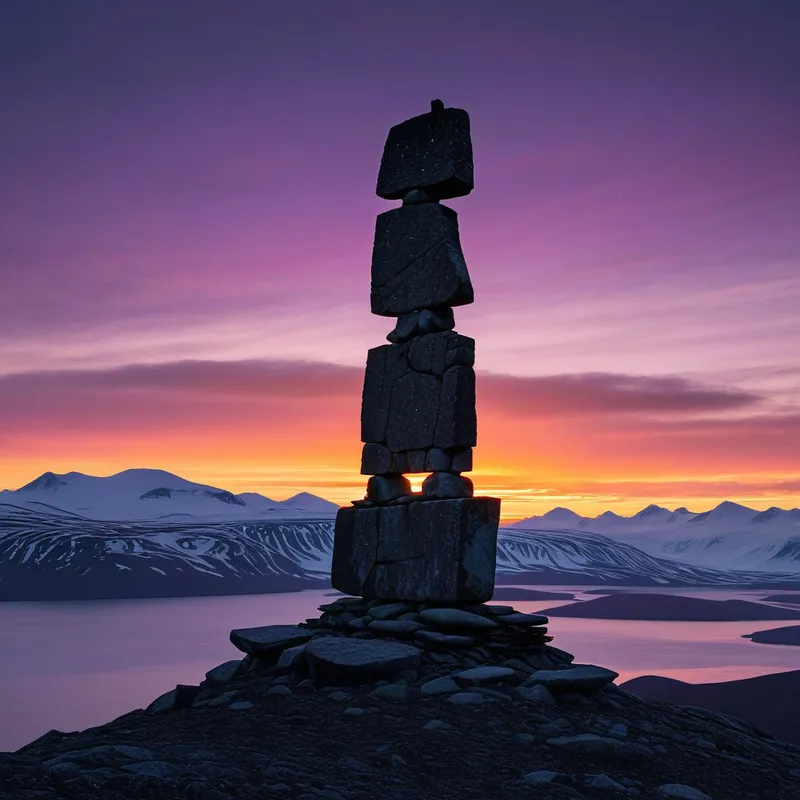
Inuksuk Myth Meaning & Symbolism
A mythic tale of a hunter who, lost in a white-out, builds a stone sentinel to guide his people, transforming into a symbol of hope and direction.
The Tale of Inuksuk
Listen. Listen to the voice of the wind that scours the tundra. Listen to the silence that comes after the snow. This is a story not written on skin or bone, but placed upon the land itself, stone by patient stone.
There was a hunter, a man of keen eye and steady breath, named Kajuq. He followed the path of the tuktu far from the breathing warmth of the sod houses, out where the world is flat and white and the sky presses down like a lid of cloud. The hunt was good; his sled was heavy. But the Sila, the great weather, turned its face. A white wind rose, not howling, but swallowing. It ate the horizon. It drank the tracks of the caribou. It left Kajuq in a bowl of pure, swirling nothing, where up and down were the same, and the only sound was the blood in his own ears.
For a day and a night, he waited, huddled with his dogs, the cold seeping into the marrow of his story. To walk was to fall into the featureless mouth of the world. Panic, a thin and chittering creature, scratched at the edges of his mind. But deep in his chest, where the memory of his grandfather’s voice lived, a different knowing stirred. It was not a knowing of where, but of what.
He moved not to flee, but to build. With hands gone clumsy as stone, he began to gather. Not snow, which the wind would steal, but the bones of the earth. He found rocks, rounded by ancient rivers, heaved from the permafrost. One, large and flat, he set as a foundation. Upon it, he balanced another, and another. His muscles burned with a new purpose. He was not making a shelter, but a sign. A figure. Arms of stone, a head of darker granite. It was crude, a child’s drawing of a person, but it stood. It did not waver in the wind.
He built a second, a little way off, pointing back toward the first. And then a third. A line of silent watchers in the chaos. He placed the last stone, and as he did, the wind, as if curious, dropped for a moment. Through a rent in the cloud, a single star, the North Star, Nuuttuittuq, the "never moving," winked once. It hung directly over the head of his first stone man. A path, invisible moments before, was now marked in the world. Not by footprints, but by intention. The stone people showed the way home.
When Kajuq finally stumbled into the camp, his story poured out not as a tale of terror, but of revelation. From that day, the people did not just build cairns. They built Inuksuk. A sentinel that says, "You are here." A guide that whispers, "The way is there." A messenger that declares, "Someone was here before you. You are not alone."
Cultural Origins & Context
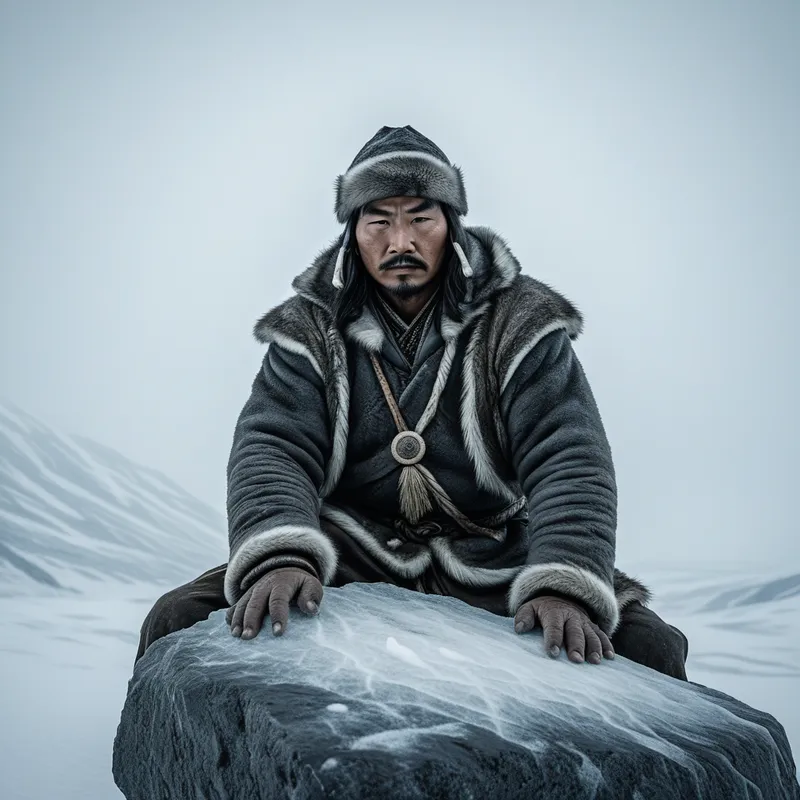
The Inuksuk (plural: Inuksuit) is not merely a artifact of Inuit culture; it is a fundamental syntax in their dialogue with a landscape that offers few permanent landmarks. In a world of shifting ice, migrating herds, and featureless tundra, survival depended on precise wayfinding and communication. The myth of its origin, passed down through generations not as a single sacred text but as a practical story imbued with spiritual weight, served a vital societal function.
It was a teaching story, told by elders to young hunters. It encoded critical knowledge: in crisis, clarity of mind and purposeful action are your first tools. It taught that the human response to being lost is not just to seek, but to mark. The story transformed the act of piling stones from a mundane task into a cultural imperative—an act of care for those who would follow. The Inuksuk became a non-perishable sign in an environment where trails vanish and snow covers all. They marked migration routes, caches of food, sacred places, and good fishing spots. They were the original social network, a stone-based communication system saying, "Safety is this way," "Danger is there," "Remember this place."
Symbolic Architecture
Psychologically, the Inuksuk is a supreme symbol of consciousness erecting itself in the void. The white-out Kajuq experiences is the archetypal landscape of confusion, depression, or existential crisis—a state where all familiar internal and external landmarks are obliterated.
The first act of salvation is not to find the old path, but to build a new point of reference.
The hunter’s panic represents the ego’s disorientation. The gathering of stones is the slow, deliberate work of gathering psychic material—memories, values, core truths—that have substance and will not blow away. The building of the human form is crucial: it is the ego constructing a representation of the Self, a symbolic marker of human presence and identity in the midst of chaos. It is an act of self-reminding. Each stone placed is a decision, an assertion of "I am here."
The resulting figure is a conduit. It does not move, but it orients. It connects the lost individual on the ground (the earthly, confused ego) with the fixed star above (the transcendent, unchanging Self, or Nuuttuittuq). The Inuksuk is the embodied axis between the temporal and the eternal, the lost and the found.
The Dreamer's Resonance
When the form of an Inuksuk appears in a modern dream, it often surfaces during periods of profound disorientation—after a major life transition, during a loss of direction in career or relationship, or in the numb aftermath of trauma. The dream-ego is in its own "white-out."
The somatic feeling is not typically fear, but a deep, weighted solitude and a pressing need for orientation. The dreamer may find themselves building the stone figure, or simply observing it. The act of building in the dream is therapeutic; it is the psyche performing the necessary work of consolidation. It is gathering scattered parts of the self and stacking them into a stable, intentional structure. If the dreamer touches the stones, they may feel surprisingly warm, indicating the latent life and guidance contained within what seems cold and inert (repressed or forgotten aspects of the self).
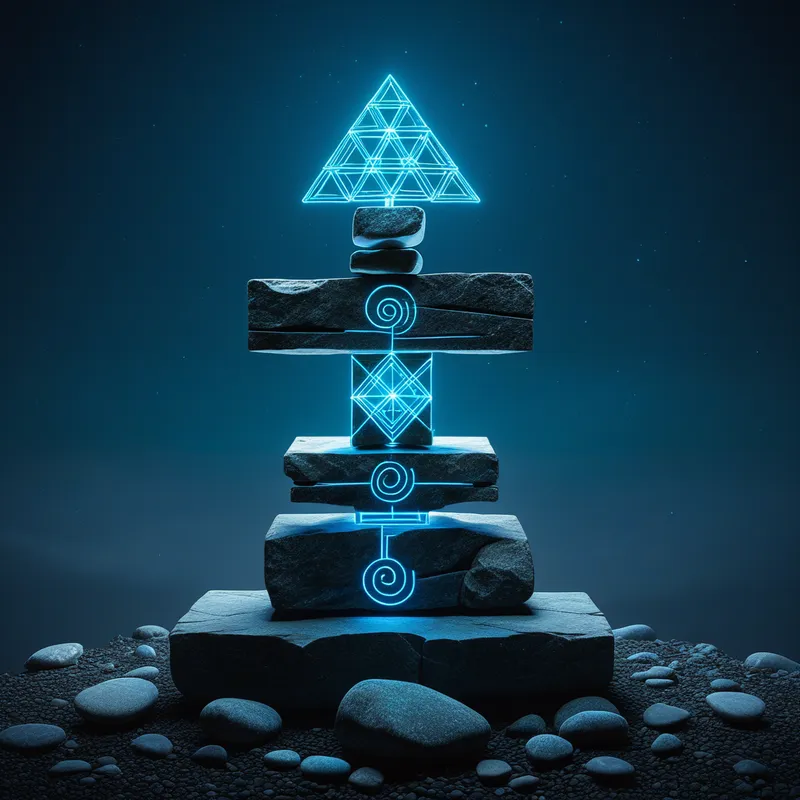
A dream Inuksuk facing away, or crumbling, suggests the dreamer’s internal guidance system is blocked or neglected. One that glows or is impossibly tall signals that a transcendent perspective or "true north" is available, if they can construct the inner landmark to see it.
Alchemical Translation
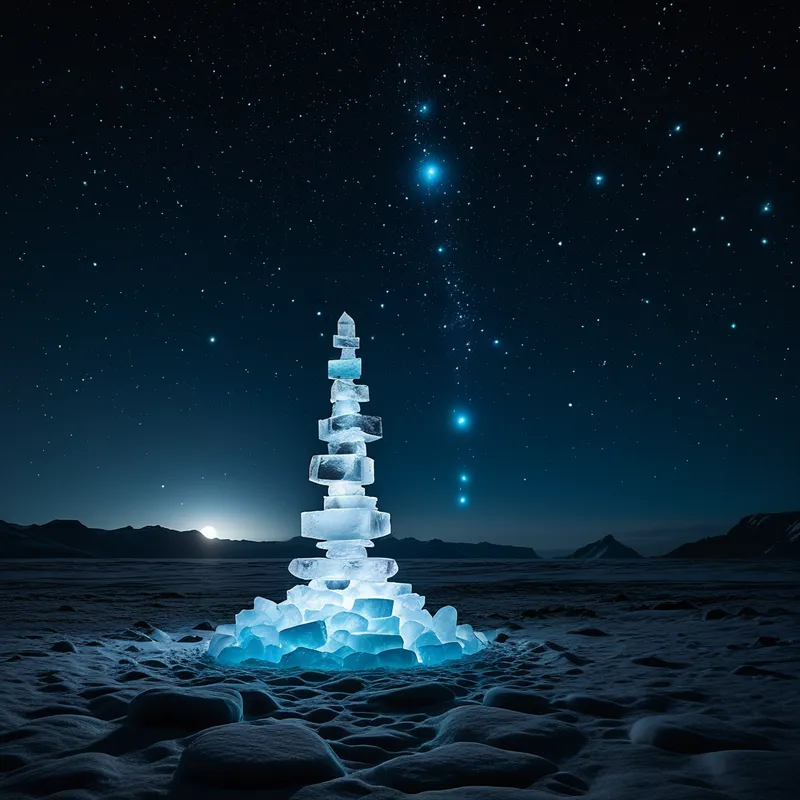
The myth of the Inuksuk models the alchemical stage of coagulatio—the process of making the spiritual solid, of giving form to the formless. The psychic transmutation it outlines is not a dramatic battle, but a patient, persistent act of inner architecture.
The prima materia, the raw stuff of the ordeal, is the blinding chaos of the crisis (the white-out). The first operation is mortificatio, a symbolic death: the death of the old known path, the old identity as "one who knows the way." This death of certainty creates the necessary void. From this void, the ego, if it can avoid the corrosive panic, must become an artisan. It must descend to gather the "stones"—the core, enduring truths of one’s character, the lessons from past trials, the non-negotiable values. These are the heavy, often overlooked aspects of the self.
Individuation is not a journey to a foreign land, but the construction of a reliable landmark in the center of your own being.
The building itself is the coniunctio, the sacred marriage of intention (the human form) with matter (the stones). It is the ego aligning itself with the structure of the Self. The moment the star appears is the illuminatio—the enlightenment that comes not from searching the sky, but from first building a reference point on earth. The guidance was always there (Nuuttuittuq never moves), but it required an inner structure to become visible and useful.
For the modern individual, the myth instructs: When you are lost, do not merely thrash about seeking external answers. Stop. Gather what you know to be solid and true about yourself, however basic. Assemble these pieces into a conscious marker—a journal entry, a clarified principle, a committed decision. This act of internal landmarking creates the orientation from which the true direction, your own "north star," can finally be discerned. You become both the lost traveler and the guide who leaves a sign for your future self, and in doing so, for all who traverse similar inner wildernesses.
Associated Symbols
Explore related symbols from the CaleaDream lexicon: