
Ilya Muromets Myth Meaning & Symbolism
A paralyzed peasant receives a shamanic call, gains superhuman strength, and becomes a holy warrior defending the borders of the sacred Russian land.
The Tale of Ilya Muromets
Listen, and hear the tale that the pines whisper and the rivers remember. In the deep, dark heart of the land of Rus', in the village of Karacharovo, there sat a man on a stove-bench for thirty years and three. His name was Ilya. He was a son of peasants, but his legs would not carry him, his arms could not lift a wooden cup. He sat, a prisoner of his own flesh, watching the world of toil and sorrow pass by the window—a world of mud and frost, of plowshares and simple prayers.
His parents, aged by grief, tended to him. Ilya heard the groaning of the cart wheels, the songs of the reapers, the lament of the widows. He heard tales of a land besieged: of the Tatar hordes with their curved swords like crescent moons, of the monstrous Zmey Gorynych breathing fire upon the holy monasteries, of bandits choking the trade roads. He heard, and his strong heart beat a furious, helpless rhythm against the cage of his ribs.
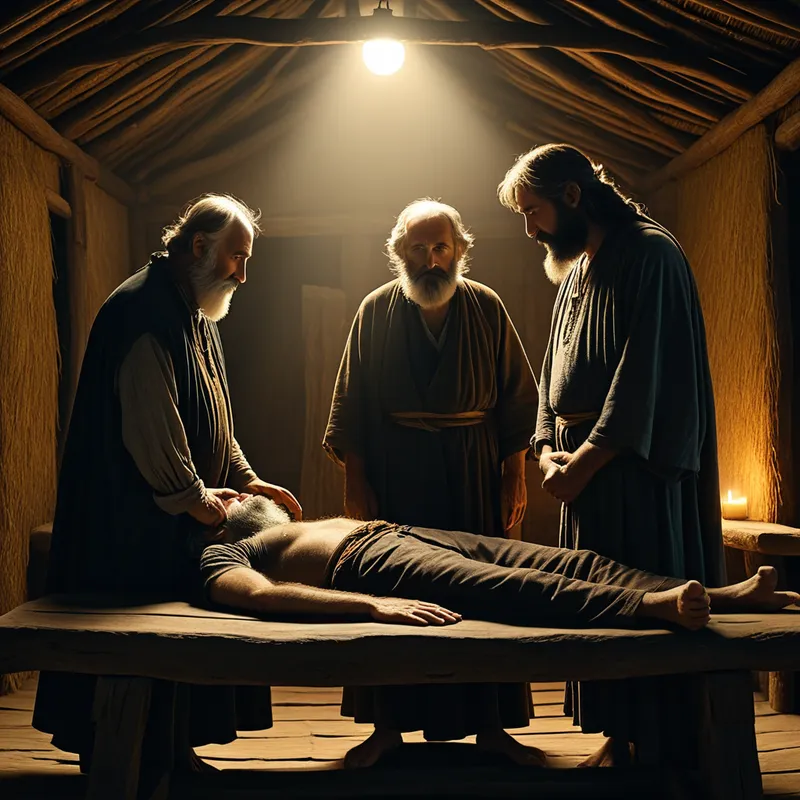
Then came a day unlike any other. The wind carried a strange scent—of distant thunder and steppe grass. A knock sounded at the door, not of a neighbor, but a fateful rap. There stood three ancient, wandering kaliki perekhozhie. Their eyes held the depth of forest lakes. "Give us to drink, Ilya of Murom," they spoke, and their voices were not a request but a summons from the earth itself.
"I would rise to serve you, honorable elders," Ilya sighed, "but my strength is not in me. I am bound to this bench."
"Arise, Ilya," the eldest said, and his words were not sound but a command that vibrated in the very timbers of the house. "Drink this water from our cup."
A tremor, like the first quake of a sleeping giant, passed through Ilya's limbs. He pushed against the bench, and for the first time in thirty-three years, his legs held him. He stood, a sapling after a long winter. He took the wooden cup and drank. The water was not water; it was the taste of lightning and iron, of deep soil and boundless sky. It coursed through him, burning away the long paralysis, filling his sinews with the strength of ten bears, no, a hundred.
The elders smiled, their mission complete. "Now, Ilya Ivanovich, your strength is great. But strength without direction is a storm that destroys its own home. Go. Your first labor is not on a battlefield, but here. Go to your father's field and move what he could not." They vanished, leaving only the scent of ozone and a destiny hanging in the air.
Ilya walked—oh, the miracle of the step!—to the field. There lay an ancient oak, its roots sunk deep into the family plot. With a roar that shook the crows from the trees, he wrapped his arms around the colossal trunk and tore it from the earth, roots and all, casting it into the river Volga. The land was cleared. The first act of his new power was an act of domestic healing.
But the call was not for farming. A second draught from a mystical cup, offered later, granted him a smaller, more enduring strength—the strength of destiny. His parents wept, blessing him with a sorrowful love. Ilya found a mighty warhorse, Cloudfall, in a forbidden meadow. He went to the city of Kyiv, to the court of the Prince Vladimir the Fair Sun. He bowed not as a subject, but as a force of nature presenting itself.
And so began his eternal vigil. He did not seek a throne or treasure. He took his place at the heroic outpost, at the Bogatyr Outpost. He became the living wall. His battles were not for glory, but for order. He slew the brigand Nightingale the Robber whose whistle could shatter forests. He defeated the pagan idol Idolishche. He faced down the Tatar armies, a one-man army against the tide of chaos. His life became a single, unwavering line drawn in the soil between the sown field and the wild steppe, between the sacred and the profane, a testament to the power that arrives not at birth, but at the summons of a sacred need.
Cultural Origins & Context
The legend of Ilya Muromets is not a story penned by a single author, but a living entity forged in the collective breath of a people. It belongs to the tradition of the byliny. These were not mere entertainments; they were the sonic tapestry of identity, performed by skilled singers who acted as living archives of history, morality, and cosmology.
The tales likely crystallized between the 11th and 16th centuries, a period marked by the consolidation of Kievan Rus', the Mongol invasion, and the constant struggle on the forest-steppe frontier. Ilya is the quintessential "older" hero, a figure of immense stability and paternal power, contrasted with the more impulsive "younger" heroes like Dobrynya Nikitich or Alyosha Popovich.
Historically, the character may absorb elements from a real warrior, from pre-Christian Slavic god-forms like Perun, and profoundly, from the Christian ascetic tradition. The historical Saint Ilya of Murom, whose relics rest in the Kyiv Caves Monastery, provides a tangible anchor, blending the archetypal warrior with the holy man. This fusion is key: Ilya is a holy bogatyr. His strength is a divine gift, his mission a sacred duty. The byliny served to model ideal citizenship—strength in service to community and faith, resilience against overwhelming odds, and the humility to receive one's destiny from a source greater than oneself.
Symbolic Architecture
At its core, the myth of Ilya Muromets is a masterful map of radical human transformation. The thirty-three years of paralysis are not an accident but a necessary gestation.
The most profound strength is often born from a prolonged encounter with powerlessness.
The stove-bench is the womb of the hero, a place of enforced introspection where the worldly ego is dissolved. Ilya is not a born aristocrat; he is a peasant, representing the latent, untapped potential within the common human soul. The three kaliki are the agents of initiation from the unconscious—they are the triune function of fate, spirit, and healing that arrives when the soul is ripe, not when the ego is ready. The drink they offer is the living water of the soul itself, the animating spiritus that activates one's essential nature.
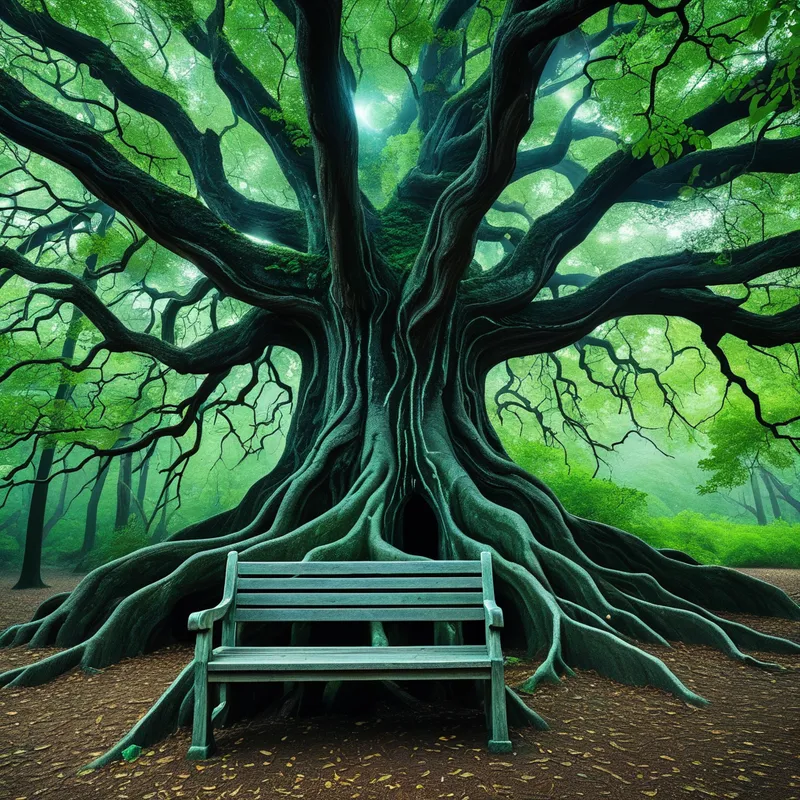
His first act—uprooting the family oak—is profoundly symbolic. It is the removal of a deep, ancestral obstacle, the clearing of old, rigid patterns (the oak) from the fertile field of the psyche (the family land). Only after this internal clearing is he fit for the external quest. His journey to Kyiv is the alignment of the individual will (the empowered hero) with the central ordering principle of the psyche (Prince Vladimir, the Senex). His eternal battle at the frontier represents the perpetual psychic work of the conscious ego: to maintain boundaries, to defend the achieved order of the personality against the constant incursions of chaos, impulsivity, and unintegrated primitive forces (the Tatars, the monsters).

The Dreamer's Resonance
When the pattern of Ilya Muromets stirs in the modern dreamer, it signals a profound somatic and psychological crossroads. To dream of paralysis—being stuck in a car, unable to scream, feet rooted to the ground—while simultaneously feeling a vast, restless power within, is to sit on Ilya's stove-bench. This is the "creative illness," a period where life force seems blocked, often preceding a major reorientation of identity.
Dreams of receiving a gift or a drink from mysterious, numinous figures (wise elders, strangers, even animals) point to the arrival of the initiating "kaliki." The dreamer may experience somatic sensations—a surge of energy, a feeling of being infused with light or warmth—upon waking. This is the psychic activation, the call to a destiny that feels both terrifying and deeply right. Dreams of encountering immense, immovable obstacles (walls, tangled roots, massive stones) that the dreamer then, surprisingly, has the strength to dismantle, mirror the uprooting of the oak. It is the unconscious confirming: "The power is now yours. The first battle is with your own history."
Alchemical Translation
The alchemy of Ilya Muromets is the transmutation of the prima materia of suffering and limitation into the gold of purposeful power. The process follows the classic stages: Nigredo, Albedo, Rubedo.
The Nigredo is the long, dark paralysis. It is the necessary dissolution, where the ego's ambitions are rendered null. The individual is reduced to their essence, forced to observe and contain their own frustration. This is not pathology, but the dark earth in which the seed of the Self is planted.
The Albedo, the whitening, is the arrival of the messengers and the imbibing of the living water. This is illumination, the lightning strike of awareness from the Self. The ego is not strengthened; it is re-created by a supra-personal force. The first task (clearing the field) is the beginning of the Rubedo, the reddening, where this new consciousness is applied to the personal sphere, purifying familial and karmic patterns.
The ultimate goal of this alchemy is not conquest, but steadfast guardianship. The fully realized individual does not seek endless expansion, but learns to hold the boundary between who they are and what they are not.
The final, enduring state of Ilya at the outpost represents the culmination of individuation: a personality so solidly founded in its authentic, gifted nature that its lifelong task becomes the conscious, willing defense of that integrity. The enemy is no longer merely external; it is any force, internal or external, that would dissolve the hard-won unity of the Self. The hero becomes a sentinel of the soul.
Associated Symbols
Explore related symbols from the CaleaDream lexicon:
- Horse — Represents Cloudfall, the instinctual, loyal power of the body and the unconscious that carries the awakened consciousness on its journey.
- Journey — The fundamental arc from the confined hut to the boundless steppe, mapping the soul's necessary passage from paralysis into purposeful action and destiny.
- Mountain — Symbolizes the immense, seemingly immovable obstacle of Ilya's paralysis and the heroic stature he achieves, becoming a human mountain defending the land.
- Root — The deep, ancestral paralysis that binds Ilya to the stove-bench, and later, the physical roots of the oak he tears out, representing the extraction of old, limiting patterns.
- Healing — The miraculous cure by the kaliki, representing a transformative, often sudden, infusion of wholeness that comes from beyond the ego's resources.
- Warrior — The archetypal identity Ilya assumes, embodying disciplined strength, protection, and the eternal struggle to maintain order against chaos.
- Destiny — The inescapable call delivered by the wanderers, framing Ilya's life not as a series of choices, but as the fulfillment of a pre-ordained, sacred role.
- Strength — The core gift, representing not just physical might, but the moral and spiritual fortitude required to wield power justly and selflessly.
- Duty — The ethical framework that channels Ilya's power, binding him to the service of Prince Vladimir and the defense of the Holy Rus'.
- Threshold — The Bogatyr Outpost itself, the liminal space where Ilya stands eternally, guarding the boundary between the known world and the wild unknown.
- Gift — The miraculous water and the superhuman strength, representing talents, callings, and powers that are bestowed by fate or the unconscious, not earned through personal effort alone.
- Earth — The peasant origin, the soil of the field he clears, and the land he defends, grounding the myth in the physical, maternal realm of nature and nation.