Illapa Thunder God Myth Meaning & Symbolism
The myth of Illapa, the celestial warrior who commands rain and lightning, embodying the sacred contract between the sky, the earth, and the human soul.
The Tale of Illapa Thunder God
Listen. The world is dry. The earth, our mother Pachamama, cracks her lips in thirst. The apus stand silent, their snowy heads bowed under a relentless, brass sun. The rivers are whispers, the fields are dust, and in the heart of Tawantinsuyu, a deep fear grows. It is the fear of emptiness, of the great cord between sky and earth being severed.
Then, a sound. Not from the land, but from the very fabric of the heavens. A low, gathering rumble, like the shifting of colossal stones in a celestial temple. It is the sound of his footsteps across the vault of the world. He is coming.
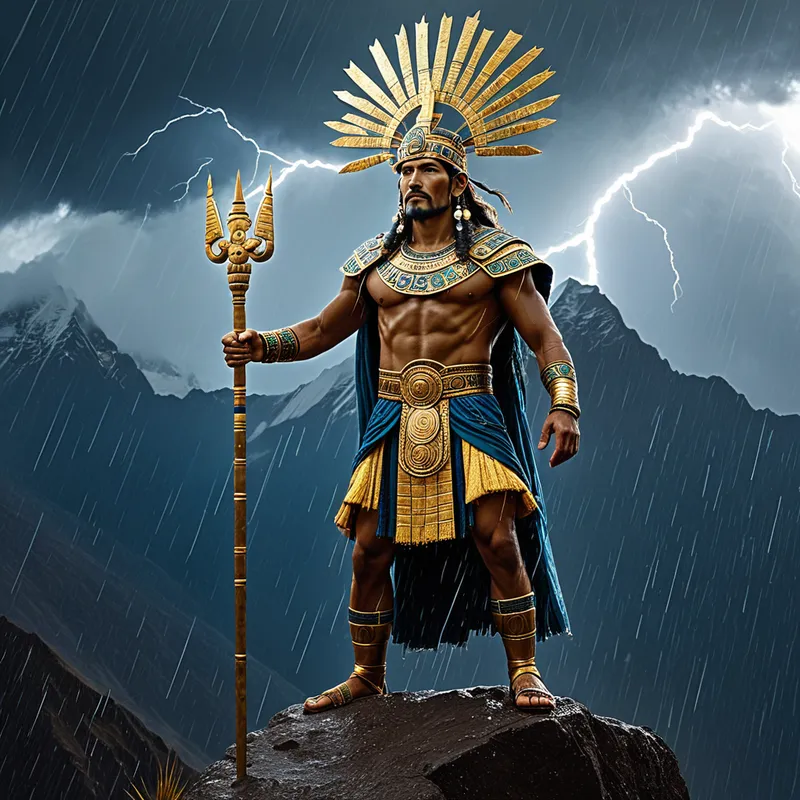
He is Illapa. In his left hand, he carries a warak'a spun from the threads of the Milky Way. In his right, a vessel of purest celestial silver, filled to the brim with the waters of the upper world. His face is the flash before the storm, his voice the crack that splits the silence. He is the son of the sun and the moon, the brother of the dawn, the warrior of the sky.
He does not walk; he strides from mountain peak to mountain peak, his gaze scanning the parched land. He sees the shriveled papa, the wilting sara, the people with eyes turned upward in desperate hope. The conflict is not of battle, but of balance. The world has tipped too far into the dry, masculine fire of the sun. It needs the quenching, feminine touch of the rain, the mediating flash of insight that is lightning.
He raises his silver vessel. He tilts it. The first drops fall, heavy and cold, drumming on the stones of the high puna. Then, he spins his warak'a. Faster and faster it whirls, a humming vortex of potential. With a cry that is both command and release, he lets the stone fly. It is not a stone of earth, but a bolt of pure, white-hot light. It streaks across the darkened sky—kachak!—a brilliant, jagged scar connecting heaven to the highest apu. The thunderclap that follows is the sound of the sky itself being torn asunder, a roar of divine power that shakes the bones of the world.
The rain is no longer a sprinkle; it is a torrent, a silver curtain drawn across the valleys. Illapa rides the storm, his sling flashing again and again, illuminating the chaotic, life-giving deluge. The lightning strikes the mountaintops, not to destroy, but to consecrate—to mark them as points of contact between realms. The dry riverbeds gurgle, then rush. Pachamama drinks deeply, her cracks sealing, her body turning from dust to dark, fertile loam.
And then, as suddenly as he came, he is gone. The clouds part. The air is washed clean, smelling of wet earth and ozone. A rainbow, his sister Cuychi, arches across the sky, a bridge of promise. The world is remade. Balance is restored. The people emerge, not to cheer a conqueror, but to offer quiet gratitude to the warrior who fights not for land, but for life itself. The tale of Illapa is the tale of the necessary, terrifying, and beautiful violence of renewal.
Cultural Origins & Context
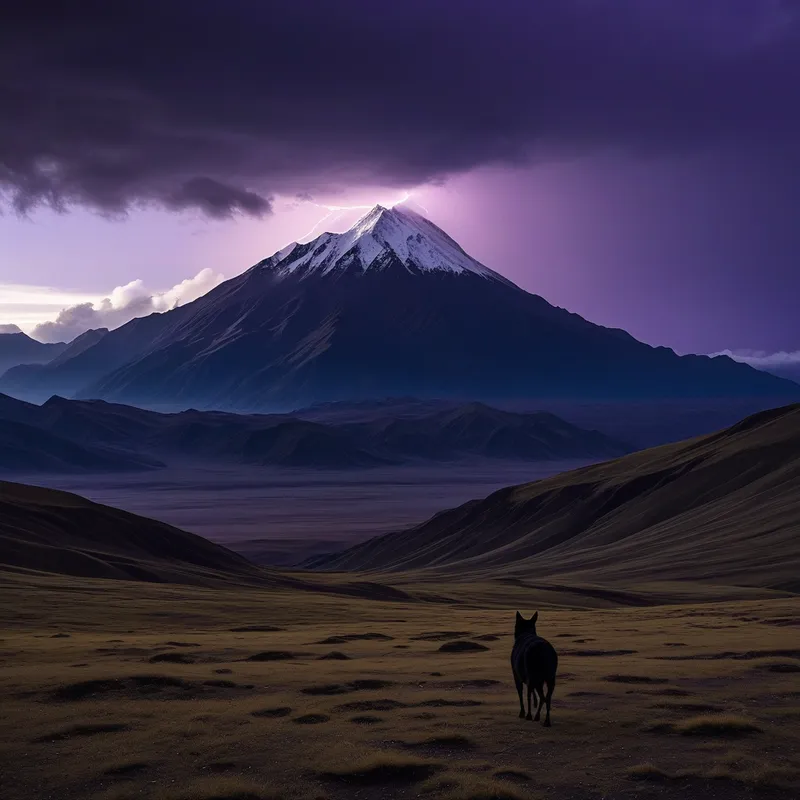
The myth of Illapa was not merely a story for the Inca; it was a lived, meteorological reality encoded into the very structure of their empire, Tawantinsuyu. Residing in the high Andes, a landscape utterly dependent on seasonal rains and vulnerable to devastating droughts and lightning strikes, the Inca saw the weather not as a natural phenomenon but as the direct action of a deity. Illapa was one of the most vital members of the Punchaw triad, alongside Viracocha and Inti.
His myth was passed down by the hamut'as and enacted in elaborate state rituals. The Sapa Inca himself was Illapa's primary earthly representative. During times of drought, sacrifices—often of prized llamas or, in extreme crises, of children (qhapaq hucha)—were offered to appease the god and "fill his vessel" with the tears of the world, compelling him to release the rains. Temples, often on high places, were dedicated to him. His societal function was paramount: he was the divine guarantor of agricultural fertility, and thus, of imperial stability. To understand Illapa was to understand the sacred contract between the people, their ruler, and the volatile, life-giving forces of the cosmos.
Symbolic Architecture
At its core, the myth of Illapa is a profound drama of psychic energy in its most dynamic form. He is not a placid god of the harvest; he is the god of the process that makes the harvest possible. He represents the necessary, often disruptive, force that breaks periods of stagnation (drought) to initiate growth.
The lightning bolt is the sudden, illuminating insight that shatters the hardened shell of a fixed mindset. The thunder is the somatic shockwave of that realization, felt in the very bones of the psyche.
His warak'a symbolizes directed, focused will—the ability to take raw, chaotic potential (the storm cloud) and launch it with precision towards a target. The silver vessel is the container of emotion, the unconscious waters of feeling that must be tipped over and released for cleansing and nourishment. Illapa himself is the archetypal Warrior in service to a higher order: the balance of the cosmos. His "violence" is not destructive rage, but the disciplined, fearsome application of power for a regenerative purpose. He is the psychological faculty that must sometimes create a crisis to break a neurotic pattern, that must allow the thunder of repressed emotion to finally speak, so that the healing rains of consciousness can fall.

The Dreamer's Resonance
When the pattern of Illapa storms into the modern dreamscape, it signals a psyche under pressure, ready for a catalytic release. To dream of a looming, magnificent thunderstorm, especially one viewed from a high place like a mountain, often precedes a period of significant emotional or intellectual breakthrough. The somatic feeling is one of atmospheric pressure—a tightness in the chest, a sense of impending, inevitable change.
Dreams of being struck by lightning, while terrifying, can symbolize a sudden, electrifying infusion of truth or inspiration, a divine "download" that fundamentally alters one's direction. The dreamer may be in a personal "drought"—a creative block, emotional numbness, or a life situation that has become stagnant and arid. Illapa’s appearance is the unconscious declaring that this state can no longer hold. The thunder is the rumble of long-silent parts of the self demanding to be heard. The dream is the inner sky preparing to break open, initiating the sometimes frightening, always transformative process of watering the parched fields of the soul.

Alchemical Translation
The journey of Illapa models the alchemical process of solve et coagula—to dissolve and to coagulate—applied to the psyche. The drought represents the coagulated state: fixed ideas, rigid identities, hardened emotions. Life has become static, predictable, and lifeless.
The sacred duty of the modern soul is to become the warrior of its own inner weather, to hold the sling and the vessel, and to mediate between the drought of stagnation and the flood of disintegration.
Illapa’s lightning is the solve: the brilliant, shocking insight that dissolves the old structure. It is the moment of painful clarity that breaks a denial, ends a toxic relationship, or shatters a limiting self-belief. The thunder is the reverberation of that dissolution through every layer of the self. This is not a gentle process; it is a psychic storm.
But it is followed by the rain—the coagula. This is the nourishing, feminine principle that follows the masculine flash of insight. It is the gentle, steady integration of that truth into daily life, the emotional release that waters the seeds of new growth. The individual who navigates this cycle moves from a state of brittle order (drought) through chaotic transformation (storm) to a new, more vibrant and fluid order (fertility). To individuate is to learn to invoke one's own inner Illapa—not to live in perpetual storm, but to have the courage to break the dry spells of the soul with the disciplined, awe-inspiring power of authentic feeling and conscious action.
Associated Symbols
Explore related symbols from the CaleaDream lexicon:
- Thunder — The terrifying, awe-inspiring voice of divine authority and the somatic shockwave of a profound psychological realization breaking into consciousness.
- Lightning — The sudden, illuminating flash of insight that connects the heavens of intuition to the earth of reality, cutting through darkness and confusion.
- Rain — The nourishing release of emotional waters after a period of drought, representing healing, cleansing, and the fertility of new growth.
- Mountain — The sacred meeting point between earth and sky, the place of revelation where humanity witnesses and petitions the divine forces of weather and fate.
- Warrior — The archetype of disciplined power in service to a higher order, embodying the courage to initiate necessary conflict for the sake of renewal and balance.
- Sacrifice — The act of offering something precious (time, comfort, an old identity) to the greater psychic order to "fill the vessel" and compel transformative change.
- Sky — The realm of potential, vastness, and divine will, the source from which all weather—and thus all change—emanates.
- River — The lifeblood of the land, fed by Illapa's rains, symbolizing the flow of psychic energy restored after a period of blockage or stagnation.
- Stone — The projectile in Illapa's sling, representing focused, launched intention and the hard, undeniable impact of truth.
- Cup — The vessel Illapa carries, a symbol of the container of the soul that must be filled with experience and emotion before it can be tipped over in generosity or release.
- Order — The ultimate goal of Illapa's violent intervention: not chaos, but the restoration of cosmic and psychic balance, the harmonious cycle of dry and wet, action and integration.
- Thunderstorm — The complete, dynamic process of transformation, integrating the flash of insight, the roar of release, and the nourishing rain into a single, awe-inspiring event.