Idun's apples Myth Meaning & Symbolism
A myth of the goddess Idun, whose golden apples grant the gods eternal youth, and the perilous journey to reclaim her when she is stolen away.
The Tale of Idun's apples
Listen, and hear the tale of the gods’ most precious treasure, the secret that holds the stars in their courses and keeps the great hall of Asgard from crumbling into dust.
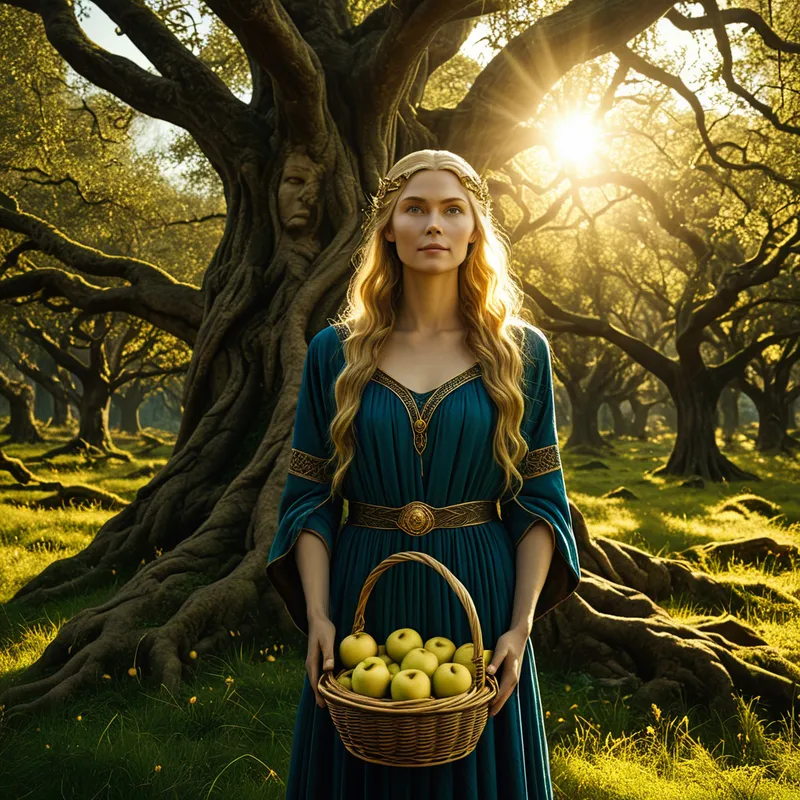
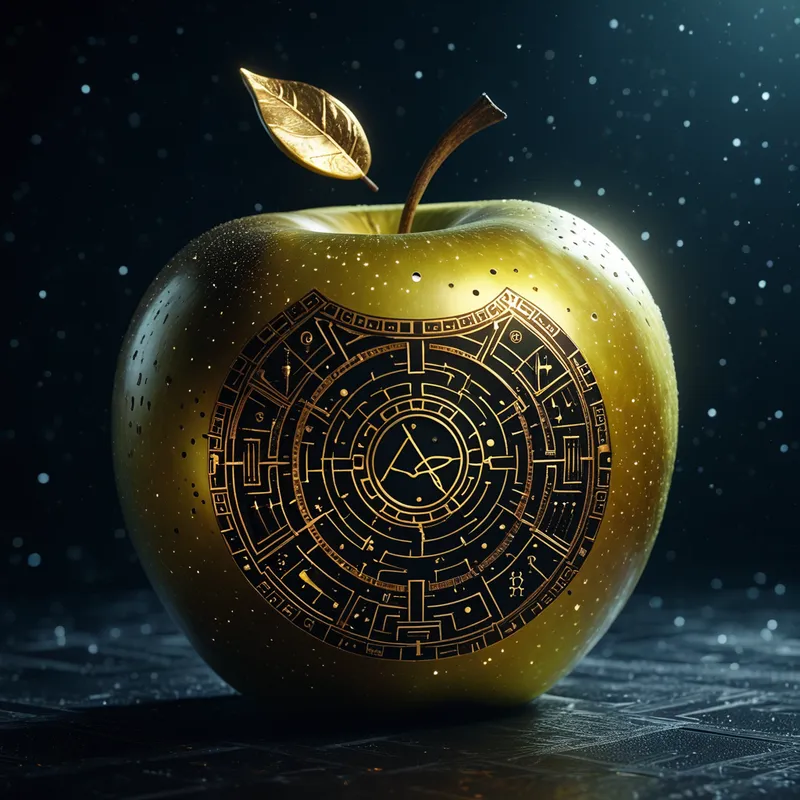
In the green and growing heart of the gods’ realm lived Idun. She was not a goddess of thunder or war, but of a quieter, more essential power. Her care was a simple wooden box, or sometimes a basket of woven ash-wood, and within it lay the fruit of eternity: apples of purest, shimmering gold. Not the gold of greed, but the gold of the just-risen sun on a spring morning. When the Æsir felt the weight of centuries in their bones, when Odin</ab title>'s single eye grew dim with too much seeing, or Thor's mighty grip began to slacken, they would come to Idun’s grove. She would offer them her fruit, and with its taste, the years would fall away like an old cloak. Their eyes would clear, their strength would return, and the divine order was preserved.
But order is a fragile thing, forever threatened by the chaos that gnaws at its roots. The agent of this chaos was, as ever, the sly one, Loki. On a journey beyond the safety of Asgard’s walls, Loki fell into the clutches of the storm-giant Thjazi. To save his own skin, Loki made a terrible bargain. He swore an oath to lure Idun, and her apples, out of Asgard and into Thjazi’s waiting grasp.
Returning to the gods’ home, Loki weaved a web of deceit. With the cunning of a serpent, he approached Idun. “Fair Idun,” he whispered, “in a wood just beyond the walls, I have found a tree that bears apples of a gold so marvelous, they make even yours seem pale. You, who are the keeper of such wonders, must come and see them.” Trusting, as all did, too easily in Loki’s silver tongue, Idun took her precious basket and followed him beyond the gate.
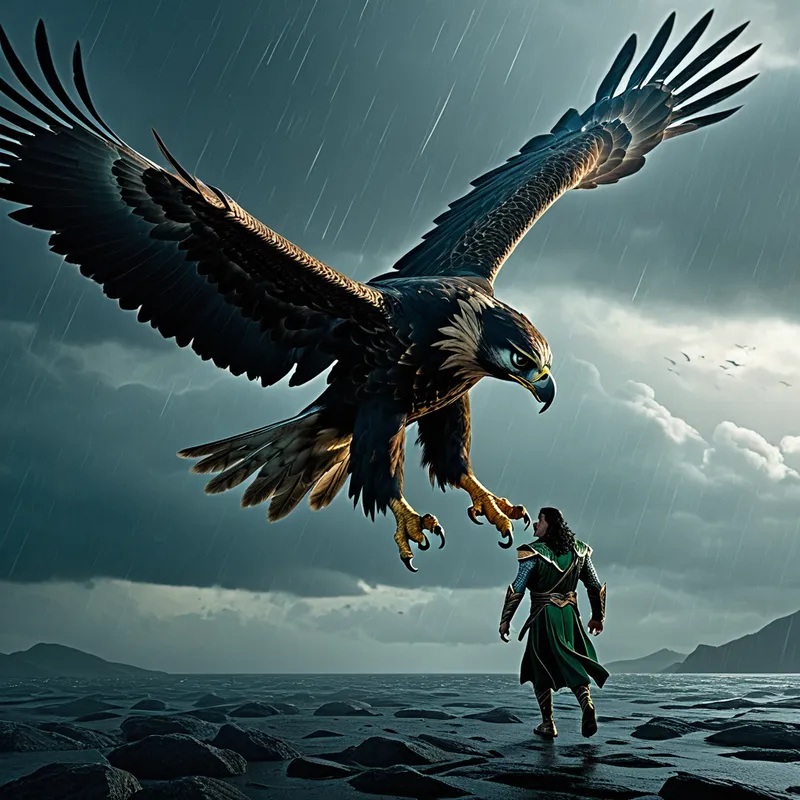
No sooner had she stepped into the lonely forest than the sky darkened. Thjazi, in the form of a monstrous eagle, swept down. His talons, like iron hooks, closed around the goddess. He snatched her, basket and all, and bore her away to his barren, freezing fortress of Jötunheimr. The gates of his hall slammed shut, and silence fell.
In Asgard, the decay began. It was not swift, but slow and insidious. A stiffness entered Bragi’s fingers as he plucked his harp. A grey pallor touched Frigg’s cheek. A profound weariness settled in Odin’s shoulders. The gods gathered, their council fire burning low, and understood the truth: Idun was gone. Without her apples, they were doomed to wither and age, to become feeble ghosts in their own halls. Asgard itself would fade. Their fury fell upon Loki, the last seen with her. Faced with the wrath of all creation, Loki bargained again—this time for their salvation. He would bring her back, if the goddess Freyja would lend him her falcon shape.
A feather-cloak was fastened. Loki, as a swift falcon, shot across the bridge Bifröst and into the vast emptiness of Jötunheimr. He found Thjazi’s hall, and finding the giant gone, he spoke to Idun. With a touch of his magic, he changed her into a single, perfect nut, clutched it in his talons, and beat his wings for home.
But Thjazi returned. Seeing his prize gone, his rage shook the mountains. He took his eagle-shape once more, a vast shadow against the sky, and gave chase. The wind of his wings was a gale. He gained on the falcon, his beak a spear aimed at Loki’s heart. Back in Asgard, the gods saw the desperate race approaching. They acted with one will. They piled tinder and shavings onto their courtyard fire, and as Loki the falcon shot over the wall, they set it ablaze.
Thjazi, in his fury, could not stop. He plunged into the heart of the divine fire. His feathers ignited, his great wings failed, and he fell, burning, into the courtyard of the gods, where he was slain. Idun was restored. From the nut, she stepped forth, whole and unharmed, her basket in her hand. And one by one, the gods came to her grove. They took the apples, and the taste was sweeter than ever before. Youth and vigor flowed back, not as a right, but as a hard-won gift. The order of the world, so nearly undone, was secured once more—but forever marked by the memory of its fragility.
Cultural Origins & Context
This myth survives primarily within the Poetic Edda and is recounted more fully in the Prose Edda by the Icelandic scholar Snorri Sturluson. These texts are our window into a worldview that was already fading, recorded by a Christian writer attempting to preserve the poetic heritage of his ancestors. The story of Idun would have been part of the vast oral tradition, recited by skalds (poets) in the halls of chieftains. Its function was multifaceted: it was entertainment, a theological explanation for the enduring power of the gods, and a profound cultural metaphor.
In the harsh, cyclical reality of the Norse world—where winter threatened survival and the strength of a leader was paramount—the myth addressed a deep existential anxiety: the loss of vitality. The gods were not truly immortal; they required constant renewal. This reflected a human truth. A chieftain’s power (megin), a warrior’s strength, a community’s fertility—all were seen as finite forces that needed replenishment. Idun’s apples symbolize the rituals, the alliances, the seasonal sacrifices, and the cultural knowledge that “renewed” the tribe, staving off the encroaching chaos (represented by the giants) of famine, weakness, and social decay.
Symbolic Architecture
At its core, this is a myth about the containment and protection of the source of life itself. Idun is not the creator of youth, but its guardian. Her apples are not a static object but a process—the cyclical return of vitality that sustains an entire system.
The treasure is not in the having, but in the continual, sacred act of renewal. To lose the ritual is to lose the life it sustains.
Idun represents the caregiver archetype in its most cosmic form. She is the nurturing, preserving principle that maintains the psychic and physical equilibrium. Her theft is the archetypal crisis: the loss of connection to one’s own wellspring of energy, creativity, and joy. Loki, the trickster, embodies the unconscious, amoral psyche that, through shortsightedness, deceit, or sheer chaotic impulse, can sever that connection. He is the part of us that sabotages our own health, betrays our trust in ourselves, or hands our vitality over to a devouring force (Thjazi) in a misguided bargain for temporary safety or advantage.
Thjazi, the giant, symbolizes the shadow in its most consuming aspect: the psychic complex that hoards life-energy, freezing it in a state of captivity. His hall in Jötunheimr is the sterile, frozen state of depression, addiction, or rigid obsession that drains the soul of its color and flexibility. The perilous rescue mission, facilitated by Freyja’s falcon-shape (linking to love, magic, and connection), is the necessary, courageous journey into the shadowlands of the psyche to reclaim what was lost.
The Dreamer's Resonance
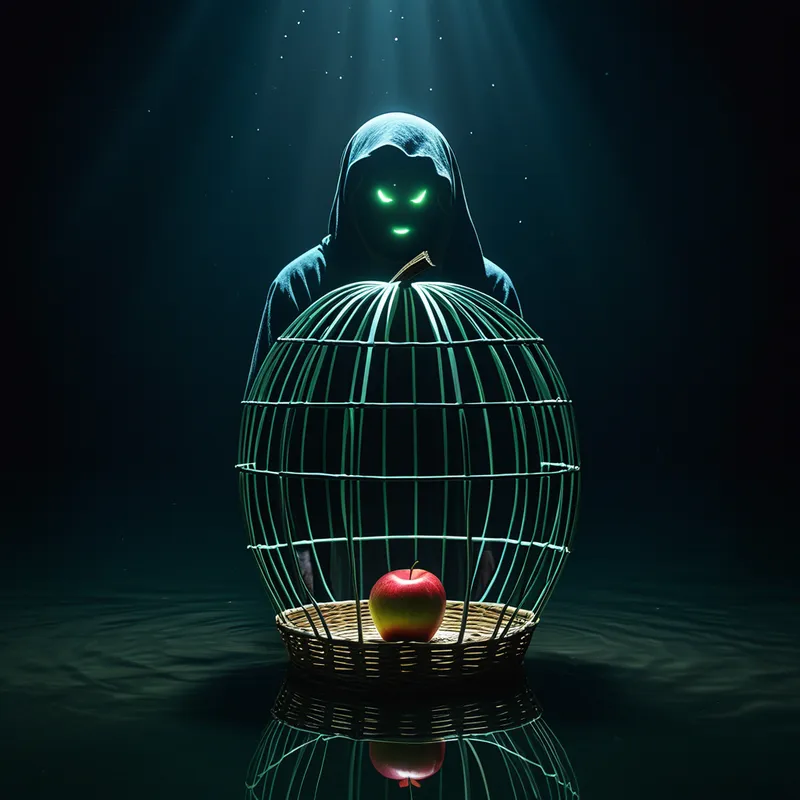
When this myth stirs in the modern dreamer, it often signals a profound crisis of depletion. To dream of rotten fruit, a stolen or empty basket, or a feeling of being trapped in a cold, stone place points directly to the “theft of Idun.” The dreamer is experiencing a somatic and psychological process where their innate source of renewal—be it passion, purpose, physical health, or creative spark—has been compromised.
The giant in the dream may wear many faces: a draining job, a toxic relationship, a long-held resentment, or an internal critic that has captured the dreamer’s vitality. Loki’s role may appear as a foolish personal choice, a self-betrayal, or an unexpected external betrayal that led to this state. The dreams are often characterized by feelings of aging, brittleness, and profound weariness that sleep does not cure. The body speaks through the dream: a heaviness in the limbs, a tightness in the chest—the physical echo of the gods’ stiffening joints. The unconscious is sounding an alarm: the system is running on reserves, and the core ritual of self-renewal has been abandoned.
Alchemical Translation
The myth of Idun’s apples provides a complete map for the alchemical process of psychic recovery and individuation. The initial state is the prima materia of a life in balance, sustained by regular communion with the Self (the apples). Loki’s betrayal is the nigredo, the blackening—the descent into chaos, betrayal, and the realization of profound loss. This dark night of the soul is necessary, for it is only in the utter depletion of the gods that the true value of Idun is understood.
The journey to Jötunheimr is the mortificatio, the death of the old, complacent attitude that took the source of life for granted.
Loki’s flight as a falcon is the albedo, the whitening. It represents the emergence of a new, agile consciousness (Freyja’s magic) capable of navigating the shadow. The transformation of Idun into a nut is crucial alchemy. The vast, nurturing goddess is distilled into her essential seed, her most compact and portable form of potential. This is the creation of the philosopher’s stone—the discovery that the source of renewal is not an external object, but a latent, indestructible kernel of Self within.
The chase and the fiery climax at the walls of Asgard represent the rubedo, the reddening. The confrontation with the shadow (Thjazi) is violent and purifying. The old, devouring complex must be lured into the light of consciousness and destroyed in the transformative fire of deliberate, collective action (the gods building the pyre). Finally, Idun’s restoration and the sharing of the apples signify the citrinitas, the yellowing or awakening. Vitality returns, but it is a new kind of vitality—one that has passed through the ordeal of loss and recovery. The individual does not just get their “old self” back; they are renewed with a deeper wisdom, having learned that their golden apples must be guarded, honored, and that their renewal is an active, sacred process, forever vulnerable to the Loki within and the giants without.
Associated Symbols
Explore related symbols from the CaleaDream lexicon: