Idunn's Garden Myth Meaning & Symbolism
The goddess Idunn guards golden apples that grant the gods eternal youth, until her theft plunges the cosmos into decay, requiring a perilous quest for renewal.
The Tale of Idunn's Garden
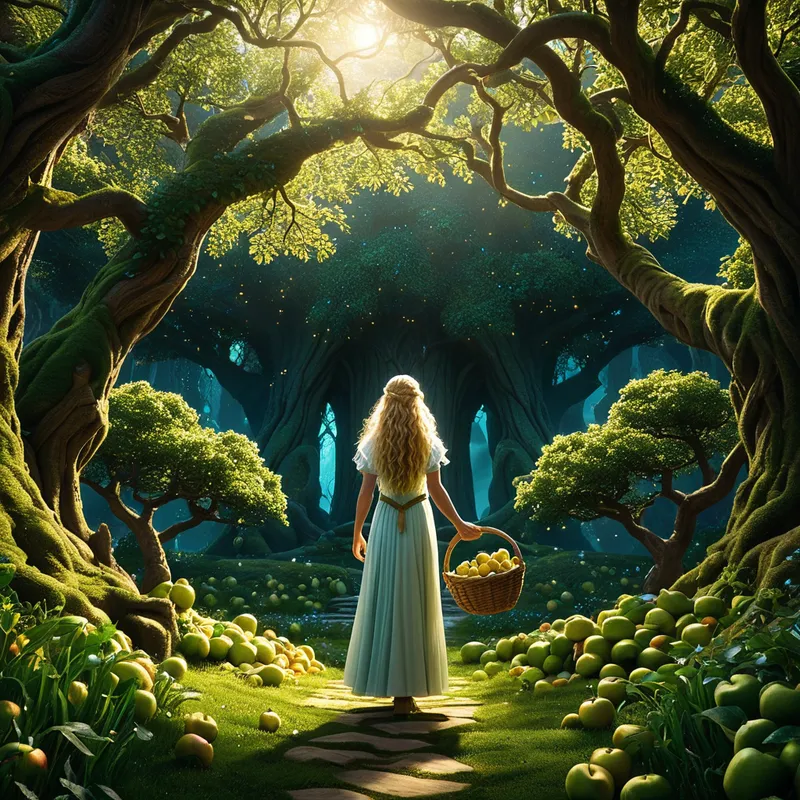
Hear now of the quiet heart of Asgard, a place not of roaring mead-halls or thunderous forges, but of a deep, humming silence. Here, in a walled garden kissed by a gentler sun, grew the secret of the gods themselves. This was the domain of Idunn, she of the gentle hands and hair like ripened wheat. Her charge was not a weapon, but a basket. And in that basket, woven from the supplest willow, lay the golden apples.
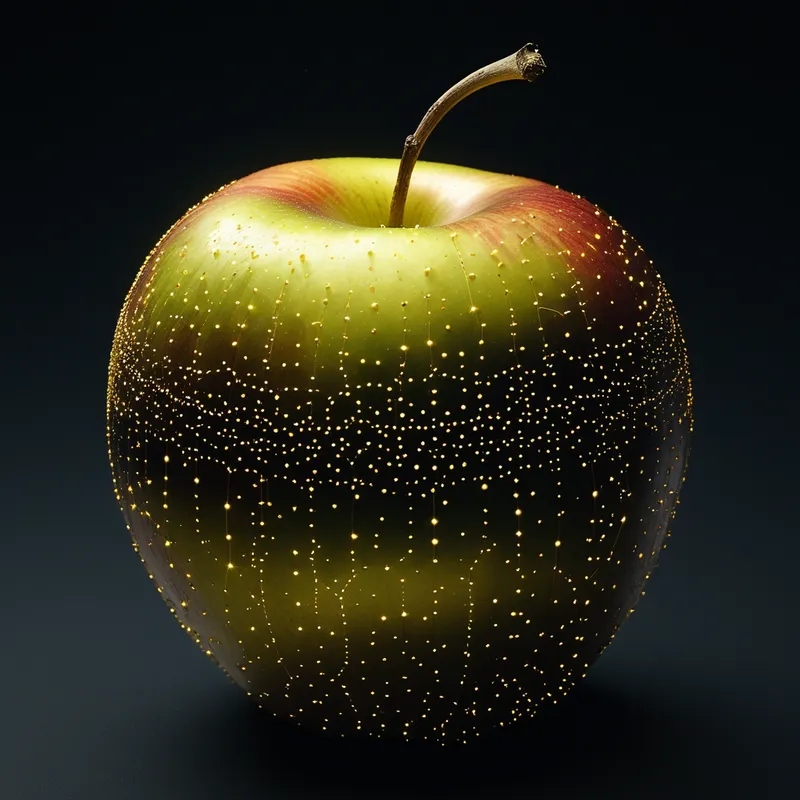
They were not fruit as mortals know it. They held within their luminous skin the very essence of spring’s first sap, the resilience of the mountain root, the unspent promise of dawn. When the Æsir felt the weight of centuries begin to bow their shoulders, when a weariness deeper than any battle-fatigue crept into their bones, they would come to Idunn’s gate. Odin himself, his one eye clouded with foresight’s burden. Thor, his mighty arm feeling the ghost of an ache. One by one, they would partake, and the years would fall from them like old snow from a pine bough. Strength returned, eyes cleared, and laughter once again echoed in the golden realm. This was the hidden rhythm of divinity, the sacred renewal that staved off the inevitable dusk.
But a shadow was cast, born from a lie woven in envy. The cunning Loki, ever a creature of chaos, was led by his own mischief into the clutches of the giant Thjazi. To save his own skin, Loki swore a terrible oath. He would deliver Idunn and her apples beyond the safety of Asgard’s walls.
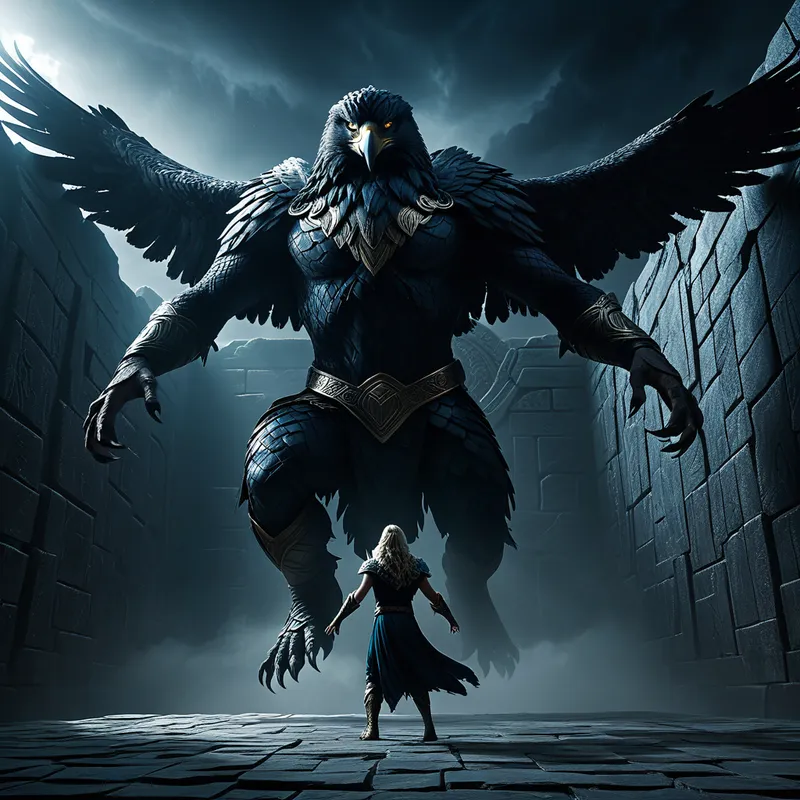
So, with a silver tongue, he went to the garden. “Fair Idunn,” he said, his voice slick as oil, “just beyond the river I have found a tree whose apples are more radiant, more potent than your own. Come, see for yourself.” Trusting, as the heart of the garden must trust, Idunn took her basket and followed him to the boundary. The moment she stepped beyond the sacred threshold, the air cracked. With a scream of wind and a beat of vast, terrible wings, Thjazi descended. Claws like iron scythes closed around Idunn, basket and all, and the eagle-giant soared into the leaden sky, bearing the heart of youth itself to his barren, stone fortress of Jötunheimr.
The decay was swift and silent. In Asgard, the gods did not notice at first. Then, a stiffness refused to leave Vidar’s joints. A grey strand appeared in Frigg’s hair, and it did not vanish. A profound fatigue settled over the halls. The mead tasted of dust. The great walls seemed to shrink, the very light of the realm to dim. They were aging, withering, becoming relics of their own legend. Panic, cold and sharp, replaced their divine vigor. They turned as one, their faded eyes finding Loki, the architect of this despair. Under the threat of a death more final than any giant’s blow, the trickster swore to bring her back.
Cloaked in Freyja’s feather-shape, Loki flew on the winds of desperation to Thjazi’s high keep. He found Idunn, not in a dungeon, but in a barren tower, her radiance the only light in the gloom. With a whisper, he changed her into a nut, clasped her tight in his falcon grip, and beat his wings for home. The chase was a storm across the sky. Thjazi, in his eagle-form, a monstrous tempest of rage and hunger, closed the gap. As the walls of Asgard loomed, the gods, weak but prepared, piled the courtyard with a mountain of wood-shavings. Loki the falcon shot over the battlements and dropped, exhausted. The giant eagle thundered after him—and the gods set the shavings ablaze. Thjazi’s vast wings became sheets of flame. He fell, earth-shaking, and was ended.
And Idunn walked once more in her garden. The basket was opened. The gods, gathered like drought-stricken roots around a spring, partook. Color returned to their faces. Light to their eyes. The great wheel of Asgard, which had ground to a terrifying halt, began to turn again, its rhythm restored by the quiet goddess and her golden, indispensable gift.
Cultural Origins & Context
This myth survives primarily within the Poetic Edda and is recounted more fully in the later Prose Edda of Snorri Sturluson. It was not a scripture, but a living narrative performed by skalds, the poet-historians of the Viking Age. Told in mead-halls, its function was multifaceted. On one level, it was a divine drama explaining the necessity of cyclical renewal, even for the gods. On another, it reinforced the existential worldview of the Norse: vitality is not a given state but a precious, vulnerable substance that must be actively protected and recovered. The myth also served as an etiological tale for the seasons, with Idunn’s abduction symbolizing winter’s theft of life and her return heralding spring. It underscored the cosmic fragility of order (örlög) against the constant threat of chaos, embodied by the giants.
Symbolic Architecture
At its core, the myth of Idunn is an allegory of the psyche’s life-sustaining center. Idunn is not a warrior or a ruler, but a custodian. She represents the inner function that guards and distributes our vital energy, our creative spark, our capacity for joy and resilience—the very essence that keeps our inner “gods” (our ruling faculties, talents, and virtues) from becoming brittle and obsolete.
The golden apples are not merely fruit, but the crystallized moments of authentic experience, self-care, and creative engagement that renew the spirit.
Loki, the shape-shifting trickster, embodies the ambivalent force of the unconscious psyche—the curious, destructive, yet ultimately restorative impulse that, through crisis, forces evolution. His betrayal is the self-sabotaging thought, the addictive pattern, or the naive trust in a poisonous idea (“there is something better outside your own garden”) that leads to the loss of our vital center. Thjazi, the giant of grasping hunger, represents the devouring complex—be it burnout, depression, or an external demand—that captures and isolates this life-force in a sterile, rocky place of isolation.
The gods’ aging is the somatic and psychological experience of depletion: creativity dries up, relationships feel burdensome, the world loses its luster. The quest, forced upon the instigator of the crisis (Loki), models the necessary, often treacherous journey into the shadow-lands of the psyche to reclaim what was lost. The transformation of Idunn into a nut is crucial; it signifies the need to condense and protect the vulnerable, precious core of life during its rescue through hostile inner territory.
The Dreamer's Resonance
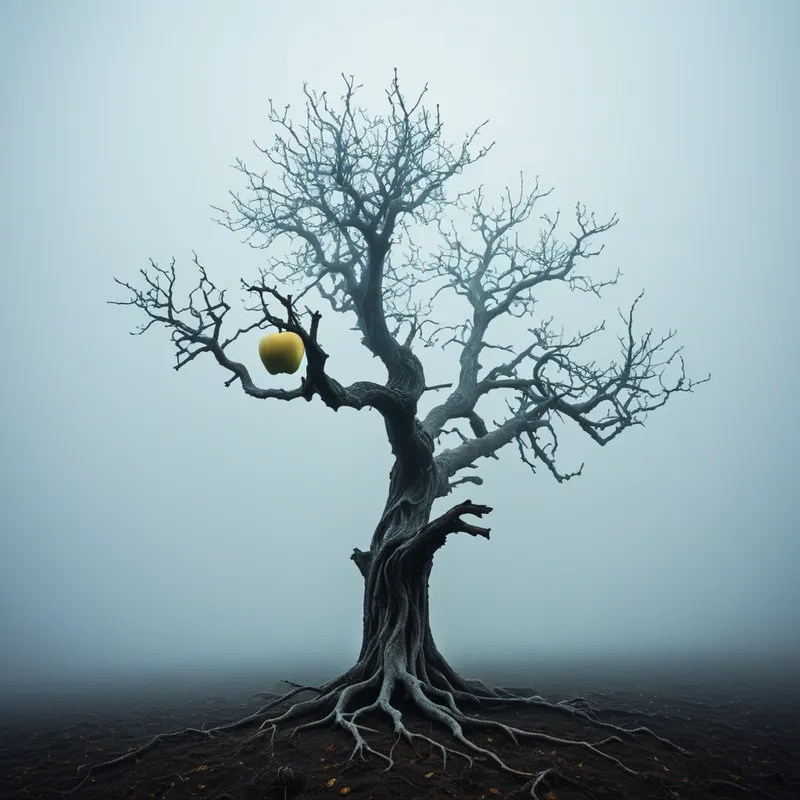
When this myth stirs in the modern dreamer, it signals a profound crisis of vitality. To dream of a walled garden now overgrown, a radiant fruit that cannot be reached, or a feeling of sudden, rapid aging is to experience the Idunn-complex. Somatically, this may manifest as chronic fatigue, a loss of libido, or a feeling of being “dried out.” Psychologically, it is the sense that one’s essential self—the part that feels curiosity, play, and passion—has been stolen.
The “giant” in the dream may wear modern guises: a crushing workload, a draining relationship, or the internalized voice of a critical parent. The dreamer is in the phase of the gods’ despair, feeling the slow creep of symbolic grey hair. Such dreams are a call from the Self, an alarm that the psychic immune system is failing. The dream may not offer the solution, but it names the problem: your golden apples are missing. The quest to find them, to identify your personal Loki (what thought or behavior betrayed you?) and your Thjazi (what holds your energy captive?), is the work of waking life that the dream initiates.
Alchemical Translation
The alchemical process mirrored here is the opus contra naturam—the work against nature’s entropic decay. In Jungian terms, it is a central drama of individuation. We begin in a state of presumed wholeness (the gods in Asgard), reliant on an unconscious, automatic renewal (Idunn’s apples). The first stage, nigredo, is initiated by Loki: the betrayal, the darkening, the loss. This is the necessary descent, the “death” of the old, complacent state.
Individuation requires the theft of our innocent sustenance. We must lose the automatic renewal of youth to consciously earn the renewal of the authentic self.
The aging of the gods is the albedo, the whitening, where the psychic situation becomes clear in its stark, lifeless reality. It is a painful but clarifying despair that mobilizes the will. Loki’s forced quest is the beginning of citrinitas, the yellowing or dawn. It requires putting on “Freyja’s falcon shape”—employing intuition (Freyja’s domain) and adopting a new, agile perspective to navigate the shadow (Jötunheimr).
The retrieval and transformation of Idunn into a nut is the crucial act of condensation: distilling the complex, vulnerable essence of life into a portable, protected form for the journey back to consciousness. The final confrontation and conflagration at Asgard’s walls represent the rubedo, the reddening. The devouring complex (Thjazi) must be lured into the light of conscious awareness and destroyed in the transformative fire of focused attention and conscious action.
The final sharing of the apples is not a return to the old, unconscious state, but the achievement of a new, conscious relationship with one’s life-force. The individual no longer takes vitality for granted but becomes both Idunn and the gods—the custodian and the beneficiary of their own golden apples. The garden is no longer a passive haven but a consciously tended sanctuary, its walls strengthened by the knowledge of what lies beyond them. The myth thus charts the path from innocent possession, through catastrophic loss, to a hard-won, mature stewardship of the soul’s eternal youth.
Associated Symbols
Explore related symbols from the CaleaDream lexicon: