Hræsvelgr Myth Meaning & Symbolism
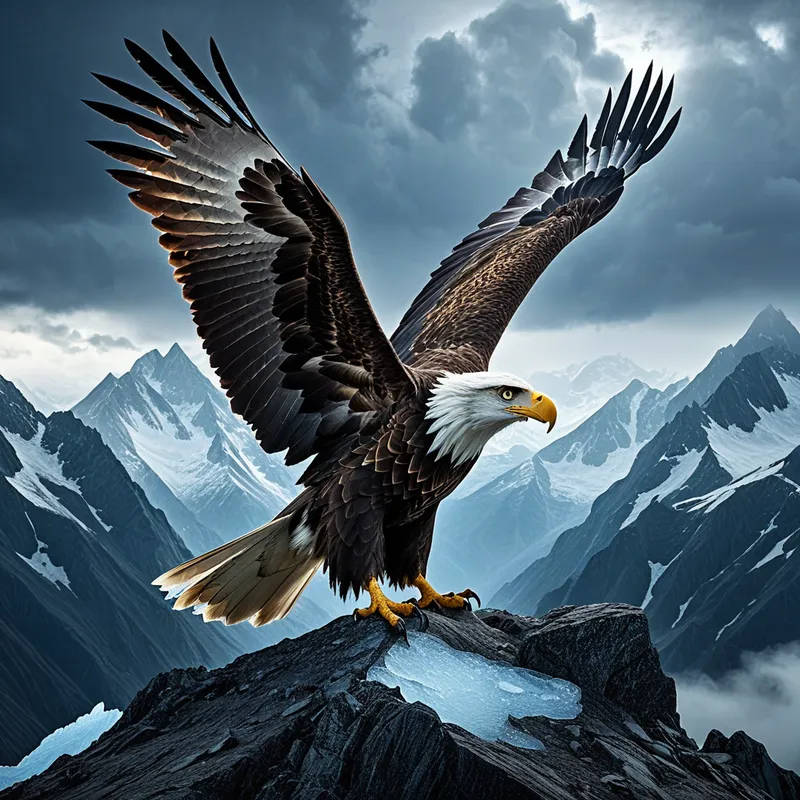
A giant eagle perched at the world's edge whose beating wings stir the winds that shape all lands and destinies.
The Tale of Hræsvelgr
Listen, and hear the wind’s true name. It does not whisper; it roars from the uttermost north, from the rim of the world where the sky itself grows teeth of ice. There, at the edge of Yggdrasil’s highest branches, where the roots of the mountain Ginnungagap still remember the cold, sits a being of stone and sky.
His name is Hræsvelgr. Do not think of him as a mere bird, though he wears the shape of an eagle. He is a Jötunn, ancient as the frost, vast as a mountain range. His feathers are not soft but are like plates of darkened slate, rimed with eternal frost. His eyes are deep wells that hold the light of dead stars.
He perches upon the highest crag, where the world falls away into the singing void. Below him churns the sea, Ægir’s domain, and beyond it, the lands of mortals and gods. But Hræsvelgr does not look down. He gazes outward, into the great nothing from which all things came. And then, he stirs.
It begins as a shudder, a tectonic shift in his shoulders of stone. With a sound like grinding continents, he spreads his wings. They are not wings of flesh and bone, but of cliff and cloud, spanning the horizon. He beats them once.
The air before him shatters. It is not a gust that follows, but a birth. A screaming gale is torn from the stillness, a river of frozen breath that plummets from the world’s edge. It races across the abyss, howling over Ægir’s grey waves, whipping them into frothing fury. It reaches the shores of Midgard, and there it becomes the storm that tears at rooftops, the breeze that fills a sail, the relentless wind that shapes the dunes.
He beats them again, and a different wind is born—a soft, sighing zephyr from the south, carrying the scent of unseen lands. Each movement, each tremor of his immense form, weaves the tapestry of the air. The sailors who curse the squall and the farmers who bless the gentle breeze are all speaking, unknowingly, of Hræsvelgr’s labors. He is the silent cause behind every breath of the world, the unmoved mover at the axis of the sky. He does not rule the wind; he is its source. And so he sits, eternal sentinel and unknowing creator, beating the great wings that write the weather of the world upon the scroll of the sky.
Cultural Origins & Context
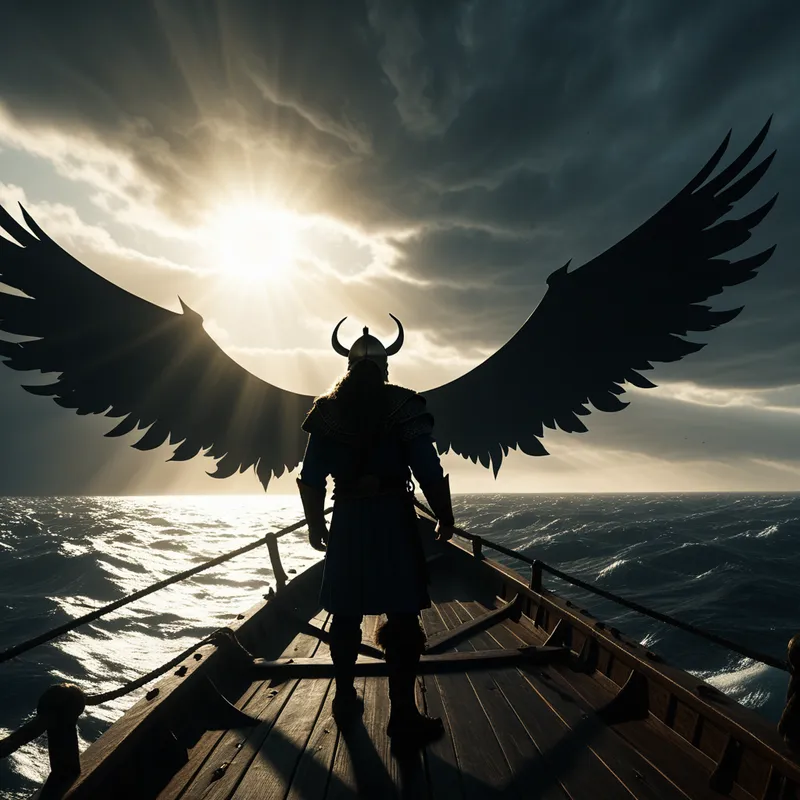
The myth of Hræsvelgr is found in the Prose Edda, specifically in the Gylfaginning section, where the high one recounts the nature of the cosmos to the Swedish king Gylfi. It is a classic example of an aetiological myth—a story explaining the origin of a natural phenomenon. In the pragmatic, sea-faring world of the Norse, the wind was not an abstraction but a fundamental, capricious, and powerful force dictating the success of voyages, harvests, and raids.
The telling is stark and matter-of-fact, a hallmark of the Eddic style. There is no epic narrative of conflict or quest centered on Hræsvelgr; he simply is, and his function is stated plainly. This integration of a giant, primordial being into the daily mechanics of the world reflects the Norse cosmological view, where the boundaries between the divine, the giant, and the elemental are fluid. Giants (Jötnar) are not merely enemies of the gods but often embody the raw, untamed forces of nature itself. Hræsvelgr represents the ultimate source, the engine of the wind, positioned literally at the structural limit of the known world. His myth served to root a terrifying and uncontrollable natural force within a comprehensible, albeit awe-inspiring, cosmic order.
Symbolic Architecture
Hræsvelgr is a profound symbol of unconscious creative power. He is not a god of wind, like Njörðr might be associated with favorable breezes; he is the blind, automatic, primordial source from which the phenomenon itself emanates. His position at the world’s edge mirrors the psyche’s boundary between conscious awareness and the vast, unknown unconscious.
The greatest forces that move our lives often have their origin in a dark, distant place we never see, activated by a presence we never meet.
His name, “Corpse-Swallower,” is chillingly significant. It suggests a intimate relationship with dissolution and the end of things. The winds he creates are born from this proximity to death, to the void (Ginnungagap). Psychologically, this translates to the understanding that true creation and new movement in the psyche often require a “swallowing” of old, dead structures—outmoded beliefs, defunct identities, past traumas. The wind, the breath of new life and change, is paradoxically fueled by the consumption of what has ended. Hræsvelgr is the embodiment of this alchemical process where decay becomes energy, where ending fuels beginning.
The Dreamer's Resonance
To dream of Hræsvelgr is to encounter the architect of your inner weather. One does not typically dream of the eagle directly, but of his effects: sudden, inexplicable, and powerful winds within the dreamscape. These are not ordinary breezes but transformative gales that reshape the dream landscape, threaten to lift the dreamer off their feet, or bring a chilling, clarifying cold.
Somatically, the dreamer may wake with a sense of pressure in the chest or shoulders, or the feeling of having been “winded.” Psychologically, this dream pattern signals that powerful, unconscious contents are in motion. The “wind” represents psychic energy being released or redirected from a deep, archaic layer of the self. It often precedes or accompanies a period of major life change, an internal “storm” that feels both destructive and necessary. The dream is a somatic metaphor for forces being set in motion that the conscious ego did not initiate and cannot control, only navigate. The fear and awe in the dream are responses to contacting this impersonal, colossal source of change within oneself.
Alchemical Translation
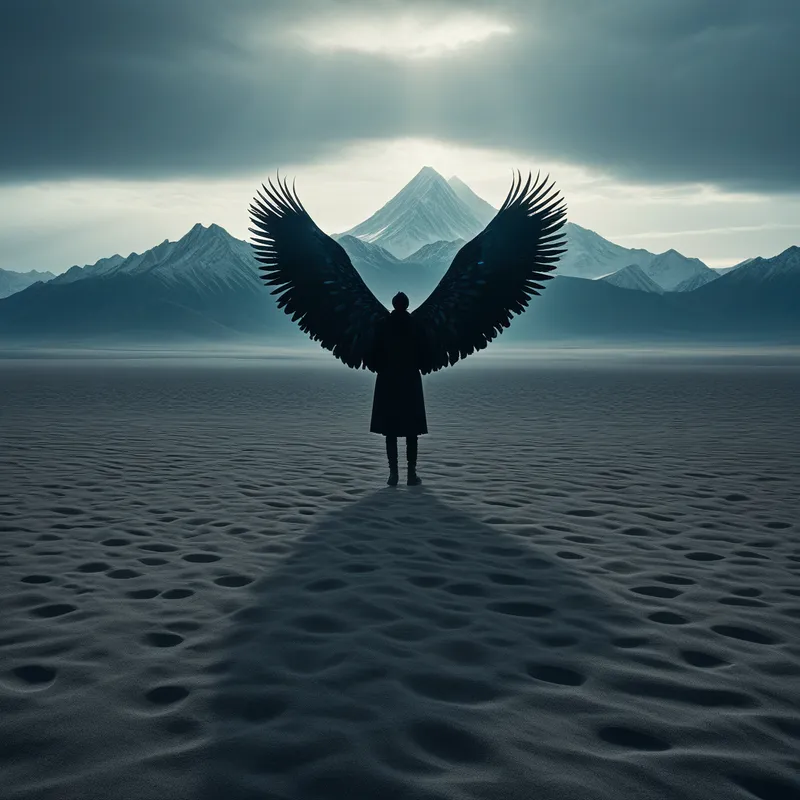
The individuation process, the journey toward psychic wholeness, requires engaging with the Hræsvelgr within. This is not about battling or taming the eagle, but about acknowledging its existence and its essential function. The modern individual, identified with the conscious ego, often believes they are the sole author of their life’s direction. The myth corrects this: you are not the wind, you are the landscape upon which it blows. The true source is deeper, older, and connected to the very edges of your being.
The alchemical work involves a “turning toward the north,” a conscious orientation toward that cold, distant, seemingly barren place within—the realm of the repressed, the forgotten, the unlived life. It is there that the great wings beat.
To individuate is to learn to distinguish the wind from the source of the wind, and to make peace with the fact that the source is a giant who swallows corpses to give you breath.
The “corpse” swallowed is the outworn persona, the childhood adaptation, the defensive pattern that has served its purpose and now must die. The anxiety and turbulence felt during life transitions are the “winds” generated by this necessary consumption. The goal of alchemical translation is not to stop the wind, but to learn to set your sail. It is to recognize that the same impersonal force that can shipwreck you is also the only force that can propel you forward to new shores. By integrating the Hræsvelgr archetype, one moves from being a victim of circumstance (blown by the wind) to a conscious participant in a larger cosmic process, respecting the profound, unconscious creativity that constantly works at the edges of the self to generate the weather of a soul’s evolution.
Associated Symbols
Explore related symbols from the CaleaDream lexicon: