Hot Stone Cooking Myth Meaning & Symbolism
A myth where a great being sacrifices its body to become heated stones, teaching humanity the sacred art of cooking and the alchemy of transformation.
The Tale of Hot Stone Cooking
In the time before memory, when the world was raw and new, the People walked the earth with hollow bellies. They ate what they could find—bitter roots, tough grasses, the cold flesh of creatures taken with their hands. Their bodies were weak, their spirits dimmed by the constant gnaw of hunger. The world was a feast they could not taste, a bounty locked away by cold and hardness.
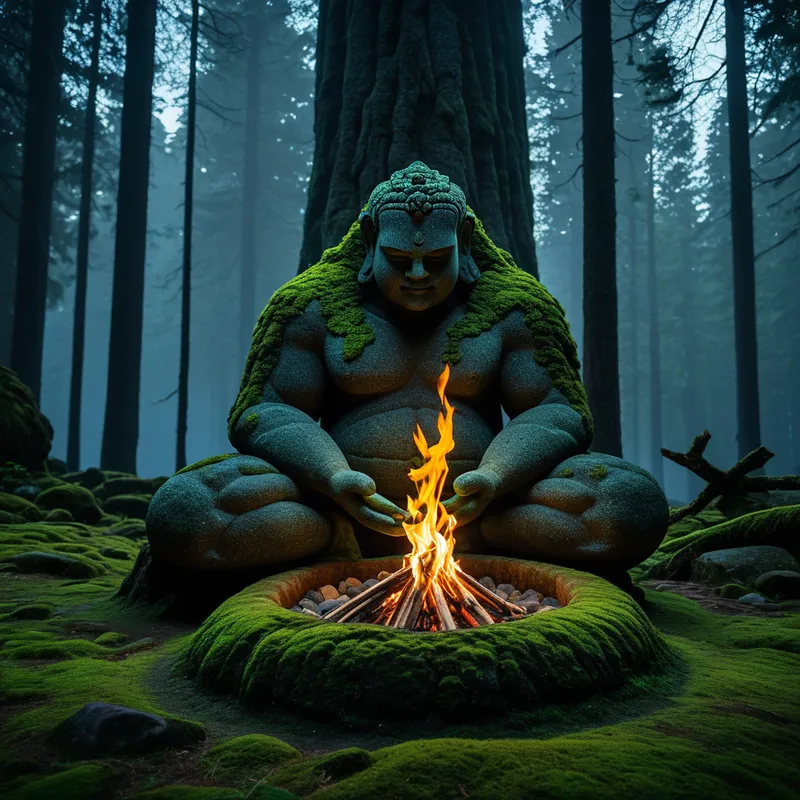
Then, from the deep places of the earth where the bones of the world lie, came a being known as Grandfather Stone. He was not a man, but a walking mountain, his skin the grey of storm clouds and riverbed, his voice the low rumble of a landslide heard from afar. His eyes held the patient light of stars caught in granite.
He saw the People shivering, saw the children with eyes too large for their thin faces. A great sorrow moved in his chest, a tremor that shook the ground beneath his feet. He called the elders to him, his form casting a long shadow in the setting sun.
“You are cold,” his voice echoed, not in their ears, but in the marrow of their bones. “You are hungry. You see the deer run, the salmon leap, the corn grow tall, but it gives you no strength. You lack the secret of the Sun’s own breath.”
The People bowed their heads, ashamed. They had tried. They had thrown meat into their fires, only to retrieve it blackened and bitter, a mockery of nourishment.
Grandfather Stone knelt, the earth groaning in acceptance. “The fire is a wild spirit,” he rumbled. “It consumes. It does not give. To make it give, you must give first. You must offer a part of yourself to become the bridge.”
And with those words, he did a terrible and beautiful thing. He reached into his own vast side, into the living rock of his being, and broke off a piece of himself—a fragment the size of a man’s head. He held it in his palm, and his inner warmth, the ancient heat of the world’s heart, began to glow within it. The stone grew luminous, radiating a gentle, penetrating warmth.
“This is my body,” he said, his voice now softer, strained. “I give it to you. Do not throw your food to the fire. Give it to the stone. Let my warmth enter it, slowly, deeply. Let the stone’s patience teach the food to become something new.”
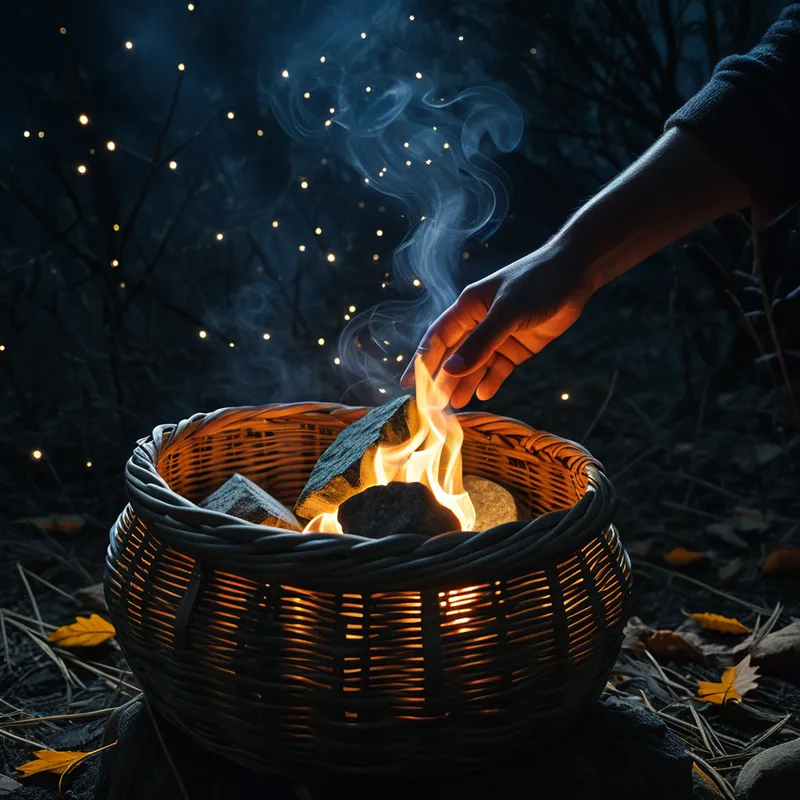
He showed them. They lined a pit with leaves, placed the glowing stone within, laid venison and tubers upon it, and covered it all with earth. They waited as the sun set and the stars wheeled above. The air grew rich with a scent they had never known—a scent of deep earth, of unlocked sweetness, of transformation.
When they uncovered the pit at dawn, the food was tender. It fell apart at a touch. It tasted of life itself, rich and sustaining. They ate, and strength flowed into their limbs. Light returned to their eyes.
Grandfather Stone, diminished but serene, watched them. “Remember,” he whispered, his form beginning to crumble at the edges, merging back with the landscape. “The greatest nourishment requires a sacred vessel. It requires a sacrifice that holds the heat without being consumed by the flame. This is the law. This is the gift.”
Where he once knelt, only a circle of warm, ordinary-looking stones remained, waiting to be heated in the fire and used again. He had given them not just a meal, but the means to make every meal thereafter a ceremony.
Cultural Origins & Context
The myth of Hot Stone Cooking, while varying in its specific characters and details, is a foundational narrative found across many Indigenous cultures of North America. It is not merely a story about the invention of a cooking technique; it is a sacred charter for a technology that defined survival and community. The story was traditionally told by elders and knowledge-keepers, often during the preparation for a community feast or when teaching the responsibilities of fire-tending and food preparation to the young.
Its societal function was multifaceted. Practically, it encoded the vital knowledge of pit-cooking, a method used for centuries to cook large quantities of food efficiently for gatherings, to preserve meat, and to render tough plants edible. Spiritually, it framed this act of cooking as a cosmological event, aligning human action with the sacrifice of a spiritual being. It taught that technology is not a separation from nature, but a partnership with it, requiring respect, ritual, and an understanding of exchange. The story served to sacralize the daily act of preparing food, transforming it from a chore of survival into a re-enactment of a primordial gift.
Symbolic Architecture
At its heart, this myth is a profound allegory for the principle of mediated transformation. The raw, inedible, or dangerous element (fire) cannot directly create nourishment; it requires an intermediary (the stone) that can endure the flame’s intensity and translate it into a gentle, pervasive warmth.
The stone is the archetypal vessel: that which contains the transformative fire without being destroyed by it, thereby making transformation possible for what it holds.
Grandfather Stone symbolizes the Self in the Jungian sense—the wholeness of the psyche that encompasses both consciousness and the unconscious. His sacrifice represents the necessary fragmentation of this wholeness for the sake of conscious development. A part of the deep, ancient, unconscious Self must be broken off and brought into the service of the conscious ego (the People) to facilitate growth and “nourishment.” The stone is this broken-off part: a symbol of the enduring, resilient core of the psyche that can hold the heat of powerful emotions, instincts, and conflicts (the fire) and transmute them into usable energy for psychological development.
The raw food represents unintegrated psychic content—raw emotions, traumatic memories, or untapped potentials. Throwing it directly into the fire is the equivalent of being overwhelmed or destroyed by one’s own unconscious material. The stone’s patient, contained heat models the process of holding, containing, and slowly “cooking” this material until it becomes assimilable, until it can nourish the personality and foster resilience.

The Dreamer's Resonance
When this myth surfaces in modern dreams, it often signals a somatic and psychological process of contained incubation. The dreamer may find themselves tending a fire, searching for the right stones, or anxiously waiting for something buried to be ready. These are not dreams of sudden catharsis, but of slow, deliberate alchemy.
Somatically, this can correlate with a feeling of deep, internal warmth—not a feverish heat, but a grounded, steady vitality. Psychologically, it indicates the ego is learning to construct a temenos, a sacred container. The dreamer is in a phase where they are holding a difficult feeling, a creative idea, or a life transition, not trying to solve it impulsively, but allowing it to be transformed by the steady, patient heat of attention and time. There is often an accompanying sense of anxiety (“Is it cooking? Have I done it right?”) mixed with an instinctual trust in the process itself. The dream affirms that nourishment and strength are being prepared beneath the surface of conscious awareness, in the dark, earthen pit of the unconscious.
Alchemical Translation
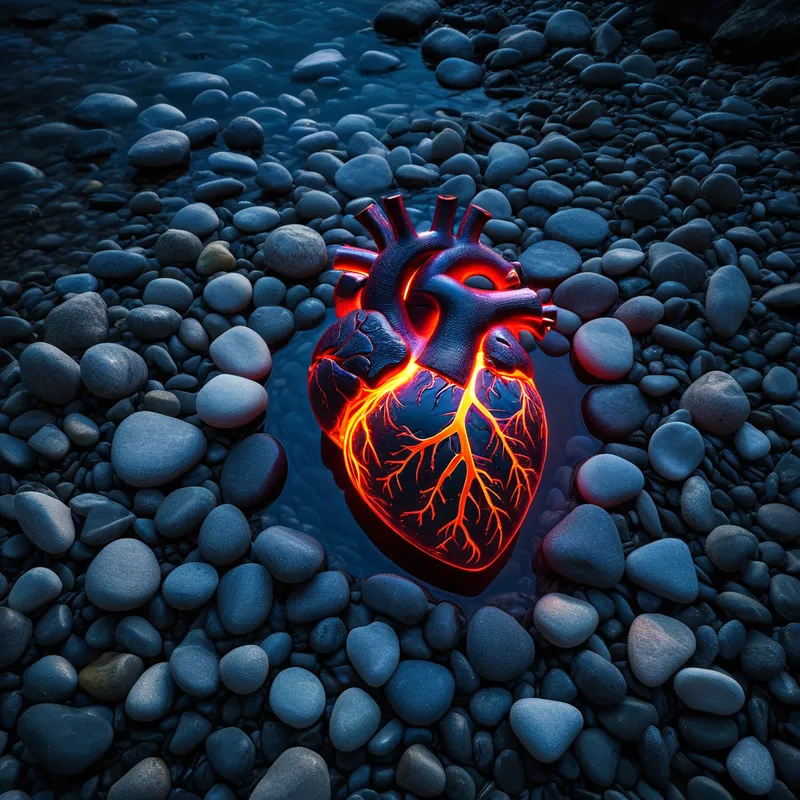
The myth of Hot Stone Cooking provides a flawless model for the individuation process, which is, at its core, an alchemical operation. Individuation requires turning the base lead of our unrefined instincts and complexes into the gold of a realized personality.
The first step is the sacrifice of the primordial state. The comfortable, unconscious wholeness represented by Grandfather Stone must be broken. We must willingly fragment our old, undifferentiated sense of self to acquire the tool—the heated stone of conscious awareness and resilience.
The fire of emotion, conflict, and desire is not the enemy; it is the necessary energy. The task is to become the stone that can hold it.
The second step is the creation of the vessel. In our lives, this is the development of ego strength, therapeutic practice, ritual, art, or meditation—any disciplined container that can hold the heat of our psyche without letting it rage destructively or be extinguished. This vessel allows for slow cooking: the patient, often frustrating work of analysis, integration, and waiting. We place our “raw” issues—anger, grief, ambition—into this vessel and cover it with the earth of daily life, trusting the process.
The final revelation is that the transformed substance—the cooked food—is not foreign, but a potential that was always within the raw material, unlocked by the sacred intermediary. The strength, wisdom, and nourishment we seek through psychological work were latent within us all along. They simply required the loving, patient, and sacrificial heat of our own conscious attention to be made available. The myth teaches that we are both the hungry People and the sacrificing Grandfather Stone; the journey of healing and wholeness is an act of self-gift, where a part of us endures the fire so that the whole of us may finally feast.
Associated Symbols
Explore related symbols from the CaleaDream lexicon: