Horn of Bran the Blessed Myth Meaning & Symbolism
A king's severed head speaks prophecy, his horn a vessel of endless plenty, buried to protect a land until its true sovereign awakens its power.
The Tale of Horn of Bran the Blessed
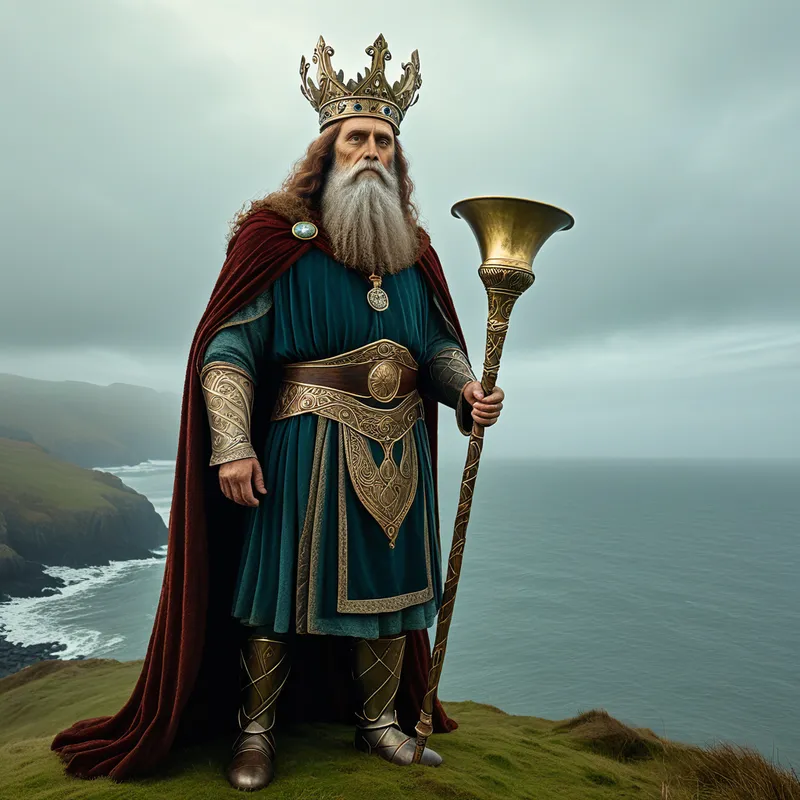
Listen now, and let the fire’s crackle become the crash of waves on a distant shore. In the time when the world was younger and the veil between the lands was thin, there ruled a king whose stature was not of this earth. He was Bran the Blessed, son of Llyr, and his head was his kingdom’s greatest treasure.
Bran’s tale is one of wounding. His beloved sister, Branwen, was mistreated in a foreign land, and across the sea he led his host to reclaim her honor. The battle was a slaughter of kin and kings. Bran, the giant, was struck in the foot by a poisoned spear—a blow to the foundation, a king’s connection to his land severed. Knowing his end was upon him, he gave a mighty command to his seven remaining loyal men.
“Cut off my head,” he said, his voice like stones grinding in a deep tide. “Carry it with you. For as long as you hold it, you shall know no sorrow, time shall lose its meaning, and this island shall be protected.”
And so they did, with heavy hearts and shining blades. They took the head, and a wonder occurred. It did not die. It spoke, it joked, it prophesied. It was a head of council and comfort. For seven years they feasted in a hall that was not a hall, in Gwales, with the head as their companion, and the Horn of Bran—a vessel of endless mead and plenty—never emptying, their joy never ceasing.
But a door, left closed by Bran’s command, was opened. The spell of timelessness broke. The wind of the world and memory rushed in. Remembering their duty and their king’s final wish, the seven men bore the living head across the land, back to the White Hill in Ynys Prydein. There, with songs of deep sorrow and deeper love, they buried it facing the continent, a guardian to turn back invasion until the world’s end. And with it, they buried the Horn, the source of its endless feast. The land itself swallowed the king and his bounty, and the deep sleep of the guardian began.
Cultural Origins & Context
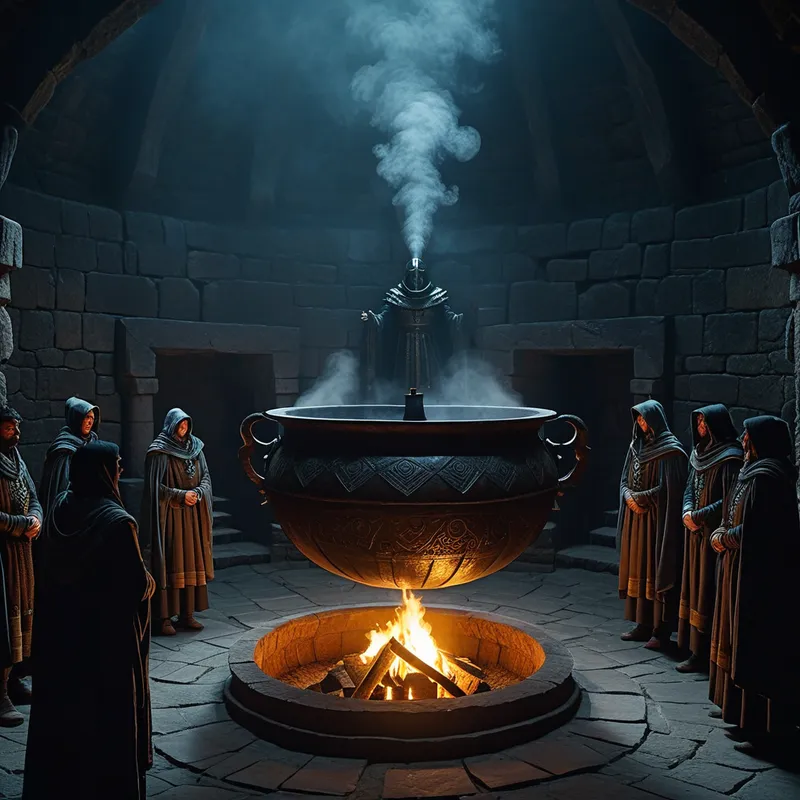
The story of Bran is not originally Arthurian in the courtly, chivalric sense. It is a bedrock Celtic myth, drawn from the Welsh Mabinogion, specifically the branch titled Branwen ferch Llyr. This is the mythic substratum upon which the later Arthurian romances were built. The tellers were likely bards and cyfarwyddiaid (storytellers) in the courts of Welsh princes, preserving the lore of the Ynys Prydein.
Its function was multifaceted: a foundational legend explaining the spiritual protection of the land, an etiological tale for ancient burial rites of the head (a powerful Celtic motif), and a narrative about sacred kingship. The king is the land; his vitality ensures its fertility. His wounding—the poisoned foot—and subsequent transformation into a buried, speaking head reflects a Celtic doctrine of sovereignty where the ruler must merge with the land in death to empower it. The Arthurian tradition later absorbed this motif, with Bran often reinterpreted as a primordial, almost pre-Arthurian guardian king, his Horn becoming a precursor to the Holy Grail as a vessel of spiritual sustenance.
Symbolic Architecture
At its core, the myth is an alchemy of sacrifice into eternal presence. Bran is the archetypal Dying and Returning God, but with a distinctly Celtic, chthonic twist. His sacrifice is not for a seasonal cycle of crops, but for the eternal vigilance and psychic integrity of the realm.
The true sovereign does not merely rule the land; he becomes its dreaming skull, its buried thought, its silent, watchful wisdom.
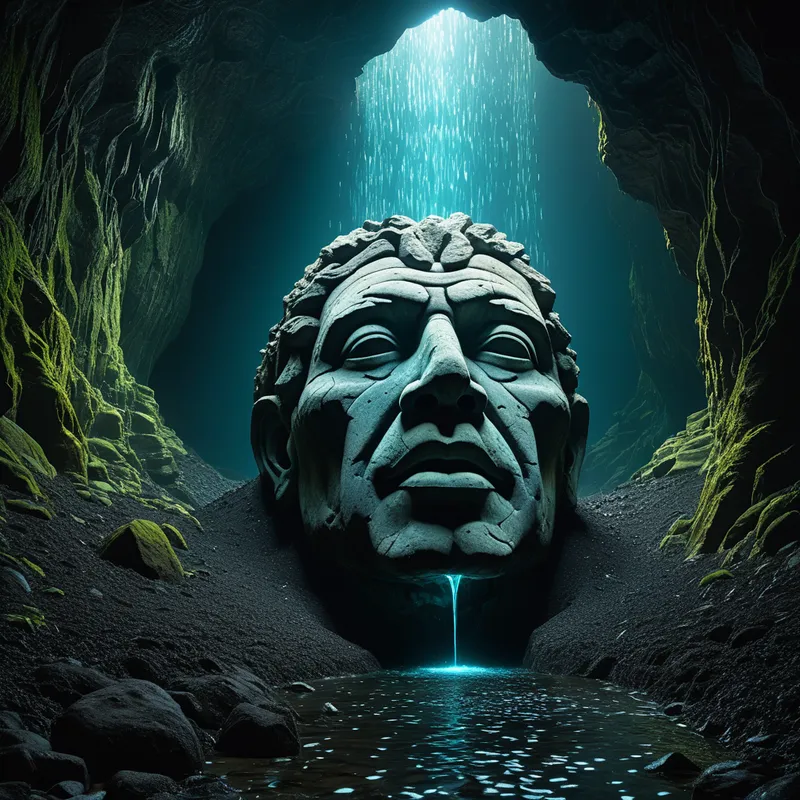
The Severed Head is the ultimate symbol of detached consciousness—intellect and prophecy separated from the body’s passions and mortality. It is insight gained through profound trauma. The Horn of Plenty is the corollary: the endless nourishment that flows from that same sacrifice. It represents the fecundity that emerges when the ego (the ruling head) is willingly offered up for a purpose greater than itself. The Burial on the White Hill is the act of making the personal sacredness infrastructural, embedding the archetype into the very bones of the land—the collective psyche. The myth models a transition from active, physical kingship to passive, spiritual guardianship.
The Dreamer's Resonance
When this myth stirs in the modern dreamer, it often signals a profound process of psychic dismemberment necessary for a new integration. To dream of a speaking head, especially one that offers counsel, suggests a part of the Self—the observing, wise ego—has been severed from the instinctual, embodied life (the body). This can follow a period of great trauma or sacrifice (a “poisoned foot” wound to one’s foundation or career).
Dreams of buried treasure, particularly vessels like horns or cauldrons, point to untapped resources of resilience, creativity, or emotional nourishment that the dreamer has had to “bury” or set aside for a time of protection. The feeling in the dream is often one of melancholic awe—a sorrow for what was lost (the integrated self) coupled with the profound comfort of an enduring, guiding presence (the inner sage). Somatically, this can manifest as a feeling of being “head-heavy” or disconnected from the feet and ground, alongside a deep, almost cellular knowing that a period of incubation is at hand.
Alchemical Translation
The individuation process mirrored here is the transmutation of the wounded king into the guardian of the threshold. Our initial state is that of Bran the active ruler: identified with our power, our stature, our ability to act in the world. Then comes the inevitable wounding—the betrayal, the failure, the illness—the poisoned spear that fells us.
The alchemical imperative is not to heal the wound in the old way, but to allow the old identity to be severed. We must, with conscious participation, “cut off the head.” This is the mortificatio: the death of the ego’s old ruling paradigm. The subsequent journey—the feast at Gwales—is the solutio: a timeless period of reflection, integration, and receiving nourishment from the newly liberated consciousness (the speaking head). The open door that ends the feast is the call back to duty, to the collective.
The final burial is the coagulatio: the grounding of this hard-won, detached wisdom into the substance of one’s life and community. The guardian does not walk the earth; he is the earth.
For the modern individual, this means taking the insight gained from a crushing defeat or sacrifice and not using it to rebuild the same old kingdom. Instead, one must bury it as a protective, guiding principle within one’s own psyche. The “Horn” is no longer carried; its endless sustenance becomes the quiet, resilient abundance available when one’s central purpose shifts from ruling to guarding, from acquiring to nourishing from within. One becomes the silent, watchful presence that turns back invasions of despair, irrelevance, and meaninglessness, not by fighting them directly, but by having become part of the foundational hill upon which they break.
Associated Symbols
Explore related symbols from the CaleaDream lexicon: