Holly King Myth Meaning & Symbolism
A myth of two kings, Holly and Oak, locked in eternal battle for the crown of the year, embodying the cycle of death and rebirth.
The Tale of Holly King
Listen, and let the fire’s crackle carry you back. The world was not a straight line, but a great, turning wheel. At its two highest points stood the thrones of the year, and two kings were bound to them in a fate older than stone.
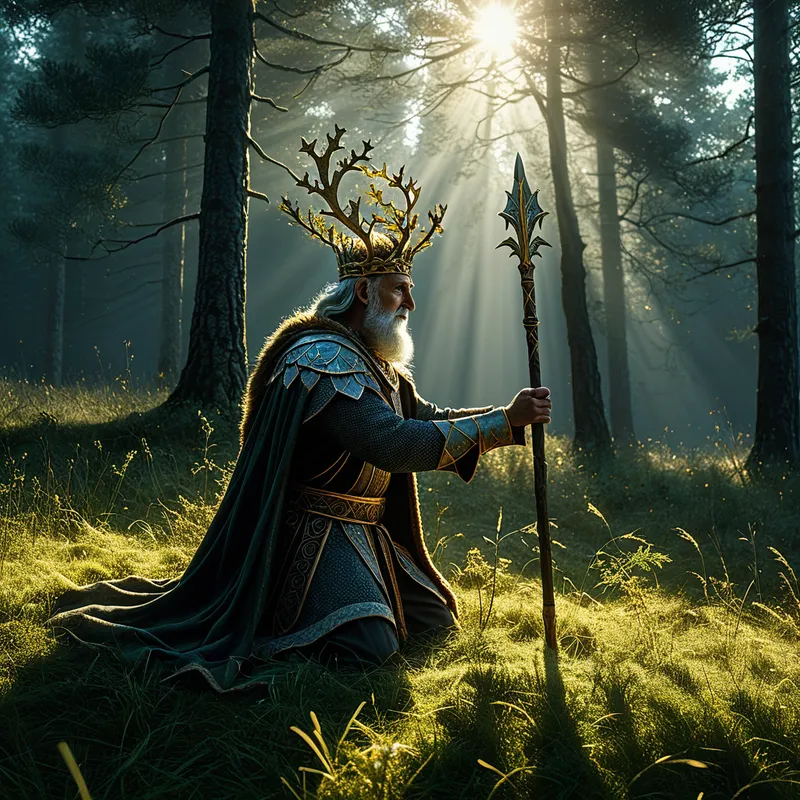
In the green and gold reign of the Oak King, the land swelled with life. His hair was the color of sun on wheat, his cloak a tapestry of beech leaves and foxglove. His rule was one of expansion, of laughter in long days, of sap rising and herds growing fat. He was the outward breath, the song at its crescendo. But as the sun reached its zenith at the Midsummer feast, a chill would touch the edge of the celebration. For the pact demanded balance.
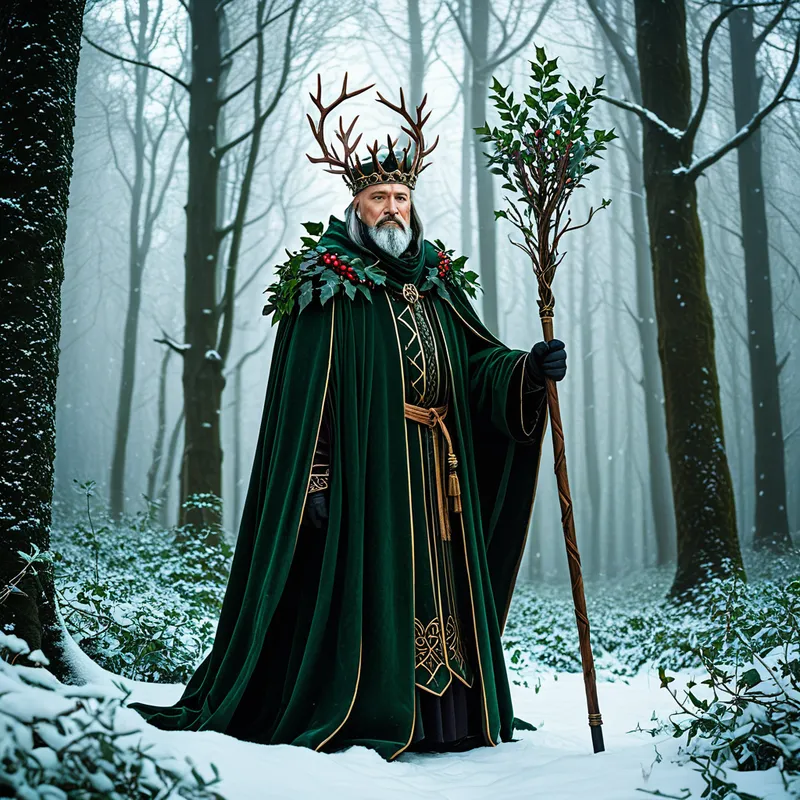
From the deep, unchanging heart of the forest, where sunlight fell in dappled pools on moss, the other would stir. The Holly King. His crown was not of leaves but of sharp, dark holly, studded with berries like drops of blood. His cloak drank the light, woven from the shadows of yew trees and the silence of falling snow. Where the Oak King was the shout, the Holly King was the listen. He was the keeper of roots, the guardian of secrets sleeping under frost, the lord of the inward gaze.
Their battle was not born of hatred, but of sacred law. At the height of the Oak King’s power, on the longest day, the Holly King would emerge. The air would grow still. The clash was not of armies, but of essences: the crushing force of the oak club against the piercing, precise thrust of the holly spear. It was the vibrant green of growth meeting the enduring, dark green of persistence. And as the sun began its slow retreat, the Oak King would fall, not in death, but in sacred surrender. The Holly King would take the crown, and his breath became the north wind, drawing the mantle of winter over the slumbering land.
His rule was one of crystalline silence, of stars sharp as ice in the black sky. He presided over the descent into the underworld of the year, where life was not gone, but dreaming in the seed, in the burrow, in the memory. Yet, at the depth of this darkness, at the Midwinter feast, when his power was absolute, the wheel turned again. From the fallen acorn, from the ember guarded in the hearth, the Oak King would rise renewed. The battle was rejoined in the bitter cold, and the Holly King, in his turn, would yield. The light was reborn, and the cycle, eternal, continued. Two halves of one breath, two kings of one crown, forever passing the sovereignty of the world between them.
Cultural Origins & Context
The myth of the Holly King and Oak King is a modern synthesis, a beautiful and potent reconstruction drawn from the fragmented tapestry of Celtic belief. It is not a singular, ancient tale written in a manuscript, but a pattern discerned by folklorists and mythographers like Sir James Frazer in The Golden Bough, who observed a recurring archetype of vegetative deities contesting for seasonal supremacy across Europe.
In the Celtic world-view, deeply animistic and cyclical, trees were sacred pillars holding up the sky and conduits to the otherworld. The oak, with its strength and longevity, was revered as the king of the trees, sacred to deities like the Dagda. Holly, evergreen and protective, was a powerful symbol of life-in-death, often associated with the winter solstice. The battle of the two kings gives narrative form to the observable, visceral struggle between summer and winter, a drama played out in the landscape itself. It was likely a concept embedded in ritual and seasonal festivals—the fires of Beltane welcoming the Oak King’s vigor, the sacred stillness of Samhain honoring the Holly King’s domain. Its societal function was to explain, enact, and make peace with the necessary rhythms of death and rebirth, teaching that sovereignty—over the land and over the self—is never permanent, but always in service to a greater balance.
Symbolic Architecture
At its core, this myth is a masterful allegory for the dualities that constitute reality. It moves beyond simple opposition to reveal a profound interdependence.
The king must die so that the king may live. The victor is merely the steward for his rival’s eventual return.
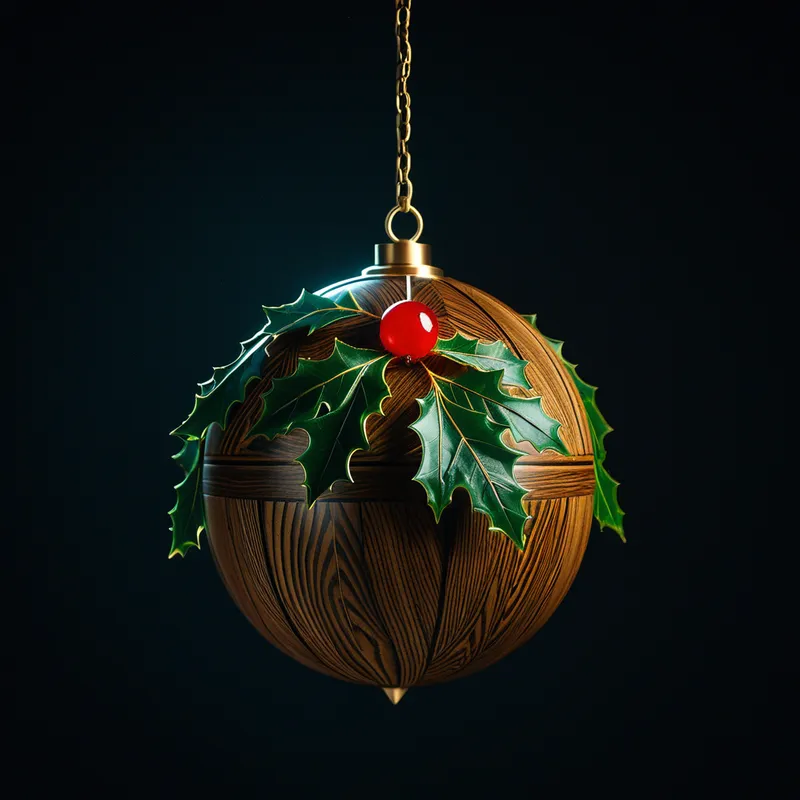
The Oak King represents the conscious ego in its flourishing state: extroverted, expansive, productive, and visible. He is our public face, our ambitions, the drive to build and create in the full light of day. The Holly King embodies the shadow and the unconscious: the introverted, contractive, reflective, and hidden self. He is our depth, our secrets, our necessary rest, and the wisdom that comes not from doing, but from being. Their battle is the internal conflict between these states. We often resist the Holly King’s call, viewing introspection, rest, or sadness as a defeat of our vibrant “oak” nature. Yet the myth insists this “defeat” is sacred. The holly’s sharp leaves symbolize the necessary, sometimes painful, boundaries and truths that protect the vulnerable soul during its inward journey. The red berries are the latent life, the potential, that is nurtured only in the dark.
The Dreamer's Resonance
When this mythic pattern stirs in modern dreams, it signals a critical point of psychic transition. You may dream of a fierce battle between a figure of light and a figure of shadow, or find yourself crowned with leaves that change from green to dark and prickly. You might wander a landscape where it is simultaneously high summer and deep winter.
These dreams often surface when you are at a peak (a career success, a period of social activity) and feel an inexplicable pull toward solitude, or conversely, when you are deep in a winter of the soul and sense a nascent, restless energy for change. Somatically, it can feel like a tug-of-war—exhaustion amidst busyness, or anxious energy during rest. The psyche is enacting the turning of the wheel. The dream is the battleground where the ruling psychic “king” is being challenged by its counterpart, not to destroy it, but to force the necessary surrender that allows for the next phase of wholeness. To dream of the Holly King’s ascent is often to encounter the call to honor your depth, your grief, your quiet wisdom. It is the unconscious sanctioning your retreat, your healing, your incubation.
Alchemical Translation
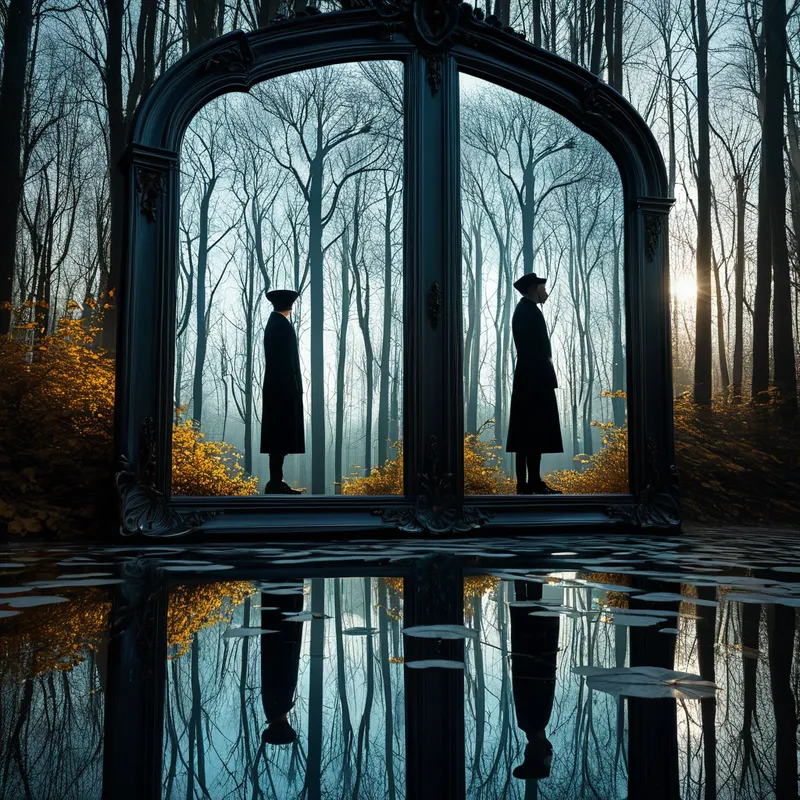
The individuation process—the alchemical work of becoming whole—is perfectly modeled in this eternal cycle. We are not meant to be perpetually sunny Oaks nor eternally brooding Hollies. Individuation requires the conscious integration of both.
The goal is not to win the battle, but to become the wheel upon which it turns.
The “alchemical translation” of this myth involves recognizing which king currently holds your inner crown, and consciously preparing for his ritual dethronement. If you have been in an “Oak” phase of relentless outward striving, the alchemical work is to welcome the Holly King. This is the nigredo: willingly entering the darkness, journaling, dreaming, therapy, solitude—allowing the sharp, holly-leaf truths to define your boundaries. You sacrifice the outward crown for the inward scepter.
Conversely, emerging from a “Holly” phase of isolation or introspection requires the sacred battle to reignite the Oak King. This is the albedo and rubedo: taking the insights forged in the dark and planting them in the world of action, relationships, and creation. You honor the Holly King by carrying his evergreen wisdom—your depth, your resilience—into the sunny fields of your life. Thus, the psyche transforms from a battleground of warring opposites into a completed kingdom, where both kings are recognized as essential, alternating regents of a single, sovereign Self. The wheel turns within, and we find our place in the eternal, nourishing cycle.
Associated Symbols
Explore related symbols from the CaleaDream lexicon: