Hollow Hills Myth Meaning & Symbolism
A journey into the sacred mounds where time flows backward, treasures are guarded, and the soul confronts the eternal truths of the Otherworld.
The Tale of Hollow Hills
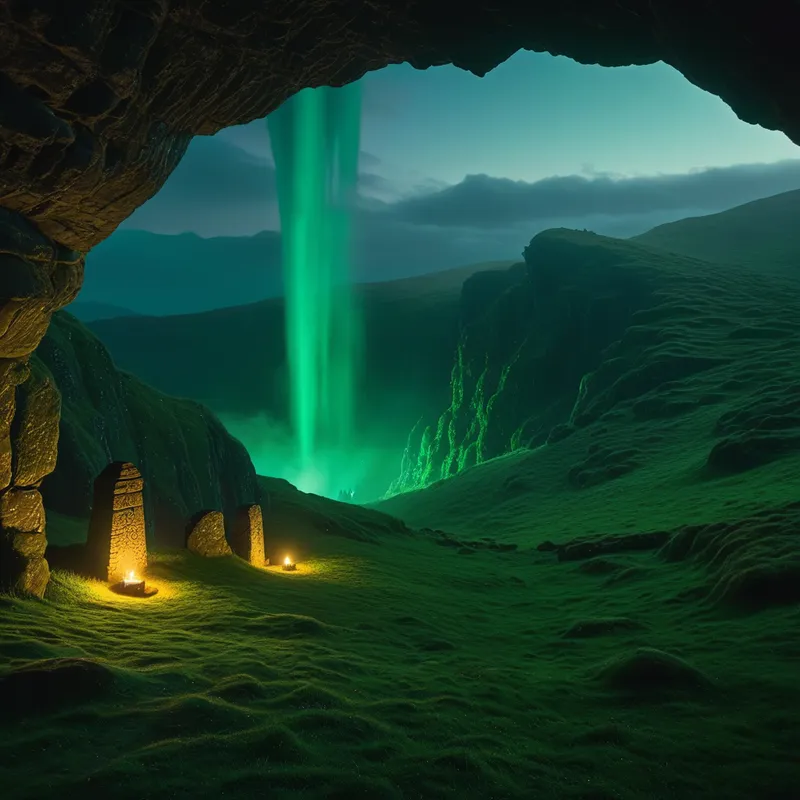
Listen. The land you walk is not the only one. Beneath the green cloak of Erin and the high moors of Albion, another world breathes. It does not lie in some distant star-field, but here, underfoot, in the sídhe. They appear as gentle rises in the earth, crowned with hawthorn or cloaked in grass. To the careless eye, they are but hills. But on certain evenings, when the veil between sun and star is thin, or when the west wind carries the scent of apple blossom from a forgotten orchard, the truth is revealed.
The doors of the hills open.
From within flows a light that is neither of sun nor fire, but of a different age. It is the light of Tír na nÓg, the Land of the Ever-Young. Here, time is a river that flows backward and in circles. Here dwell the Aos Sí, the People of the Mounds. They are the Tuatha Dé Danann, the old gods, who when the sons of Mil came, did not die but retreated into the hollow hills, becoming the fair folk, the keepers of magic.
A mortal might stumble upon an open door, drawn by unearthly music—harp strings that pluck at the very heart, pipes that call to a memory older than bone. Inside, the hill is vast, a cavern-palace hung with silks that are woven from dawn-light, where feasts are laid that never diminish. The Aos Sí are beautiful and terrible, their eyes holding the stillness of deep pools. They may offer hospitality: a cup of red ale, a taste of a silver apple. But this is the peril. For in that world, an hour is a century in the world above. The mortal who dances one dance may return to find his home dust, his loved ones long turned to earth.
Some come seeking. A hero, like Cú Chulainn, might venture in to win a prize or gain wisdom. A poet, like Oisín, might be invited for his gift, only to be bound by love for a woman of the Aos Sí. The journey is one of inversion. You leave the world of struggle, of decay, of linear time, and enter a realm of eternal potency, where thought and manifestation are one. But the price of that perfection is the world you knew. The hill is a threshold, a mouth that consumes the old life to offer a new one—a life outside of time, forever separate from the stream of human becoming.
The door closes. The music fades to a whisper in the wind through grass. The hill is just a hill again. But forever after, that spot is haunted by the memory of what lies within, a quiet tension in the landscape, a promise and a warning written in the very shape of the earth.
Cultural Origins & Context
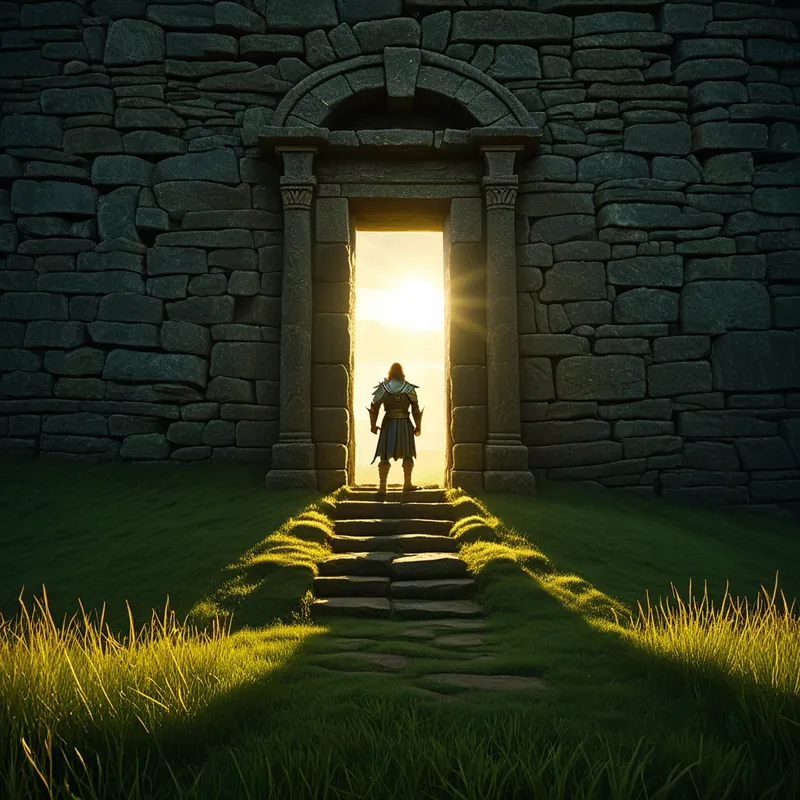
The myth of the Hollow Hills is not a single story but a pervasive narrative layer woven into the Celtic understanding of landscape and cosmology. It originates primarily from the Irish and Brythonic (Welsh, Cornish) traditions, preserved in medieval manuscripts like the Lebor Gabála Érenn (The Book of Invasions) and the various cycles of Irish legend. These tales were the province of the fili, the poet-seers, who acted as custodians of history, genealogy, and sacred lore.
The societal function was multifaceted. On one level, it was etiological, explaining the origin of the thousands of Neolithic passage tombs and burial mounds (like Newgrange) that dot the landscape. These were not mere graves, but sídhe, the literal dwellings of the gods. This sacralized the land, making every significant hill a potential portal, teaching respect and caution. The myth also served as a cultural memory of the pre-Celtic inhabitants, with the Aos Sí representing the displaced, yet still powerful, indigenous gods and peoples.
Furthermore, it modeled a complex relationship with the supernatural. The Otherworld was not a far-off heaven but an interpenetrating reality, accessible yet dangerous. It provided a narrative framework for experiences of altered states, profound inspiration (the imbas of the poets), and the human encounter with the timeless and the numinous. The Hollow Hill was the concrete symbol of this liminal space where the community’s deepest wisdom—and its deepest fears—resided.
Symbolic Architecture
Psychologically, the Hollow Hill is the archetypal symbol of the unconscious itself. It represents the hidden, foundational layer of the psyche that underlies the conscious "surface" of the ego. The grassy, ordinary exterior is the persona, the acceptable face we show the world. The vast, luminous, and paradoxical realm within is the totality of the unconscious—a place of both divine treasures and profound perils.
The hill is the self. The door is the wound, the crack in our reality, through which the deeper truth insists on being known.
The Aos Sí are the autonomous complexes and archetypal figures that inhabit this inner world. They are "the others within," personifications of instincts, ancestral memories, and psychic potentials that feel both familiar and utterly alien. Their beauty symbolizes the allure of abandoning the difficult, differentiated path of consciousness for the undifferentiated bliss of unconsciousness—a psychic death. The lost time symbolizes the disorientation and dissociation that occurs when one is swallowed by a complex, emerging later to find one's life alien.
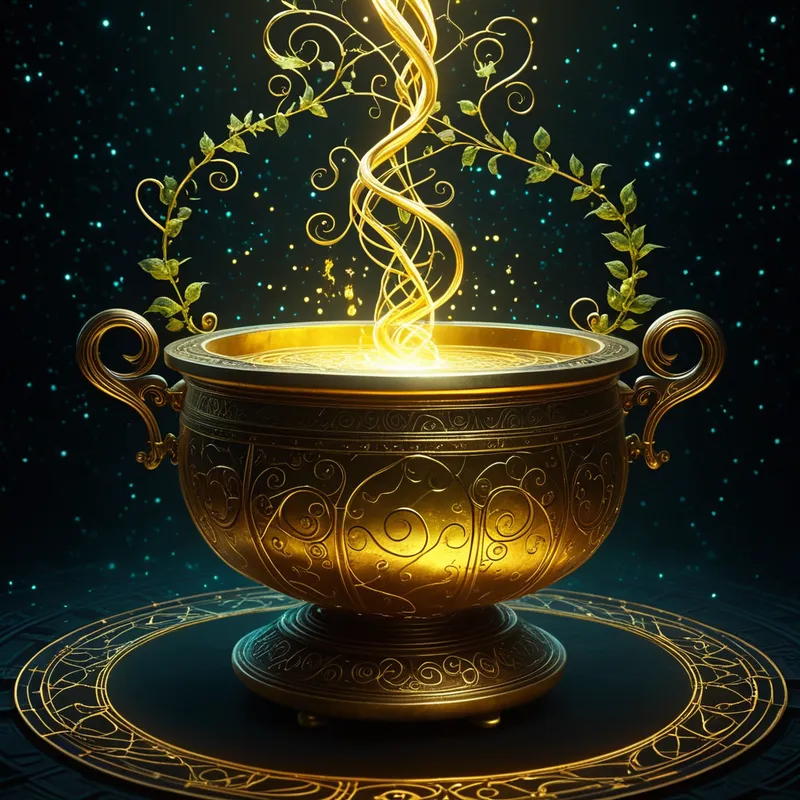
The treasures of the hill—the cauldron of plenty, the sword of light, the harp of joy—are the latent gifts and powers of the Self. But they are guarded, requiring a negotiation with the inner guardians. The hero’s journey into the hill is thus the ego’s necessary, perilous descent into the unconscious to retrieve these vital energies for the enrichment of conscious life.
The Dreamer's Resonance
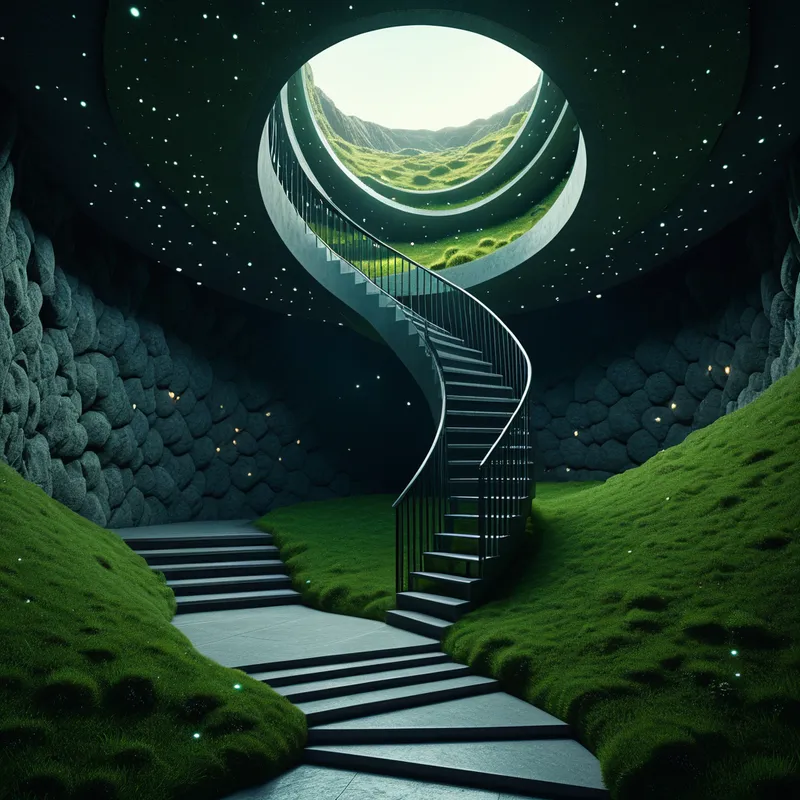
When the motif of the Hollow Hill appears in modern dreams, it signals a powerful invitation—or demand—from the deep psyche to engage with material that has been buried or walled off. This is not a gentle process. To dream of a hidden door in a hillside, a staircase descending into the earth, or a lush interior world beneath a mundane surface is to dream of the threshold of the unconscious.
The somatic experience often accompanying such dreams is one of profound ambivalence: a magnetic pull mixed with dread, a sense of awe tinged with anxiety. This is the body’s wisdom registering the enormity of the psychic shift at hand. The dreamer may be undergoing a process where an old identity, a long-held attitude, or a repressed trauma is becoming untenable on the surface. The psyche is creating a "door" – often through symptoms, moods, or life disruptions – to force a confrontation with what lies beneath.
The psychological process is one of négritude—a descent into the foundational, often shadowy, aspects of oneself that have been culturally or personally devalued. It is the beginning of shadow-work. The dream hill is a container, offering a structured, symbolic space for this dangerous encounter. The dream asks: Are you ready to see what your carefully maintained "surface" has been built upon? Are you prepared to lose your old sense of time and self to what waits within?
Alchemical Translation
The myth of the Hollow Hill is a precise map for the alchemical process of individuation, the psychic transmutation of the base lead of the ego into the gold of the Self. The entire narrative is an allegory for the nigredo, the blackening, the descent into the prima materia.
The first operation is not to climb a mountain, but to find the door in the hill. Enlightenment begins in the dark, within the earth of our own nature.
The conscious ego (the mortal) living in the daylight world of linear time and logic must first recognize its incompleteness. This is the "call," often felt as depression, stagnation, or a haunting sense of meaninglessness—the hill that will not be ignored. The crossing of the threshold into the hill is the voluntary engagement with the unconscious, the beginning of analysis, active imagination, or deep introspection. This is the solutio—the dissolution of rigid ego structures in the waters of the unconscious.
Inside, the ego encounters its own contents personified (the Aos Sí). The feast represents the temptation to be consumed by archetypal possession, to become inflated or lost in fantasy. The successful navigation requires the separatio—maintaining enough conscious observation to engage but not be wholly assimilated. The retrieval of a treasure, or the wise refusal of a gift, symbolizes the coniunctio, the integration of a previously autonomous psychic content. The returned hero, like Oisín touching the earth and aging centuries in an instant, embodies the result: the conscious personality is irrevocably altered, burdened with the weight and wisdom of a broader reality. The linear time of the ego has been shattered by the eternal time of the Self.
For the modern individual, the myth teaches that wholeness is not achieved by rising above our nature, but by descending fully into its hidden chambers. Our wounds, our oddities, our ancient sorrows—these are the doors to our personal sídhe. The treasure we seek—authenticity, creativity, soul—is not fabricated, but remembered and reclaimed from the luminous hollows we have spent a lifetime pretending are just hills.
Associated Symbols
Explore related symbols from the CaleaDream lexicon: