
Hāloa Myth Meaning & Symbolism
A myth of sacred kinship where the first human is born from a stillborn child buried in the earth, who grows into the life-giving taro plant, Hāloa.
The Tale of Hāloa
Listen. Before the great voyaging canoes carved their paths across the star-strewn sea, there was the breath of the gods. Wākea the Sky Father stretched himself over the vast, dark breast of Papa, the Earth Mother. From their union, the islands were born, rising steaming and fertile from the deep.
But the first child of Wākea and Papa was not a human. It was a root, a tender, pale shoot that grew without limbs or voice. They named him Hāloanakalaukapalili, and he was beautiful in his stillness. Yet, he did not cry, he did not breathe the air. He was a stillborn child, born to the world but not of it.
A great silence fell upon the parents. In their grief, they did not cast him away. With hands that trembled with both sorrow and reverence, they took the small, silent form and carried him to a place of rich, black soil, still warm from the belly of the earth. They dug a bed for him, a soft cradle in the dark. They washed his body with their tears and laid him down, covering him gently with the living earth, a final embrace from Papa herself.
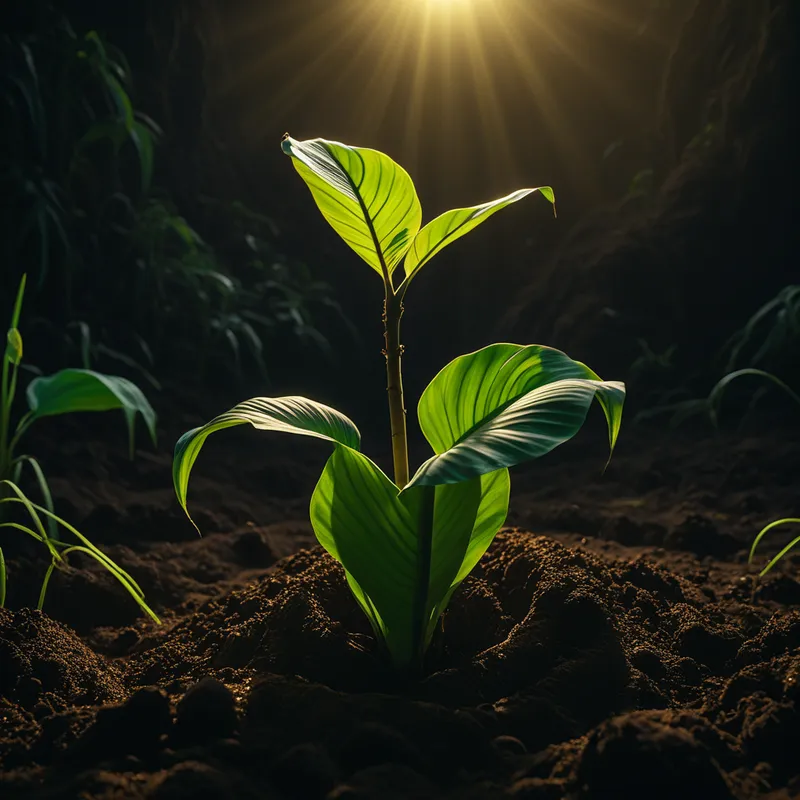
They returned to that spot each day, their grief a heavy cloak. But one morning, where they had laid their sorrow, they saw a miracle of green. From that sacred burial place, a new plant had sprung. Its leaves were broad and heart-shaped, catching the rain and the sun. Its stem was strong, its root a firm, sustaining bulb buried deep in the land. It was their child, transformed. They named this plant Hāloa, meaning “long breath” or “everlasting breath.” It was the first kalo, the taro.
And from this act of sacred return, from this alchemy of loss into life, a second child was born to Wākea and Papa. This one breathed. This one cried out. They named this first human child Hāloa as well, in honor of his elder brother who lay nourishing in the earth. And so the elder Hāloa, the kalo, became the food that would sustain the younger Hāloa, the man. The younger brother was charged with the sacred duty: to tend the elder, to cultivate the garden, to care for the plant that was his flesh and blood. The breath of the one was fed by the breath of the other, in an unbroken circle of kinship and obligation.
Cultural Origins & Context
This is not merely a story of origin; it is the foundational charter of Hawaiian society and its relationship to the ʻāina. The myth of Hāloa is the core genealogical narrative, the kumulipo, that connects the Hawaiian people directly to the gods and to the land itself. It was preserved and recited by kāhuna and kūpuna (elders), not as entertainment, but as a sacred truth that structured all of life.
The societal function was profound and practical. It established the kalo as more than a crop; it was an elder sibling. This created an ethical and spiritual framework for agriculture: one does not exploit a sibling. One cares for them, respects them, and in return, receives sustenance. This myth governed land use, resource management, and social structure, embedding a sense of reciprocal familial duty into every aspect of life. To eat the poi was to literally consume the body of one’s ancestor, a holy communion that reaffirmed one’s place in the familial and cosmic order.
Symbolic Architecture
At its heart, the myth of Hāloa is a supreme allegory for the cycle of death and regeneration, where loss is not an end but a necessary transformation into a new form of life. The first child, stillborn, represents pure potential that cannot manifest in its intended form. Its burial is not disposal, but a planting. The earth, Papa, becomes the womb for a second, more viable birth.
The deepest nourishment does not fall from the sky; it grows from what we are willing to bury with love.
The two brothers—the plant and the human—symbolize the inseparable duality of nature and culture, the wild and the cultivated, the unconscious and the conscious. The human (Hāloa-ke-aka) is literally fed by and responsible for his ancestral, vegetative self (Hāloanakalaukapalili). Psychologically, this represents the ego’s dependence on the deep, rooted, instinctual layers of the psyche. Our conscious life is sustained by nutrients drawn from the dark, rich soil of the unconscious. To neglect that soil, to fail to tend that garden, is to starve our own soul.
The Dreamer's Resonance
When this myth stirs in the modern dreamer, it often surfaces around themes of miscarriage—not just of children, but of ideas, projects, relationships, or phases of life that were born but never came to fruition. The dreamer may encounter images of barrenness, of something precious being placed in the ground, or of a surprising, lush growth emerging from a place of decay or grief.
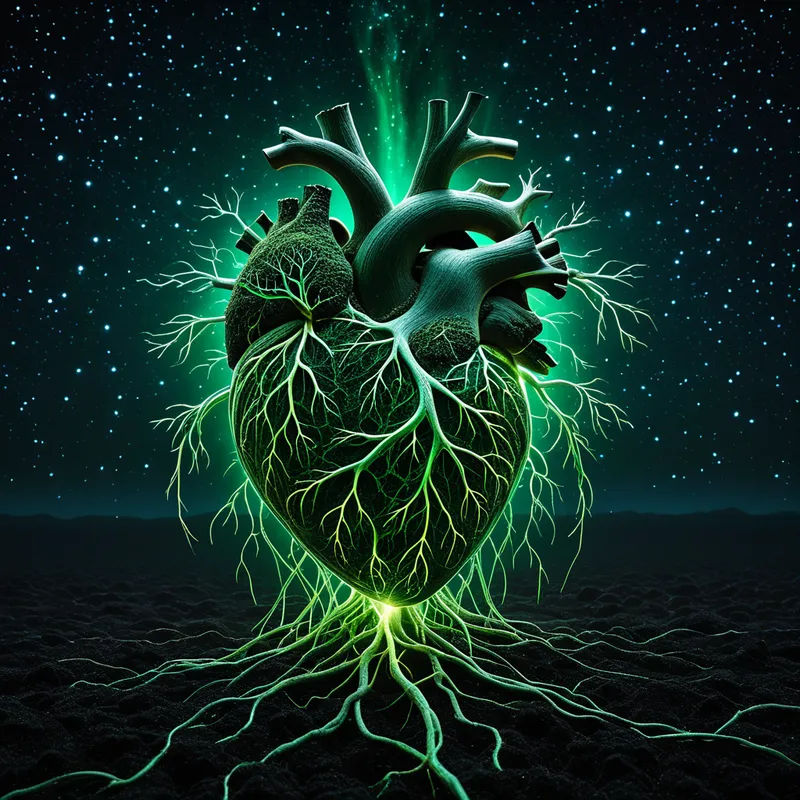
Somatically, this can feel like a hollow ache in the belly—the empty cradle—followed by a slow, rooting sensation, a grounding. The psychological process is one of composting. The dream is performing the alchemical function of Papa: it is taking the unformed, the stillborn hopes and unmourned losses, and inviting the dreamer to bury them not with resentment, but with sacred attention. The dream asks: What have you not properly grieved? What potential are you holding onto that needs to be surrendered to the earth, so it can transform into a different kind of sustenance?
Alchemical Translation
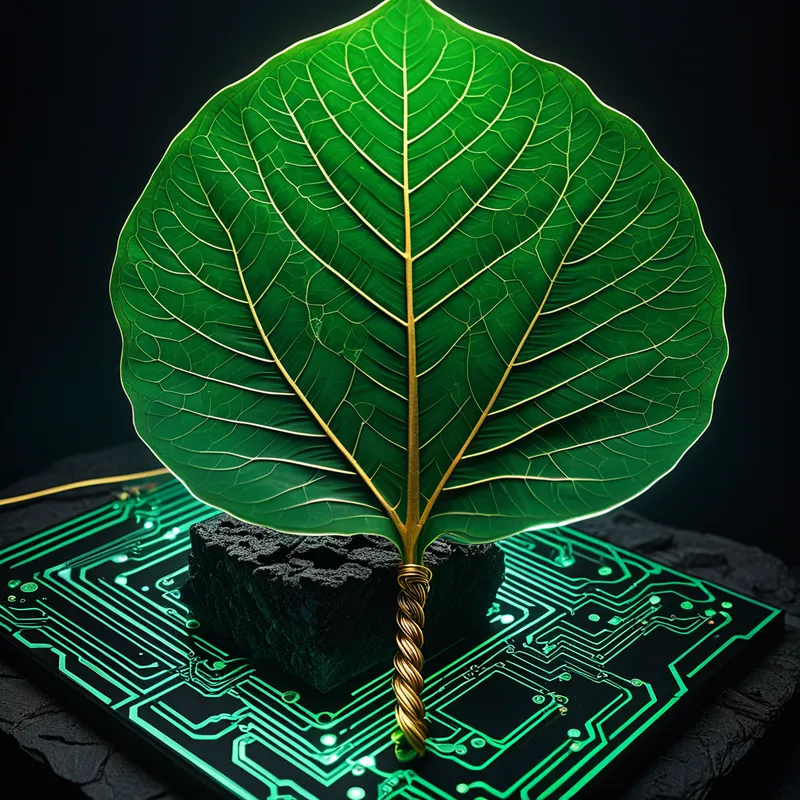
The individuation process modeled by Hāloa is not one of heroic conquest, but of humble, reciprocal care. The modern quest for self-realization often focuses on “finding oneself” as a discrete entity. Hāloa’s path reveals that we must first acknowledge the “elder sibling” within—the deep, autonomic, vegetative layer of our being that is often ignored or repressed. This is the part of us that grows in the dark, that processes trauma and emotion below the level of thought, that connects us to the body and the biological pulse of life.
Individuation begins when we stop trying to be only the human child of the gods, and accept our duty to tend the divine plant that sustains us.
The “alchemical translation” is the act of mālama ʻāina—to care for the land—applied inwardly. It is the daily, patient work of tending the garden of the psyche: watering it with attention, weeding out destructive patterns, harvesting its insights with gratitude. The “poi” we produce is the integrated self, a nourishing substance made from the pounded roots of our experience. We do not become whole by transcending our earthly, “root-like” nature, but by honoring it as our eldest kin, the silent, steadfast source of our very breath. In this myth, enlightenment is not an ascent to the sky, but a deepening of roots, a recognition that our everlasting breath (Hāloa) is a gift from what we lovingly buried.
Associated Symbols
Explore related symbols from the CaleaDream lexicon: