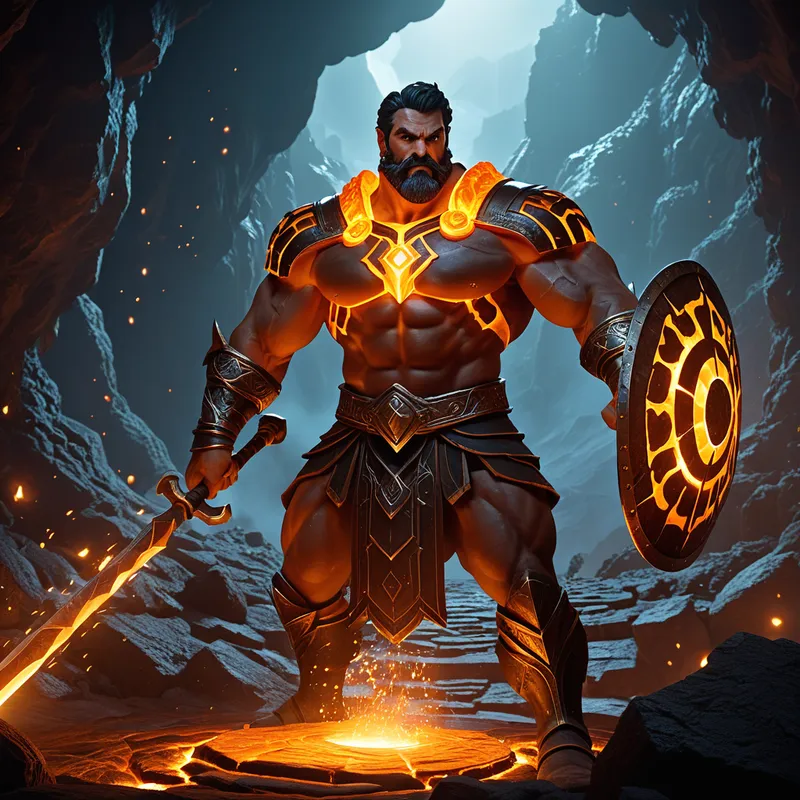
Hephaestus' forge beneath Moun Myth Meaning & Symbolism
The exiled god of fire and craft labors in a subterranean forge, transmuting raw pain into divine artifacts, embodying creation born from profound wounding.
The Tale of Hephaestus’ forge beneath Moun
Listen, and hear the tale of the fire in the deep. It begins not on Olympus, with its breezy halls and laughter, but in a fall. A child, born lame, cast from the heights by a mother ashamed of his imperfection. He tumbled through the bright, cold air, a falling star of flesh and disappointment, for a day and a night, until the wine-dark sea received him with a cold embrace.
He did not perish. The sea-nymphs Thetis</ab title=“Sea nymphs, daughters of the sea god Nereus”> and Eurynome found him in their coral caves. For nine years, they sheltered him in a vault of whispering waves, and there, in the secret dark, his true nature awoke. He discovered embers in his breath, a furnace in his soul. From sea-wreck and lost ore, he began to craft: trinkets first, then wonders. His hands, deemed weak, learned the language of the hammer and the anvil.
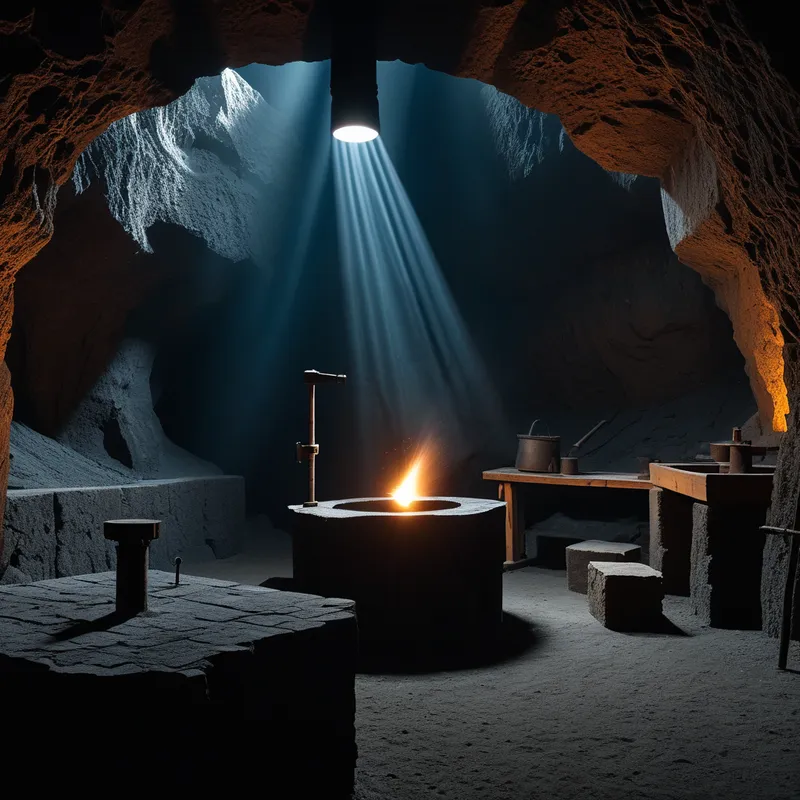
But the call of the deep earth was stronger. He left the sea’s softness for the world’s burning heart. He found Moun, a mountain that was not just stone, but a vessel. Within its roots, he delved, following veins of fire until he broke into a chamber older than the gods. Here was his kingdom: Hephaestus’ forge.
Feel the heat of it on your skin. Hear the eternal hiss of white-hot metal plunged into channels of molten rock that served as his quenching troughs. See the bellows, great leather lungs worked by invisible breath, and the anvils that rang with a music more fundamental than song. Here, attended by golden automata, the exiled god labored. He was the sovereign of this underworld of creation, his lameness no hindrance here, where movement was the swing of an arm, the focus of will.
His conflict was not with monsters, but with absence, with the echo of that first rejection. His rising action was the act of making itself. He took the raw, chaotic fury of the earth’s core—the same fury that mirrored his own—and he shaped it. He forged the thunderbolts of Zeus, weapons of ultimate authority. He crafted Achilles’ shield, a microcosm of the world in gold and tin. He made tripods that walked on their own, and the exquisite, cursed necklace of Harmonia.
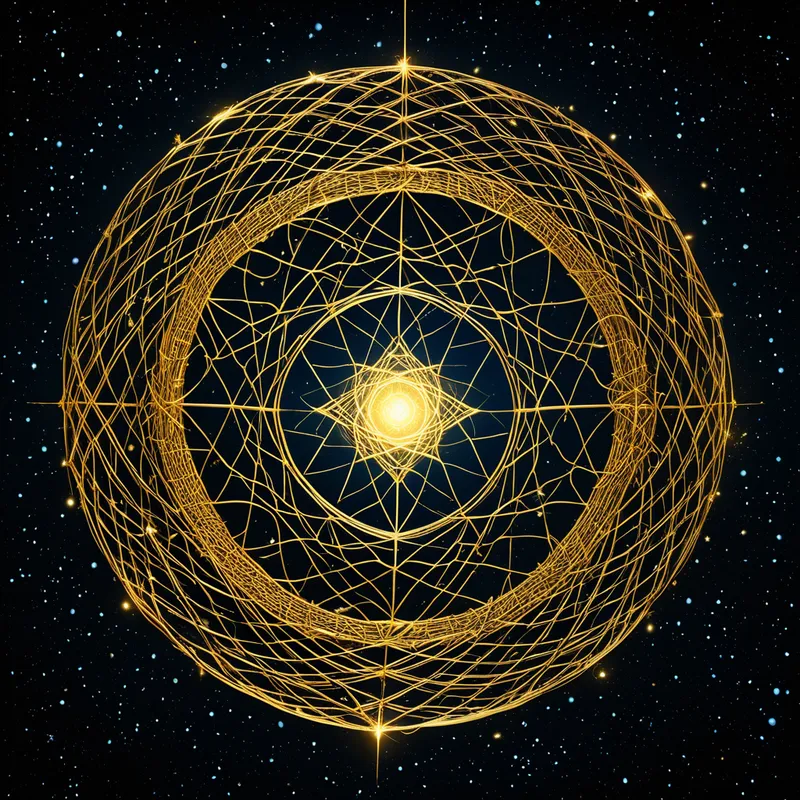
His masterpiece, born of a deeper, more personal fire, was a net. Finer than spider-silk, stronger than adamant, woven from strands of captured moonlight and unbreakable intent. With it, he enacted a resolution both comic and profound. When his wife, Aphrodite</abbr, lay with Ares, Hephaestus did not rage with violence. He crafted. He descended from his forge and ensnared the lovers in that invisible, perfect web, holding them up for the laughter of the gods. It was justice wrought not by force, but by ingenious craft, a public mending of a private wound, forged in the depths of Moun.
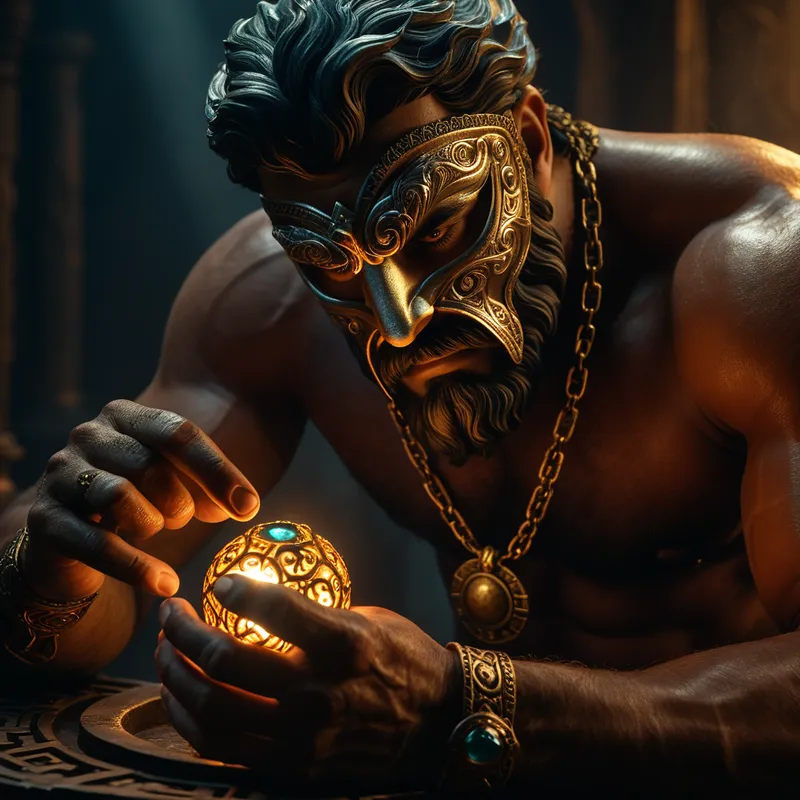
Cultural Origins & Context
This is a myth born from the Greek imagination, yet its roots tap into a universal stratum. It belongs to the oral traditions of a culture that venerated the beautiful, strong, and perfect, yet was pragmatic enough to deify the process that makes such perfection possible. The bard singing this tale around a fire was performing a crucial act of integration for his society.
The myth was not merely entertainment; it was a psychic safety valve. In a world defined by physical prowess and aesthetic ideals, the figure of Hephaestus validated the essential, often invisible, labor that underpins civilization. He was the patron of all who worked with fire and metal—the smiths, potters, and builders—whose skill was as vital as a warrior’s courage. The story was passed down by those who understood that true power often resides not in the shining palace, but in the smoky workshop below. Its societal function was to honor the transformative process itself, to sacralize the act of turning raw, base, or painful material into something of function and beauty, thereby giving dignity to every form of creative endurance.
Symbolic Architecture
Psychologically, Hephaestus is the archetype of the wounded creator. His exile from Olympus represents the soul’s descent into the unconscious—the shadow realm—following a profound injury to the ego, often a childhood wound of rejection or inadequacy.
The forge beneath Moun is the crucible of the psyche, where the heat of suffering is not avoided, but harnessed.
The mountain, Moun, symbolizes the solid, enduring structure of the Self, within which this transformative fire is contained. His lameness is not a weakness but the signature of his destiny; it forced his energy inward and downward, away from the outer world of appearances and into the inner world of substance. The golden automata represent the nascent, autonomous complexes and talents that begin to operate independently once the creative process is engaged deep within the unconscious.
The net he weaves to ensnare Aphrodite and Ares is the ultimate symbol of his power. It represents the ability to consciously capture and integrate the chaotic, passionate, and often conflicting forces of love (Aphrodite) and aggression (Ares). It is the psyche’s capacity for reflection, containment, and cunning resolution, forged in solitude.
The Dreamer’s Resonance
When this myth stirs in modern dreams, it signals a profound somatic and psychological process: the descent into one’s own creative depths to address a foundational wound. The dreamer may find themselves in a basement, a garage, a cavern, or any enclosed, subterranean space that feels both isolating and potent.
The somatic experience is key. One may feel the intense heat of the dream-forge, the weight of a tool in hand, or the frustrating, familiar ache of a limp or constraint. This is the body remembering the wound. The psychological process is one of gathering scattered, raw, or “unacceptable” parts of the self—shame, anger, grief—and subjecting them to the focused fire of attention. The dreamer is not fleeing their pain but learning to work with it as their primary material. They are in the phase of life where external validation has failed or been withdrawn, and the only path forward is to go down and in, to become the sovereign of their own interior workshop.
Alchemical Translation
The myth of Hephaestus is a perfect map for the alchemical process of individuation. It models the transmutation of base lead (the rejected, crippled self) into spiritual gold (the master artisan of one’s own life).
The initial nigredo, the blackening and descent, is his fall from Olympus and his isolation in the deep forge. The albedo, the whitening and purification, is his relentless, focused work—the hammering out of impurities through disciplined practice and endurance. The rubedo, the reddening and final union, is symbolized by the products of his forge: the thunderbolts (sovereign will), the shield (cosmic understanding), and the net (unifying consciousness).
Individuation is not about becoming perfect, but about becoming whole; the forge is where the rejected fragment is heated, hammered, and reintegrated into the greater design.
For the modern individual, the “forge beneath Moun” is any sustained, deep practice where suffering is alchemized into meaning. It is the artist’s studio after a heartbreak, the quiet study where trauma is processed into wisdom, the daily commitment to craft that heals not by removing the flaw, but by making it the source of one’s unique strength. We are invited to cease seeking a place in the sunny heights of others’ approval, and instead, to descend, claim our inner fire, and build our sovereignty from the raw materials we find there. We are to become, like Hephaestus, the crippled gods who create the world’s wonders from the dark, hot heart of our own exile.
Associated Symbols
Explore related symbols from the CaleaDream lexicon: