Helios Myth Meaning & Symbolism
The myth of Helios, the all-seeing Sun God, embodies the relentless journey of consciousness, the burden of truth, and the fiery chariot of the self.
The Tale of Helios
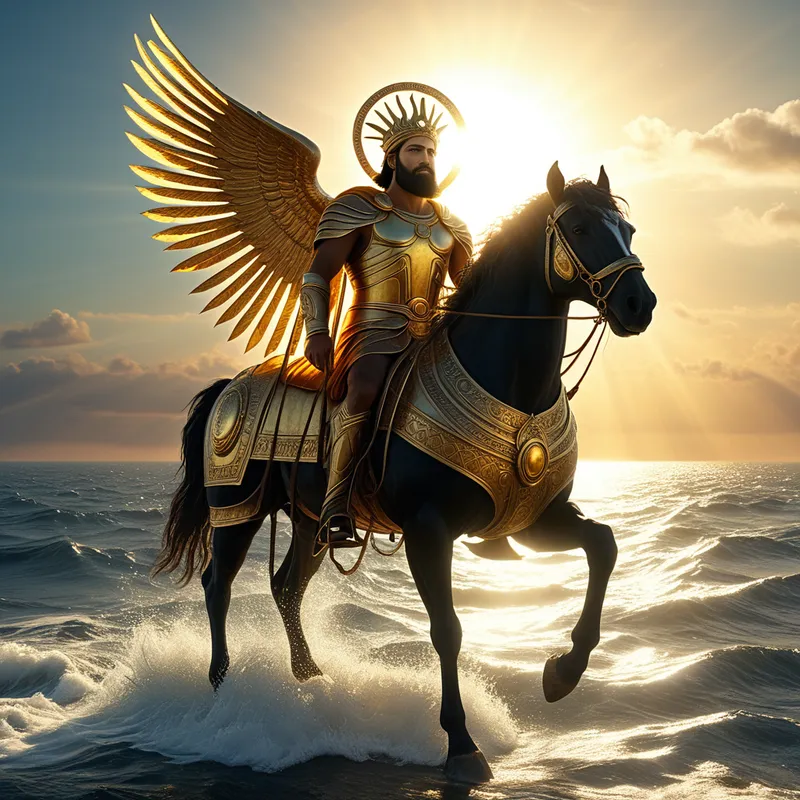
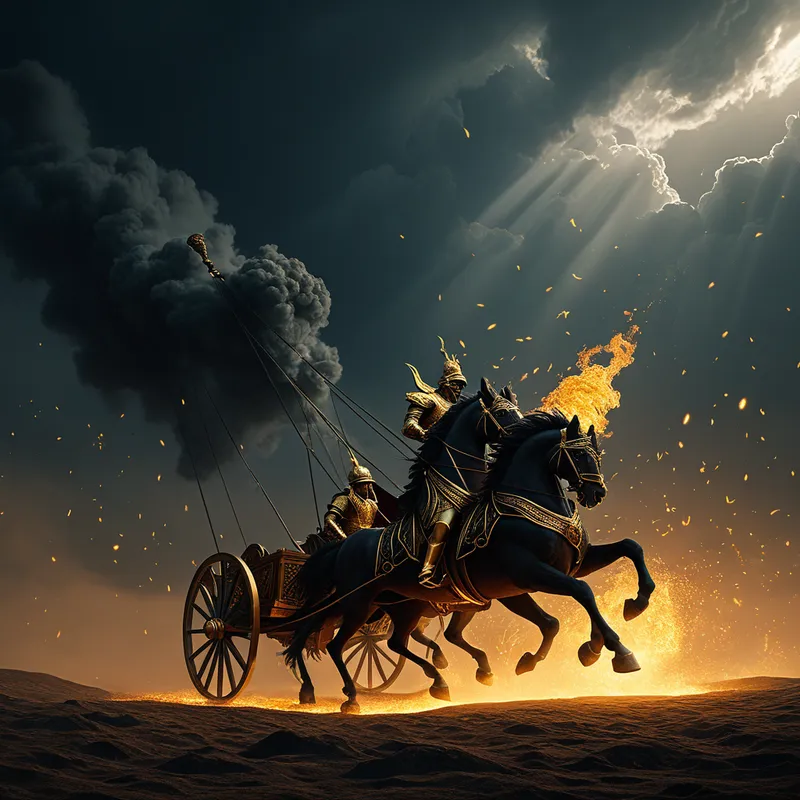
Before Apollo claimed his share of the light, there was one who was the light. His name was Helios. Each day, from the edge of the world in the east, he would rise. Not as a metaphor, but as a god in a chariot of beaten gold, so brilliant it hurt the soul to behold. Four immortal steeds, Pyrois, Eous, Aethon, and Phlegon, breathed not air but pure fire, their hooves striking sparks from the vault of heaven.
He drove his course with an unerring hand, a solitary sovereign on a road of air. From his celestial height, he saw everything. The secret embrace of lovers in a grove, the oath sworn in a darkened room, the silent theft in a crowded market—nothing was hidden from the gaze of Helios. He was the great witness, the eye that never slept.
His palace lay in the far east, a place of shimmering columns and light so dense it was like liquid gold. And in the far west, where the ocean drank the sun each evening, his other palace waited, and a golden boat to carry him back through the subterranean rivers of night, beneath the weight of the world, to begin again.
But the heart of this tale is not his constancy, but its shattering. It begins with a boy, Phaethon, who came to the eastern palace, seeking proof of his divine father. Helios, moved, swore by the dread river Styx to grant any wish. The boy, in his mortal folly, asked for the one thing he should not: to drive the chariot of the sun for a single day.
A silence fell in the hall of dawn. Helios, bound by his oath, felt a coldness deeper than any night river. He pleaded, he warned of the untamed fury of the horses, of the dizzying height, of the certain doom. But the boy’s heart was set on glory. As the first fingers of rose touched the sky, Helios anointed his son’s face with sacred oil to ward off the flame, placed the golden reins in his unskilled hands, and whispered a prayer that was lost in the snorting of the steeds.
The ascent was chaos. The horses, sensing weakness, bolted from the path. They soared too high, freezing the stars, then plunged too low, scorching the earth. Rivers boiled away into steam, mountains caught fire like kindling, and the skin of the great Libya cracked and bled into sand. The world screamed under the erratic eye. Finally, to save all creation, Zeus had no choice but to strike the chariot from the sky with a thunderbolt of terrible finality. Phaethon fell like a shooting star, burning into nothingness, and his weeping sisters were transformed into amber-teared poplar trees.
And Helios? He took up the reins once more the next day, and the day after that. The chariot resumed its perfect, terrible arc. But the light that now fell upon the scarred earth was a grieving light, a light that had witnessed the cost of its own power, a light that now carried the memory of ashes within its gold.
Cultural Origins & Context
The worship of Helios is ancient, predating the more anthropomorphic and complex Olympian pantheon. He is a relic of a proto-Indo-European sun deity, a fundamental natural force personified. In early Greek culture, he was not merely a god in the sun; he was the solar disc itself, a visible, daily miracle of cosmic order. His myths were not the center of a cult with vast temples like Zeus or Athena, but were woven into the fabric of daily life and broader mythological cycles.
His story was preserved primarily through epic poetry, like Homer’s Odyssey, where he is the powerful owner of the sacred cattle on Thrinacia, and through later literary sources such as Ovid’s Metamorphoses, which gives us the poignant, detailed tragedy of Phaethon. He was the god invoked in oaths, for he saw all transgressions. His societal function was as a guarantor of cosmic law and a reminder of the visible, objective truth—a counterpoint to the more politicized and human intrigues of Olympus. He represented a principle older than the polis: the undeniable fact of the day, the cycle that no mortal king could alter.
Symbolic Architecture
Helios is the archetype of consciousness itself. His chariot is the vehicle of the aware self, moving through the sky of the psyche. His unswerving path is the necessary, often monotonous, journey of bringing light—of making things conscious.
To see all is to bear the weight of all. The sun does not choose what it illuminates; it simply reveals.
His primary symbols are profound. The Chariot represents the disciplined structure of the ego, the necessary vehicle to harness and direct the immense, primal energy of the life force (the horses). The All-Seeing Gaze symbolizes objective consciousness, the faculty of awareness that witnesses our thoughts, actions, and motives without judgment—a precursor to the modern psychological concept of the observing ego. The Stable Path across the sky is the law of nature and psychic order, the consistent application of consciousness that makes life sustainable.
The tragedy of Phaethon is the myth of inflated ego-consciousness. The boy is the untested, arrogant aspect of the psyche that desires the glory and power of consciousness (the chariot) without the strength, discipline, or wisdom to guide it. His disastrous ride is the psyche run amok when the immature ego is at the helm: manic inflation (flying too high) followed by scorching depression and rage (flying too low), culminating in a catastrophic crash that forces divine intervention (a necessary, painful correction from a higher authority within the Self).
The Dreamer's Resonance
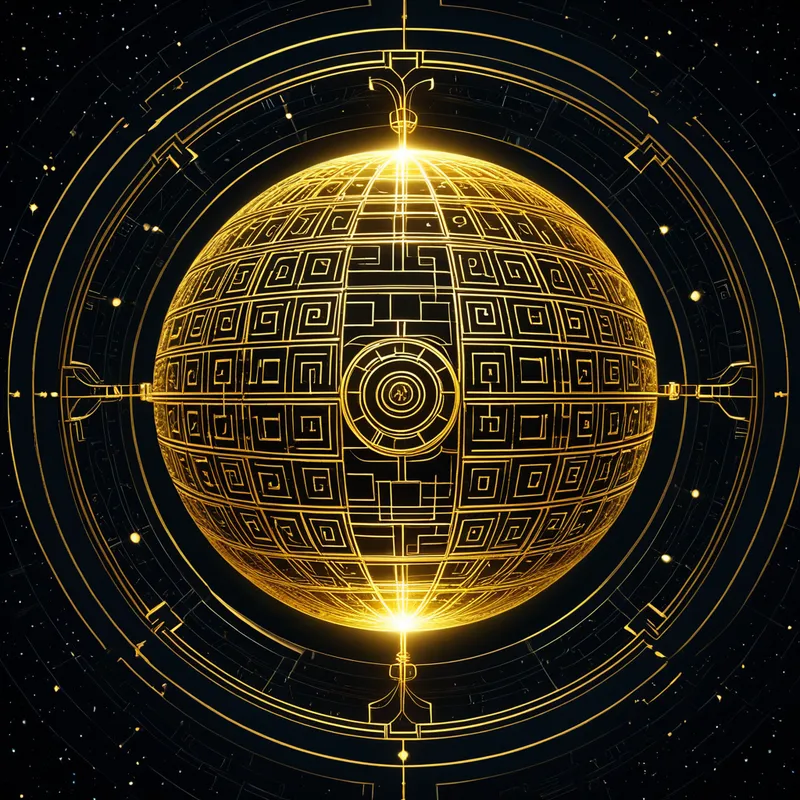
When the pattern of Helios appears in modern dreams, it speaks to a critical phase in the dreamer’s relationship with their own consciousness and vitality.
Dreaming of a blinding, oppressive light or a sun that stands still suggests a psyche overwhelmed by too much consciousness. It is the feeling of being unable to escape self-scrutiny, analysis, or the harsh light of truth about one’s situation. The dreamer may be in a state of hyper-vigilance or intellectual overdrive, scorching their own emotional ground.
Dreaming of driving a powerful, out-of-control vehicle, especially one that is luminous or fiery, directly echoes the Phaethon complex. This often manifests when an individual has recently attained a new position, power, or insight but feels terrified and incompetent at managing it. The somatic experience is one of panic, vertigo, and burning anxiety—the feeling that one’s newfound energy is destroying everything around them.
Conversely, dreaming of witnessing a beautiful, serene sunrise from a place of safety can indicate the successful integration of this archetype. It is the somatic feeling of clarity, warmth, and peaceful order returning after a period of chaos or darkness. The dreamer is aligning with their true path.
Alchemical Translation
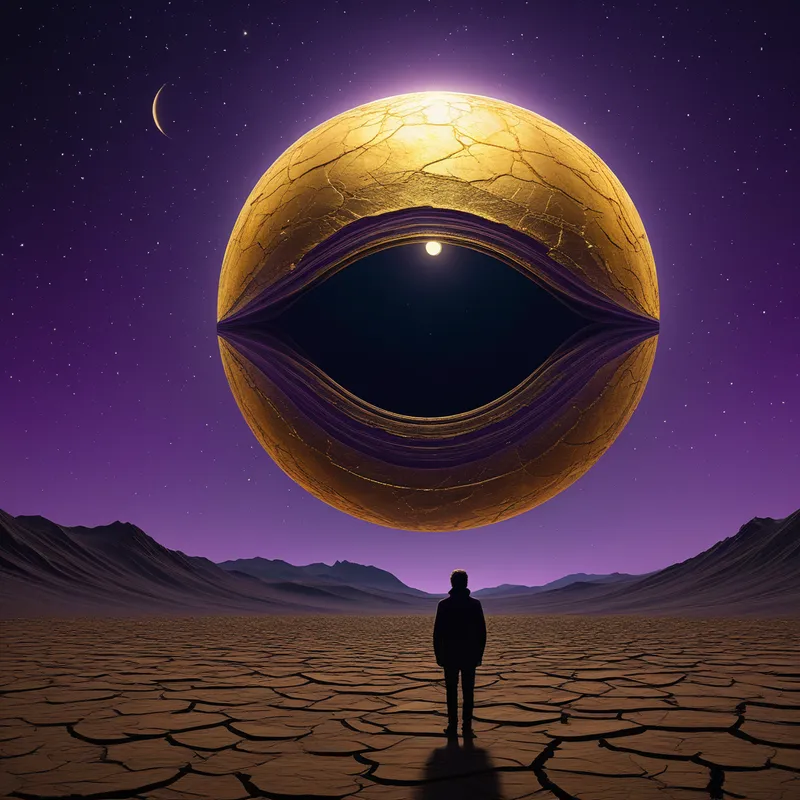
The alchemical journey modeled by Helios is the opus contra naturam—the work against nature—of sustaining consciousness. The base material is the chaotic, primal life force (the untamed horses of instinct). The goal is not to extinguish this force, but to harness it into the Aurum Potabile, the drinkable gold of enlightened, sustainable selfhood.
The first stage is Separation: recognizing the conscious self (Helios) as distinct from, yet responsible for, the instinctual drives (the horses). The second is Conjunction, the perilous marriage of the two, as when Helios places the reins in Phaethon’s hands. This stage is fraught with danger, for if the ego inflates with this power (identification with the archetype), it leads to the Nigredo, the blackening—the scorched earth of Phaethon’s fall.
The crucible of the self is the chariot. The fire that destroys is the same fire that illuminates; the difference is in the hand that guides it.
The necessary Mortificatio is the thunderbolt of Zeus. It is the humbling, often painful, intervention from a higher order of the psyche that shatters the inflated ego to save the totality of the Self. For the modern individual, this is the crisis that follows a major failure born of arrogance—a crash that forces a fundamental re-evaluation of one’s relationship to power, ambition, and truth.
The final stage is Solificatio, the making of the sun. This is Helios resuming his drive. It is the conscious self, now tempered by tragedy and humility, reintegrating its duty. The light it now sheds is not naive, but wise. It carries the memory of the scorch marks within its rays. The individual learns to drive their own chariot not for glory, but for the sake of the journey itself, bearing the burden of their own witness, day after day, in a faithful, grieving, and radiant arc.
Associated Symbols
Explore related symbols from the CaleaDream lexicon:
- Daytime
- Smart Glasses
- Sunset Cliffs
- Sunshine
- Blistering Sun
- Hazy Sunset
- Horse-drawn Carriage
- Magic Chariot
- Helios
- Citrine Sphere
- Sunstone Orb
- Sunstone Fragment
- Sunstone Nugget
- Desert Sun
- Peach-tinged Sunset
- Giant Sunflower
- Solar Panel
- Sunstone Gem
- Solar-Powered Home
- Sunlit Sunroom
- Sunset Horizon
- Sunset Over Cityscape
- Sunset Over Ruins
- Sunrise over a Temple
- Sunset Over Sanctuary
- Rays of Sunlight
- Sun-Dried Grains
- Sunset over Fields
- Sunrise Over Mountains
- Warmth of the Sun
- Sunrise Over Valley
- Blazing Sun
- Sun-Kissed Tides
- Morning Sun
- Solar Radiance
- Golden-hour
- Day
- Clockwise
- Ecliptic
- Solar
- Noon