
Harpoon of the Sea Spirit Myth Meaning & Symbolism
A hunter's desperate quest to retrieve his lost harpoon from the Sea Spirit, leading to a transformative encounter in the depths of the world.
The Tale of Harpoon of the Sea Spirit
Listen. The wind does not just blow; it carries the whispers of the ice. The sea does not just move; it breathes with a living soul. In the time when the world was a conversation between human hunger and animal consent, there lived a hunter. He was skilled, his arm strong, his eye true. His harpoon, bound with sinew and tipped with sharpened bone, was an extension of his will, a promise to his family.
One day, under a sky the color of a bruise, he sighted a great seal. It was a lord of the ice, fat with life. The hunter cast his harpoon. It flew true, biting deep. But the seal was a creature of profound spirit, and in its death-throes, it plunged into the black water, pulling the hunter’s line, his harpoon, his very livelihood, down into the crushing dark. The line snapped. The harpoon was gone.
Despair is a cold heavier than any ice. Without his harpoon, the hunter was less than a man; he was a mouth with no means to feed it. He could not return to the iglu empty-handed. So, driven by a need deeper than fear, he did the unthinkable. He weighted himself with stones. He whispered an apology to the air. And he let himself sink into the world below.
Down he fell, past the realm of seals and fish, into a silence so complete it rang in his ears. The water grew warmer, stranger. He landed not on the sea floor, but on a path. It was a shore of sorts, in the belly of the ocean. Before him stood a great dome of ice and whalebone—the house of Sedna, the Spirit of the Sea.
Her form was vast and terrible. Where hands should be, she had great flippers. Her hair, long and tangled, swarmed with the creatures of the deep—seals, walruses, whales, all swimming in the dark river of her tresses. She was the source of all life he hunted, and she was enraged. The harpoon, his harpoon, was lodged in the wall of her home. It had pierced her realm.
She turned a gaze upon him that held the pressure of the abyss. “You dare enter my house, you who take and take?” her voice was the grinding of pack ice.
The hunter, his lungs burning with need and awe, did not plead for his tool. He fell to his knees. He spoke not of his hunger, but of his respect. He confessed the necessity of the hunt, the sacredness of the gift, and the terror of its loss. He offered not excuses, but acknowledgment. He saw her, not as a monster to be appeased, but as the Mother of the Hunt, wounded by the carelessness of those above.
A long silence hung between them, filled only with the fluid dance of the animals in her hair. Then, a shift. The wrath in her eyes softened to a profound, weary knowing. With a motion of her flipper, she gestured to the harpoon. “Take it,” she said, her voice now the sigh of calm seas. “But remember this sight. You do not own the hunt. You are its humble partner. Your weapon is a bridge, not a claim. Tell your people. The sea gives, but it also remembers.”
The hunter, trembling, retrieved his harpoon. As he touched it, a new understanding flowed into him—the weight of reciprocity. When he returned to the surface, gasping on the ice, he was changed. And his hunt, from that day forward, was never the same.

Cultural Origins & Context
This myth, in its many variations, is a cornerstone of Inuit worldview, told across the circumpolar Arctic from Alaska to Greenland. It was not mere entertainment but a vital teaching story, shared in the qargi during the long winter nights by elders and storytellers. Its primary function was pedagogical, encoding the essential laws of survival and spirituality.
The narrative served as the mythological underpinning for a complex system of inua—the spiritual essence residing in all things. Every animal had an inua, and Sedna was the supreme inua of marine mammals. The story explained the direct causal link between human action (respect or disrespect in the hunt) and divine consequence (abundance or scarcity of game). The hunter’s journey to Sedna’s realm mirrored the shaman’s (angakkuq) spirit-journeys undertaken to soothe the goddess when taboos were broken and animals withheld themselves. Thus, the myth justified and sanctified the angakkuq’s role as psychopomp and healer of the communal relationship with the unseen world.
Symbolic Architecture
At its core, the myth is a map of a conscious relationship with the Source. The Sedna is not a distant deity but the embodied psyche of the environment itself—the unconscious, fecund, and potentially wrathful source of all life-sustaining nourishment.
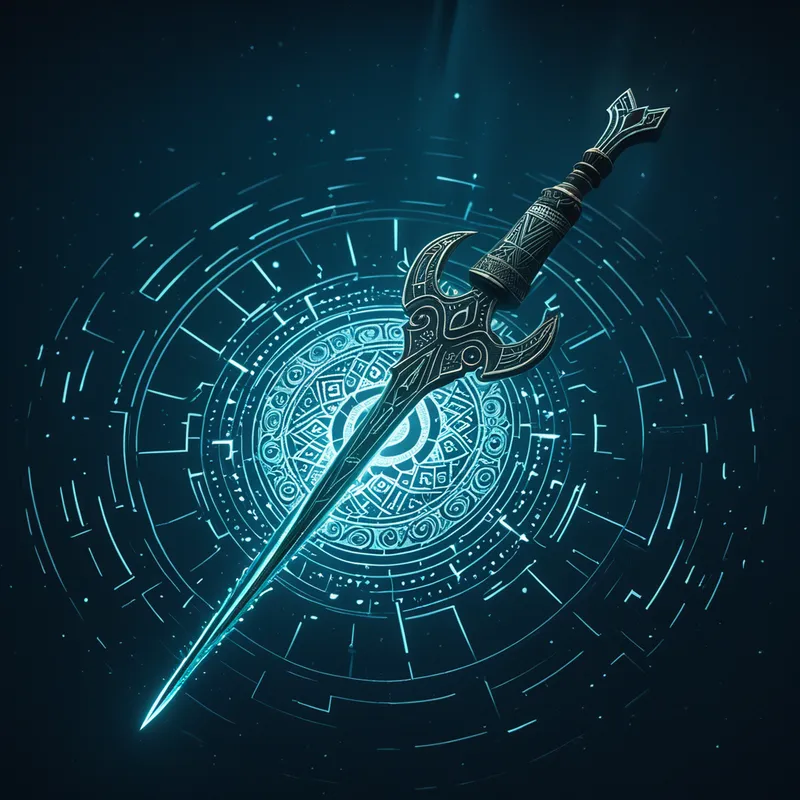
The harpoon is the focused will of the ego, necessary for survival, yet perpetually at risk of becoming a weapon that wounds the very source it depends upon.
The hunter’s loss represents the inevitable crisis: the moment when our directed consciousness (the hunt) fails, and we are confronted with the consequences of our actions upon the deeper Self (the sea). His descent is the quintessential katabasis—a voluntary journey into the underworld of the psyche, weighted with the gravity of his situation. Sedna’s domain is the collective unconscious, teeming with the archetypal forms of life (the animals in her hair). His successful return hinges not on force, but on submission, recognition, and the heartfelt articulation of a fundamental truth: that we are in relationship, not in control. The retrieved harpoon is now a symbol of this redeemed, conscious partnership.
The Dreamer's Resonance
When this myth stirs in modern dreams, it often signals a profound psychological process related to loss, responsibility, and sourcing. To dream of losing a crucial tool or weapon into deep water speaks to a fear of lost potency, a failure of one’s directed will in the world. The somatic feeling is often one of sinking, of being pulled down by a weight.
The subsequent dream-journey into a strange, sub-aquatic realm indicates that the psyche is initiating a necessary descent. The dreamer is being called to account for how they have “harpooned” their sustenance—be it through their career, creativity, or relationships. Have they taken without acknowledgment? Has their focused striving wounded a deeper, more instinctual part of themselves? The encounter with the immense, tangled Sea Spirit is the ego facing the neglected, perhaps angry, aspect of the Great Mother archetype—the source of our vitality who demands respect. Resolution in such dreams comes not through fighting, but through the humility of the kneeling confession, the act of seeing the consequence of one’s actions on the soul-level. One awakens with a sense of a burdensome truth being shouldered, and a new, more sacred contract being formed with one’s own depths.

Alchemical Translation
The myth perfectly models the alchemical and Jungian process of individuation. The hunter begins in a state of identification: he is his harpoon, his skill, his social role. The loss is the necessary nigredo, the blackening, the crisis that dissolves this brittle identity.
The descent is the solutio—the dissolution of the ego in the waters of the unconscious. One must become lost in the sea to find its spirit.
His confrontation with Sedna is the coniunctio, the sacred marriage. It is not a union of love, but of profound recognition between the conscious mind (the hunter) and the animating spirit of the unconscious (Sedna). His humble speech is the offering that transforms the relationship from one of predation to one of dialogue. The retrieval of the harpoon is the albedo, the whitening. The tool is not merely returned; it is transmuted. It is no longer a simple instrument of taking, but a symbol of a conscious, ethical connection to the source. He returns to his community (rubedo, the reddening) not just with food, but with a new myth to live by—a myth of wholeness that acknowledges the shadow side of our sustenance and sanctifies the cycle of give, take, and give thanks. The individual becomes a vessel for a more conscious life, grounded in the terrifying and beautiful pact with the deep.
Associated Symbols
Explore related symbols from the CaleaDream lexicon:
- Harpoon Point — The focused, penetrating intention of the conscious will, necessary for action in the world but capable of wounding the source if used without reverence.
- Ocean — The vast, unconscious psyche, the source of all life and deep emotion, both nourishing and perilous, representing the unknown depths of the self.
- Sacrifice — The voluntary offering of pride, certainty, or old ways required to enter into right relationship with a greater power, as seen in the hunter's descent and confession.
- Journey — The essential descent (katabasis) into the underworld of the psyche, a perilous voyage that is necessary for healing, knowledge, and the retrieval of lost power.
- Spirit — The animating essence (inua) within all beings, central to the myth's worldview where animals, the sea, and tools all possess conscious spirit.
- Mother — The archetypal Great Mother in her dual aspect: Sedna as the nourishing source of all marine life and the wrathful guardian who withholds when disrespected.
- Shadow — The repressed consequences of our actions, embodied by Sedna's wrath and the hunter's forced confrontation with the results of his hunt in the psychic deep.
- Key — The redeemed harpoon and the hunter's newfound understanding, which unlocks a sustainable, sacred relationship between humanity and the generative forces of nature.
- Goddess — The sovereign, non-human feminine power, Sedna, who governs the rhythms of life and death and demands ethical engagement from those who depend on her bounty.
- Bone — The material of the harpoon tip, representing the essential, stripped-down framework of survival, truth, and connection to ancestral ways and the animal world.
- Dream — The myth itself functions as a collective dream, and the hunter's journey mirrors a visionary state where the boundaries between worlds dissolve for teaching.
- Ritual — The prescribed acts of respect, taboo, and shamanic mediation that the myth justifies, forming the sacred protocols for maintaining cosmic and communal balance.