
Hafez and the Beloved Wine Myth Meaning & Symbolism
A mystic poet seeks the divine Beloved, finding the sacred not in ascetic denial but in the intoxicating wine of spiritual ecstasy and union.
The Tale of Hafez and the Beloved Wine
Listen, and let the dust of centuries settle. In the city of Shiraz, under a sky pierced by minarets and perfumed by night-blooming jasmine, there lived a man whose soul was a lute strung too tight. His name was Hafez. He was a scribe of mundane accounts by day, but by night, a wanderer in the deserts of longing. He sought the Face behind all faces, the Name whispered in the rustle of leaves and the silence between heartbeats.
The orthodox path of stern prayer and rigid doctrine felt to him like a cage of dry thorns. His prayers were not answered with clarity, but with a deeper, more agonizing thirst. One evening, in despair, he wandered beyond the city walls to a ruined garden. There, beneath the skeletal branches of a cypress tree, he found not a holy man, but a radiant figure—the Beloved—manifest not as an angel or a king, but as a humble vintner. The Beloved held a single cup, filled not with water from a sacred spring, but with a wine so dark it seemed to drink the moonlight.
“You seek to quench your thirst with rules,” the Beloved said, His voice like distant thunder and close honey. “But I offer the vintage of the Vineyard of Al-Haqq. Drink, and know.”
Hafez hesitated. Wine was forbidden, a symbol of heedlessness. To drink was to risk his standing, his piety, his very self. Yet the love in the Beloved’s eyes was an ocean, and his own self was but a drop longing to vanish within it. The conflict tore him. The world of order and the mosque stood behind him; the intoxicating, unknown ecstasy of union beckoned before him.
With a cry that was both surrender and triumph, Hafez took the cup. He did not sip; he drank deeply. The wine was fire and ice, sweetness and a searing pain that dissolved the very boundaries of his being. The walls of the mosque, the lines in the holy book, the name ‘Hafez’ itself—all began to shimmer and melt like wax. He did not become drunk with foolishness, but sober to a terrifying, glorious reality. He saw the Beloved’s face in every stone, heard the Beloved’s voice in every breeze. The tavern and the mosque became one; the sinner and the saint were revealed as the same lonely traveler. The resolution was not an answer, but a vanishing. The seeker was gone, and only the Sought remained, singing through his lips the ghazals that would echo through time.

Cultural Origins & Context
This is not a myth of antiquity, but one woven in the 14th century from the lived experience of the historical poet Hafez of Shiraz. It emerged from the rich tapestry of Sufism in Persia, a tradition that used poetic metaphor (ishara) to express truths considered inexpressible in conventional theological language. The “myth” is distilled from his Divan, a collection of hundreds of ghazals (lyric poems).
The tale was passed down not by bards around a fire, but by Sufi masters and disciples in khanqahs (lodges), and by everyday people who found in Hafez’s verses a mirror for their own spiritual anguish and aspiration. Its societal function was dual: for the mystic, it was a map of the path to fana (annihilation in God); for the common person living under often oppressive religious and political structures, it was a coded language of liberation, celebrating an inner, unassailable freedom found in love’s intoxication, not in external conformity.
Symbolic Architecture
At its heart, the myth is a radical allegory of the soul’s journey from separation to union. Every element is a symbolic vessel for a profound psychological and theological truth.
The tavern is the ruined heart, made sacred not by perfection, but by its willingness to be broken open.
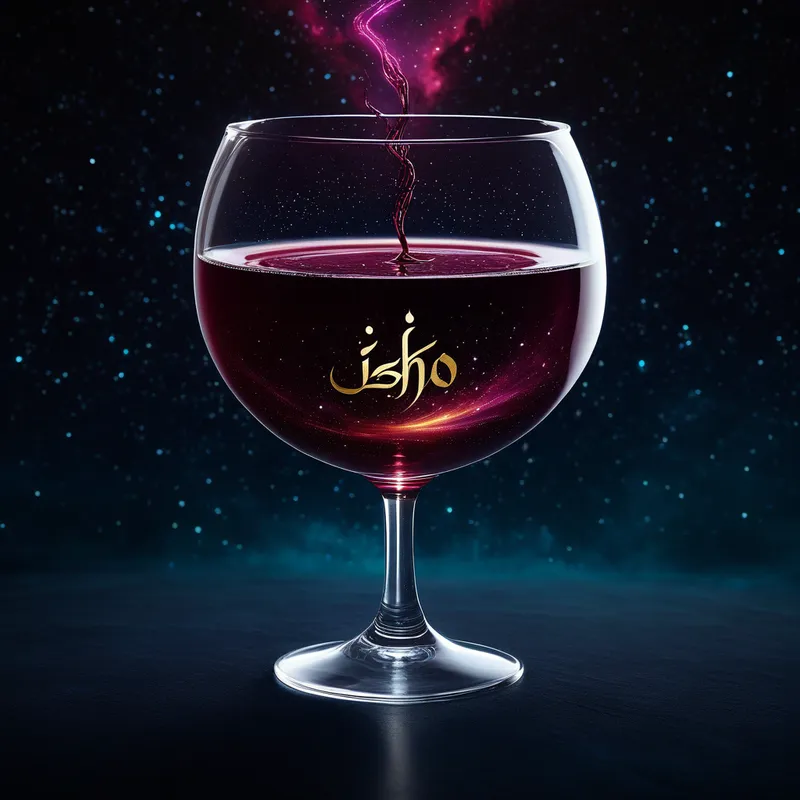
The Wine is the intoxicating essence of divine knowledge and love (ma’rifah and ishq). It is not a substance but an experience—the direct, unmediated encounter with the Real that shatters the ego’s constructed world. The Beloved is the Haqiqah, the ultimate objective of the seeker, who paradoxically initiates the seeking. Hafez, the hero, represents the human ego or lower self (nafs), specifically the nafs that is self-aware and longing (al-nafs al-lawwamah). His conflict is the archetypal battle between the socially-conditioned, rule-bound persona and the soul’s deep, anarchic call to unity.
The act of drinking is the ultimate surrender (taslim), the conscious choice to allow one’s limited identity to be dissolved. The resulting intoxication (sukr) is not a loss of consciousness, but a higher consciousness where the dichotomy of sacred and profane ceases to exist.
The Dreamer's Resonance
When this myth stirs in the modern dreamscape, it signals a profound somatic and psychological process: the ego’s confrontation with a call to deeper integration that feels both ecstatic and terrifyingly disruptive. To dream of being offered a forbidden, radiant wine is to feel the Self (the Beloved) offering the dreamer a chance to drink from their own depths.
One might dream of spilling wine on important documents (the dissolution of old identities), of finding a hidden tavern in a familiar place (discovering sacred space within the mundane), or of a guide who is both disreputable and deeply wise (the Trickster aspect of the Self). The somatic experience is key: a feeling of warmth, expansion, or dizzying liberation in the dream body. This reflects the nervous system processing the possibility of surrendering a rigid, protective structure for a more fluid, authentic, and connected state of being. It is the psyche’s way of rehearsing the death of the old self.

Alchemical Translation
The myth models the individuation process with stunning clarity. The nigredo, the initial blackening, is Hafez’s despair in the ruined garden—the feeling of meaninglessness, of the orthodox path turning to ash. The albedo, the whitening, is the appearance of the Beloved, the symbol of the Self, presenting the transformative agent (the wine).
The cup is the crucible of the heart, where the lead of the ego is transmuted into the gold of the integrated soul through the fire of love.
The drinking is the citrinitas, the yellowing or ignition, where the conscious ego actively engages with the unconscious contents, a process fraught with fear of madness or loss. The final resolution—the poet vanishing into song—is the rubedo, the reddening. This is the culmination: not the ego’s victory, but its graceful dissolution into a wider identity. The individual becomes a vessel for the transpersonal. For the modern seeker, this translates to the moment when one’s personal pain, creativity, or love is experienced not as a private possession, but as a participation in a universal pattern. The “work” is no longer a striving, but a being-lived. The crafted personality becomes a transparent medium for the archetypal Lover to act in the world, creating beauty and connection from a place of unified, rather than divided, consciousness.
Associated Symbols
Explore related symbols from the CaleaDream lexicon:
- Wine — The intoxicating essence of divine love and direct spiritual knowledge that dissolves the boundary between seeker and Sought.
- Beloved — The ultimate divine reality and object of longing, representing the integrated Self that calls the ego to its own annihilation and rebirth.
- Cup — The human heart or soul, the vessel that must be emptied of ego to be filled with the transformative vintage of the divine.
- Tavern — The sacred inner space, often appearing ruined or profane, where the rules of the outer world are suspended for the holy work of intoxication.
- Door — The threshold moment of choice between the known world of religious or social order and the unknown ecstasy of the spiritual path.
- Fire — The searing, purifying quality of divine love that burns away illusion and identity, leaving only essential truth.
- Mirror — The polished heart that, once cleansed by the wine of love, perfectly reflects the face of the Beloved in all things.
- Heart — The central organ of spiritual perception in Sufism, the seat of consciousness that is both the battlefield of conflict and the site of ultimate union.
- Journey — The entire odyssey from the pain of separation (hijr) through the trials of seeking to the arrival (wusul) at union, which is paradoxically a non-place.
- Spilled Wine — The grace that overflows from the experience of union, often appearing as wasteful or scandalous to the outer world, but which nourishes the unseen.
- Mask — The social and religious persona that Hafez must remove or see through to recognize the Beloved and to offer his true, naked face.