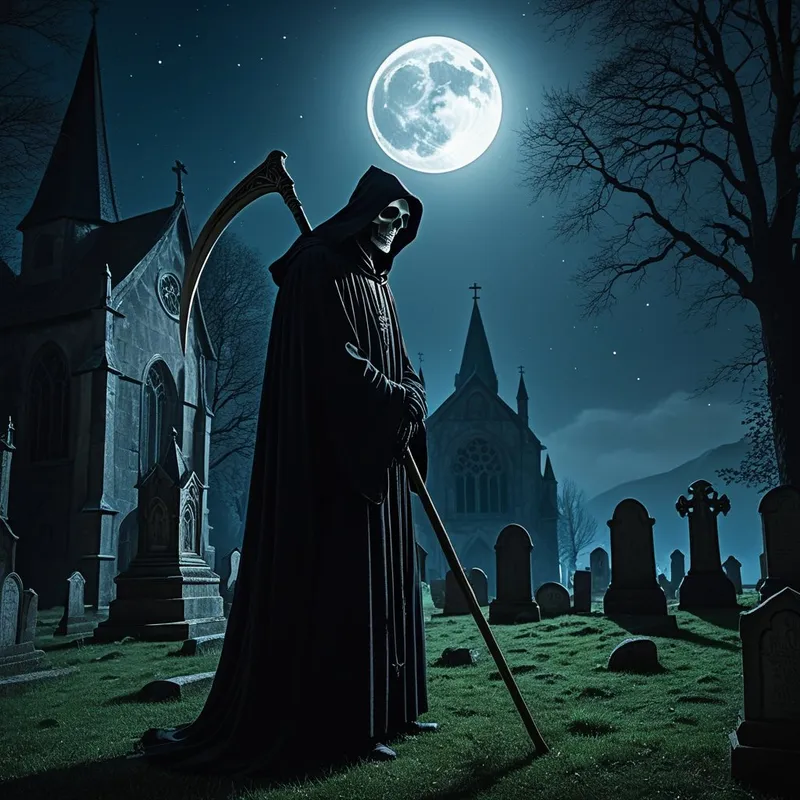
Grim Reaper Myth Meaning & Symbolism
The skeletal figure with a scythe is not a monster but a profound psychopomp, a symbolic guide through the ultimate threshold of the human soul.
The Tale of Grim Reaper
Listen, and feel the chill that is not of winter, but of the soul’s deepest knowing. In the hour when the last candle gutters and the hearth-fire sinks to embers, when the village bell tolls a note that hangs, solitary, in the frozen air—He comes.
He does not ride a pale horse of conquest, nor sound a trumpet of final judgment. His arrival is a silence so profound it has weight. He is a shape woven from the shadows between the tombstones, a whisper in the rustle of fallen leaves. A long, hooded robe, the color of a starless midnight, drapes a form that is less flesh and more essence. From within the deep cowl, the smooth, ivory curve of a skull gazes forward, not with malice, but with an ancient, patient vacancy. In His grasp—always in His grasp—is the scythe. Its blade is a sliver of coldest moonlight, its handle worn smooth by the touch of eternity.
His footsteps make no sound on the frost or the stone. He moves through the sleeping world like a thought of ending. He comes not for kings in their halls, nor paupers in their ditches, but for the time that has been allotted. He is the harvester at the end of the season of life. There is no bargaining in that hollow gaze, no rage in the swing of the blade. It is a motion as natural and as inevitable as the fall of the apple from the bough. The scythe does not cut down; it severs. It severs the silver cord that binds the spirit to its weary clay, the final, taut thread of a story.
And in that moment of severing, there is a sigh—not of pain, but of release. A sigh that is the echo of every first and last breath. The Reaper does not linger. His work is precise, absolute. He turns, the great robe swirling like a pool of ink, and withdraws into the deeper shadows from whence He came, leaving behind only the silent, empty vessel and the indelible mark of the threshold crossed. The night holds its breath, and then, slowly, the world resumes. But it is a world forever altered, for the Reaper has passed, and a soul has been gathered.
Cultural Origins & Context
The figure we name the Grim Reaper is a late and vivid blossom on an ancient tree. Its roots are not strictly in Biblical canon, but in the rich humus of late medieval Christian folk imagination, fertilized by the Black Death. When a third of Europe died, abstract theological concepts like “the wages of sin is death” (Romans 6:23) demanded a face. The Danse Macabre, or Dance of Death, emerged in murals and poetry, depicting Death as a skeletal figure leading emperors, popes, and peasants alike in a final, equalizing procession.
This personification served a critical societal function: a memento mori, a reminder of mortality. In a culture steeped in the drama of salvation, the Reaper was not the end of the story, but the crucial pivot. He was the usher at the door of the afterlife, the necessary agent that delivered the soul to its divine judgment. Priests might have spoken of angels and the Lake of Fire, but the folk knew a more immediate, visceral herald. The Reaper was told of in hushed tones by the hearth, a story to instill both holy fear and a focus on the state of one’s soul. He was a folk-theological compromise—a way to visualize the ineffable moment of transition within a worldview that meticulously charted the journey of the soul.
Symbolic Architecture
Psychologically, the Grim Reaper is the ultimate psychopomp. He is not Death as a state, but Death as the agent of transition. His symbolism is an intricate architecture built on necessity, not evil.
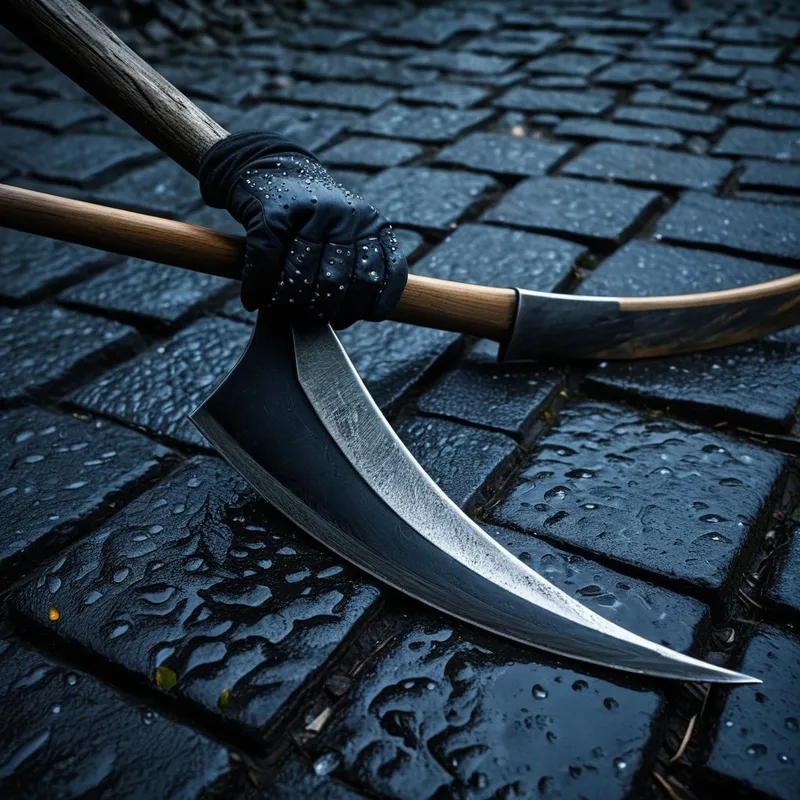
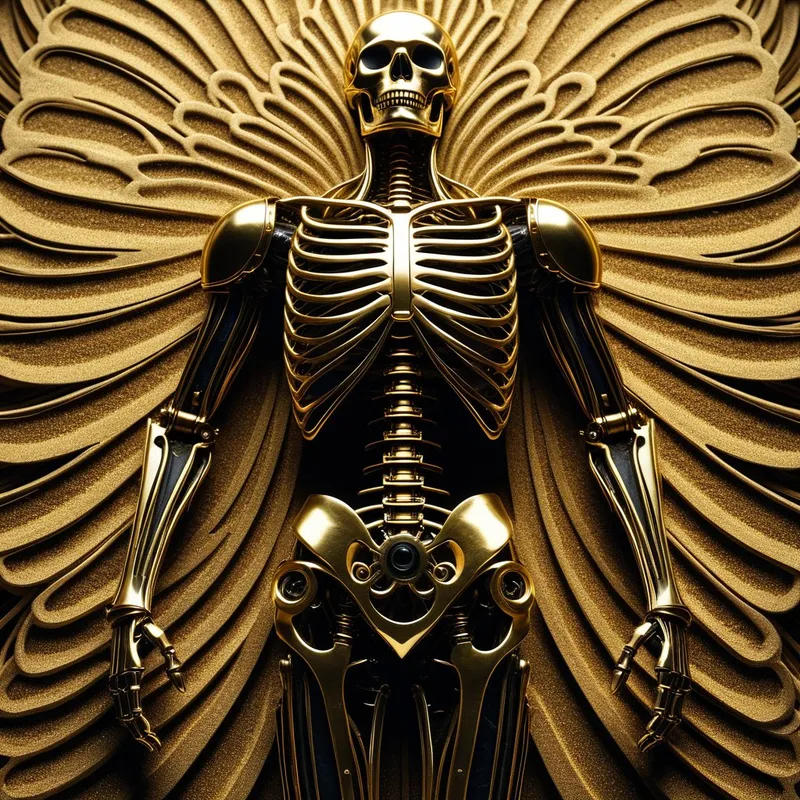
The Skeleton represents the irreducible core, the structure that remains when all that is temporal—flesh, identity, status—is stripped away. It is the blueprint of the human form, the truth beneath the persona. The Black Robe is the void, the unknown, the womb of potential from which all life emerges and to which it returns. It is the cosmic night. The Scythe is perhaps the most profound symbol. It is not merely a weapon; it is an agricultural tool. It harvests ripe grain. This transforms the Reaper from a destroyer into a reaper of seasons, a participant in the cyclical logic of nature and spirit.
The scythe does not attack life; it concludes a cycle, making way for the next. It is the sharp edge of time itself, the instrument of fate’s necessity.
Thus, the Reaper symbolizes the ego’s confrontation with the absolute limit. He is the embodied truth that all things—our plans, our loves, our very sense of self—are temporal. To face Him is to face the annihilation of the personal, the terrifying and necessary step before any form of transcendence or rebirth can occur.
The Dreamer's Resonance
When the Reaper strides into modern dreams, he rarely comes as a figure of pure terror. More often, he appears in dreams of profound transition, loss, or the ending of a major life chapter. Dreaming of a calm, silent Reaper observing you may signal that a part of your psyche—an outworn attitude, a toxic relationship, a former identity—has reached its natural end and must be “harvested” to make psychic space.
The somatic experience in such dreams is often one of chilling stillness, a frozen awe. There is a confrontation with an authority beyond reason or appeal. This is the Self, in its most severe aspect, enforcing a necessary death within the personality. If the dream-Reaper is aggressive or chasing, it may point to a conscious resistance to this inner process, a panic of the ego clinging to what must be released. The Reaper in dreams is ultimately a symbol of the psyche’s own imperative toward growth, which always requires the death of what currently is.
Alchemical Translation
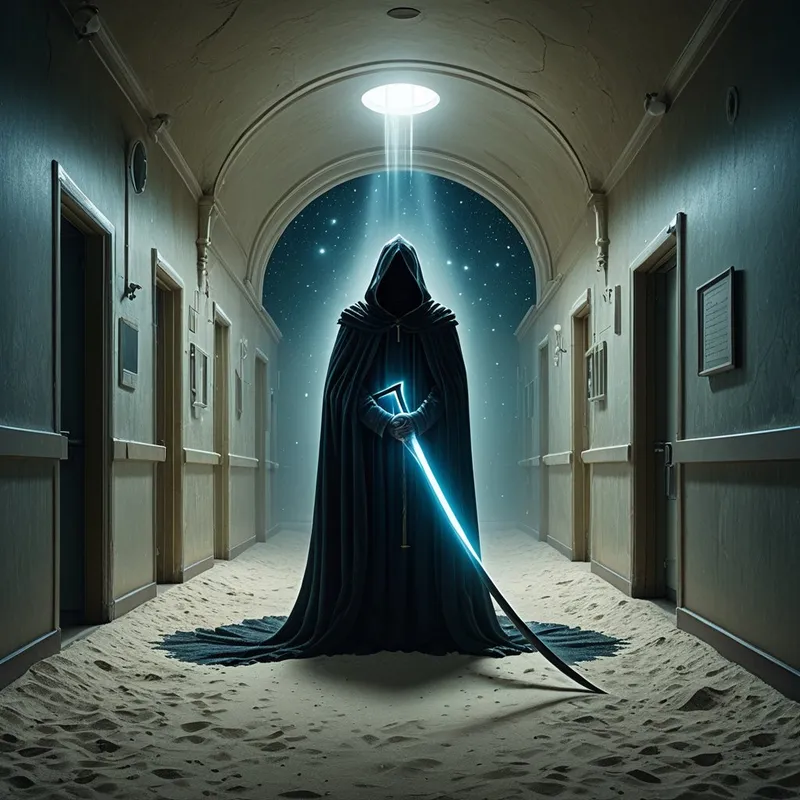
In the alchemical journey of individuation—becoming who one truly is—the Grim Reaper models the crucial stage of nigredo. This is the dark night of the soul, where all that was familiar and constructed must dissolve.
The modern individual does not face physical death, but the death of illusions: the illusion of permanent security, the perfect persona, the endless future. The Reaper’s scythe represents the ruthless, introspective work of cutting away these psychic attachments. We must become the Reaper for our own outmoded selves.
To integrate the Reaper is to willingly take up the scythe of self-honesty and sever the ties to who you thought you were, so that who you are may emerge.
This is not a morbid act, but one of profound courage and renewal. By consciously engaging with this “death”—ending a career, leaving a relationship, abandoning a cherished belief—we perform the Reaper’s work ourselves. We move from being passive victims of fate to active participants in our own transformation. We harvest the wisdom of the completed cycle and prepare the fallow ground of the soul for a new sowing. In this light, the Grim Reaper is not a monster from a dark myth, but the most severe and necessary of inner guides, the sage who knows that every true beginning is irrevocably wed to an end.
Associated Symbols
Explore related symbols from the CaleaDream lexicon: