Good Samaritan Myth Meaning & Symbolism
A parable of radical compassion where a despised outsider becomes the true hero, revealing that salvation is found not in doctrine, but in the act of merciful encounter.
The Tale of Good Samaritan
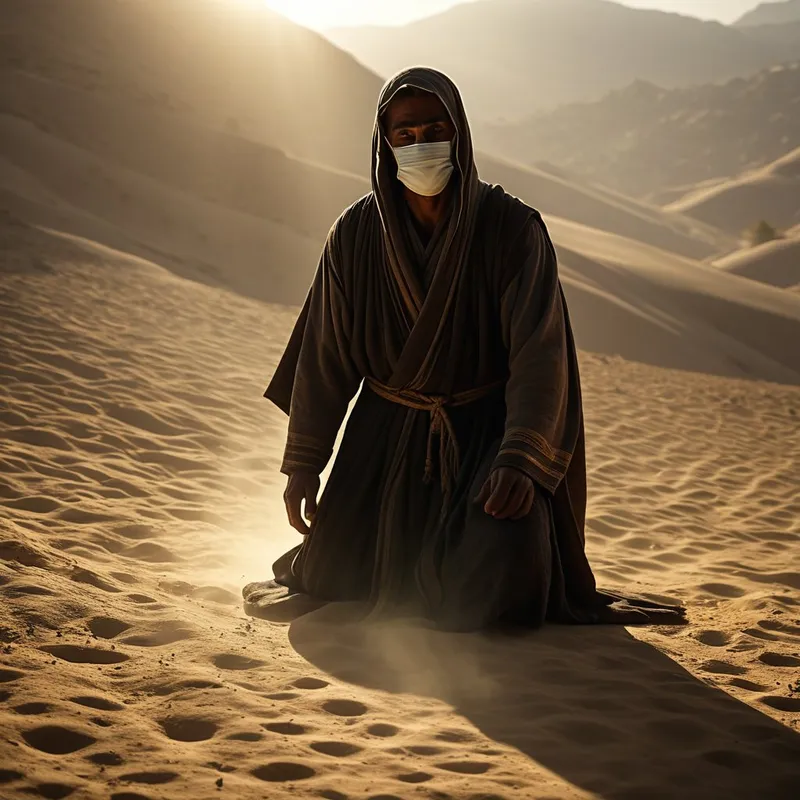
The road from Jerusalem to Jericho is a gash in the earth, a winding descent through a wilderness of stone and thorn. It is a place where the sun is a hammer and the shadows are thieves. On such a road, a man—just a man—was traveling. He carried with him the simple faith of his people, the dust of the temple on his sandals. But the road does not care for faith. From the rocks, violence descended. They stripped him, beat him, took what he had, and left him as broken as the stones, half-dead in the ditch where the sun would finish the work.
Time passed, measured by the pulsing pain in his skull. First, the sound of footsteps—measured, solemn. A priest of the temple, a man of God, was coming down that road. He saw the shape in the ditch. His soul flinched. The law whispered of impurity, of ritual defilement by contact with blood, with death. His duty was to the altar, not to the ditch. He passed by on the other side, his robes a whisper of sanctity against the cruel ground.
More time, more pain. Then, a Levite, a servant of the holy place. He came, he looked, he paused. His mind was a scroll of codes—what was required, what was forbidden? The risk was too great, the ambiguity too profound. To touch was to become entangled. He, too, passed by, adding the shadow of his rejection to the weight upon the broken man.
Then came a third. Not on foot from Jerusalem, but from the north, from the lands of the despised. A Samaritan. He had no business on this road, no temple to serve. He was the other, the heretic, the one every child of Jerusalem was taught to avoid. He traveled, and he saw.
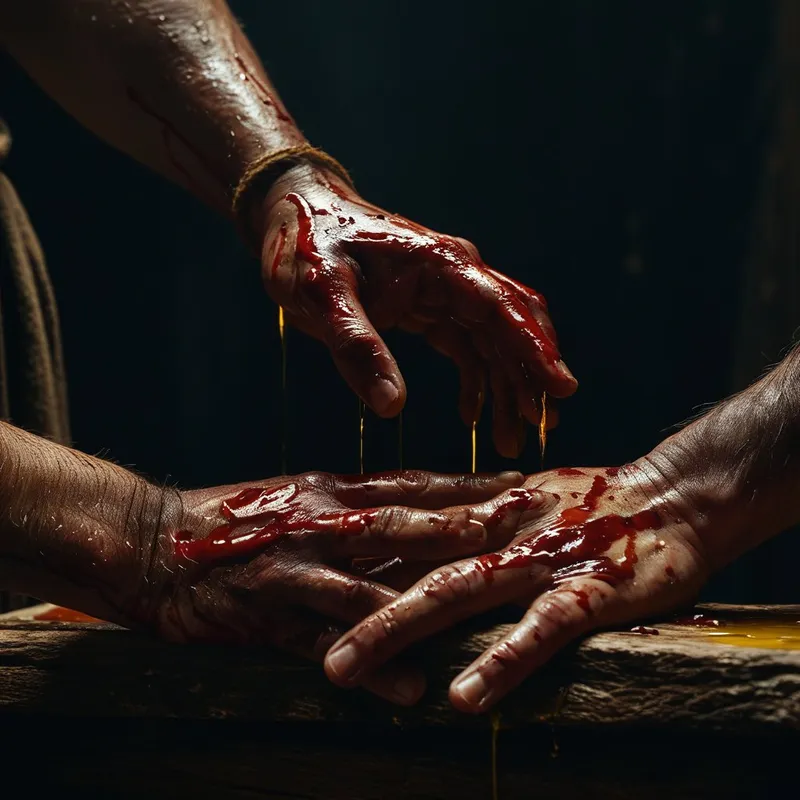
But his seeing was different. It was not a calculation of law or risk. It was a visceral, gut-punched recognition. This could be me. His heart did not flinch; it broke open. He went to him. He did not send a prayer ahead; he knelt in the filth and the blood. He poured oil and wine onto the wounds—the oil to soothe, the wine to cleanse—not from a healer’s kit, but from his own journey’s provision. He tore his own garments for bandages. He lifted the dead weight onto his own beast, walking while the wounded rode. He brought him to an inn, a place of common mercy. He paid for his care, and his promise held the future: “Whatever more you spend, I will repay you.”
The road was silent again. But everything had changed.
Cultural Origins & Context
This story is not an ancient folktale but a parable, a teaching weapon of immense precision, delivered by Jesus of Nazareth and recorded in the Gospel of Luke. It was told not to a crowd of admirers, but to a legal expert seeking to test him, asking, “Who is my neighbor?” The question sought a limit, a boundary for the command to “love your neighbor.” The culture was one of meticulously defined purity, ethnicity, and religious obligation. Priests and Levites were not villains; they were upholders of a system that prioritized sacred duty over profane accident.
The parable was a cultural explosive. By making the hero a Samaritan, Jesus inverted the entire social and religious hierarchy. Samaritans were the ultimate “not-neighbor,” considered racially mixed and theologically corrupt. The story’s function was to shatter the container of the question itself. It redefined “neighbor” not as a category you belong to, but as an act you perform. It was passed down not as a myth of gods, but as a radical ethic of humanity, embedded in the foundational texts of what would become a world religion, forever challenging its adherents to see the face of the divine in the face of the broken stranger.
Symbolic Architecture
The myth’s power lies in its stark symbolic architecture. Each figure represents a part of the human psyche confronting the shock of suffering.
The Wounded Traveler is the Shadow made flesh. He is our own vulnerability, our brokenness, everything we fear will befall us and everything we despise when we see it in others. He is life itself, assaulted and left for dead.
The Priest and the Levite symbolize the Persona and the rigid structures of the conscious mind—the rules, the doctrines, the identities we cling to for safety. They are not evil; they are inadequate. They represent the psyche’s first, failed response to the Shadow: avoidance, denial, passing by on the other side of the road to preserve the illusion of wholeness.
The true neighbor is not found in proximity of blood, but in proximity of heart. It is the one who makes the suffering of the other their own business.
The Good Samaritan is the unexpected emissary from the unconscious, the Self. He is the despised, rejected part that holds the key to healing. He acts not from law but from compassion—literally, “suffering-with.” His tools are profound symbols: oil (the spirit of consolation, anointing, the sacred), wine (the spirit of life, blood, passion, and also antiseptic truth), bandages (binding, integration), and the inn (the temporary container of the psyche, the therapeutic space). He pays the price, promising full restoration. He is the archetypal Caregiver, but one who emerges from beyond the walls of tribe and tradition.

The Dreamer's Resonance
When this myth stirs in the modern dreamer, it signals a profound somatic and psychological crossroads. To dream of being the wounded one on the side of the road is to feel utterly abandoned by one’s own inner resources—the “priests and levites” of one’s ambition, intellect, or social self have passed by. It is a crisis of meaning, a call for radical self-care.
To dream of being the one who passes by, filled with disgust or fear, points to a hardened heart, a refusal to acknowledge one’s own pain or the pain one causes. The psyche is signaling a dangerous split.
Most powerfully, to dream of being the Samaritan—to kneel in the muck of one’s own or another’s despair—marks the beginning of profound integration. This is not a pleasant dream. It is heavy, urgent, and deeply somatic. You feel the weight of the body, the stickiness of the oil, the strain of lifting. The dream is initiating you into the act of compassion, which is always an act of courage. It is the ego consenting to be guided by the deeper, wiser Self, to perform the messy, costly, and utterly necessary work of binding the wounds you have long ignored.

Alchemical Translation
The parable is a perfect map of psychic alchemy, the Individuation journey. The process begins with the nigredo—the blackening. The traveler is stripped, beaten, left in the ditch. This is the necessary dissolution of the old, naive identity (“I am safe, I am righteous, I am whole”).
The passing-by of priest and Levite represents the albedo—the whitening—but in its failed, sterile form. It is an attempt to purify by separation, to rise above the mess. It fails because it refuses the base material of suffering.
The alchemical gold is not manufactured in the temple of purity, but forged in the filthy ditch of shared humanity. The healer and the healed are transmuted together.
The Samaritan’s arrival is the true albedo and the beginning of the rubedo—the reddening. He brings the cleansing wine (consciousness) and the soothing oil (the unifying spirit). He does not magically cure; he provides the vas (the vessel)—the inn, his care, his promise. He pays the price, symbolizing the ego’s investment of energy, time, and attention into the healing process. The final promise, “I will repay you,” is the pledge of the Self: the work of integration, once begun, leads to a wholeness that repays all costs.
For the modern individual, the myth demands a translation: Who is the “Samaritan” within you—the despised quality, the unexpected intuition, the “unspiritual” urge that alone knows how to heal your deepest wound? And who is the “wounded stranger” you pass by daily—in yourself, in others, in the world? The alchemy occurs the moment you stop, kneel, and pour your own precious resources—your attention, your mercy, your time—into that very wound. In that act, the road from Jerusalem to Jericho becomes the sacred path where the outcast and the victim are revealed to be the savior and the saved, two halves of one becoming soul.
Associated Symbols
Explore related symbols from the CaleaDream lexicon: