Gethsemane Myth Meaning & Symbolism
A man, divine yet human, faces his destiny in a moonlit garden, wrestling with terror and surrender, forging a new consciousness through acceptance.
The Tale of Gethsemane
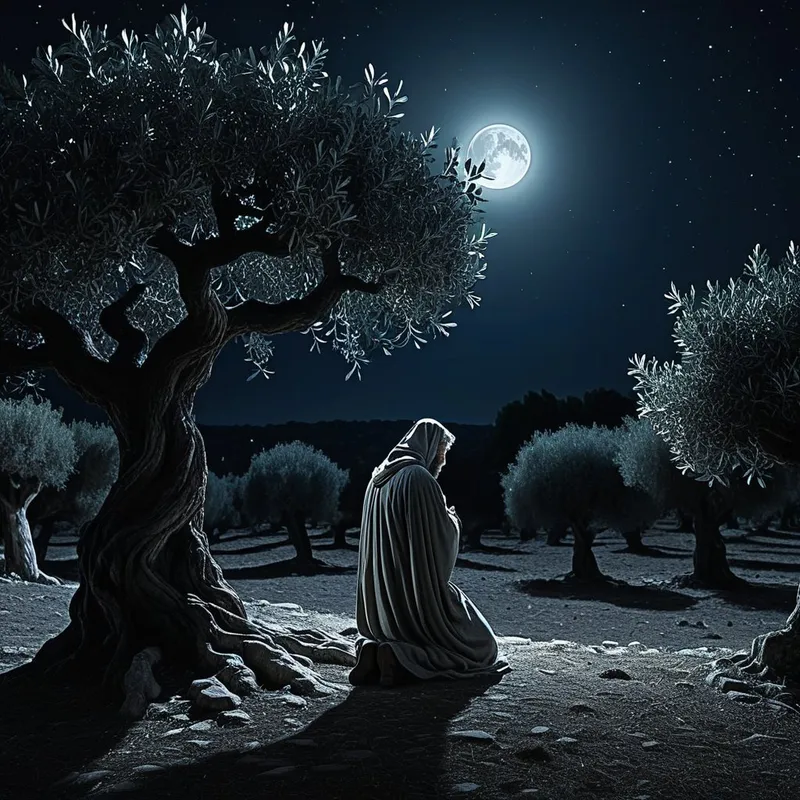
The city slept, a beast of stone breathing in the dark. But beyond its walls, in a hollow cradled by the Mount of Olives, the night was awake and weeping. The air was thick with the scent of crushed olives, earth, and the coming rain. Here, in a place called Gethsemane, a man walked with his heart in his throat.
His name was Jesus, and the weight of all the worlds pressed upon his shoulders. He left his three closest friends—Peter, and the two sons of Zebedee—at the garden’s edge. “My soul is crushed with grief to the point of death,” he told them, his voice a frayed thread. “Stay here and keep watch with me.”
He went a little farther, until the gnarled trunks of ancient olive trees hid him from view. Then he fell to the ground, his face pressing into the cool, damp soil. The full terror of what was to come—the betrayal, the mockery, the searing pain of the cross—unfolded within him not as a prophecy, but as a visceral, present reality. He could taste the metallic fear on his tongue, feel the phantom nails in his flesh. “Abba, Father,” he cried out, his words tearing through the silent night. “Everything is possible for you. Please take this cup of suffering away from me.”
The cup. It was not of clay or silver, but of destiny itself, filled to the brim with the bitter wine of betrayal, torture, and a death reserved for slaves and rebels. He saw it clearly. He felt its dreadful weight. The human in him recoiled, screaming for a different path, for the comfort of obscurity, for life.
He prayed until his sweat fell like great drops of blood upon the ground—a sign of the inner crucifixion already begun. Time stretched and collapsed in that sacred grove. He returned to his friends, seeking a fragment of human solace, and found them asleep, their spirits willing but their flesh weak, unable to companion him in this abyss. The loneliness deepened, an ocean in which he was the only swimmer.
He prayed again. And again. And in the third watch of that endless night, a shift occurred. It was not a voice from the clouds, nor an angelic rescue. It was a quiet, devastating resolution that rose from the very core of his being, born from the exhaustion of struggle. The prayer changed. The terror did not vanish, but it was met. “Yet I want your will to be done, not mine.”
The words hung in the air, a final, fragile bridge between terror and peace. In that moment, the internal war was over. The cup was not taken away, but it was accepted. He had drunk of it in his soul. When he stood up, his face was calm, etched with a sorrow deeper than the sea, but also with a terrible clarity. The sound of tramping feet and the glint of torchlight then pierced the garden’s peace. Judas approached, his kiss a signal in the dark. The hero did not flinch. He had already passed through the fire in the garden. What followed was merely the outer form of a destiny he had already embraced, from the depths of Gethsemane.
Cultural Origins & Context
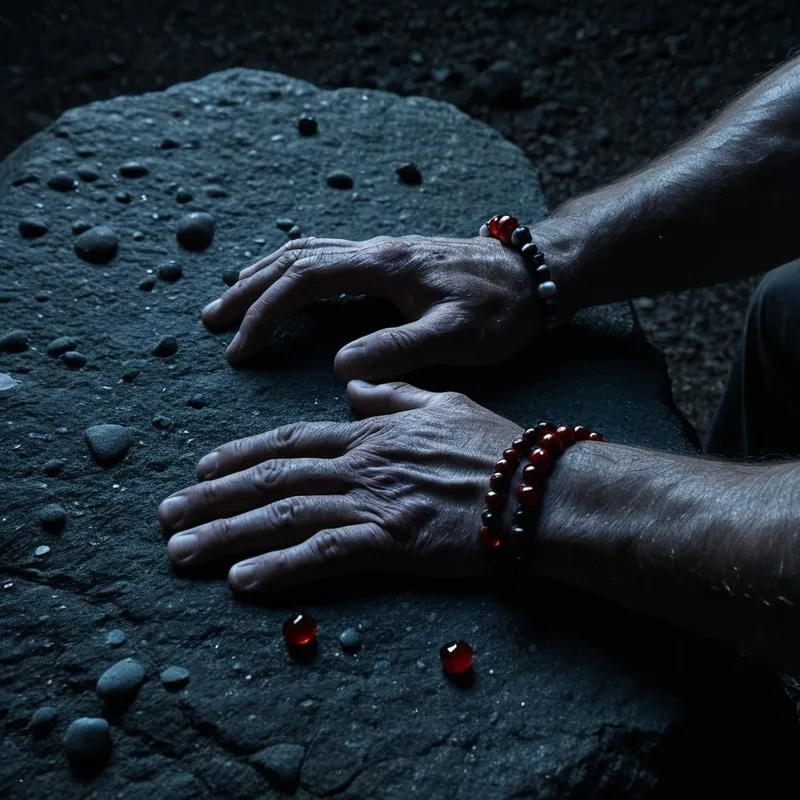
The story of Gethsemane is found in the Synoptic Gospels of Matthew, Mark, and Luke, with a parallel in the Gospel of John. It is a cornerstone of the Passion narrative, transmitted orally by early Christian communities before being codified in text. These communities, often persecuted and facing their own existential terrors, found in this myth not just a theological point about atonement, but a profound model for facing unbearable suffering with faith.
The setting is deeply symbolic. Jerusalem during Passover was a pressure cooker of political tension and messianic expectation. The garden, a known retreat, becomes the stage for the ultimate internal conflict. The story was told and retold to answer a harrowing question: How does one remain faithful when God’s will seems to lead directly into the abyss? It functioned as a narrative container for the trauma of persecution, offering a template where agony was not a sign of faith’s failure, but its very crucible. The hero’s humanity—his fear, his plea, his need for companionship—made the divine resolution that followed accessible and awe-inspiring to ordinary people facing their own lesser, but no less real, nights of the soul.
Symbolic Architecture
Gethsemane is the archetypal landscape of the ultimate human crisis: the confrontation with a fate one did not choose, yet must accept to remain whole. It is the mythic representation of the moment the ego surrenders to the demands of the Self.
The garden is not a place of peace, but an inner oil press, where the soul is crushed until its essence—its true will—is separated from the husk of personal desire.
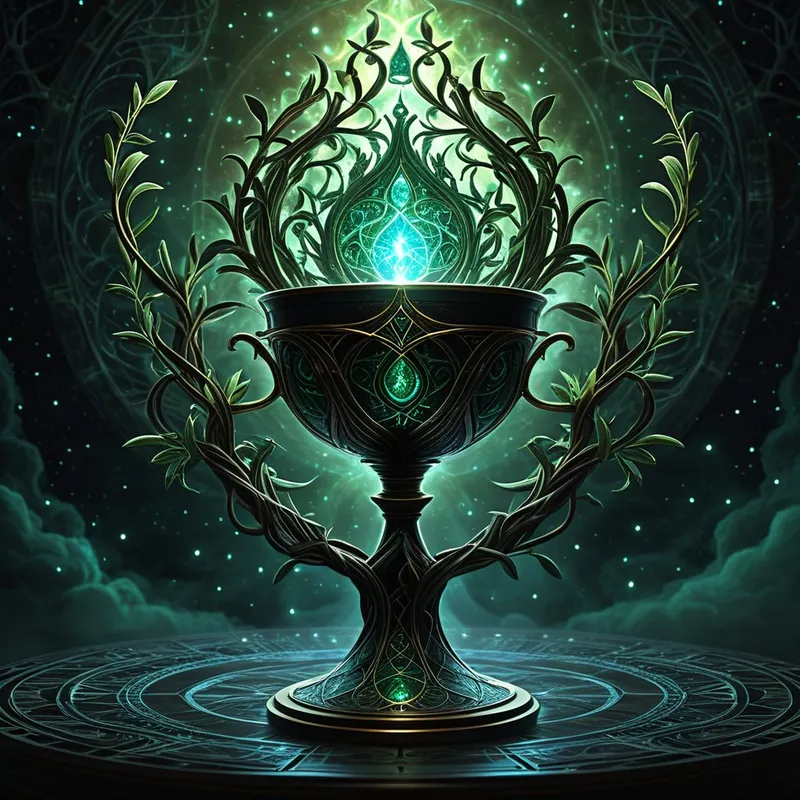
The cup is the symbol of inescapable fate, the portion one must drink to fulfill one’s destiny. To pray for its removal is human; to willfully accept it is the birth of a new, integrated consciousness. The sleeping disciples represent the parts of our own psyche and community that fail us in our darkest hour, underscoring the profound solitude of this deepest work. The hematidrosis is a powerful somatic symbol—the inner turmoil made physically manifest, proving that this is no mere philosophical exercise, but a whole-body, whole-soul ordeal.
Psychologically, the figure of Jesus in Gethsemane represents the heroic ego facing the Self. His struggle is between his personal, human will to survive and avoid pain, and the transpersonal, archetypal will of a larger destiny. His victory is not overcoming the fate, but integrating it. He does not conquer fear; he moves through it to a state of acceptance on the other side. This is the death of the ego’s illusion of control and the birth of an alignment with a pattern greater than itself.
The Dreamer's Resonance
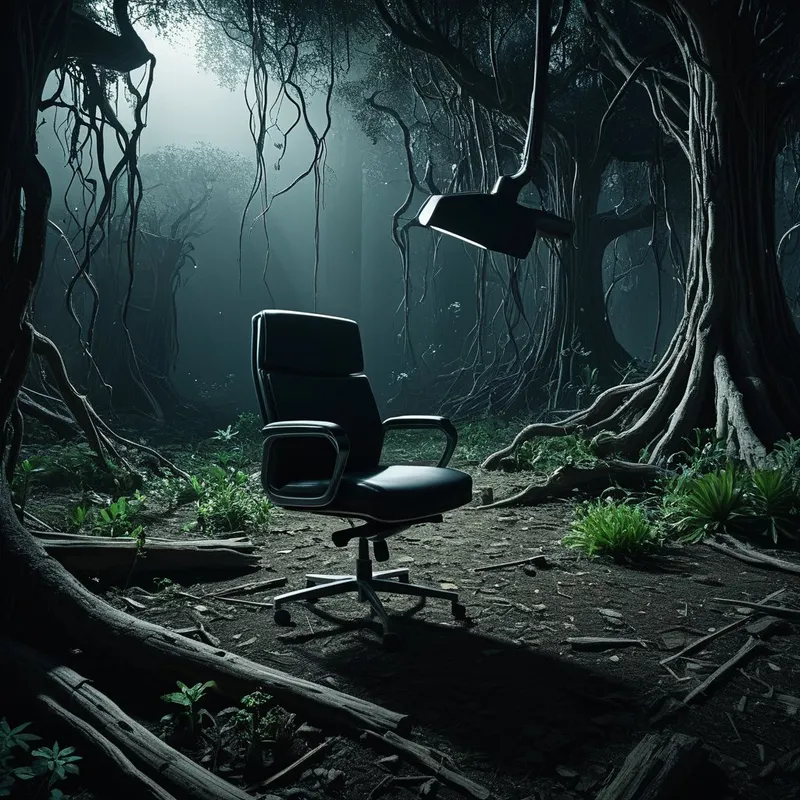
When the pattern of Gethsemane stirs in the modern dreamer, it announces a profound psychological turning point. One may dream of being in a dark, enclosed garden or a lonely room, faced with an impossible choice or a looming, dreadful obligation. There is often a cup, a contract, a door, or a vial that must be consumed or accepted. The somatic feeling is one of crushing dread, paralysis, and profound loneliness—even if others are present in the dream, they are asleep, turned away, or unable to help.
This dream state signifies that the psyche is at the threshold of a major initiation. The conscious mind is being pressed to accept something it has long resisted: perhaps the end of a relationship, a career change, the acknowledgment of an illness, or the integration of a shadow aspect of the self. The “cup” is the bitter truth that must be swallowed for growth to proceed. The dream is the soul’s nocturnal rehearsal of surrender. The agony felt upon waking is not a pathology, but an indicator of the depth of the process. The dreamer is in their own oil press, and the psyche is working to transmute resistance into acceptance, preparing the ego for a necessary, if painful, death and rebirth.
Alchemical Translation
In the alchemy of individuation, Gethsemane represents the nigredo stage—the dark night of the soul where all light seems extinguished. It is the necessary dissolution. The ego, identified with its own plans and comforts, must be broken down. The prayer, “Take this cup from me,” is the ego’s last, desperate stand.
The alchemical vessel is the garden itself, and the fire is the agony of confrontation. The prima materia—the raw soul-stuff—is the personal will. The goal is not to destroy it, but to purify it by uniting it with a higher will.
The transmutation occurs in the space between the two prayers. The first prayer is the ego’s plea. The second, “Your will be done,” is the moment the Self speaks through the ego. This is the coniunctio on the most profound level: the marriage of human consciousness with transpersonal purpose. The “bloody sweat” is the sign of this inner work—the old substance beginning to change.
For the modern individual, the myth teaches that transformation is not achieved through bypassing terror or bargaining with fate, but by moving directly into the heart of the conflict and staying there until a new orientation emerges. Our “Gethsemane moments” are those crises of vocation, relationship, identity, or spirit where we must choose between the path of comfort (which leads to stagnation) and the path of destiny (which leads through the cross). To accept the cup is to choose wholeness over fragmentation, even when wholeness looks like destruction. It is the ultimate act of psychic courage, where one becomes, for a moment, both the sacrificer and the sacrificed, thereby achieving a unity that no external event can ever shatter.
Associated Symbols
Explore related symbols from the CaleaDream lexicon: