
Genesis Creation Myth Meaning & Symbolism
A poetic telling of the seven days of creation, where divine word and spirit bring cosmos from chaos, establishing the sacred pattern of existence.
The Tale of Genesis Creation
In the beginning, there was no beginning as we know it. There was only the <abbr title="The formless, primordial state before creation, often depicted as a watery abyss.">Tehom</abbr>, the deep. A formless void, a darkness that was not merely the absence of light but a presence of unshaped potential. And over the face of these waters, a wind—a breath, a Spirit—moved. It was a presence of intent in the heart of the formless.
And then, a voice. Not a sound that travels through air, for there was none, but a vibration that was reality itself. "Let there be light." And there was. Not the light of sun or star, but light as the first principle, the first act of distinction. It was the primal separation: light from dark, day from night. The first day was not a measure of hours, but the birth of rhythm itself.
On the second day, the voice spoke into the waters, and a firmament was stretched—a vast dome, <abbr title="The sky or heavens, conceived as a solid dome separating the waters above from the waters below.">raqia</abbr>—to separate the waters above from the waters below. A space was made within the formless.
On the third day, the voice commanded the waters below to gather, and dry land, <abbr title="The solid ground, the Earth.">erets</abbr>, appeared. And from the land, the voice called forth vegetation: seed-bearing plants and fruit trees, each according to its kind. The barren was clothed in the green potential of life.
On the fourth day, the voice filled the expanse with lights: the greater light to rule the day, the lesser light to rule the night, and the stars. They were set as signs, for seasons, for days and years, to give light upon the earth. Time was now written in the sky.
On the fifth day, the voice spoke to the waters, and they swarmed with living creatures. Great sea monsters and every living thing that moves. And the voice blessed them, saying, "Be fruitful and multiply." Then, the voice called forth winged birds to fly across the expanse. The waters and the sky teemed with the chaos of movement, now given form and blessing.
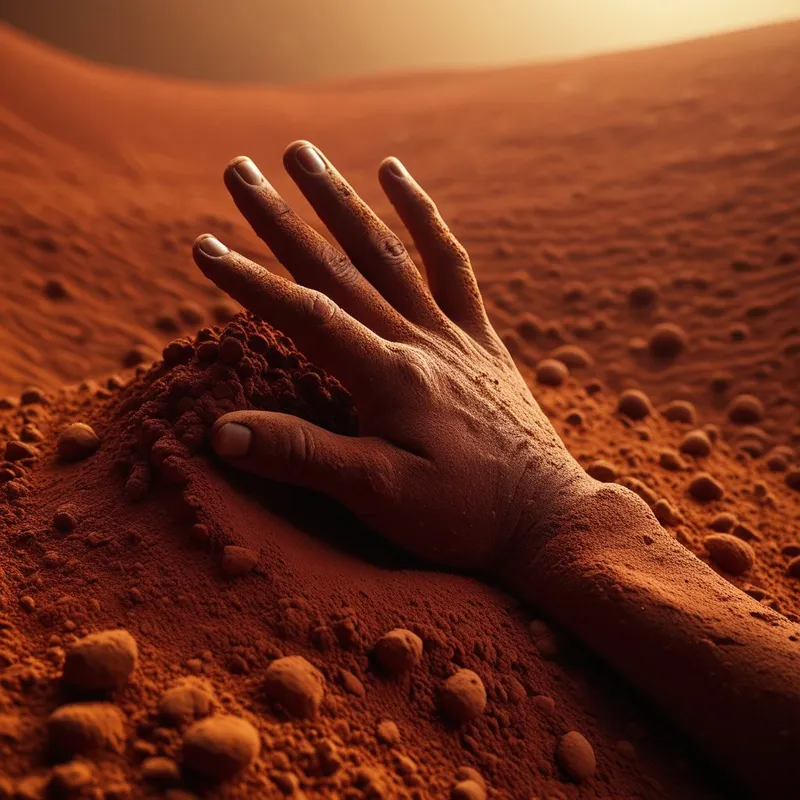
On the sixth day, the land brought forth living creatures: cattle, creeping things, and beasts. And then, the voice took counsel within itself. "Let us make humankind in our image, according to our likeness." From the dust of the ground, <abbr title="The red clay or earth from which the first human was formed.">adamah</abbr>, the <abbr title="The first human, whose name is derived from the word for earth or ground.">Adam</abbr> was shaped. And into its nostrils was breathed the breath of life, and the human became a living being. They were given dominion, and charged to be fruitful. And it was very good.
On the seventh day, the work was finished. The voice rested. It blessed the seventh day and hallowed it, for on it the creative force ceased from all its work. The cosmos, born from word and spirit, now rested in its own completed pattern.
Cultural Origins & Context
This foundational narrative opens the <abbr title="The first five books of the Hebrew Bible, also known as the Pentateuch.">Torah</abbr>, the sacred text of ancient Israel, and by extension, the Christian Old Testament. Its final form is a product of the Priestly (<abbr title="A hypothesized source of the Torah, concerned with ritual, order, and genealogy.">P</abbr>) tradition, likely crystallized during or after the Babylonian Exile (6th century BCE). In this context of displacement and cultural trauma, the story served a profound sociological function: it asserted a monotheistic, sovereign God who creates through orderly command, in stark contrast to the chaotic, violent creation myths of surrounding Mesopotamian cultures, like the <abbr title="The Babylonian creation epic featuring the god Marduk's battle with the sea monster Tiamat.">Enuma Elish</abbr>. It was not merely an explanation of origins, but a theological and political statement of identity. Passed down through ritual recitation, it established the <abbr title="The seventh day of rest, a core covenantal sign.">[Sabbath](/myths/sabbath "Myth from Judeo-Christian culture.")</abbr> as the cornerstone of cosmic and social order, weaving the pattern of creation directly into the fabric of communal life.
Symbolic Architecture
The myth is less a scientific account and more a symbolic map of consciousness emerging from the unconscious. The <abbr title="The formless, primordial state before creation, often depicted as a watery abyss.">Tehom</abbr> represents the undifferentiated, potential-laden unconscious—the psychic womb. The moving Spirit is the first stirring of intention, the ego-complex beginning to form. The sequential acts of separation—light/dark, waters/waters, sea/land—are the fundamental psychic act of making distinctions, without which consciousness is impossible.
Creation is not making something from nothing, but calling forth distinct forms from the boundless potential of the All.
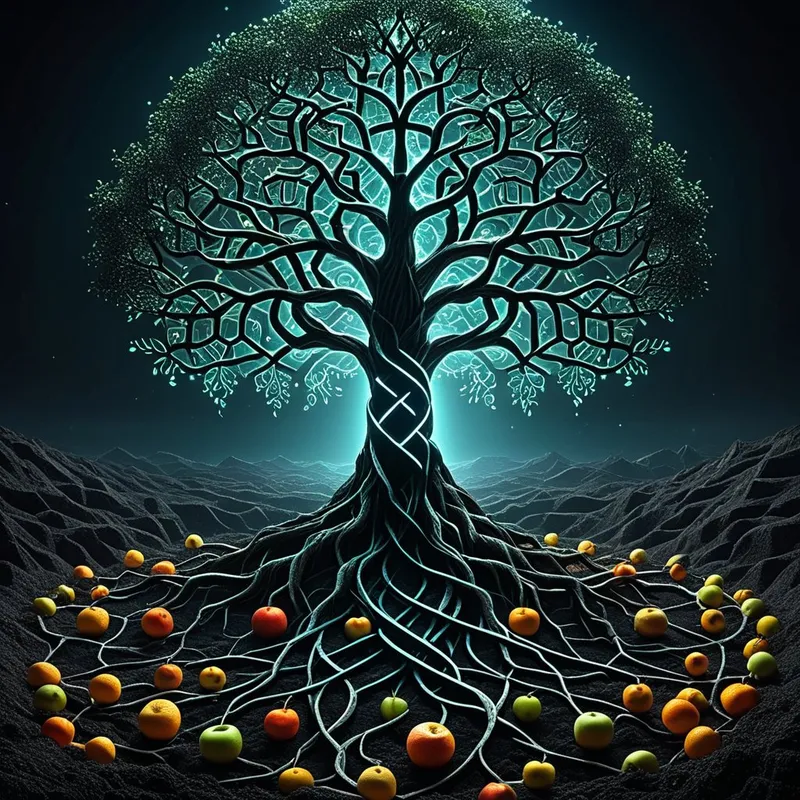
The creation of humans "in the image" of the Creator is the myth's psychological core. It signifies that the human psyche contains the archetype of the <abbr title="The self-regulating center of the psyche; the archetype of wholeness.">Self</abbr>, the inner divine pattern. Our capacity for language, creativity, and moral discernment mirrors the divine Logos (Word) that structures chaos. The command to have "dominion" is not a license for exploitation, but a symbolic charge for the conscious ego to responsibly steward the chaotic, instinctual forces of the inner world (the beasts, the creeping things, the deep).
The Dreamer's Resonance
When this myth resonates in modern dreams, it often surfaces during life transitions where one's inner or outer world feels formless and chaotic—a career change, a creative block, a period of depression or grief. Dreaming of vast, dark oceans, empty spaces, or featureless landscapes points to the <abbr title="The formless, primordial state before creation, often depicted as a watery abyss.">Tehom</abbr>. A voice in the dream, or a sudden, illuminating light, can signal the nascent movement of the Spirit, the psyche's inherent drive toward order and meaning.
The somatic experience is often one of weightlessness followed by a slow, deliberate grounding. The dreamer may feel the terror of the void, then the profound relief of a first, simple distinction: "I am here, and that is there." This is the psyche performing its most ancient work: ego-formation, separating the "I" from the background noise of the unconscious. To dream of planting seeds or naming animals is to engage directly with the mythic task of giving specific form to one's own latent potentials.
Alchemical Translation
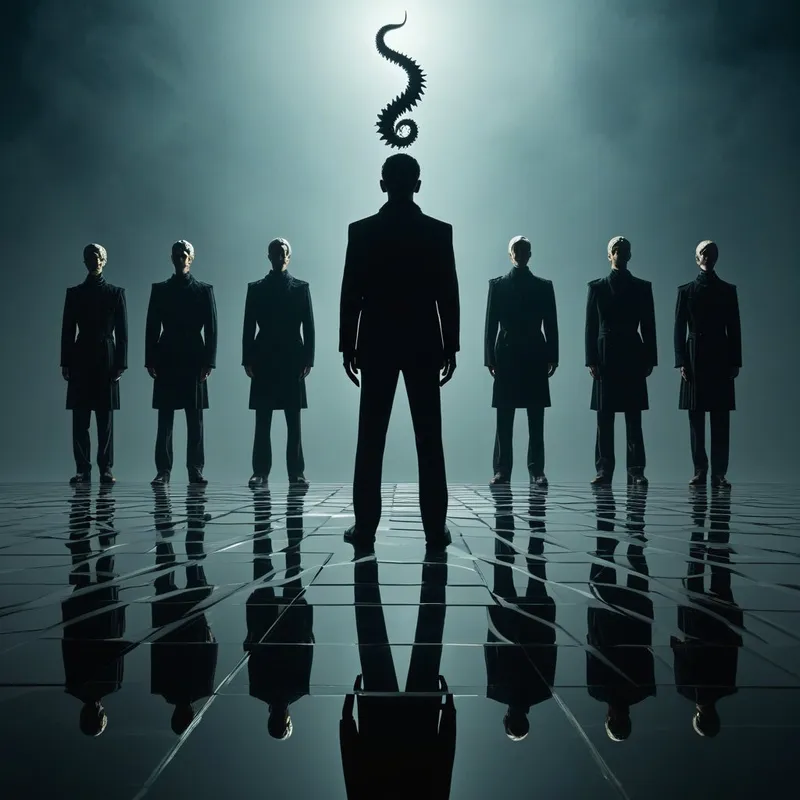
The seven-day structure is a perfect model for the alchemical process of individuation—the journey toward psychic wholeness. Each "day" represents a stage of inner work. The first stage (Separatio) is the crucial, often painful, act of distinguishing light from dark within oneself, confronting the shadow. The second (Coagulatio) involves creating an inner vessel, a firmament of consciousness to contain emotional waters.
The later days map onto the integration of the anima/animus (the teeming life of the fifth day) and the relationship to the body and instinct (the beasts of the field). The creation of the human represents the emergence of the <abbr title="The conscious personality; the center of the field of consciousness.">ego</abbr> in service to the <abbr title="The self-regulating center of the psyche; the archetype of wholeness.">Self</abbr>.
The goal is not endless labor, but to reach the seventh day: the coniunctio oppositorum where work ceases, and the psyche rests in its own integrated, hallowed wholeness.
For the modern individual, the myth teaches that our task is not to invent ourselves ex nihilo, but to discover the divine image—the unique pattern of the Self—already latent within our personal <abbr title="The red clay or earth from which the first human was formed.">adamah</abbr>, our embodied, earthy existence. We are called to speak the word of consciousness into our inner chaos, to separate and name our conflicting parts, and to ultimately rest in the sacred pattern that emerges, declaring our own complex being "very good."
Associated Symbols
Explore related symbols from the CaleaDream lexicon: