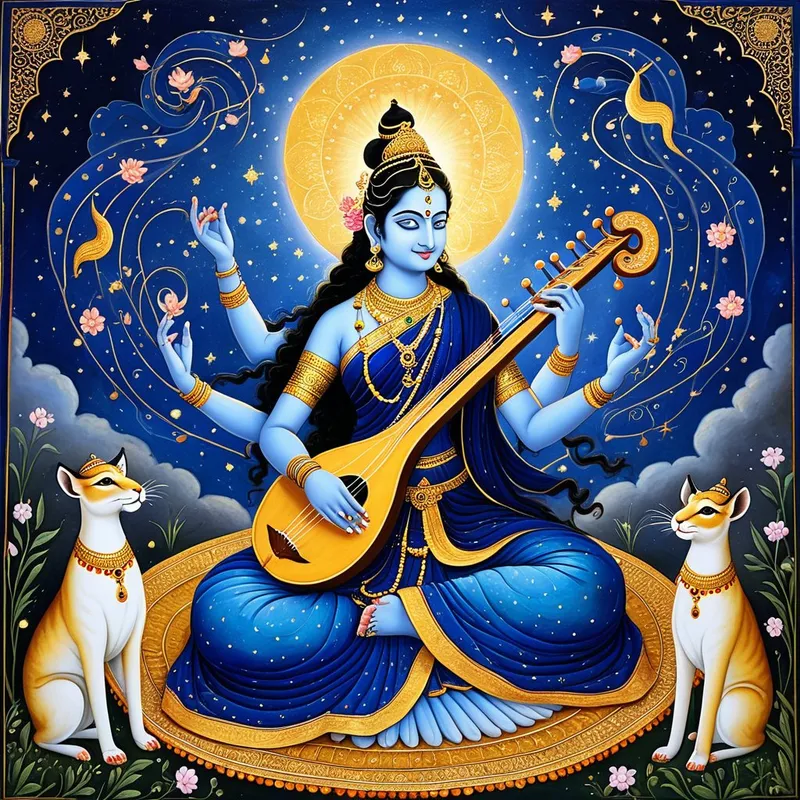
Gandharvas Myth Meaning & Symbolism
Celestial musicians and scent-bearers, the Gandharvas embody the divine marriage of sound and soul, weaving the cosmos with melody and guarding the sacred soma.
The Tale of Gandharvas
Listen, and let the scent of celestial blossoms carry you to the threshold of the worlds. In the golden age of the gods, when the universe was young and its laws still fluid as melody, there existed beings born from the breath of Brahma. They were the Gandharvas, the singers of heaven.
Their home was not a palace of stone, but a realm woven from sound itself—the Gandharvaloka. Here, the air was thick with perfume, a symphony of jasmine, champaka, and sandalwood that rose from the earth to greet the descending notes of their music. They were the keepers of the sacred soma, its intoxicating essence guarded as the secret heart of creation. Their forms were luminous, androgynous, and beautiful beyond mortal comprehension, often depicted with the wings of swans or horses, creatures of both earth and sky.
Their eternal companions were the Apsaras, whose dance gave form to their song. Together, they performed the eternal rite that sustained the cosmos: sound giving birth to movement, movement giving birth to form. Yet, a profound loneliness echoed within their perfect harmonies. They were beings of pure aesthetic essence, but they yearned for the gritty, passionate reality of earthly life. Their music, for all its divinity, lacked the counterpoint of suffering, the bass note of desire that gives melody its depth.
This longing drew them to the world of men. They became the invisible musicians at every sacred wedding, their harmonies blessing the union of Purusha and Prakriti. It is said a Gandharva’s song could make the rivers pause and the mountains lean in to listen. But they were also tricksters, capable of creating illusions so potent they could lead travelers astray with mirages of paradise, or steal away the hearts of those who heard their hidden lullabies in the wind.
Their greatest tale is one of stolen nectar and divine consequence. When the amrita was churned from the ocean of milk, a Gandharva, captivated by its radiant promise, attempted to steal a drop. The vigilance of the gods was absolute, and he was cast down, his celestial form dimmed. Yet, in his fall, he did not perish. He became the music that haunts the lonely places—the whisper in the forest at dusk, the inexplicable scent of flowers on a barren cliff, the melody that arrives unbidden in a moment of deep sorrow or joy, a fleeting taste of the paradise he once called home. He became the myth itself, forever reminding the world that the divine is not only above but also hidden within the very fabric of longing.
Cultural Origins & Context
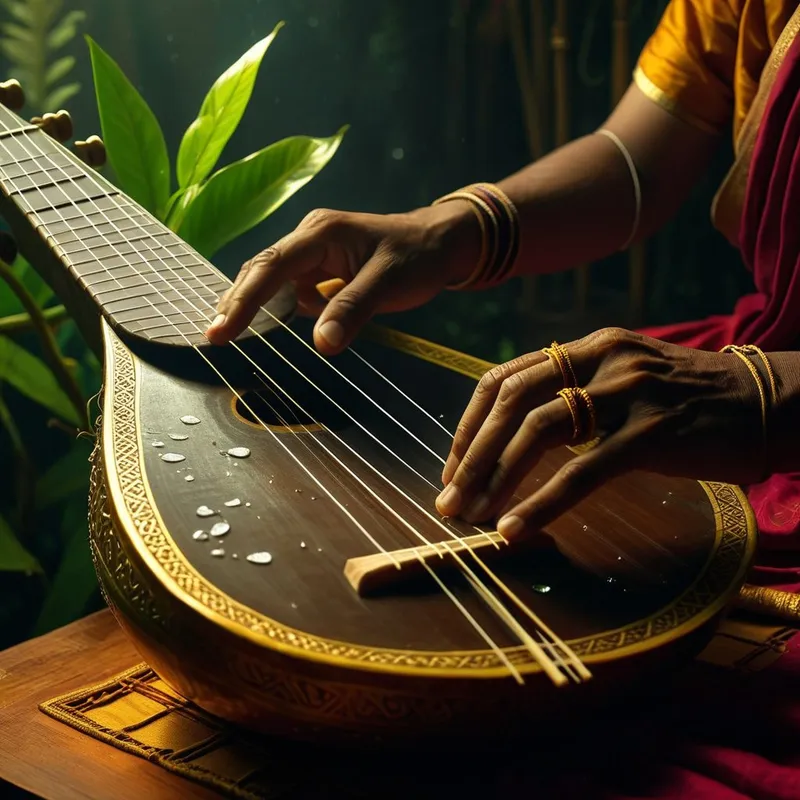
The Gandharvas are not latecomers to the Hindu imagination; their roots sink deep into the Vedas. In the Rigveda, they appear as minor deities associated with fertility, the sun, and the preparation of soma. They were the archetypal "scent-eaters," beings who subsisted on fragrance, linking them to the most ethereal and intangible of senses. This established their domain as the liminal space between the tangible and the ineffable.
Their stories were carried forward by the bards, the Sutas, and elaborated in the grand epics and Puranas. In the Mahabharata, they are skilled warriors and musicians, often intervening in human affairs. Their societal function was multifaceted: they were divine entertainers in the courts of gods like Indra, spiritual muses who inspired poets and artists, and cosmological functionaries who maintained the order of the heavens through ritual performance. They modeled a form of divine service that was not about brute power, but about the sustaining power of beauty and harmony.
Symbolic Architecture
The Gandharva is a master symbol of synthesis. They represent the divine marriage of opposites necessary for creation and consciousness.
They are the psychic function that translates the inchoate longing of the soul into the specific, beautiful form of a song.
Their androgyny symbolizes the union of masculine (structure, melody) and feminine (flow, emotion) principles within the psyche. They are not purely male or female but a transcendent third that contains both. Their association with horses or swans—animals that traverse different realms (earth/water, water/air)—marks them as psychopomps, guides for the soul moving between states of consciousness.
Their primary domain is sound (Nada). In Hindu cosmology, the universe is born from sound, from the sacred syllable Om. The Gandharvas are the personification of this creative vibration. They are the artists of reality, reminding us that the world is not a fixed thing, but a ongoing performance, a composition. Their theft of the soma or amrita symbolizes the human (and psychic) impulse to grasp the transcendent, to bring the ecstatic knowledge of the divine into the realm of personal experience, often at a great cost.
The Dreamer's Resonance
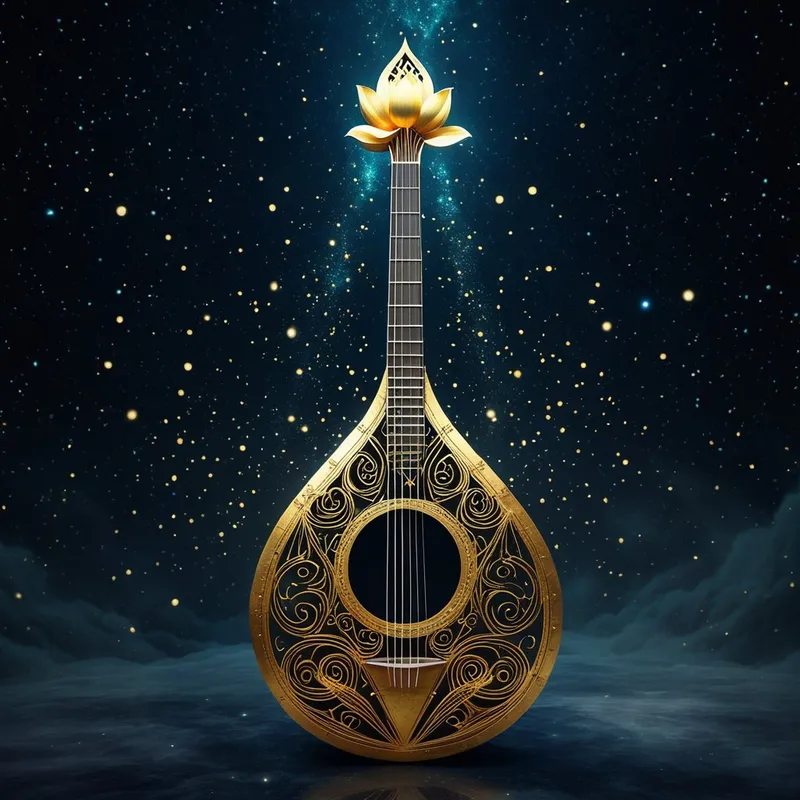
When the Gandharva pattern stirs in the modern unconscious, it often manifests as a profound aesthetic yearning. The dreamer may experience dreams of breathtaking, unearthly music that evokes intense emotion upon waking, or of being in landscapes saturated with powerful, significant scents for which there is no name.
This is the psyche signaling a deep need for ensoulment—for the raw material of one’s life (the "facts") to be transformed into something meaningful and beautiful (the "song"). It can feel like a restless, creative tension, a sense that one is living a competent but mute existence. The Gandharva dream is a call from the soul’s artist. It may appear when one is trapped in overly rational, dry, or utilitarian modes of being, serving as a psychic corrective. The somatic experience might be a tightness in the chest (un-sung songs) or a heightened sensitivity to sound and smell, as if the body itself is trying to tune into a forgotten frequency.
Alchemical Translation
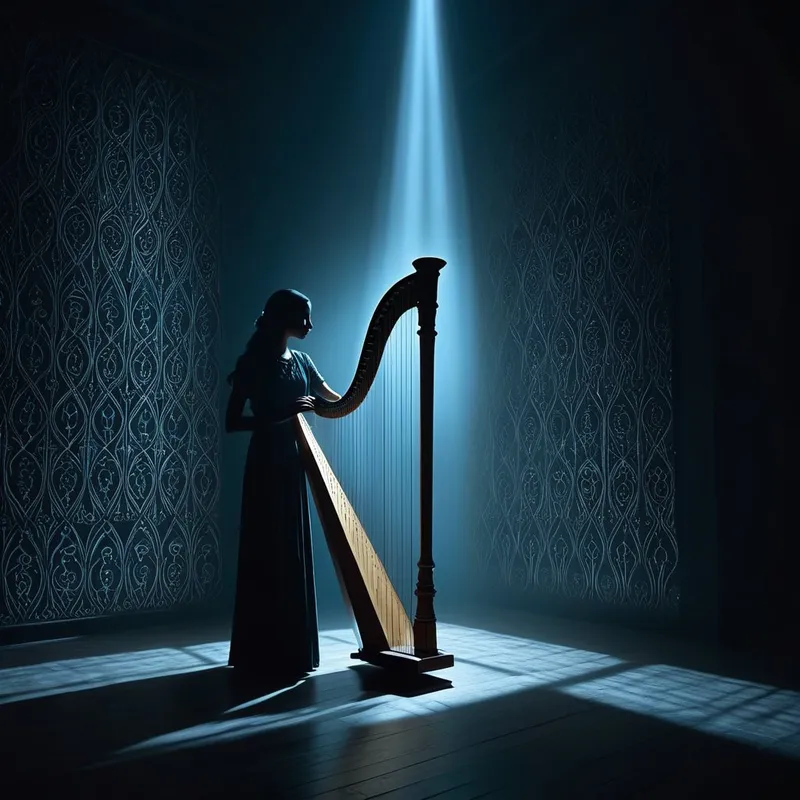
The Gandharva myth models the alchemical process of sublimation—the transmutation of base, instinctual energy into the gold of art and spiritual awareness. Their journey from celestial guardians to fallen tempters and back to hidden muses mirrors the individuation path.
The modern seeker’s task is not to become a Gandharva, but to host its function within: to become the vessel where inner conflict is alchemized into creative harmony.
The first step is recognizing the "soma" within—the intoxicating, numinous potential of one’s own libido or life force, which often feels dangerous or taboo to claim (the "theft"). The "fall" is the inevitable descent of this ideal into the complexities and compromises of real-world creation—writing the flawed novel, singing the imperfect song, building the vulnerable relationship.
The Gandharva’s eternal performance with the Apsara teaches that creation is a dance between the structuring principle (the musical score, the masculine) and the animating principle (the interpretive dance, the feminine). Individuation requires learning this internal dance. The final stage is not a return to a static heavenly abode, but becoming like the fallen Gandharva’s song: an integrated presence that infuses ordinary reality with echoes of the divine. One becomes a source of beauty and fragrance—not by escaping the world, but by marrying the celestial melody to the earthly clay of one’s own life, thus performing the most sacred of weddings: the union of spirit and matter within the self.
Associated Symbols
Explore related symbols from the CaleaDream lexicon: